
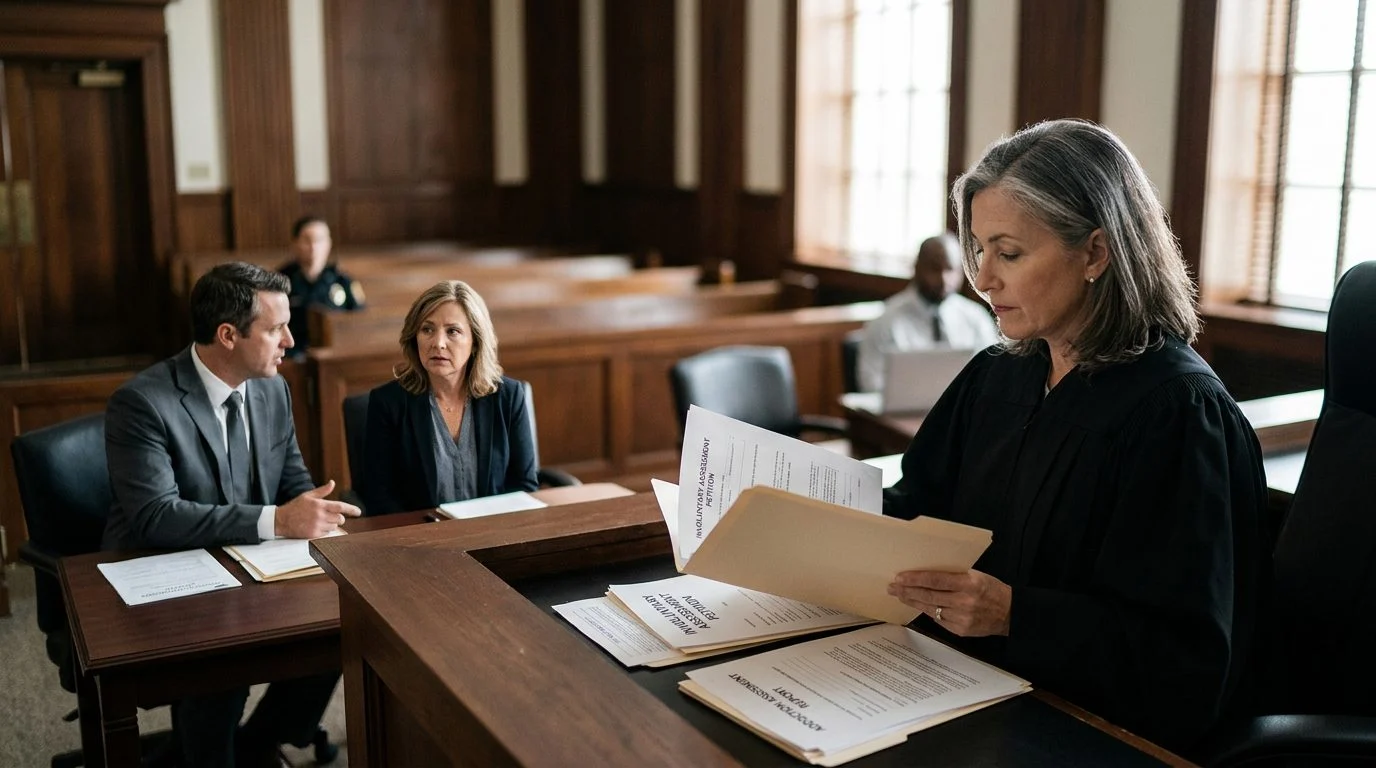
Marchman Act Guidance for Florida Families
Marchman Act Gun Rights in Florida: What Families Need to Know
A plain-language guide to how a Marchman Act case can affect firearm rights, and how Robinson Casey helps families understand their options. Free first consultation, confidential and with no obligation to continue.
By Richard J. Casey III, Esq. · Published October 23, 2026
Marchman Act Gun Rights in Florida: What Families Need to Know
If a Marchman Act order has you worried about guns in your home, you don't have to sort it out alone. Our team can talk it through with you at (561) 849-4149. Talk it through with our team — the first consultation is free, confidential, and carries no obligation.

Can a Marchman Act Order Affect Gun Rights in Florida?
Yes, a Marchman Act order can affect gun rights in Florida in some situations. Whether it does depends on the type of order, what the court found, and the exact wording of the paperwork.
The Marchman Act deals with substance use disorders. Many families expect a question about treatment, not guns. The firearm question often shows up later, when someone tries to buy a gun or asks what to do about firearms already in the home.
Most of the confusion comes from one gap. A treatment order and a firearm ban are judged under different laws, so one does not automatically answer the other.
This page covers the federal rules, the Florida rules, the routes to restore firearm rights, and the records worth gathering. Keep the order in front of you as you read. Small words in the findings can change the answer.
How a Marchman Act Case Moves Through Florida Courts
A Marchman Act case starts when someone files a petition in court. That petition is where any firearm question begins. The petition must name the respondent and the petitioner, explain how they are related, and give the facts behind the request, under Fla. Stat. § 397.68141.
For an adult, the law lists who may file. A spouse or legal guardian, any relative, a service provider, or an adult who has direct personal knowledge of the respondent’s substance abuse impairment and his or her prior course of assessment and treatment may file, under Fla. Stat. § 397.68112.
If the court finds the conditions proven by clear and convincing evidence, it may order involuntary treatment for up to 90 days. The court keeps jurisdiction after that order, too. See Fla. Stat. § 397.697. The Florida Department of Children and Families guide explains how the process starts and when law enforcement can get involved.
If no petition has been filed yet, there may be no order to read. Your records will look different in that case. Our guide to the involuntary commitment process walks through the full timeline.
Federal Firearm Prohibitions That Can Apply
Federal law makes it unlawful to sell or otherwise dispose of a firearm or ammunition to a person the seller knows or has reasonable cause to believe has been adjudicated as a mental defective, or has been committed to any mental institution at 16 years of age or older. See 18 U.S.C. § 922. See 18 U.S.C. § 922.
Under Fla. Stat. § 790.065, “adjudicated mentally defective” means a determination by a court that a person, as a result of marked subnormal intelligence, or mental illness, incompetency, condition, or disease, is a danger to himself or herself or to others or lacks the mental capacity to contract or manage his or her own affairs. Florida’s definition covers a person who, because of mental illness, incompetency, or disease, is a danger to self or others or lacks the capacity to manage their own affairs (Fla. Stat. § 790.065).
This overlap matters in guardianship cases, where a court finds someone cannot manage their own affairs.
“Committed to a mental institution” is a separate category, and Fla. Stat. § 790.065 expressly includes commitment for substance abuse and involuntary substance abuse treatment under s. 397.6957, so a Marchman involuntary treatment order can fall within this category. Read the exact language. Federal and Florida rules apply side by side, so meeting one does not clear the other.
Florida Rules on Buying, Owning, and Possessing Firearms
Under Florida law, a person adjudicated mentally defective or committed to a mental institution may not own or possess a firearm until relief is obtained (Fla. Stat. § 790.064). This rule covers guns a person already has, not only new purchases.
According to the Florida Department of Law Enforcement, Florida checks apply federal prohibitions. Those include prohibitions for unlawful drug users or addicts and for persons adjudicated mentally defective or involuntarily committed to treatment.
Federal law also sets age rules. Under 18 U.S.C. § 922, the sworn statement for a firearm other than a shotgun or a rifle includes the swearer’s statement that they are twenty-one years or more of age. That rule applies alongside Florida’s rules.
If a family member owns guns, make a simple list. Note each firearm, who owns it, and where it is kept. Those details help apply the rules to the guns actually in the home.
Does a Particular Order Trigger a Firearm Prohibition?
Florida’s criteria for involuntary admission require a good faith reason to believe the person has lost the power of self-control about substance abuse. They also require a finding about the person’s need for services, or a threat of harm (Fla. Stat. § 397.675).
Under that statute, mere refusal to receive services does not, by itself, constitute evidence of lack of judgment with respect to his or her need for such services. Fla. Stat. § 397.675 reads: “(b) Without care or treatment, is likely to suffer from neglect or refuse to care for himself or herself; that such neglect or refusal poses a real and present threat of substantial harm to his or her well-being; and that it is not apparent that such harm may be avoided through the help of willing, able, and responsible family members or friends or the provision of other services, or there is substantial likelihood that the person has inflicted, or threatened to or attempted to inflict, or, unless admitted, is likely to inflict, physical harm on himself, herself, or another.” Read the findings section and any firearm language line by line. A summary may leave out the exact finding that controls.
Write down the dates, the court name, and the case number first. Florida makes these court records confidential. The clerk may disclose them, upon request, to any of the following, including the petitioner, the petitioner’s attorney, the respondent, the respondent’s attorney, and others listed in the statute (Fla. Stat. § 397.6760).
Not sure what your next step is?
Talk it through with our team — the first consultation is free, confidential, and carries no obligation.
Restoring Firearm Rights After a Marchman Act Order
Florida and federal law each provide a path to relief. Eligibility turns on the order and the person’s record.
In Florida, the person may ask the court that made the adjudication or commitment for relief (Fla. Stat. § 790.064). Relief covers only the particular adjudication or commitment it addresses.
Federally, a person may apply to the Attorney General for relief from federal firearm disabilities. A denial can be reviewed by a federal district court (18 U.S.C. § 925).
Restoration is a separate process. The Florida disability stays in place until relief is obtained. The end of a Marchman case does not lift it by itself.

Talk Through Your Loved One’s Situation With Robinson Casey
If a Marchman Act order has landed on your family, you didn’t choose this. The gun question may feel like one more problem on top of a crisis involving someone you love.
You don’t have to sort out the firearm rules alone. Bring the order, the dates, the court name, and your list of guns in the home. Richard J. Casey III, Esq. is responsible for this page.
Your first consultation is free, confidential, and carries no obligation to continue. Call (561) 849-4149 or send a request through the contact page.
Frequently Asked Questions
Background checks apply federal and Florida categories, so the order’s findings matter.
Can a Florida firearm disability be lifted?
Yes. The person may petition the court that made the adjudication or commitment for relief.
Are Marchman Act records public?
No. The records are confidential, and the clerk may release them to the parties and their attorneys.
How Robinson Casey Helps Families
Focused Practice
Robinson Casey focuses on Marchman Act petitions and guardianship matters, serving families across South Florida and statewide.
Plain-Language Answers
We explain how a Marchman Act case works, what it may mean for firearm rights, and what questions to raise with the court.
Support for Families
Our team understands how stressful a crisis involving a loved one can be, and we work to keep you informed at every step.
Confidential Consultation
Your first consultation is free, confidential, and carries no obligation to continue.
Important: Do Not Make Firearm Decisions Alone
Firearm questions often come up quickly during a Marchman Act case. Before you transfer, sell, or surrender any firearm, speak with a lawyer about how the case may affect your rights and your household.
Common Questions About Firearms and the Marchman Act
What is the Marchman Act?
The Marchman Act is Florida's law for addressing substance abuse and involuntary assessment and treatment. Our practice focuses on Marchman Act petitions and the court process that follows.
How can firearm rights be affected?
Certain Marchman Act outcomes may lead to firearm restrictions under Florida and federal law. Whether a restriction applies depends on the specific facts of your case.
Can a firearm disability be lifted?
In some situations, the person may petition the court that made the adjudication or commitment for relief. Robinson Casey can explain whether this option may be available in your case.
Are Marchman Act records public?
Marchman Act records are generally confidential, and the clerk may release them to the parties and their attorneys. Ask us how confidentiality applies to your situation.