
Marchman Act & Guardianship | South Florida
Helping South Florida Families Navigate the Marchman Act for Elderly Parents
Robinson Casey focuses on Marchman Act petitions and guardianship matters for families in Miami-Dade, across South Florida, and statewide. Your free, confidential first consultation comes with no obligation to continue.
By Richard J. Casey III, Esq. · Published October 23, 2026
The Short Answer: Yes, the Marchman Act Can Apply to Older Adults
Yes. Florida’s Marchman Act can reach an adult parent who meets the statute’s criteria, and those criteria do not turn on age. If you want to get an elderly parent into rehab for alcohol in Florida, the first question is whether the parent meets the Act’s test for substance abuse impairment.
The Marchman Act criteria, § 397.675 focus on impairment and what it does to a person’s judgment and self-control. A family does not need a formal diagnosis label to ask a court for help. What matters is how drinking affects the person and whether the harm is real and current.
When drinking appears alongside memory loss, confusion, or poor decisions, the question can shift to capacity. That is a separate legal route, called guardianship, and we cover it below.
Robinson Casey is a Florida law firm that limits practice to Marchman Act petitions and guardianship matters. The firm serves families across South Florida and statewide. Richard J. Casey III, Esq. is the responsible attorney for this page.
If your mother or father keeps drinking after falls, confusion, or refusals of help, we can talk through the facts of your situation with you. Talk it through with our team — the first consultation is free, confidential, and carries no obligation.

What the Marchman Act Requires for an Adult Parent
A Marchman petition must give the court facts showing why the family believes the parent is impaired and has lost self-control over substance use. The petition must also state the reasons behind those beliefs, as set out in petition contents, § 397.68141.
The statute gives two main paths. The petition may rest either on the petitioner’s reason to believe the respondent has inflicted or is likely to inflict physical harm on himself or herself or others unless the court orders services, or on the reason the petitioner believes the respondent’s refusal of care rests on judgment so impaired by substance abuse that he or she cannot appreciate the need for care and decide rationally about it, as set out in § 397.68141. Either way, the factual allegations must also show that the respondent is substance abuse impaired and has lost the power of self-control with respect to substance abuse.
The difference between seeking help and refusing it matters. A parent who says no is not automatically a candidate. The facts must show the impairment and the risk.
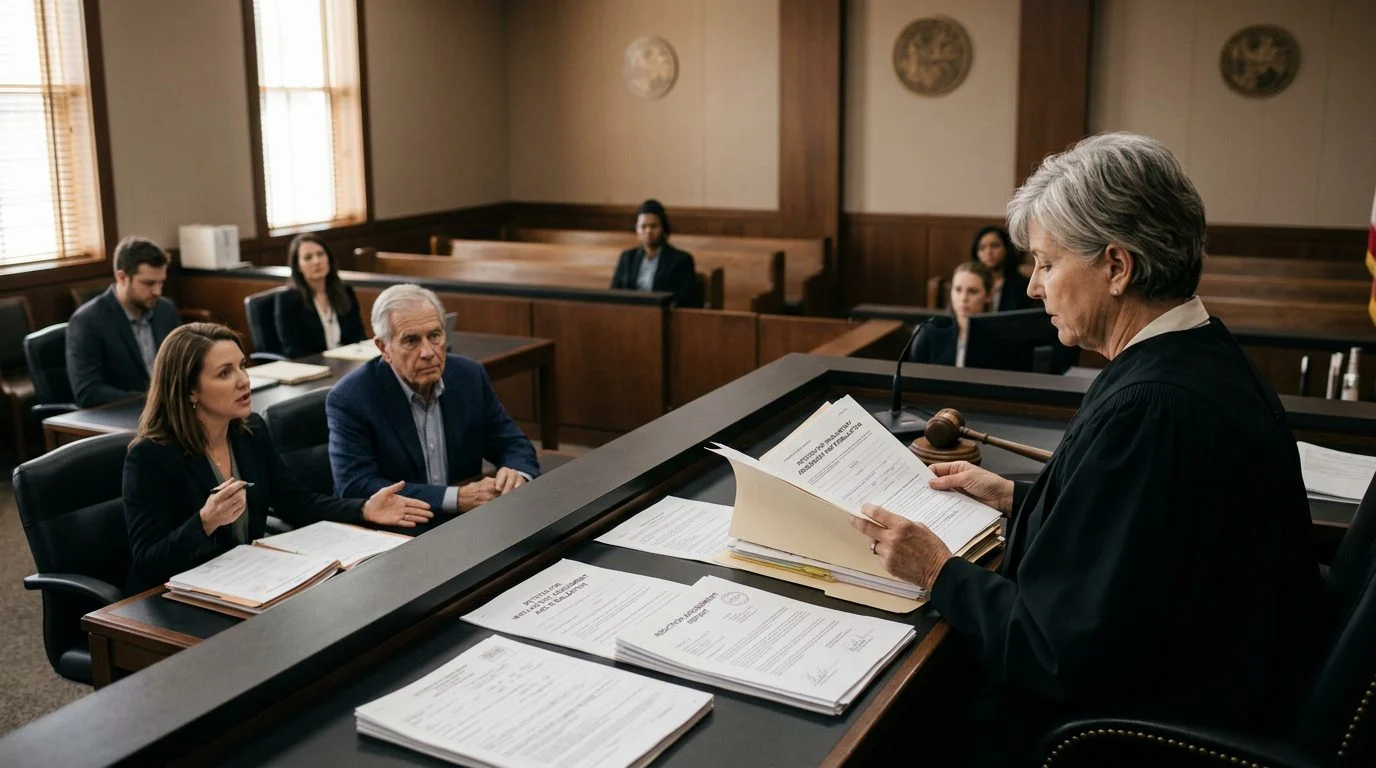
The court, not the family, makes the decision. Testimony is taken under oath, and the proceedings are recorded. The court may also order drug tests, under hearing on petition, § 397.6957. If the conditions are proved by clear and convincing evidence, the court may order involuntary treatment for up to 90 days, under court determination, § 397.697.
When Capacity Concerns Point Toward Guardianship
Guardianship is the route when a court must find that a person cannot manage property or meet basic health and safety needs. Under definitions, § 744.102, an incapacitated person is someone a judge has found lacks the capacity to manage at least some of his or her property or to meet at least some essential health and safety requirements.
Under § 744.102, a limited guardian is a guardian appointed by the court, after the court has found that the ward lacks the capacity to do some, but not all, of the tasks necessary to care for his or her person or property, or after the person has voluntarily petitioned for appointment of a limited guardian, to exercise the legal rights and powers specifically designated by court order. A plenary guardian is a guardian appointed by the court, after the court has found that the ward lacks the capacity to perform all of the tasks necessary to care for his or her person or property, to exercise all delegable legal rights and powers of the ward. A limited guardian holds only the rights the court names in its order. The difference matters because the court can narrow the guardian’s power to what the person truly cannot do.
Urgent cases have a separate tool. Under emergency temporary guardianship, § 744.3031, a court may appoint an emergency temporary guardian only after a petition for determination of incapacity is filed. The court must find imminent danger to the person’s health or safety, or danger that property will be lost, unless immediate action is taken. The court must also appoint counsel for the alleged incapacitated person.
Capacity cases also involve medical review. Each member of the examining committee must examine the person and file a report with the clerk of the court within 15 days after appointment, under incapacity procedures, § 744.331.
A Marchman petition and a guardianship petition address different problems. One concerns substance use. The other concerns capacity. A parent may have both, so sort out the facts early.
Who Can File and How the Petition Process Works
For an adult, a spouse or legal guardian, any relative, a service provider, or an adult who has direct personal knowledge of the respondent’s substance abuse impairment and his or her prior course of assessment and treatment can file. That list comes from who may petition, § 397.68112. Whether your role fits depends on the facts.
Under § 397.68112, for an adult, a spouse or legal guardian, any relative, a service provider, or an adult who has direct personal knowledge of the respondent’s substance abuse impairment and his or her prior course of assessment and treatment may file the petition, and under § 397.681 it goes to the clerk of the court in the county where the person is located. The clerk may not charge a fee for filing it, under jurisdiction and counsel, § 397.681. In Miami-Dade, the Miami-Dade Clerk, Mental Health Court page directs adult matters to the Probate Court.
Evidence Families Gather Before Filing
A petition needs reasons, and reasons come from facts. Start a dated record now. Keep it short, specific, and factual.
Write down dated incidents: falls, missed medications, driving events, unpaid bills, unsafe conditions at home, and times the parent was found confused. Note who saw each event and when.
Keep medical records and any assessment you can get.
List witnesses with firsthand knowledge. Family members familiar with the parent’s history can testify at the hearing, under hearing on petition, § 397.6957.
Record your attempts to talk about treatment. Write the date, what you said, and how the parent answered. Because a single refusal is not proof of lack of judgment, your notes should show a pattern over time.
How Age and Health Conditions Affect the Situation
Cognitive changes, chronic illness, and drinking can overlap, which makes careful records more important. Families often need to separate concerns about addiction from concerns about capacity before choosing a path.
Emergencies move differently. In an emergency, a court may issue an ex parte assessment and stabilization order based on the petition alone, without appointing an attorney first. The service provider may hold the person for up to 72 hours of observation, with listed exceptions. See ex parte order, § 397.6818.
Thin petitions can fail.
Each case turns on its own record, and the court makes the call. Focus on what you can show, not on what you fear.
Not sure what your next step is?
Talk it through with our team — the first consultation is free, confidential, and carries no obligation.

Talk With Robinson Casey About Your Parent’s Situation
If your parent keeps drinking after falls, confusion, or refusals of help, you do not have to sort out the legal route alone. A family may not know whether a Marchman petition or a guardianship fits their parent’s facts.
Frequently asked questions
How does Florida law describe who may be involuntarily admitted?
§ 397.675 looks at whether there is good faith reason to believe a person is substance abuse impaired, or has a substance use disorder and a co-occurring mental health disorder. Because of that impairment or disorder, the person must have lost the power of self-control with respect to substance abuse. The person must also meet the statute’s further conditions about impaired judgment, self-neglect or the risk of physical harm. A court decides whether those criteria are met on the facts.
Does the family pay a filing fee?
The clerk may not charge a fee for filing a Marchman petition, under § 397.681.
Does a parent get a lawyer?
Yes. A respondent has the right to counsel at every stage of the proceeding, however, the respondent may waive that right if the respondent is present and the court finds that such waiver is made knowingly, intelligently, and voluntarily, and a respondent who desires counsel and is unable to afford private counsel has the right to court-appointed counsel.
The first consultation is free, confidential, and comes with no obligation to continue (consulta inicial gratuita, confidencial y sin compromiso). Call (561) 849-4149 or schedule a consultation to talk through your parent’s case with us.
How Robinson Casey Supports Families
A Focused Practice
Our firm limits its practice to Marchman Act petitions and guardianship matters, so our work centers on these proceedings and the families who bring them to us.
A Confidential First Conversation
Your initial consultation is free and confidential, with no obligation to continue. It is a chance to explain your situation and ask questions.
Support for the Whole Family
Our team, including the support staff who handle scheduling and filings, keeps families informed at each step so no one is left guessing about what comes next.
Serving South Florida and Statewide
We work with families in Miami-Dade and across South Florida, and we assist clients in other parts of Florida as well.
If Someone Is in Immediate Danger
If your parent may harm themselves or others, call 911 right away. Then contact Robinson Casey at (561) 849-4149 to talk through the legal options available to your family.
Matters We Handle
Marchman Act Petitions
Petitions under Florida's Marchman Act for a loved one who may need assessment, stabilization, or treatment for substance use.
Involuntary Commitment for Addiction
Guidance on the court process for involuntary admission for substance abuse impairment under Florida law.
Emergency Temporary Guardianship
Help with urgent court requests when an elderly or incapacitated adult needs a guardian quickly to protect their health and property.
Plenary and Limited Guardianship
Guardianship options that range from broad decision-making authority to narrower authority tailored to a person's specific needs.
Mental Health Guardianship
Guardianship matters for adults whose mental health condition affects their ability to make sound decisions for themselves.