
Marchman Act and Guardianship | Miami-Dade and South Florida
Helping Your Family Get a Homeless Loved One Into Treatment
Robinson Casey focuses on Marchman Act petitions and guardianship matters for families in Miami-Dade, South Florida and across Florida.
By Richard J. Casey III, Esq. · Published November 2, 2026
Yes. A family member can ask a Florida court to order assessment and treatment for a homeless adult who uses drugs. The request is a Marchman Act petition. A judge decides it only after a hearing, and only if the legal standards are met.
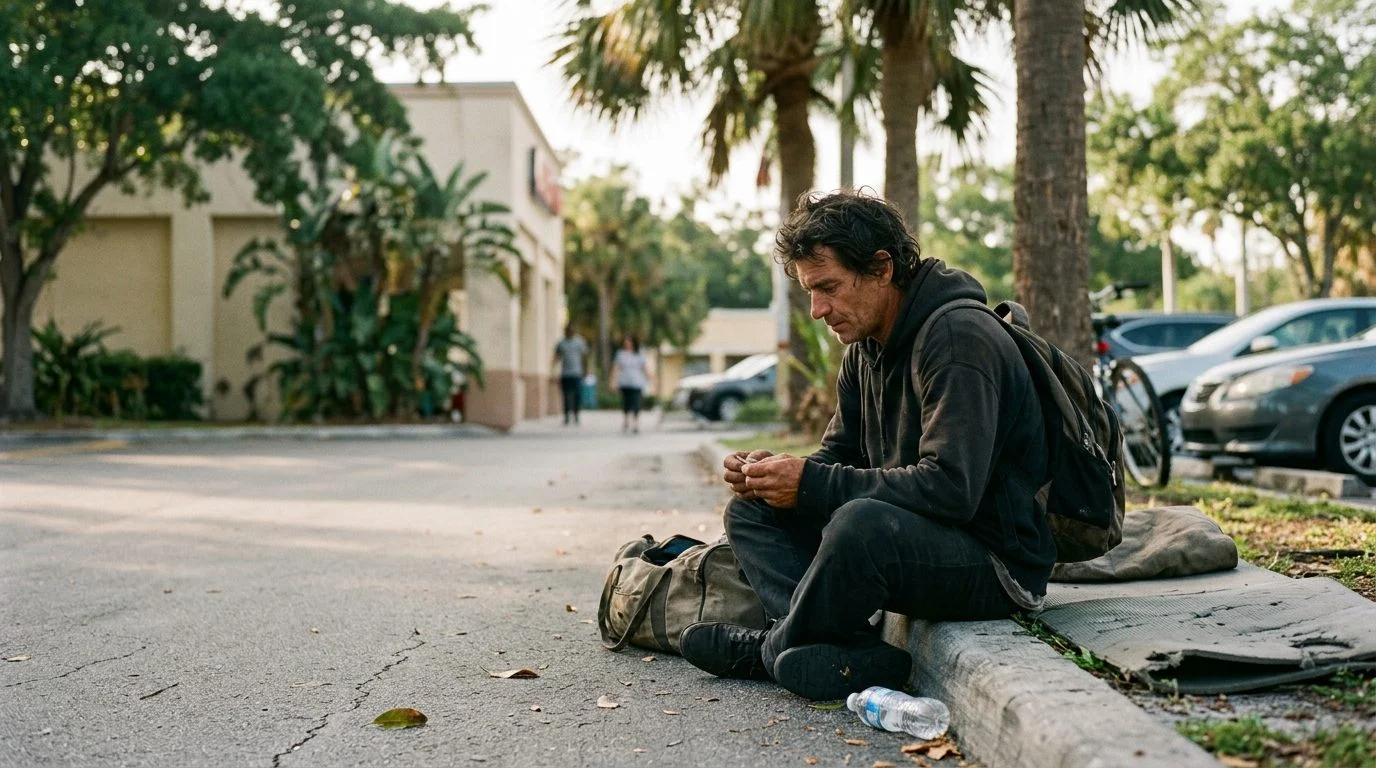
Where You Are Right Now: A Homeless Adult Child Who Keeps Using Drugs
Your adult child may be sleeping in a car, a shelter, or on the street. You may have called for help, sat in emergency rooms, and watched them leave with nothing changed. You’re tired, scared, and not sure what the law allows.
Your biggest fears are probably clear. You worry about lasting harm, dangerous choices, someone taking their money, and the next crisis. Those fears are reasonable. Florida has a court process built for families in this situation.
So here is the core question: can you seek treatment when your adult child refuses it? In many cases, yes. But the court must make specific findings first. For the broader picture, read our involuntary commitment for addiction guide.
If your adult child is homeless and using drugs, you don't have to figure out the court process alone. Reach out to Robinson Casey to talk it through. Talk it through with our team — the first consultation is free, confidential, and carries no obligation.

Can a Family Member Start a Marchman Act Case in Florida?
A family member can start the case by filing a petition with the court. Under Fla. Stat. § 397.68112, an adult respondent’s petition may be filed by a relative, a spouse or legal guardian, a service provider, or an adult with direct personal knowledge of the person’s substance abuse and prior treatment.
Location matters. Under Fla. Stat. § 397.681, the petition is filed with the clerk in the county where the person is located. However, in J.P. v. J.N., the filing of the petition in the wrong county did not divest the circuit court in Putnam County of jurisdiction. A petition filed in the wrong county is a venue problem, not a loss of the court’s power to hear the case.
Filing is free. The clerk may not charge a fee for filing the petition under § 397.681.
See Fla. Stat. § 397.68141. See Fla. Stat. § 397.68151.
What a Court Looks for Before Ordering Treatment
A judge can order treatment only when the legal conditions are proved by clear and convincing evidence. That is a high bar. See Fla. Stat. § 397.697.
Under Fla. Stat. § 397.675, the court looks for a good faith reason to believe the person is substance abuse impaired, or has a substance use disorder and a co-occurring mental health disorder. The person must also have lost the power of self-control over substance use. Then one of two things must be shown. Either the person cannot understand the need for help and make a rational choice about it. Or the person is likely to neglect themselves or refuse care, which poses a real and present threat of substantial harm to their well-being and cannot be avoided through willing, able, and responsible family members or friends or other services; or there is a substantial likelihood that the person has inflicted, or threatened or attempted to inflict, or is likely to inflict, physical harm on themselves or another.
Facts like repeated overdoses, hospital visits, and unsafe living conditions matter here. A refusal of help alone is not enough. The statute says mere refusal does not prove a lack of judgment.
Many people who use drugs also have a mental health condition. MedlinePlus notes these conditions are usually best treated at the same time.
Family testimony matters. Family members who know the person’s history can describe facts showing a good faith reason to believe the person is substance abuse impaired.
The petitioner must present the case. In J.C. v. State, the Fifth District reversed when the trial judge questioned the only witness while the petitioner was absent. A Fourth District case reached a different result, so this rule is Fifth District law, not statewide. Whether a given case meets these standards depends on the facts. No one can predict how a judge will rule.
What Your Family Should Document Before Speaking With a Lawyer
Keep a dated written record before you go to court. Note the date, what happened, who was there, and what your loved one needed. Include emergency room and hospital visits, police or shelter contacts, and refused medications. Also note any money or property taken or at risk.
Judges look for a pattern, not one bad day. Dated facts show the pattern. Summaries from memory tend to blur it.
Write what you saw, not labels. Keep notes factual and respectful. Your loved one may read them someday.
Treatment records have federal protection. Under 42 C.F.R. § 2.13, substance use disorder records may be used or disclosed only as the rules allow. Those limits apply even when the person asking says they already have the information. Bring any records questions to your lawyer.
When Guardianship Is a Separate Question for Your Family
A Marchman case deals with treatment. Guardianship deals with who makes decisions when an adult cannot safely handle housing, money, medical care, or daily life. These are two different tools. A family may need one, the other, or both.
Robinson Casey handles plenary guardianship, limited guardianship, mental health guardianship, and emergency temporary guardianship. Each has different scope and court steps.
Emergency temporary guardianship is the fastest option. Under Fla. Stat. § 744.3031, the court must find imminent danger to health or safety, or property at risk of being wasted, misappropriated, or lost. Fla. Stat. § 744.3031 reads: “The court must specifically find that there appears to be imminent danger that the physical or mental health or safety of the person will be seriously impaired or that the person’s property is in danger of being wasted, misappropriated, or lost unless immediate action is taken.” Its authority expires 90 days after appointment or when a guardian is appointed, whichever comes first. It can be extended for another 90 days if the emergency still exists.
For a regular incapacity case, Fla. Stat. § 744.331 requires the court to appoint a lawyer for the alleged incapacitated person. Each member of the examining committee must file his or her report with the clerk of the court within 15 days after appointment. One member must be a psychiatrist or other physician.
The right tool turns on your loved one’s ability to decide and on what your family needs protected. Families in Miami-Dade and across South Florida often have questions about local court steps.
Protecting Your Loved One’s Rights While Your Family Acts
Your loved one keeps important rights during the case. The respondent has the right to counsel at every stage, although the respondent may waive that right if present and the court finds the waiver is made knowingly, intelligently, and voluntarily, and a respondent who desires counsel and cannot afford a private lawyer has the right to court-appointed counsel.
The respondent also gets a copy of the petition and notice of the hearing. See Fla. Stat. § 397.68151.
Know the limits on treatment orders. A court may order involuntary treatment for no more than 90 days. Renewal can be requested before that period ends if the conditions continue. See Fla. Stat. § 397.697.
Keeping the focus on safety and stability helps the process stay on track.
Quick Answers
Can a family get treatment for a homeless adult using drugs in Florida?
Yes. A family member can file a Marchman Act petition, and a judge decides after a hearing.
Can a homeless adult using drugs be the subject of a Marchman Act petition?
Yes. The petition goes to the county where the person is physically located when it is filed.
Does the person get a lawyer?
Yes. The respondent has the right to counsel at every stage, unless the respondent waives it while present in court and the court finds the waiver is made knowingly, intelligently, and voluntarily; a respondent who cannot afford a private lawyer has the right to court-appointed counsel, and if the court believes the respondent needs or desires counsel, it must appoint one even without regard to the respondent’s wishes.
How long can a court order treatment?
A treatment order can last up to 90 days, and renewal can be requested before that period ends.
Not sure what your next step is?
Talk it through with our team — the first consultation is free, confidential, and carries no obligation.

Talk With Robinson Casey About Your Family’s Situation
If your adult child is homeless and using drugs, you don’t have to work out the legal path alone. Richard J. Casey III, Esq. is the responsible lawyer for this page.
Your first consultation is free, confidential, and comes with no obligation to continue.
Call (561) 849-4700 or use our contact page to talk through your loved one’s situation.
Why Families Contact Robinson Casey
A Focused Practice
Our practice focuses on Marchman Act petitions and guardianship matters, so our work centers on the situations families like yours face.
A Confidential First Conversation
Your initial consultation is free, confidential and carries no obligation to continue.
Support for Your Family
Our team and support staff help you understand the process and what to expect as your matter moves forward.
Reach Us Directly
Call (561) 849-4700 or request a consultation to talk through your family's situation.
Don't Wait Until It Becomes a Crisis
When a loved one is living on the street and using drugs, the situation can change quickly. Talking with a Florida attorney early gives your family more options to consider.
Ways We Help Families
Marchman Act Attorney
Petitions for court-ordered assessment and treatment for an adult struggling with substance use.
Involuntary Commitment for Addiction
Guidance on involuntary commitment for addiction when a family believes their loved one cannot make safe decisions.
Emergency Temporary Guardianship
Help seeking short-term court protection when an adult is at immediate risk and needs urgent decisions made.
Guardianship Attorney
Plenary, limited and mental health guardianship matters handled with attention to the person's needs and the family's goals.