
Marchman Act & Guardianship | Miami-Dade & South Florida
Clear Guidance for Families Facing Marchman Act and Guardianship Matters
Robinson Casey focuses on Marchman Act petitions and guardianship cases for families across South Florida and statewide. Your first consultation is free, confidential, and carries no obligation to continue.
By Richard J. Casey III, Esq. · Published October 30, 2026
When Your Loved One Can No Longer Keep Themselves Safe
If your loved one has both an addiction and a mental health condition, Florida law may give your family a court path to protect them. The two tools that fit most of these cases are the Marchman Act for substance use and guardianship for decisions a person can no longer make safely.
You may be living through a cycle of hospital stays. Your loved one may refuse medical care, lose money to others, or lose their place to live. Each crisis can feel like the one before something worse.
This page helps families who need a lawyer for addiction and mental illness involuntary treatment Florida. It explains both tools in plain words and shows how they can work together. Robinson Casey focuses only on Marchman Act petitions and guardianship matters for families across South Florida and statewide. For a broader look at involuntary care for addiction, read our involuntary commitment for addiction guide.
If your loved one is refusing care, losing money, or cycling through crises, we're ready to review your family's situation with you and talk through the legal options. Talk it through with our team — the first consultation is free, confidential, and carries no obligation.

What Involuntary Treatment for Addiction and Mental Illness Means in Florida
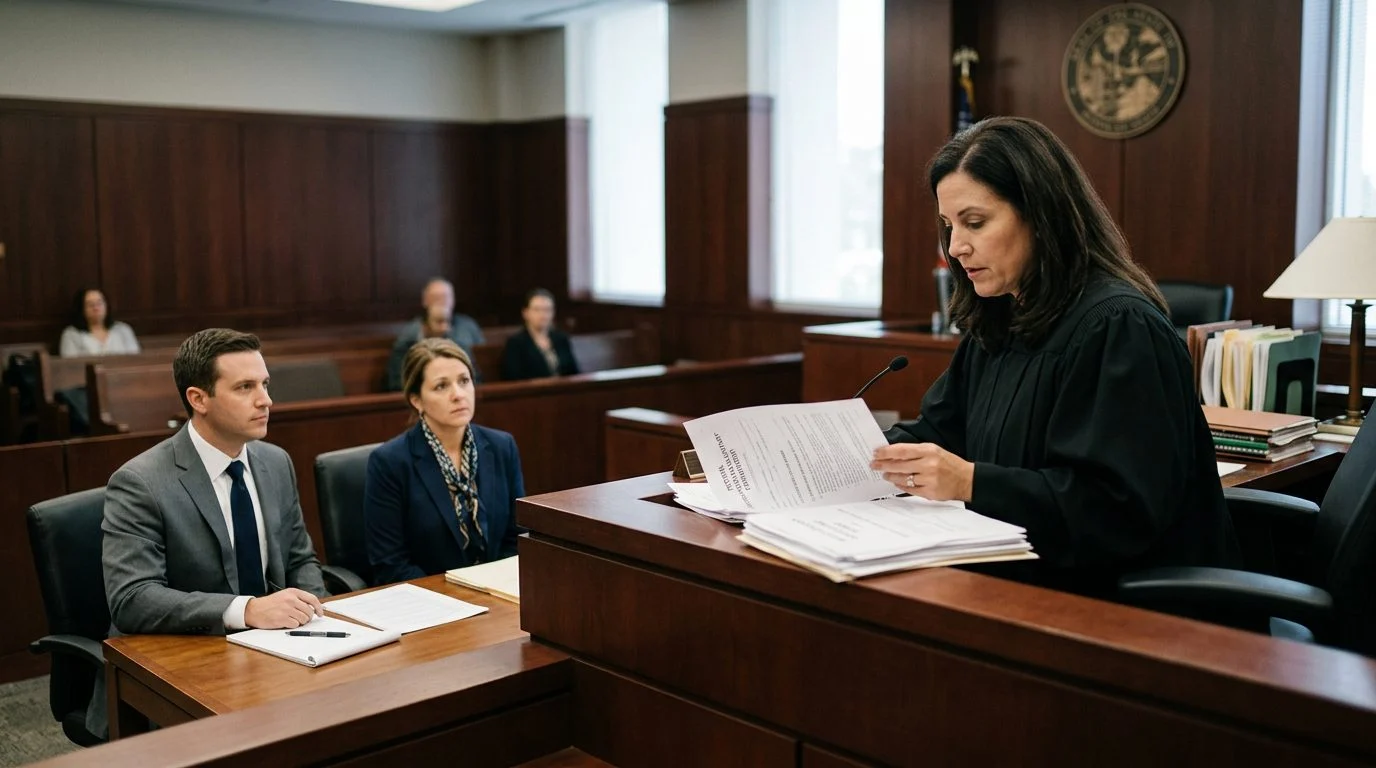
Involuntary treatment is a court-ordered assessment and treatment for a person who cannot accept help on their own. It is not a voluntary rehab admission. The person does not have to agree first.
Florida has two main laws here. The Marchman Act covers substance use impairment. The Baker Act, in Chapter 394, covers mental health examination. Many families face both problems at once.
Under the current text of Marchman Act admission criteria, a person may qualify if there is good faith reason to believe they are substance abuse impaired. A co-occurring mental health disorder also counts. The impairment must have caused them to lose self-control with respect to substance use.
Or they must be likely to neglect themselves, a neglect that poses a real and present threat of substantial harm and that is not apparent to be avoidable through willing, able, and responsible family members or friends or other services, or there is a substantial likelihood they have inflicted, threatened, or attempted to inflict, or unless admitted are likely to inflict, physical harm on themselves or another.
Facts decide which path fits. A case starts with the person’s history, their current crisis, and what has already been tried. For emergency order detail, see our Marchman Act ex parte order guide.
Who Can File a Marchman Act Petition and When
A family member can often file. For an adult, a petition may be filed by a spouse or legal guardian, any relative, a service provider, or an adult with direct personal knowledge of the person’s substance use and past treatment. That is set out in Marchman Act petitioners. Adult children and siblings often fit that description.
The petition goes to the clerk of the court in the county where the person is physically located, under Marchman Act jurisdiction. Location matters.
The petition is filed with the clerk of the court in the county where the person is located. It must explain why the petitioner believes the person is substance abuse impaired, why the person has lost self-control over substance use, and either the risk of physical harm or the impaired judgment behind their refusal of care, as set out in § 397.68141. A recent professional exam may be attached, per petition contents.
In an emergency, the court can act fast. Under ex parte assessment and stabilization, the court may enter an order for assessment based on the petition alone. In D.H. v. K.J.R., an appeals court held an ex parte order was wrongly entered when the petition did not establish that.
What the Court Looks At, Including Co-Occurring Mental Health Conditions
The court looks at the evidence and decides whether the legal conditions are proved. The court may order treatment for up to 90 days only if the conditions are proved by clear and convincing evidence, per court orders for involuntary services.
The court hears all relevant evidence. That can include testimony from family members who know the person’s history and how it connects to their current condition. The court also reviews the clinical assessment results, under hearing on the petition.
A person generally cannot be ordered into treatment without a clinical assessment. Fla. Stat. § 397.6957 reads: “(b) A respondent may not be involuntarily ordered into treatment under this chapter without a clinical assessment being performed, unless he or she is present in court and expressly waives the assessment.” If a mental illness beyond substance use appears, the court may start an examination under Chapter 394 (same source).
The petitioner carries the burden of proof. The Fourth District later certified conflict with Fifth District decisions on whether a court may question a witness when the petitioner is absent, in J.J.J. v. D.G.. Robinson Casey can help you sort out how these rules apply to your facts.
How the Process Works, Step by Step
A Marchman Act case usually moves through five stages. Timing depends on the county, the court’s calendar, and the facts.
- Confidential review. You share your loved one’s history, the current crisis, and what you want to protect.
- Record gathering. You collect hospital and treatment records, incident reports, and a timeline of money or housing problems.
- Filing. The petition goes to the clerk in the county where the person is located. If facts show imminent danger, an emergency request can be included.
- Notice and hearing date. The court must schedule a hearing within 10 court working days unless a continuance is granted, per court duties.
- Hearing and order. If the court orders treatment, it may last up to 90 days. A renewal may be requested before that period ends.
Guardianship When Decisions Can No Longer Be Made Safely
Guardianship is a court appointment that gives someone legal authority to make decisions for an adult found incapacitated. Florida law covers it in Chapter 744. The petition must say whether plenary or limited guardianship is wanted, per guardianship petition contents.
A limited guardianship covers specific decisions and leaves the person other rights.
In an urgent situation, the court can appoint an emergency temporary guardian. See emergency temporary guardianship. Notice must be served at least 24 hours before the hearing, unless the petitioner demonstrates that substantial harm to the alleged incapacitated person would occur if the 24-hour notice is given. That authority expires after 90 days or when a guardian is appointed. It can be extended 90 days if the emergency still exists.
The court must also appoint an examining committee within 5 days. One member must be a psychiatrist or other physician, per incapacity procedures.
A person under guardianship keeps important rights. These include an annual review of the guardianship report and plan, and restoration to capacity at the earliest possible time, per rights of incapacitated persons. A guardian also may not, without first obtaining specific authority from the court as described in s. 744.3725, commit the ward to a facility, institution, or licensed service provider without a formal placement proceeding, pursuant to chapter 393, chapter 394, or chapter 397, as set out in Fla. Stat. § 744.3215.
Not sure what your next step is?
Talk it through with our team — the first consultation is free, confidential, and carries no obligation.
Why Families Work With Robinson Casey
Robinson Casey focuses only on Marchman Act petitions and guardianship matters. Because the practice is limited to these areas, consultations and filings center on these matters.
Richard J. Casey III, Esq. is the lawyer responsible for this page. Our team includes support staff who assist with records, filings, and scheduling.
Matters handled include Marchman Act petitions, emergency ex parte requests, involuntary commitment for addiction, emergency temporary guardianship, plenary and limited guardianship, and mental health guardianship.
The first consultation is free, confidential, and comes with no obligation to continue.
Common Questions Families Ask
Is a Marchman Act order the same as rehab?
No. Once the court finds by clear and convincing evidence that the conditions for involuntary treatment services exist, it can order involuntary treatment services from a licensed provider for up to 90 days, and the setting follows the court’s order.
Does my loved one get a lawyer?
Yes. A respondent has the right to counsel at every stage of a judicial proceeding relating to a petition for involuntary treatment for substance abuse impairment, though the respondent may waive that right if present and the court finds the waiver is made knowingly, intelligently, and voluntarily, and a respondent who is unable to afford private counsel has the right to court-appointed counsel (Fla. Stat. § 397.681).
Can we use the Marchman Act and guardianship together?
Sometimes. They address different needs, so the facts decide which fits.
How soon is the hearing?
The court must schedule it within 10 court working days unless a continuance is granted.
What if my loved one refuses to cooperate?
The respondent receives notice and may be heard. The court decides the case on the evidence.
Can a lawyer promise a result?
No lawyer can promise how a court will rule. We present the facts clearly and accurately.

Talk With Robinson Casey About Your Loved One’s Situation
If your loved one is refusing care, losing money, or cycling through hospital stays, don’t wait for the next crisis. Call Robinson Casey at (561) 849-4149 or request a consultation to review your family’s options under the Marchman Act and Florida guardianship law.
Matters We Handle
Marchman Act & Involuntary Commitment for Addiction
Petitions for involuntary treatment services for a loved one whose substance use puts them or others at risk. We guide families through each step of the process.
Plenary and Limited Guardianship
Guardianship matters that address the personal and financial needs of an adult who can no longer make certain decisions. We help families weigh the options and choose the structure that fits.
Emergency Temporary Guardianship
Urgent requests for temporary guardianship when an adult faces immediate risk. Our team responds quickly when time matters most.
Mental Health Guardianship
Guardianship matters involving an adult with a mental health condition. We explain the court process in plain language so you know what to expect.
Why Families Turn to Robinson Casey
A Focused Practice
Robinson Casey limits its practice to Marchman Act petitions and guardianship matters, keeping our attention on these cases.
Time-Sensitive Matters
Many of these situations move quickly. Our team treats every call with urgency and works to understand your timeline.
Plain-Language Guidance
We explain each step clearly, so you can make informed decisions for yourself and your loved one.
Confidential Consultations
Your first consultation is free, confidential, and carries no obligation to continue.
South Florida and Statewide
We represent families in Miami-Dade and across South Florida, and we assist clients throughout Florida.
Do Not Wait if Someone Is in Danger
If someone is in immediate danger, call 911 first. Then contact Robinson Casey as soon as possible to discuss a Marchman Act petition or emergency temporary guardianship.