
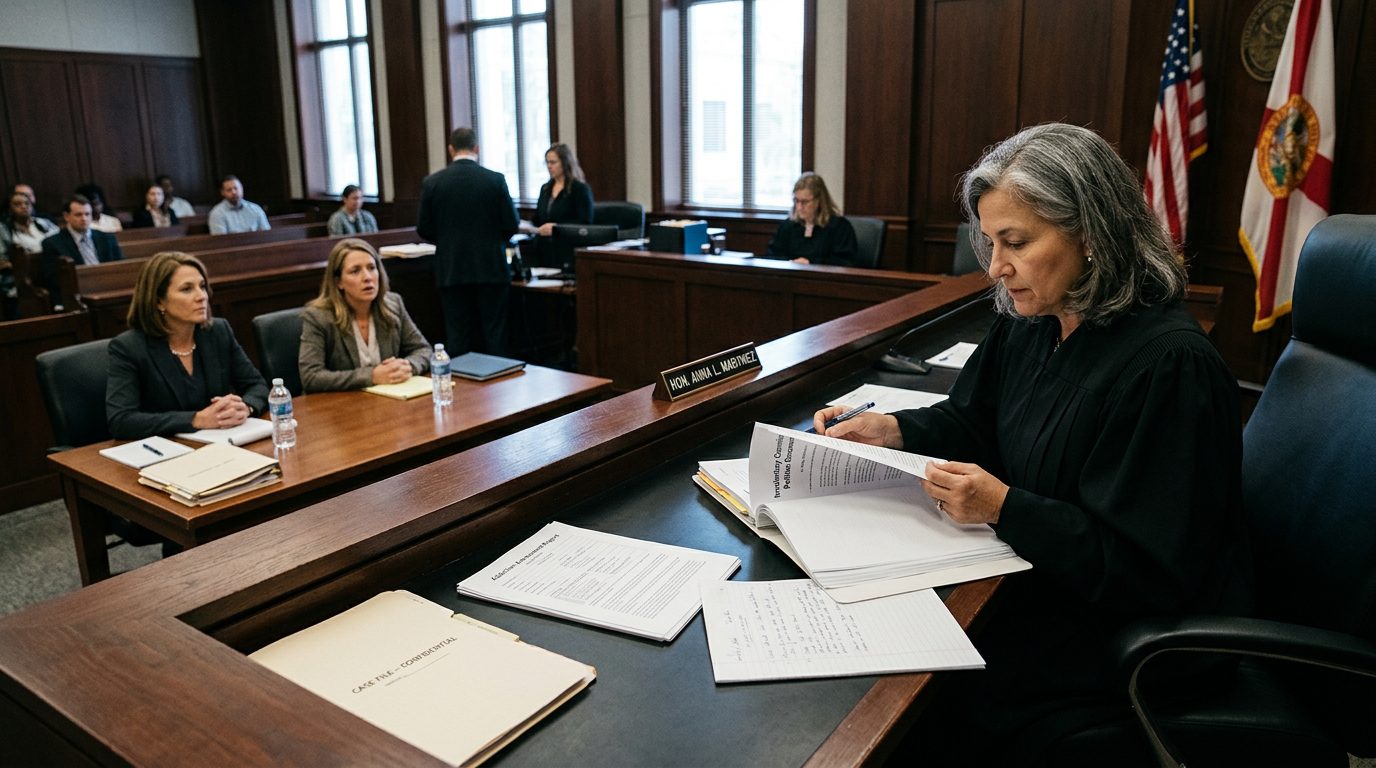
Involuntary Commitment for Addiction
Florida Involuntary Commitment for Addiction: What It Costs and How Long It Takes
Navigate the legal process for addiction treatment commitment with clear guidance on timelines, fees, and next steps.
By Richard J. Casey III, Esq. · Published September 28, 2026
Involuntary Commitment for Addiction in Florida: Costs, Timeline & What to Expect
Involuntary commitment for addiction in Florida typically costs $2,300–$5,300 in legal fees and court costs upfront, with the full process taking 1–3 weeks from petition filing to treatment start. The actual total investment depends on attorney complexity, your county, and the treatment facility you choose.
If you’re considering this path for a loved one, you need concrete numbers and realistic timelines—not vague promises. This guide breaks down what involuntary commitment actually costs in Florida, how long it takes, and what happens at each step.
Not sure what your next step is?
Talk it through with our team — the first consultation is free, confidential, and carries no obligation.

What Is Involuntary Commitment for Addiction in Florida?
Involuntary commitment for addiction is a court-ordered legal process that allows family members or concerned parties to petition a judge to mandate evaluation and treatment for someone whose substance use disorder poses imminent danger to themselves or others, or who cannot care for themselves.
This process is grounded in Florida Statute Chapter 397, commonly called the Marchman Act. It applies to addiction involving alcohol, opioids, stimulants, and other controlled substances. Unlike voluntary treatment, which requires the person’s consent, involuntary commitment is court-ordered and does not require agreement from the respondent (the person being committed).
The process is civil, not criminal—its purpose is to connect someone to medical care, not to punish them.
Typical Costs: What You’ll Actually Pay
Understanding the full financial picture means breaking down legal costs, court fees, evaluation costs, and treatment facility costs separately. Here’s what families typically face:
Legal Fees
Attorney fees: $1,500–$3,500+
An attorney prepares your petition, files it with the court, coordinates service of process, and represents you at the hearing. Fees vary based on case complexity, whether the respondent contests the petition, and how many hearings are required. A straightforward case with no contestation costs less than a complex case requiring multiple court appearances.
Court and Filing Costs
Court filing fees: $200–$500
Each county clerk charges different fees. Miami-Dade, Broward, and Palm Beach counties have their own schedules. These fees are non-refundable, even if the court denies your petition.
Service of process: $100–$300
The respondent must be legally served with the petition and hearing notice. This is typically done by a process server or law enforcement. Cost depends on how easily the respondent can be located and served.
Evaluation Costs
Medical or psychiatric evaluation: $500–$1,500
Courts often require an independent medical or psychiatric evaluation to support the commitment order. If you arrange this evaluation before filing, you’ll pay the evaluator directly. Some facilities include this as part of their intake process after commitment.
Treatment Facility Costs
Inpatient residential treatment: $5,000–$30,000+ per month
This is typically the largest expense. Costs vary widely based on: – Level of care (detoxification, residential, intensive outpatient) – Length of stay – Facility amenities and location – Whether the facility accepts your insurance
Insurance Coverage
Some private insurance plans cover involuntary commitment evaluation and treatment; others do not. Florida Medicaid may cover portions of both the evaluation and treatment, depending on your loved one’s eligibility. Contact your insurance provider and the treatment facility before committing to understand your coverage.
Total First-Month Investment
Legal costs (petition through initial hearing): $2,300–$5,300
First-month total (legal + treatment start): $7,300–$35,300+
The wide range reflects the difference between a modest treatment facility and a high-end residential program.
Timeline: How Long Does the Process Take?
The involuntary commitment process in Florida is designed to move quickly. Here’s the realistic timeline:
Initial petition filing to first hearing: 3–7 days
Florida law requires expedited scheduling. Courts prioritize these cases because they involve potential danger.
Emergency ex parte hearing (optional): same day or next business day
If you can demonstrate imminent danger, a judge may hold a hearing without the respondent present and issue a temporary order for immediate evaluation. This accelerates the process.
Full hearing with respondent present: 5–10 days after filing
The respondent has the right to appear, present evidence, and contest the petition. This hearing is before a judge.
Court decision and order: same day or within 1–2 business days
The judge issues an order for evaluation, commitment, or dismissal.
Involuntary commitment duration: 5–21 days
The respondent is evaluated by medical professionals, stabilized (detoxification if needed), and a treatment plan is developed. The initial commitment is typically 5 days minimum; stabilization and planning can extend it to 21 days.
Transition to longer-term treatment: 1–3 days
If the court orders continued treatment, the respondent is transferred to an inpatient facility or outpatient program.
Total time from petition to treatment start: 1–3 weeks
Most cases move through this timeline. Delays occur if court calendars are full, the respondent is difficult to locate for service, or medical complexity requires additional evaluation.
Step-by-Step Process: What Happens and When
Step 1 – Consultation & Petition Preparation (1–3 days)
You meet with an attorney, describe the respondent’s addiction history and the danger they pose, and the attorney drafts a petition with supporting affidavits (sworn statements).
Step 2 – File Petition with Court (same day or next)
The attorney files the petition, pays court fees, and requests an expedited hearing.
Step 3 – Ex Parte Hearing (optional, 1–2 days)
If imminent danger is shown, a judge may hold a hearing without the respondent present and issue a temporary order for immediate evaluation and transport.
Step 4 – Service of Process (1–3 days)
Law enforcement or a process server delivers the petition and hearing notice to the respondent. The respondent must be served before the full hearing.
Step 5 – Full Hearing (3–10 days after filing)
You, the respondent, and your attorney appear before a judge. You present evidence of addiction and danger; the respondent has the right to legal counsel and may contest the petition.
Step 6 – Judge’s Order (same day or next)
The judge orders involuntary evaluation, involuntary commitment, or dismissal of the petition.
Step 7 – Evaluation & Stabilization (5–21 days)
The respondent is evaluated by medical professionals at a designated facility. Detoxification, medication, and treatment planning occur during this period.
Step 8 – Transition to Treatment (1–3 days)
If longer-term treatment is ordered, the respondent is transferred to an inpatient facility or outpatient program.
What Costs Vary and Why
Understanding cost and timeline variables helps you anticipate your own situation:
Attorney fees depend on: – Case complexity (straightforward vs. contested) – Whether the respondent contests the petition – Number of hearings required – County jurisdiction
Court fees vary by: – County (Miami-Dade, Broward, Palm Beach, and other counties have different clerk fee schedules)
Evaluation costs affected by: – Whether an independent evaluator is needed – Type of evaluation (medical vs. psychiatric) – Facility location
Treatment facility costs driven by: – Level of care (detox, residential, intensive outpatient) – Length of stay – Amenities and location – Insurance acceptance
Timeline variables: – Respondent’s cooperation and location – Court calendar availability – Whether an emergency ex parte hearing is granted – Medical complexity requiring extended evaluation
Not sure what your next step is?
Talk it through with our team — the first consultation is free, confidential, and carries no obligation.
What’s Included in the Legal Process
Robinson & Casey’s legal representation for involuntary commitment includes:
- Petition drafting: all required legal documents and affidavits
- Court filing and fees: submission and payment of filing costs
- Service of process coordination: arranging legal service on the respondent
- Representation at hearing: appearing with you, presenting evidence, cross-examining witnesses if needed
- Post-hearing orders: obtaining and explaining the judge’s order
What is NOT included: – Treatment facility costs – Medical evaluations beyond court-ordered assessment – Ongoing treatment after the commitment order
Why Robinson & Casey for Your Involuntary Commitment Matter
Focused practice. Robinson & Casey handles involuntary commitment for addiction and related guardianship matters exclusively—not as a side service. This focus means deep familiarity with Florida’s Marchman Act and court procedures.
Florida-wide service. Licensed to serve families across South Florida and statewide, with experience in Miami-Dade, Broward, Palm Beach, and other counties.
Expedited process. We understand urgent timelines and can move quickly when imminent danger is present. We’ve handled cases requiring same-day or next-day ex parte hearings.
Transparent pricing. We provide clear fee estimates upfront so you know the legal cost before proceeding.
Coordination with treatment. We’re familiar with major treatment facilities and can help guide your loved one’s transition after the court order.
Common Questions & Objections
Q: Can I get a refund if the court denies the petition?
A: Attorney fees are earned upon work performed; court filing fees are non-refundable. Discuss fee arrangements with your attorney upfront.
Q: Will my insurance cover the legal costs?
A: Typically no; legal fees are separate from medical and treatment costs. Some insurance may cover the treatment portion after commitment.
Q: What if the respondent contests the petition and we need multiple hearings?
A: Additional hearings may increase attorney fees. Discuss this scenario with your attorney during your consultation.
Q: How much will treatment cost after the commitment order?
A: Facility costs vary widely ($5,000–$30,000+ per month). Your attorney can provide referrals; contact facilities directly for pricing and insurance verification.
Q: Can I do this without an attorney?
A: You can file a petition yourself, but the process is complex, time-sensitive, and mistakes can delay or derail the case. Attorney representation significantly improves outcomes.
Q: What if the respondent lives out of state?
A: Florida courts can order commitment for Florida residents. If the respondent is out of state, jurisdiction and logistics are more complex—discuss this with your attorney.
Q: How long will my loved one stay committed?
A: Initial commitment is typically 5–21 days. Longer-term treatment depends on the court order and the respondent’s progress. The court can order renewal if needed.

Next Steps: Get Clarity on Your Situation
A consultation with Robinson & Casey will clarify the specific costs and timeline for your loved one’s situation. During the call, you’ll discuss the respondent’s addiction history, any imminent danger, your goals, and realistic legal fees and timing. The attorney can answer county-specific questions and explain how your circumstances affect cost and timeline.
If you’re weighing whether to pursue involuntary commitment for a family member struggling with addiction, you need clear answers about what it costs and how long it takes—and families facing this decision reach out to Robinson & Casey regularly to get those answers. Schedule a consultation today or call (561) 849-4149 to speak with an attorney who handles these cases every day.
The Involuntary Commitment Process at a Glance
Emergency Petition Filing
An emergency petition for involuntary commitment can be filed immediately when a person poses an imminent danger due to substance abuse. Court filing fees apply; the process typically begins within hours of filing.
Court Hearing & Timeline
Florida law requires a hearing within a specific timeframe after the petition is filed. The court evaluates evidence and determines whether involuntary commitment is warranted. Attorney representation helps present your case clearly.
Legal Fees & Costs
Attorney fees vary based on case complexity and the services required. Court filing fees are separate and non-refundable. Discuss your fee arrangement with your attorney before proceeding.
Treatment & Commitment Duration
If the court orders commitment, the person enters a treatment facility. The length of stay depends on the facility's assessment, the individual's progress, and the court's order. Treatment costs are typically separate from legal fees.
Why Robinson & Casey Handles Your Involuntary Commitment Petition
Focused Practice in Addiction & Guardianship Law
Robinson & Casey focuses exclusively on Marchman Act petitions and guardianship matters. We handle involuntary commitment cases for families across South Florida and statewide.
Urgent Response When Time Matters
Emergency situations demand immediate action. We understand the urgency of addiction-related crises and work quickly to file petitions and prepare for court hearings.
Clear Guidance on Your Options
We explain your legal options, the costs involved, and what to expect at each stage—so you can make informed decisions for your family member.
Direct Access to Your Attorney
When you call Robinson & Casey, you reach a lawyer who knows your case and can answer your questions about timelines, fees, and next steps.
Important: Refunds and Insurance Coverage
Attorney fees are earned upon work performed and are generally not refundable if the court denies the petition. Court filing fees are non-refundable. Legal fees are separate from medical and treatment costs; health insurance typically does not cover attorney fees. Discuss all costs and fee arrangements with your attorney upfront.
Common Questions About Involuntary Commitment Costs & Timeline
How quickly can a petition be filed?
Emergency petitions for involuntary commitment can be filed immediately when there is imminent danger. The filing process itself can happen within hours, but the court hearing follows Florida's statutory timeline.
What are the typical legal costs?
Attorney fees depend on the complexity of your case and the services needed. Court filing fees are separate. Your attorney will explain the full cost structure before you proceed.
How long does the court process take?
Florida law sets specific timeframes for hearings after a petition is filed. The exact timeline depends on the court's schedule and case circumstances. Your attorney will keep you informed of all deadlines.
What happens if the court denies the petition?
If the court denies the petition, attorney fees are earned for work performed and are not refundable. Court filing fees are also non-refundable. Discuss possible next steps with your attorney.