
Involuntary Commitment
Understanding the Florida Involuntary Commitment Hearing Process
A clear guide to what happens at your hearing and how to prepare
By Richard J. Casey III, Esq. · Published October 01, 2026
Involuntary Commitment Hearing Process in Florida: What to Expect
An involuntary commitment hearing is a civil court proceeding where a judge decides whether someone struggling with addiction meets the legal criteria for court-ordered treatment under Florida law. The hearing is part of the Marchman Act process, Florida’s statute for involuntary substance abuse treatment. Understanding what happens at each stage—from petition filing through the judge’s ruling—helps families prepare and know what to expect.
If you're considering involuntary commitment for someone struggling with addiction, or you're preparing for a hearing, reach out—families navigating this process contact us regularly to understand their options. Talk it through with our team — the first consultation is free, confidential, and carries no obligation.

Understanding the Involuntary Commitment Hearing in Florida
The involuntary commitment hearing is where a court determines whether someone meets the legal criteria for court-ordered addiction treatment. The judge reviews evidence from both the petitioner (the person filing) and the respondent (the person named in the petition) to decide whether involuntary commitment is appropriate. This hearing is the central decision point in the entire Marchman Act process.
Step 1: The Petition Is Filed
A family member, healthcare provider, or other authorized person files a petition with the circuit court in the county where the person resides. The petition must describe specific facts showing the person meets the legal criteria: substance abuse disorder, inability or unwillingness to seek voluntary treatment, and likelihood of serious harm without treatment.
The court reviews the petition to determine if there is probable cause to proceed. If probable cause is found, the court schedules a hearing, typically within a short timeframe. In emergency situations, the court may issue an ex parte order (a temporary order issued without the respondent present) to authorize immediate assessment and stabilization.
Step 2: Notice Is Served to the Respondent
The person named in the petition must be notified of the hearing and given a copy of the petition. Notice must be provided in time for the respondent to prepare a defense, usually at least a few days before the hearing. The respondent has the right to be present at the hearing, to have an attorney represent them, and to contest the petition.
Step 3: Pre-Hearing Preparation
The petitioner (or their attorney) gathers evidence: medical records, statements from family or treatment providers, documentation of substance use, and any prior treatment attempts. The respondent may prepare a defense, gather witnesses, or retain an attorney to represent them.
The court may order an evaluation by a physician or mental health professional to assess whether the legal criteria are met. This evaluation report is typically presented at the hearing and helps the judge make an informed decision.
Step 4: The Hearing Takes Place
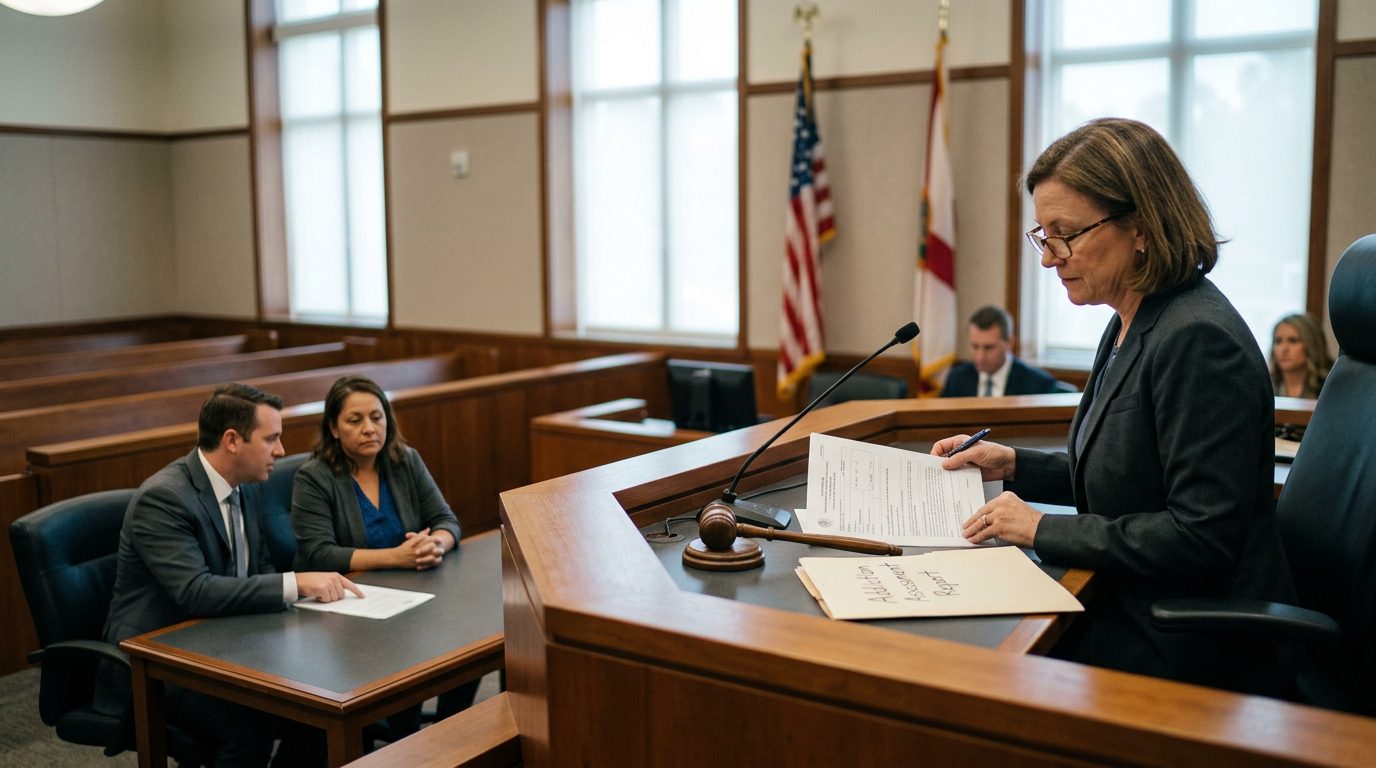
The hearing is held in circuit court, typically in a courtroom or via video conference. The judge presides; both the petitioner and the respondent (or their attorneys) present evidence and testimony.
The petitioner presents facts supporting the petition: evidence of substance abuse, failed treatment attempts, inability to care for self, or risk of harm to self or others.
The respondent has the opportunity to testify, present witnesses, and challenge the evidence. A physician or evaluator may testify about their assessment of the respondent’s condition and whether the legal criteria for commitment are met.
The standard of proof is clear and convincing evidence—a high legal standard that requires the judge to be substantially certain the criteria are met.
Not sure what your next step is?
Talk it through with our team — the first consultation is free, confidential, and carries no obligation.
What Happens at the Hearing: Key Elements
The judge asks questions to understand the respondent’s substance use history, prior treatment, current condition, and ability to care for themselves. Testimony focuses on whether the respondent meets the three legal criteria under Florida Statute § 397.675:
- Substance abuse disorder: The person has a diagnosable substance abuse disorder.
- Inability or unwillingness to seek treatment: The person is unable or unwilling to seek voluntary treatment.
- Likelihood of serious harm: Without treatment, the person is likely to suffer serious harm to their health, safety, or welfare.
The respondent may speak on their own behalf or remain silent. The hearing is typically brief—often 15 to 45 minutes—but the judge has all the information needed to decide.
How Long Does the Involuntary Commitment Hearing Process Take?
From petition filing to hearing: typically 3 to 5 business days, though emergency hearings can occur within 24 hours.
The hearing itself: usually 15 to 45 minutes.
The judge’s ruling: The judge may issue a decision immediately or take time to issue a written order within a few days.
What Are the Legal Requirements for Involuntary Commitment in Florida?
Under the Marchman Act, a person may be involuntarily committed if the court finds clear and convincing evidence that all three criteria are met:
- The person has a substance abuse disorder.
- The person is unable or unwilling to seek voluntary treatment.
- Without treatment, the person is likely to suffer serious harm to their health, safety, or welfare.
The court must find all three criteria met before ordering involuntary commitment. The burden of proof is high—clear and convincing evidence—which protects the respondent’s rights while allowing the court to act when necessary.
Step 5: The Judge’s Decision
If the judge finds clear and convincing evidence that all criteria are met, the court orders involuntary commitment. The order specifies the type of commitment (emergency, temporary, or extended) and the treatment facility where the respondent will be admitted.
If the judge finds insufficient evidence, the petition is dismissed and the respondent is released. The respondent has the right to appeal the decision if they believe the judge made an error.
After the Court Hearing: What Happens Next?
If committed: The respondent is transported to a designated treatment facility and begins an intake and assessment process. The facility develops a treatment plan based on the respondent’s needs and the court’s order.
The respondent may have the right to a follow-up hearing after a set period—typically 5 days for emergency commitment or 21 days for extended commitment. At these hearings, the respondent can challenge the commitment or request release.
If not committed: The respondent is released, and the family may explore other options or seek legal guidance on next steps.
If you're considering involuntary commitment for someone struggling with addiction, or you're preparing for a hearing, reach out—families navigating this process contact us regularly to understand their options. Talk it through with our team — the first consultation is free, confidential, and carries no obligation.
Your Role as a Family Member or Petitioner
You may testify at the hearing about your observations, concerns, and the respondent’s behavior. You can provide documentation—medical records, treatment history, incidents of harm or danger—to support your case.
An attorney can help you present your evidence clearly and ensure all documentation is properly introduced to the court. You do not need to be an attorney to file a petition, but legal guidance strengthens your case and protects your rights throughout the process.

Frequently Asked Questions
What rights does the respondent have at the hearing?
The respondent has the right to be present, to have an attorney represent them, to testify, to present witnesses, and to challenge the evidence presented by the petitioner.
Can the respondent appeal the judge’s decision?
Yes, the respondent has the right to appeal an involuntary commitment order if they believe the judge made an error in applying the law or evaluating the evidence.
What if I don’t have all the evidence ready before the hearing?
You can present the evidence you have at the hearing. The judge will consider all evidence presented by both sides before making a decision.
Does the respondent need an attorney?
The respondent has the right to an attorney. If they cannot afford one, they may request a public defender be appointed to represent them.
If you’re considering involuntary commitment for someone struggling with addiction, or you’re preparing for a hearing and want to understand your role and options, our team can walk you through the process and help you prepare. People in your situation reach out regularly—reach out to discuss what comes next.
Schedule a consultation or call us at (561) 849-4149 to speak with someone who handles these cases.
Key Stages of the Hearing Process
Petition Filing & Notice
A petition for involuntary commitment is filed with the court, and the respondent receives notice of the hearing. The respondent has the right to know the charges and the basis for the petition before the hearing takes place.
Pre-Hearing Rights
The respondent may retain an attorney to represent them, request a continuance, and obtain copies of the petition and supporting documents. Legal representation is critical at this stage to prepare a defense.
The Hearing
The petitioner presents evidence, witnesses testify, and the respondent has the right to be present, testify, present witnesses, and cross-examine the petitioner's witnesses. The judge hears both sides before making a determination.
The Judge's Decision
The judge issues an order based on the evidence presented. If involuntary commitment is ordered, the respondent has the right to appeal and to request a new hearing within a specified timeframe.
Your Rights During an Involuntary Commitment Hearing
Right to Legal Representation
You have the right to be represented by an attorney throughout the hearing process. An attorney can help protect your rights and present your side of the case effectively.
Right to Testify and Present Evidence
You may testify on your own behalf, present witnesses, and introduce documents or other evidence to challenge the petitioner's claims.
Right to Review the Petition
You have the right to see the petition and supporting documents before the hearing so you can prepare your response.
Right to Challenge Evidence
You can cross-examine the petitioner's witnesses and question the evidence presented against you.
Right to Appeal
If the judge orders involuntary commitment, you have the right to appeal the decision and request a new hearing.
Time Matters in Involuntary Commitment Cases
The hearing process moves quickly, and deadlines apply at each stage. Having an attorney from the start ensures you meet all procedural requirements and protect your rights from the moment the petition is filed.
Common Questions About the Hearing Process
What evidence will be presented?
The petitioner typically presents medical or psychological evaluations, witness testimony, and documentation of the respondent's behavior or statements. You have the right to challenge this evidence and present your own.
Can I have someone support me at the hearing?
Yes. You can have an attorney represent you, and you may also have family members or other supporters present. An attorney ensures your legal rights are protected throughout the process.
What happens if the judge orders commitment?
If the judge finds that involuntary commitment is warranted, an order is issued. You retain the right to appeal and to request a new hearing within the timeframe set by Florida law.
How long does the hearing take?
Hearings vary in length depending on the complexity of the case and the amount of evidence presented. Your attorney can help you prepare for what to expect.
How Robinson & Casey Can Help
Case Preparation & Strategy
We review the petition, gather evidence, and develop a strategy to present your side at the hearing.
Representation at Your Hearing
We represent you before the judge, cross-examine witnesses, and advocate for your rights throughout the process.
Protection of Your Legal Rights
We ensure all procedural requirements are met and that your rights are upheld at every stage of the involuntary commitment process.
Immediate Legal Guidance
We provide clear, direct answers to your questions and help you understand what to expect before, during, and after the hearing.
Ready to Protect Your Rights?
Related practice areas
- Involuntary Commitment for Addiction in Florida
- Involuntary Commitment for Addiction vs. Voluntary Treatment in Florida
- Involuntary Commitment Addiction Cost Breakdown Florida