
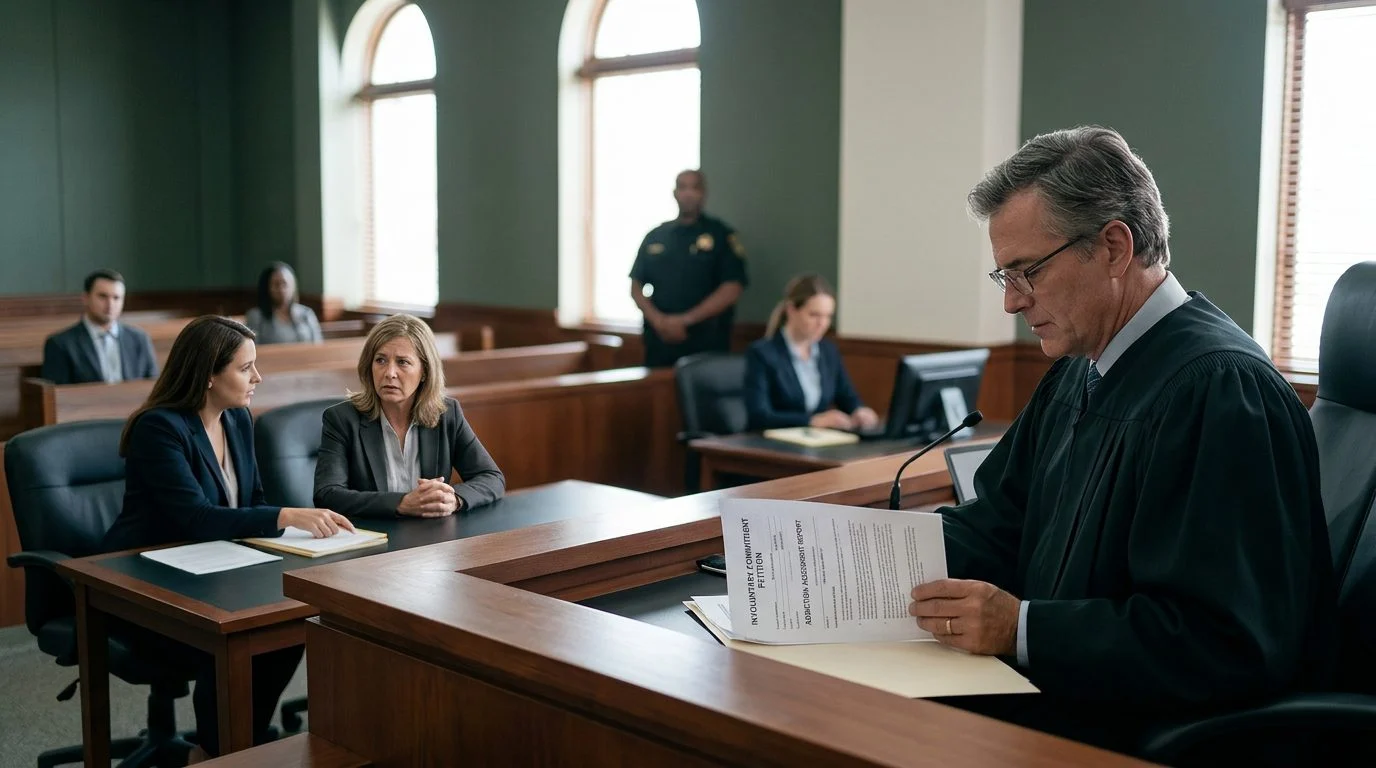
Miami-Dade & South Florida | Marchman Act
Involuntary Commitment for Drug Addiction in Florida
Robinson Casey focuses on Marchman Act petitions and guardianship matters for families across South Florida and statewide. Your first consultation is free, confidential, and carries no obligation to continue.
By Richard J. Casey III, Esq. · Published October 27, 2026
Involuntary Commitment for Drug Addiction in Florida: What You Need to Know
When someone you love struggles with addiction and refuses help, you may feel trapped between respecting their autonomy and fearing for their safety. Florida law provides a legal pathway called involuntary commitment, which allows courts to order treatment when specific conditions are met. Understanding how this process works—and what it requires—is the first step in deciding whether it’s right for your situation.
If you're facing a situation where a loved one refuses treatment and you're unsure whether involuntary commitment is the right step, our team can review your circumstances and guide you through the legal pathway. Talk it through with our team — the first consultation is free, confidential, and carries no obligation.

What Is Involuntary Commitment for Drug Addiction in Florida?
Unlike voluntary treatment, the person does not consent, but the commitment is authorized by law and approved by a judge. The purpose is to provide immediate access to medical and psychiatric care when addiction poses a danger to the person or others, or when they cannot care for themselves.
The Marchman Act sets out the criteria for involuntary admission for people who are substance abuse impaired or have a substance use disorder.
When Can Someone Be Involuntarily Committed for Drug Addiction in Florida?
The law does not permit involuntary commitment simply because someone uses drugs or refuses help. Instead, specific legal criteria must be met.
The person must demonstrate:
- Loss of self-control over substance use
- Either impaired judgment about the need for treatment, or a substantial likelihood of serious harm to themselves or others
For example, if someone is using intravenously in unsafe conditions, has overdosed recently, or is unable to eat or bathe, these facts may support involuntary commitment.
Who Can Petition for Involuntary Commitment?
Several categories of people can file a petition for involuntary commitment:
- Family members: spouse, parent, adult child, or sibling
- Healthcare providers and mental health professionals who have evaluated or treated the person
- Law enforcement officers who have direct knowledge of the person’s condition
- Other interested parties with documented direct knowledge
The petitioner must describe specific facts—what they observed, when they observed it, and how it demonstrates the legal criteria. A petition does not require the person’s consent or advance notice. The court can issue an order for evaluation and transport before the person even knows a petition has been filed.
The Involuntary Commitment Process in Florida
The process unfolds in steps, each designed to balance the need for urgent intervention with the person’s legal rights.
Step 1: Filing the Petition
A petition is filed with the court describing the person’s substance use, the specific behaviors or circumstances that demonstrate harm or danger, and the petitioner’s relationship to the person. The petition must be verified (signed under oath) and include the names and addresses of people with direct knowledge of the facts. Petitioners in Miami-Dade County can find filing information through the Miami-Dade Mental Health Court page.
Step 2: Ex Parte Order for Evaluation
A judge reviews the petition. If the judge finds probable cause that the legal criteria are met, an ex parte order (made without the person present) can be issued. This order authorizes law enforcement or a designated professional to transport the person to an evaluation facility. The person does not have to consent.
Step 3: Professional Evaluation
At the designated facility, a qualified professional (physician or mental health professional) evaluates the person’s condition, substance use history, medical status, and risk level. The facility must inform the person in writing of the reason for the evaluation and their rights.
Step 4: Observation and Assessment (Up to 5 Days)
During this time, the person has the right to an attorney and to contact family or friends.
Step 5: Hearing Before a Judge
The person has the right to be present, to have an attorney (court-appointed if unable to afford one), to present evidence, and to call witnesses. The court hears evidence about whether the legal criteria for continued commitment are met.
Step 6: Court Order and Treatment
If the judge finds that the criteria are met, an order for continued commitment is entered. The person remains in treatment. The duration depends on the person’s progress, the treatment plan, and the court’s order. Regular review hearings may be scheduled.
What Happens During and After Involuntary Commitment?
During involuntary commitment, the person receives medical evaluation, detoxification if needed, psychiatric assessment, and treatment planning. Treatment typically includes medication management, individual and group counseling, education about addiction, and discharge planning.
The person has the right to an attorney and to request a hearing to challenge the commitment at any time.
After commitment ends, follow-up care is crucial. The facility and court typically recommend outpatient treatment, counseling, support groups, or medication-assisted therapy to prevent relapse. Some people initially resist involuntary commitment but later engage meaningfully in treatment once they begin. Others may need additional support or a different treatment approach.
Not sure what your next step is?
Talk it through with our team — the first consultation is free, confidential, and carries no obligation.
Legal Rights During Involuntary Commitment
Florida law protects the rights of people in involuntary commitment:
- Right to written notice: The person must be informed in writing of the reason for commitment and the legal basis for it.
- Right to an attorney: A court-appointed attorney is assigned if the person cannot afford one. The attorney represents the person’s interests, not the family’s or the state’s.
- Right to a hearing: The person has the right to a hearing before a judge within a specified timeframe to contest the commitment.
- Right to present evidence: The person can call witnesses, present medical records, and challenge the facts alleged in the petition.
- Right to appeal: If the court orders commitment, the person can appeal the decision.
- Protection against indefinite detention: The person cannot be held without a court order or beyond the period authorized by law.
These rights exist to ensure that involuntary commitment is not misused and that the person’s interests are protected even when they cannot advocate for themselves.
Challenges and Considerations
Involuntary commitment is a serious legal step. It should be pursued only when the person meets the legal criteria—not simply because you are worried or frustrated.
Key considerations:
- Documentation matters: The court will scrutinize the facts. Vague concerns or secondhand reports are not enough. You must document specific behaviors, dates, and evidence of harm or danger.
- Family relationships may be strained: Some people initially feel angry or betrayed. Others, after receiving treatment, recognize that the intervention was necessary. Neither outcome can be promised in advance.
- Success depends on treatment quality and engagement: Involuntary commitment opens the door to treatment, but lasting recovery depends on the quality of care and the person’s willingness to participate, especially after the initial commitment period ends.
- Legal guidance is important: Filing a petition incorrectly or without sufficient evidence can result in dismissal. An attorney ensures the petition meets statutory criteria and is filed properly.
When to Seek Legal Help
If you are considering involuntary commitment, an attorney can help in several ways:
- Review your situation: An attorney can assess whether your circumstances meet Florida’s legal criteria for involuntary commitment.
- Prepare and file the petition: Proper drafting and filing increase the likelihood the court will accept the petition and issue an order.
- Protect your rights: Legal counsel ensures the process follows court rules and your interests are represented.
- Explore alternatives: An attorney can advise whether guardianship, conservatorship, or other legal tools might be appropriate for your situation.
Robinson & Casey focuses on Marchman Act petitions and guardianship matters. We understand the emotional weight of these decisions and the legal complexity involved. Whether involuntary commitment is the right path for your family, or whether another approach better fits your circumstances, we can guide you through the options.

FAQ
Can I force my family member into drug treatment in Florida?
Not simply by asking. The court decides, not you.
How long can someone be held on involuntary commitment?
If the court orders continued commitment, the duration depends on the treatment plan and the court’s order.
What if the person refuses to go to the evaluation facility?
Law enforcement can transport the person to the facility if an ex parte order has been issued by the court. The person cannot refuse once a court order is in place.
Can the commitment order be appealed?
Yes. The person has the right to appeal the court’s decision to a higher court. An attorney can assist with the appeal.
What happens after involuntary commitment ends?
The facility typically recommends outpatient treatment, counseling, support groups, or medication-assisted therapy. Follow-up care is important to support recovery and prevent relapse.
If you’re facing a situation where a loved one refuses treatment and you’re unsure whether involuntary commitment is the right step, our team can review your circumstances and guide you through the legal pathway. Contact Robinson & Casey to schedule a consultation and discuss your options. Call (561) 849-4149 or reach out online to speak with an attorney who focuses on Marchman Act petitions and guardianship matters in South Florida.
How Robinson Casey Helps Families
Marchman Act Petitions
We focus on Marchman Act petitions for families seeking court-ordered help for a loved one struggling with substance use.
Guardianship Matters
Our practice covers guardianship matters, including emergency temporary, plenary, limited, and mental health guardianship.
Plain-Language Guidance
We explain each step of the process in clear terms, so you know what to expect before deciding on a course of action.
Support for Families in Crisis
We understand that these situations are stressful. Our team works with you respectfully and at a pace you can manage.
Don't Wait Until the Situation Escalates
Addiction crises can change quickly. Speaking with a lawyer early helps you understand your options, the court process, and what documentation may be needed before a situation becomes an emergency.
Understanding Your Options
Involuntary Commitment
Involuntary commitment for addiction is a court process under the Florida Marchman Act. It is not something a family can arrange on its own by request alone.
Voluntary Treatment
Some individuals agree to enter treatment on their own. When a loved one refuses help, families often explore court-based options with an attorney's guidance.
Guardianship Options
Guardianship matters may involve emergency temporary, plenary, limited, or mental health guardianship, each suited to different circumstances.
Your First Consultation
Our free, confidential first consultation gives you a chance to share your situation and learn how we can help, with no obligation to continue.