
Marchman Act Attorney | Miami-Dade
Marchman Act Petitions and Guardianship Matters, Handled With Care
Robinson Casey focuses on Marchman Act petitions and guardianship matters for families in Miami-Dade and across South Florida. Call (561) 849-4149 or request a consultation.
By Richard J. Casey III, Esq. · Published October 23, 2026
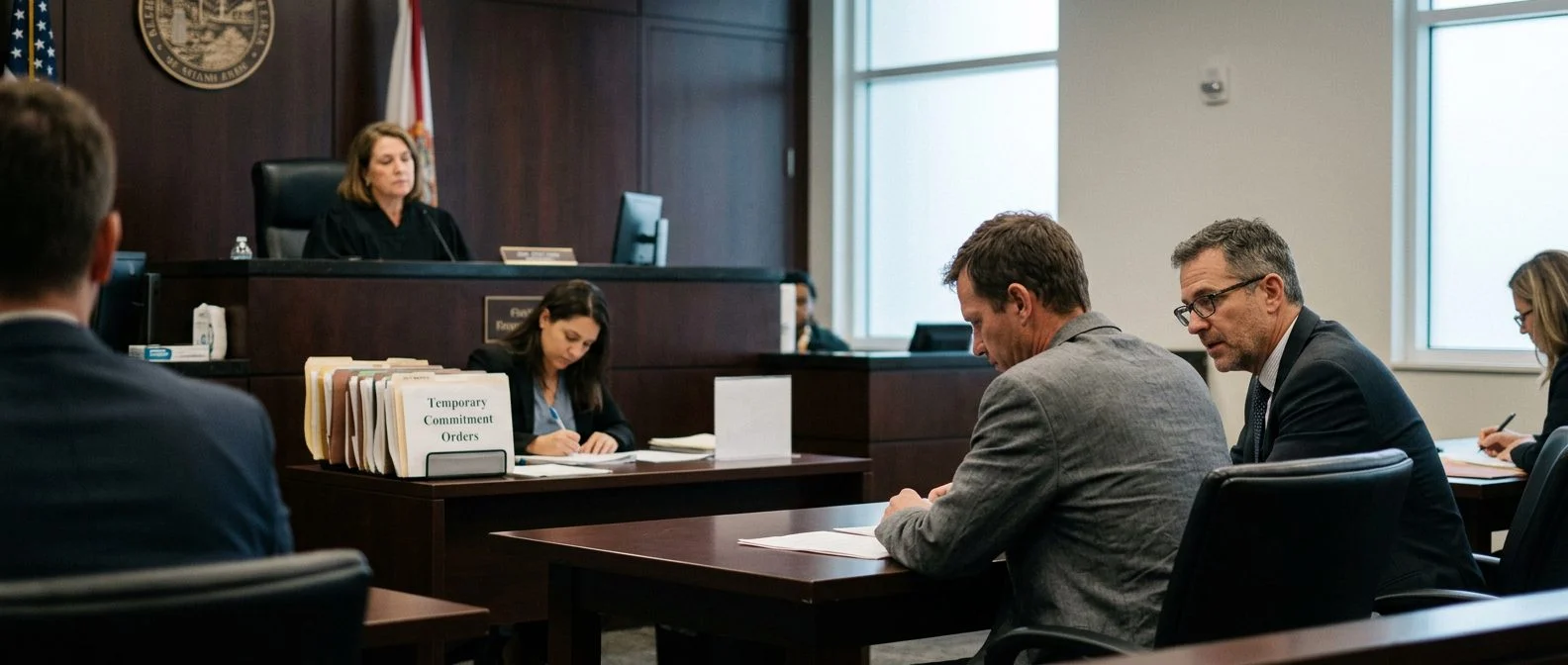
A respondent is the alleged impaired person named in a Marchman Act petition. In Florida, that person has the right to counsel at every stage of the case, which the person may waive only if present and the court finds the waiver knowing, intelligent, and voluntary. This page explains what Marchman Act respondent representation in Florida covers, from the petition through the hearing and after any order. Robinson Casey limits its practice to Marchman Act and guardianship matters, and serves families in Miami-Dade, South Florida, and across the state.
What Respondent Representation Means Under the Marchman Act
Respondent representation means a lawyer acts for the adult named in the petition. The Marchman Act is a Florida law that addresses involuntary services for substance abuse impairment. It lets a court order assessment and, in some cases, involuntary treatment for substance abuse impairment. The alleged impaired person is named as the respondent, under Fla. Stat. § 397.681.
The respondent has the right to counsel at every stage. The respondent can give up that right only in court, and only if the judge finds the choice is knowing, intelligent, and voluntary. If the respondent can’t afford a private lawyer, the respondent can ask for one from the court.
Not everyone can file. For an adult, a petition may come from a spouse or legal guardian, any relative, a service provider, or an adult with direct personal knowledge of the respondent’s substance abuse impairment and prior course of assessment and treatment, under § 397.68112.
This page is for two readers. One is the respondent. The other is a family member trying to understand what the respondent is facing.
If a Marchman Act petition has named someone you love, you don't have to work out the next steps alone. Call (561) 849-4149 to talk it through. Talk it through with our team — the first consultation is free, confidential, and carries no obligation.

What Representation Covers at Each Stage
Representation covers the petition, the hearing, and any order that follows. A lawyer typically handles five areas.
- Petition review. The petition must name the respondent and the petitioner, state their relationship, and give the facts behind the claim. Florida Statute § 397.68141 sets out what a petition for involuntary services must contain.
- Assessment questions. A petition may include a report from a qualified professional who examined the respondent within 30 days before filing. If there was no assessment, or the respondent refused one, the petition must say so.
- Access to the case. An attorney representing the respondent may access the person, witnesses, and relevant records, under § 397.68151.
- Hearing preparation. The lawyer reviews the evidence, the assessment, and the witnesses who may testify.
- Advocacy and explanation. The lawyer questions witnesses at the hearing and explains any order, including its terms and length.
How the Process Typically Unfolds: Steps and Timeline
A Marchman Act case moves from filing to hearing, then to an order that can be renewed. The main steps are below.
- Filing. The petition goes to the clerk of the court in the county where the person is located. The clerk may not charge a fee to file it, under § 397.681.
- Emergency steps. In an emergency, the court may rely on the petition alone and enter an ex parte assessment and stabilization order. A provider may not hold the respondent for more than 72 hours of observation, except in the cases the statute lists, under § 397.6818.
- Hearing. Before ordering treatment, the court must find the conditions proved by clear and convincing evidence, under § 397.697.
- Order. Involuntary treatment may last up to 90 days.
- Renewal. If the need continues, a renewal petition must be filed before the period ends, under § 397.6975.
Common Questions About Respondent Rights and Court Procedure
The respondent generally must attend the hearing. The respondent may also refuse to testify. The court can excuse presence only with a valid waiver made knowingly, intelligently, and voluntarily, or, upon receiving proof of service and evaluating the circumstances of the case, a finding that presence is inconsistent with the respondent’s best interests or is likely to be injurious to self or others.
- Testimony. Testimony must be taken under oath, and the proceedings must be recorded.
- Assessment. The court may not order involuntary treatment without a clinical assessment, unless the respondent is present in court and expressly waives the assessment. Where an assessment was attached to the petition, the respondent may request an independent assessment, and the court must tell the respondent of this right. See § 397.6957.
- Treatment records. Federal law keeps substance use treatment records confidential. Without patient consent or a qualifying court order, those records cannot be used against the patient in court. See 42 U.S.C. § 290dd-2.
What Happens After an Order Is Entered
After an order, the court keeps oversight of the case. It may enter further orders, monitor compliance, change the treatment type, or start contempt proceedings for violating a valid order, under § 397.697.
Early release is possible in some cases. A person may be discharged when they no longer meet the criteria for involuntary admission and give informed consent to voluntary treatment. Discharge is also possible for a person admitted on the grounds of likelihood of physical harm once that likelihood no longer exists, or when the person no longer needs treatment services. See § 397.6971.
An individual involuntarily retained by a provider, or the individual’s parent, guardian, custodian, or attorney on behalf of the individual, may petition for a writ of habeas corpus at any time, without notice, to challenge the cause and legality of retention, under § 397.501. Guardianship is a separate practice area at the firm.
Why Work With Robinson Casey on a Respondent Matter
Robinson Casey limits its practice to Marchman Act and guardianship matters. Respondent matters are handled within that focused practice.
- Responsible lawyer. Richard J. Casey III, Esq. is the responsible lawyer for this page.
- Team. Our lawyers and support staff handle filings, scheduling, and client communication.
- Plain-language rules. We explain this section’s own terms, including the individual’s right to have dignity respected at all times and upon all occasions.
- Service area. We serve Miami-Dade, South Florida, and families across the state.
Not sure what your next step is?
Talk it through with our team — the first consultation is free, confidential, and carries no obligation.
Frequently Asked Questions
How do I request a Marchman Act in Florida?
A petition is filed with the clerk of the court in the county where the person is located. The petitioner must be someone the law allows, such as a spouse, legal guardian, relative, or service provider.
Can a Marchman Act be cancelled?
Whether that applies depends on the facts of the case.
Do I need a lawyer if the respondent agrees to treatment?
The right to counsel applies at every stage. A respondent may give up that right only in court, and only if the waiver is knowing, intelligent, and voluntary.
Can a respondent get a free lawyer?
A respondent who cannot afford a private lawyer may ask the court to appoint one. The court must appoint counsel if it believes the respondent needs or desires assistance.

Talk With a Lawyer About the Respondent’s Situation
You may be facing a petition, a hearing date, or an order you didn’t choose. You may also be worried about someone you love. You don’t have to sort out the deadlines alone. Call (561) 849-4149, or contact Robinson Casey to schedule a free, confidential first consultation with no obligation to continue. We can review the petition and the next deadlines with you.
Why Families Work With Robinson Casey
Focused Practice
Robinson Casey focuses on Marchman Act petitions and guardianship matters, so your case is handled by a firm that concentrates on these areas of law.
Support for Families
Our team works with the people who are worried about a loved one and helps them understand the steps involved in each matter.
Clear Explanations
We explain the petition process, the court filings and what to expect, so you can make informed decisions at every stage.
Compassionate Approach
These matters involve people you care about. We listen carefully and treat each family with respect and patience.
Easy to Reach
Call (561) 849-4149 to speak with our office about your situation.
If Someone Is in Immediate Danger
If a person is at immediate risk of harm, call 911 first. Then contact Robinson Casey at (561) 849-4149 to discuss the legal options available for your family.
Matters We Handle
Marchman Act Petitions
Representation for families seeking help under the Florida Marchman Act for a loved one struggling with substance use.
Involuntary Commitment for Addiction
Guidance on the court process for involuntary commitment related to substance use disorders.
Guardianship Matters
Representation in guardianship proceedings, including plenary, limited and mental health guardianship.
Emergency Temporary Guardianship
Help with urgent requests for temporary guardianship when a person needs protection quickly.