
Marchman Act Petitions | South Florida and Statewide
Helping Your Spouse Get the Care They Need
Robinson Casey focuses on Marchman Act petitions and guardianship matters for families across South Florida and throughout Florida. Talk with a lawyer about your situation and your options.
By Richard J. Casey III, Esq. · Published October 28, 2026
When Your Spouse’s Drinking or Drug Use and Mental Illness Have Made Home Unsafe
A Marchman Act petition asks a Florida court to order assessment and treatment for an adult whose substance use has taken away their self-control. If you’re weighing Marchman Act help for a spouse with mental illness and drinking, this page explains how the process works.
Maybe a recent incident pushed you here. It could be a hospital stay, a violent outburst, or a night you didn’t know where your spouse was. The money is slipping away. The kids notice everything. And you’ve been carrying all of it alone.
That fear is real. Continued drinking or drug use, paired with untreated mental illness, can put your children, your finances, and your marriage at risk. Below, you’ll find who can file, what a petition must show, how the court moves, and how to protect your family while the case is pending.
If your spouse's drinking or drug use and mental illness have made your home unsafe, you don't have to work out the Marchman Act alone. Talk it through with our team — the first consultation is free, confidential, and carries no obligation.

What the Marchman Act Is and Who Can File It
The Marchman Act is Florida’s court process for involuntary treatment of an adult with substance abuse impairment. A spouse can file one. Fla. Stat. § 397.68112 says that for an adult, a petition may be filed by the respondent’s spouse or legal guardian, any relative, a service provider, or an adult with direct personal knowledge of the impairment and prior treatment.
The petition goes to the clerk of court in the county where the person is located. The clerk cannot charge a fee to file it, under § 397.681.
In Miami-Dade County, the Miami-Dade Clerk’s Mental Health Court page directs people seeking involuntary alcohol or drug abuse treatment for adults to the Clerk’s Office Probate Court.
The aim of the process is assessment and, when the court finds the legal criteria met, treatment.
When Addiction and Mental Illness Occur Together: Marchman Act or Baker Act
A spouse with both substance use and mental health problems can fall under the Marchman Act.
The Baker Act is a separate Florida law for mental health crises. Which route fits depends on the facts you can show. Your petition has to match those facts. Show what drinking or drug use is doing in the home, and how the mental health condition connects to it.
A petition that doesn’t match the facts can waste time while the home stays at risk.
What a Marchman Act Petition Must Show and How the Process Moves
A petition must name your spouse and you, state your relationship, and list the facts that justify treatment. § 397.68141 sets out those requirements. The facts must explain why you believe your spouse is impaired and has lost self-control over substance use. They must also show a risk of physical harm, or a refusal of care based on impaired judgment.
Here is how the process moves:
- Gather dated facts. Write down incidents, missed work, money losses, and any past treatment. Specific dates support a petition better than general complaints.
- Add a professional report if one exists. A report from a qualified professional who examined your spouse within 30 days may go with the petition. If your spouse was never assessed or refused, the petition must say so.
- Hearing date set. The court schedules a hearing within 10 court working days unless it grants a continuance (§ 397.68151).
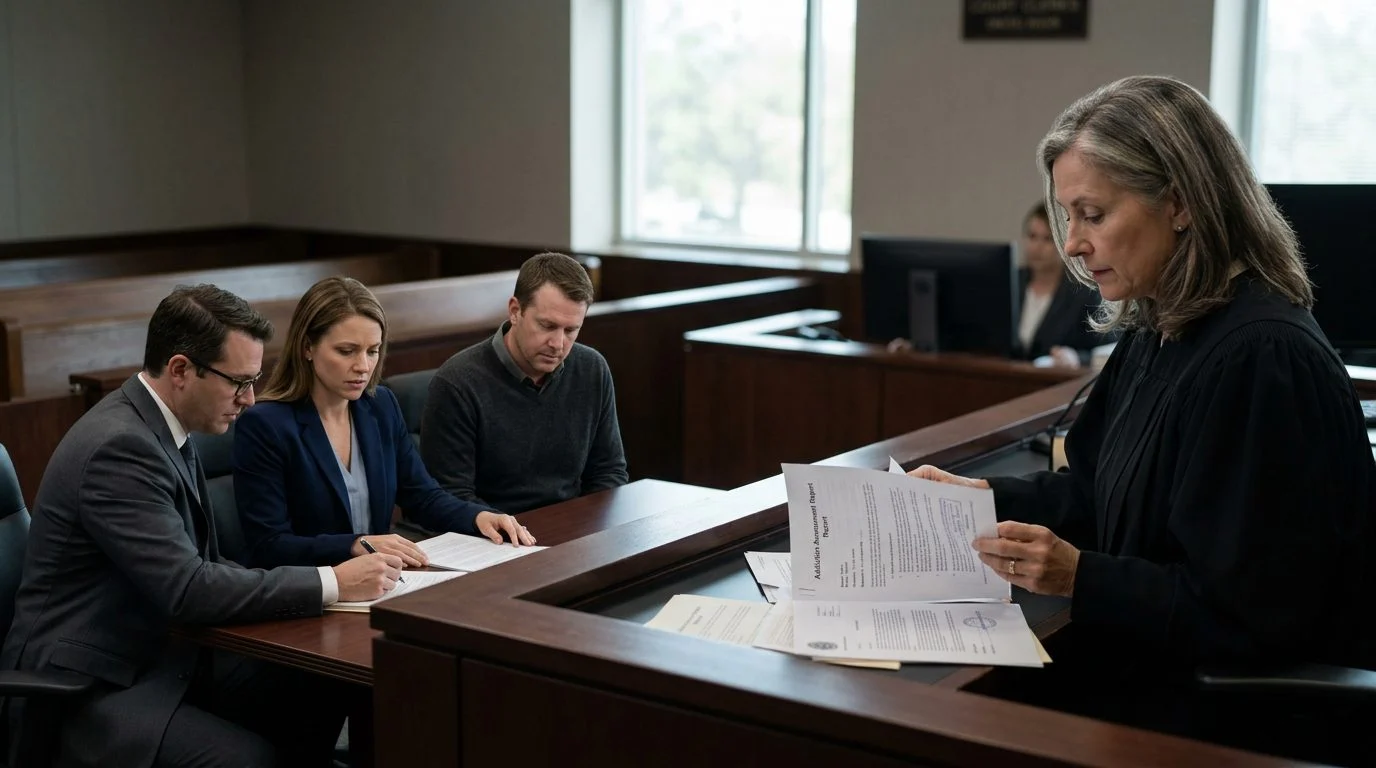
- The hearing. Your spouse must attend unless the court finds a valid waiver. The judge hears family members who know the history. Testimony is under oath (§ 397.6957).
- The order. If the criteria are proved by clear and convincing evidence, the court may order treatment for up to 90 days (§ 397.697).
Show up and present your case.
Protecting the Children, Finances, and Household While the Case Moves
Protecting your children starts with a clear, dated record of what they’ve seen and how the home has changed. The court hears family members who know your spouse’s history, so your account matters.
For money, keep records of shared bills, lost income, and debts tied to drinking, drug use, or care. Organized records make the household impact easier to show.
When danger is immediate, the law lets a court act quickly. § 397.6818 allows an ex parte order, based on the petition alone, when emergency circumstances exist.
Emergency temporary guardianship is a different route, for a person whose ability to manage their affairs is in question. § 744.3031 requires a court finding of imminent danger to physical or mental health or safety, or to property. Fla. Stat. § 744.3031 reads: “The court must specifically find that there appears to be imminent danger that the physical or mental health or safety of the person will be seriously impaired or that the person’s property is in danger of being wasted, misappropriated, or lost unless immediate action is taken.” That authority lasts 90 days or until a guardian is appointed, and can be extended for another 90 days if the emergency continues.
Florida also has plenary, limited, and mental health guardianships. Each gives a guardian different decision-making authority, so the scope should fit the person’s needs.
Waiting leaves the same risks in place. A crisis can arrive with little warning.
Why Robinson Casey Concentrates on These Matters
Robinson Casey limits its practice to Marchman Act petitions and guardianship matters, serving families in South Florida and statewide. That focus keeps each consultation on your family’s situation.
Richard J. Casey III, Esq. is the responsible lawyer for this page. Support staff help with scheduling and paperwork, and our team keeps families informed about the steps ahead. The firm focuses on preparing petitions and organizing the evidence the court will need.
The firm offers a free first consultation. It is confidential and carries no obligation to continue.
Some matters may be referred to another lawyer or firm.
Not sure what your next step is?
Talk it through with our team — the first consultation is free, confidential, and carries no obligation.
Common Questions About Marchman Act Help for a Spouse
Most spouses ask the same few questions before deciding. Here are short answers.
Can I file if my spouse doesn’t agree to treatment?
Yes. A spouse may file a petition for involuntary treatment services under Fla. Stat. § 397.68112.
Will my spouse go to jail?
The goal is assessment and treatment. If the court orders it, a sheriff may take your spouse to a treatment provider.
Does my spouse get a lawyer?
Yes. A respondent has the right to counsel at every stage unless he or she is present and the court finds that a waiver is made knowingly, intelligently, and voluntarily, and a respondent who cannot afford one may have counsel appointed (§ 397.681).
Do divorce or property questions belong here?
Those are a separate area of law and need their own review.
What should I bring to the consultation?
Bring dated notes of incidents, any hospital or medical records you hold, and the names of the children’s caregivers.

Talk Through Your Situation With Robinson Casey
A confidential conversation is the clearest way to learn which route fits your household.
If your spouse’s drinking or drug use and mental illness have made your home unsafe, you don’t have to work out the Marchman Act alone. Call (561) 849-4149 or request a consultation. We’ll review the facts with Richard J. Casey III, Esq., the proper petition route, and a plan for your children and household.
Why Families Contact Robinson Casey
Focused Practice
Our firm limits practice to Marchman Act petitions and guardianship matters, so your case is handled by lawyers who work in these areas every day.
Free, Confidential First Consultation
Your first consultation is free, confidential, and comes with no obligation to continue.
Support for Spouses and Families
We understand how difficult it is to watch a spouse struggle with addiction or a mental health crisis, and we work to explain each step clearly.
South Florida and Statewide
We represent families in Miami-Dade and across South Florida, and we serve clients throughout the state.
Don't Wait Alone With the Problem
Every family's situation is different. Speaking with a lawyer early can help you understand the options available and what to expect.
How We Work With Your Family
1. Tell Us What Is Happening
Share the details of your spouse's situation in a confidential consultation at no charge.
2. Review Your Options
We explain the Marchman Act process, possible petitions, and guardianship alternatives that may fit your circumstances.
3. Prepare and Pursue Your Petition
If you decide to move forward, we help you prepare the petition and guide you through each court step.