
Marchman Act | Miami-Dade & South Florida
Marchman Act for a 19-Year-Old in Florida: Can Your Family File?
Robinson Casey focuses on Marchman Act petitions and guardianship matters for families across South Florida and statewide. Start with a free, confidential first consultation, with no obligation to continue.
By Richard J. Casey III, Esq. · Published October 24, 2026
The Marchman Act lets a family ask a court for assessment and treatment when substance use has taken away a person’s self-control. This page explains who can file, what the judge reviews, and where age does and does not matter.
Short Answer: Yes, the Marchman Act Covers Adults in Florida
For a Marchman Act 19 year old in Florida, the answer is yes. A 19-year-old falls on the adult side of the law. The statute’s minor rules cover people under 18, and Fla. Stat. § 397.601 uses that under-18 line when it discusses consent to voluntary treatment. A 19-year-old is past that line.
That line changes who can consent to voluntary substance abuse services: for persons under 18, the disability of minority is removed solely for obtaining voluntary services from a licensed service provider (Fla. Stat. § 397.601). For an adult, the group is wider, as covered below. The age line is the first thing to check, because it sets which petition rules apply.
An involuntary commitment for addiction is a court process. It begins with a written petition filed with the clerk of the court, and a judge decides what happens next. Understanding that difference helps before you read further.
If your 19-year-old is refusing help while substance use puts them or others at risk, you do not have to face the petition question alone; our team is ready to talk. Talk it through with our team — the first consultation is free, confidential, and carries no obligation.

What Is the Marchman Act in Florida?
The Marchman Act is Florida’s law for court-ordered help with substance use. It sits in Chapter 397 of the Florida Statutes. Under Fla. Stat. § 397.601, a person who wishes to enter treatment for substance abuse may apply to a service provider for voluntary admission.
A petition is a written request to the court. It names the person, the person filing it, and the relationship between them. It also lays out the facts that show why help is needed. Fla. Stat. § 397.68141 sets out these required parts.
After filing, the court sets a hearing; if there is an emergency, the petition itself must describe it and ask for an ex parte assessment and stabilization order. The person named in the petition is called the respondent. Each later step has its own rules, and the rest of this page follows that order.
How Age Changes Who Can File a Marchman Act Petition
Under Fla. Stat. § 397.68112, if the respondent is an adult, a petition for involuntary treatment services may be filed by the respondent’s spouse or legal guardian, any relative, a service provider, or an adult who has direct personal knowledge of the respondent’s substance abuse impairment and his or her prior course of assessment and treatment. Fla. Stat. § 397.68112 lists these petitioners for adult respondents.
A parent still has a role, as a relative. A friend or other adult can also file, if they have direct personal knowledge of the person’s substance abuse impairment and past assessment and treatment.
Facts carry the petition. It must say why the petitioner believes the person is impaired, why that impairment has taken away self-control, and why the person is at risk of harm or cannot make a rational decision about care. A petition may also attach an assessment from a qualified professional who examined the person within 30 days before filing. If there was no assessment, or the person refused one, the petition must say so.
Depends on the facts: if the young adult already has a guardian, spouse, or attorney, the court must send them a copy of the petition and the hearing notice. Fla. Stat. § 397.68151 sets that notice rule.
Florida Drinking Age vs. Marchman Act Age: What the Numbers Mean
The Marchman Act does not use the age for buying alcohol as its test. The drinking age does not decide whether a petition is possible.
The test is about impairment. A person meets the criteria for involuntary admission if there is good faith reason to believe that the person is substance abuse impaired or has a substance use disorder and a co-occurring mental health disorder and, because of such impairment or disorder, has lost the power of self-control with respect to substance abuse, along with one of the additional conditions set out in the statute. That impairment must also have taken away their self-control.
The law covers more than one substance. The Flagler County Clerk describes the Marchman Act as covering illegal drugs, prescription drugs, and alcohol.
So the useful question is not whether a 19-year-old is old enough to drink. The useful question is whether the facts show impairment and a loss of self-control. The same question applies to adults in their early twenties.
What a Judge Looks at When a 19-Year-Old Is the Subject of a Petition
Where the petition is filed matters.
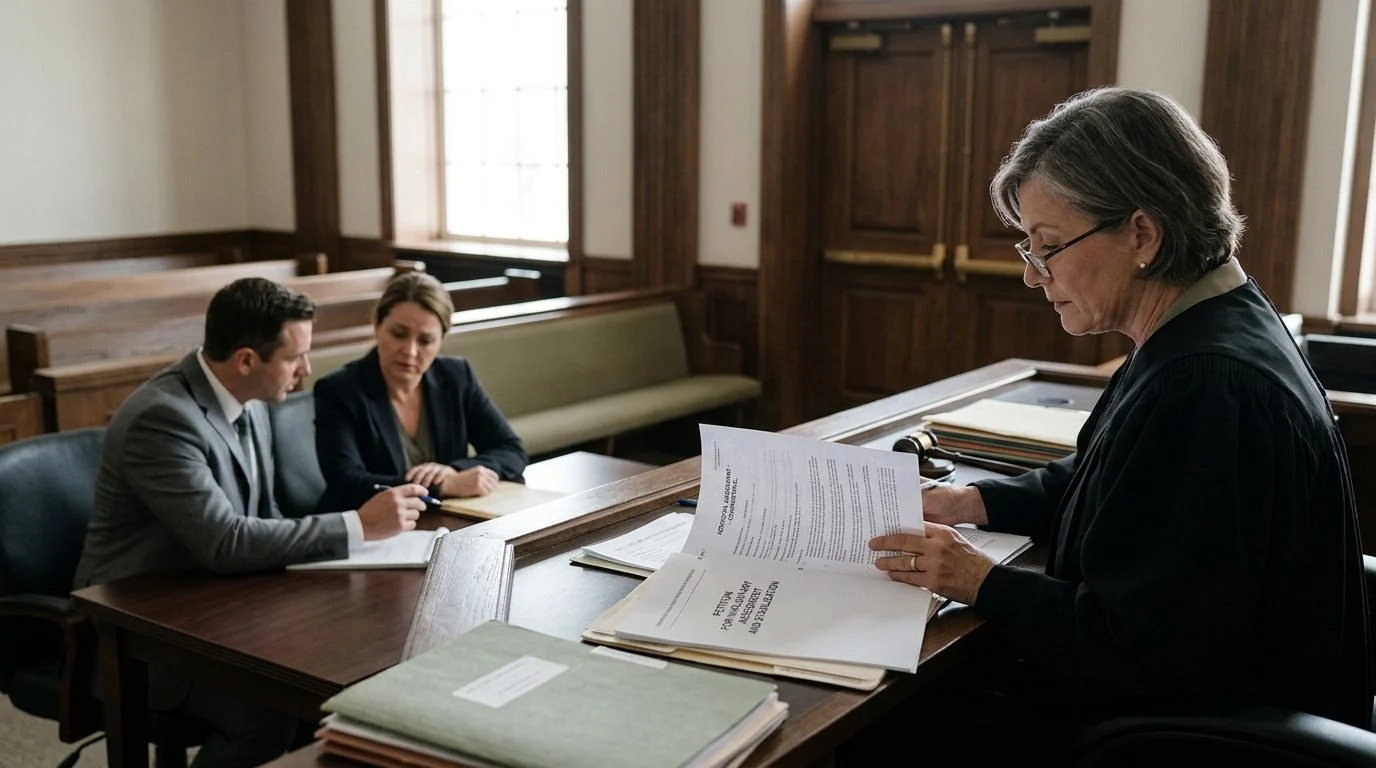
The hearing comes quickly. The court must schedule it within 10 court working days unless a continuance is granted. The respondent generally must be present. Testimony is taken under oath, the proceedings are recorded, and family members familiar with the person’s history can testify.
In the Fifth District, the petitioner carries the burden of proof. In J.C. v. State, the appeals court reversed an order where the judge questioned the only witness while the petitioner was absent.
To order treatment, the court must find the conditions proved by clear and convincing evidence. An order can last up to 90 days under Fla. Stat. § 397.697.
Voluntary Admission Versus Involuntary Commitment for a Young Adult
A person who wishes to enter treatment for substance abuse can apply to a service provider for voluntary admission.
If the young adult refuses, the involuntary route becomes the question. A refusal alone is not proof of a lack of judgment. Fla. Stat. § 397.675 says that mere refusal to receive services does not, by itself, show lack of judgment about the need for them. Fla. Stat. § 397.675 reads: “(b) Without care or treatment, is likely to suffer from neglect or refuse to care for himself or herself; that such neglect or refusal poses a real and present threat of substantial harm to his or her well-being; and that it is not apparent that such harm may be avoided through the help of willing, able, and responsible family members or friends or the provision of other services, or there is substantial likelihood that the person has inflicted, or threatened to or attempted to inflict, or, unless admitted, is likely to inflict, physical harm on himself, herself, or another.”
The young adult also has a right to a lawyer. Under Florida Statute § 397.68151, the court determines whether a respondent in a proceeding on a petition for involuntary treatment for substance abuse impairment is represented by counsel or whether appointing counsel is appropriate.
Timing can be urgent. A provider may hold the person for no more than 72 hours of observation, with listed exceptions, under Fla. Stat. § 397.6818.
Not sure what your next step is?
Talk it through with our team — the first consultation is free, confidential, and carries no obligation.

Next Steps for Families in Miami-Dade and South Florida
Start by writing down dates, specific events, and changes in behavior. A petition needs facts, not general worry.
Facts matter from the start. In D.H. v. K.J.R., the Second District held that an ex parte order was entered in error because the petition did not establish a good-faith reason to believe the statutory criteria were met.
Gather the person’s name, your relationship to them, the dates of specific incidents, who saw what happened, and any prior assessment or treatment. Those details give the petition its factual base.
Robinson & Casey focuses its practice on Marchman Act petitions and guardianship matters for families across South Florida and statewide. Richard J. Casey III, Esq., is the responsible lawyer for this page.
Frequently Asked Questions
Can a 19 year old be committed under the Marchman Act in Florida?
Yes.
Who can file a petition under the Marchman Act?
Under Fla. Stat. § 397.68112, if the respondent is an adult, a petition for involuntary treatment services may be filed by the respondent’s spouse or legal guardian, any relative, a service provider, or an adult who has direct personal knowledge of the respondent’s substance abuse impairment and his or her prior course of assessment and treatment.
Does the drinking age decide whether a petition is possible?
No. The Marchman Act turns on impairment and loss of self-control, not on the age for buying alcohol.
If your 19-year-old is refusing help while substance use puts them or others at risk, call Robinson & Casey at (561) 849-4149 or request a consultation. The first consultation is free, confidential, and carries no obligation to continue.
How Robinson Casey Supports Families
Marchman Act Petitions
Our practice focuses on Marchman Act petitions for involuntary treatment of substance use disorders, including matters involving young adults.
Guardianship Matters
We handle guardianship matters, including emergency temporary, plenary, limited, and mental health guardianship.
Clear, Direct Guidance
We explain the process in plain language so you know what to expect before deciding on next steps.
Confidential Conversations
Your first consultation is confidential and free, and it comes with no obligation to continue.
Do Not Wait to Ask Questions
Every family's situation is different, and the details matter. Gather any records, medical or treatment information, and key dates you have, then contact our office to talk through your concerns.
How to Prepare for Your Consultation
Write Down Your Concerns
Note what you have observed, recent events, and the outcomes you hope to see for your loved one.
Collect Key Documents
Bring any treatment records, court papers, or identification information that relates to your family member.
List Your Questions
Think about who is involved in your family's situation and what questions matter most to you.
Call Our Office
Reach out to Robinson Casey at (561) 849-4149 to schedule your free, confidential first consultation.