
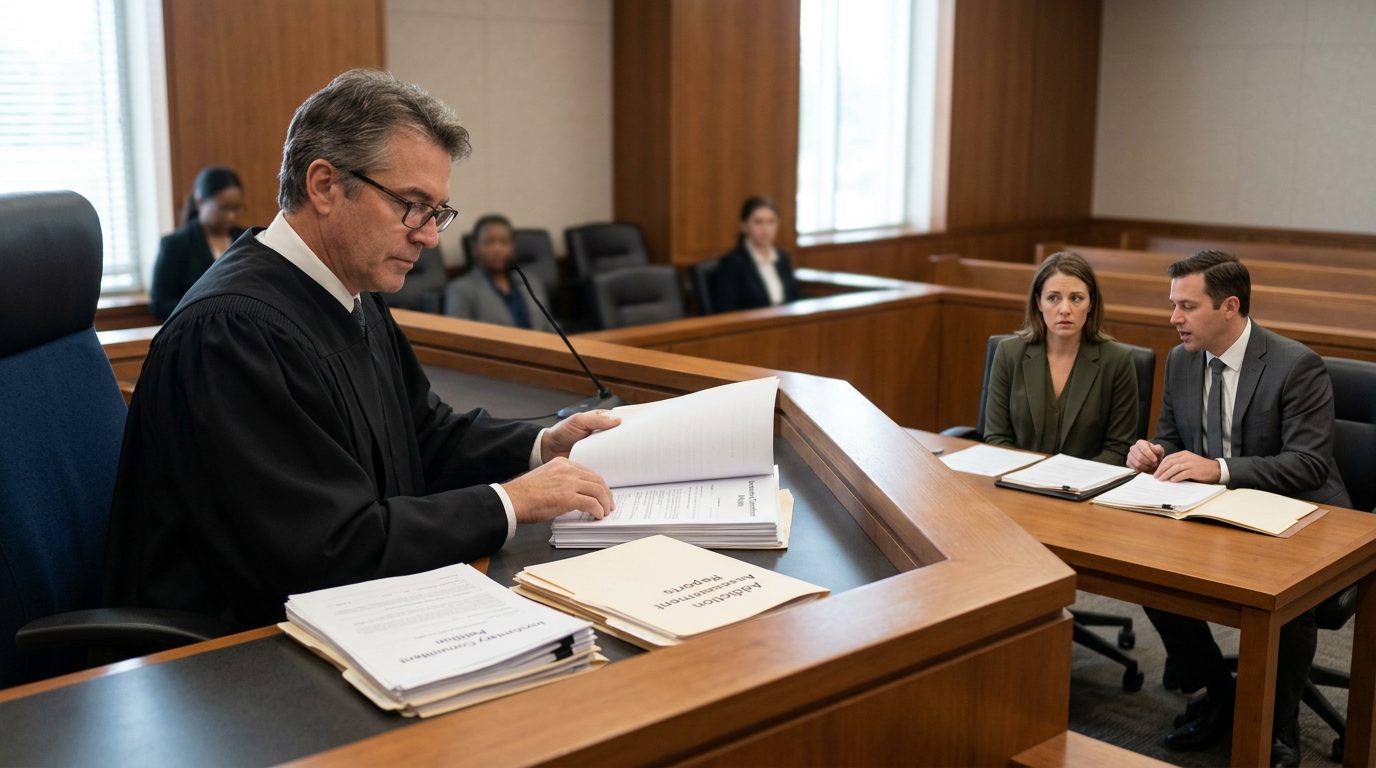
Involuntary Commitment
Legal Provisions for Involuntary Commitment in Florida
Understanding the statutory frameworks that govern substance use and mental health commitments under Florida law.
By Richard J. Casey III, Esq. · Published October 03, 2026
Florida law provides two primary statutory pathways for involuntary commitment: the Marchman Act for substance use disorders, and the Florida Mental Health Act for mental illness. Both frameworks require clear evidence, due process protections, and a finding that the individual meets strict legal criteria before a court can order commitment.
Overview of Florida’s Involuntary Commitment Framework
Florida addresses involuntary commitment through Chapter 397, Florida Statutes (the Marchman Act) for substance use disorders and Chapter 916, Florida Statutes (the Florida Mental Health Act) for mental illness. These statutes exist to protect individuals in crisis while respecting due process and constitutional rights.
The Marchman Act allows family members, physicians, mental health professionals, law enforcement, and other authorized persons to petition the court for involuntary assessment and treatment of individuals whose substance use poses a threat to themselves or others. The Florida Mental Health Act follows a similar framework but applies to mental illness rather than addiction.
Both pathways require the court to find that specific statutory criteria are met before ordering commitment. This threshold protects individuals from arbitrary or unnecessary confinement.
If you're navigating a substance use or mental health crisis and wondering whether involuntary commitment might be necessary—or if you're facing commitment proceedings yourself—reach out to discuss your situation and the options available to you. Talk it through with our team — the first consultation is free, confidential, and carries no obligation.

What Are the Three Criteria for Involuntary Commitment?
Under Florida law, involuntary commitment typically requires three elements: (1) a substance use disorder or mental illness; (2) evidence that the person poses a substantial threat of harm to themselves or others, or is unable to care for themselves; and (3) that less restrictive alternatives are unlikely to be effective.
The “substantial threat” standard is the legal threshold—not mere concern or family disagreement, but evidence of imminent danger or incapacity. Courts evaluate whether the individual’s condition and behavior meet these statutory criteria before ordering commitment. The burden is high because the state is depriving someone of liberty, and Florida law requires clear and convincing evidence to justify that step.
The Marchman Act: Addiction and Substance Use Commitment
Florida Statutes § 397.675 permits involuntary assessment and treatment for individuals with substance use disorders when they meet the statutory criteria. A petition can be filed by a family member, physician, mental health professional, law enforcement, or other authorized persons.
Once a petition is filed, the court must hold a hearing within a specified timeframe to determine whether commitment is warranted. The Marchman Act includes protections for the respondent’s rights, including the right to counsel and the right to contest the petition. The individual can present evidence, cross-examine witnesses, and have an attorney argue on their behalf.
In the involuntary commitment cases Robinson & Casey handles, we regularly see families file Marchman petitions when a loved one’s substance use has escalated to the point where they pose a danger to themselves or others, or when they’ve lost the ability to meet their basic needs. The statute recognizes that addiction can impair judgment to the degree that voluntary treatment becomes impossible.
The Florida Mental Health Act: Mental Illness Commitment
Chapter 916, Florida Statutes governs involuntary commitment for mental illness. Like the Marchman Act, it requires evidence of a mental illness and a substantial threat of harm or inability to care for oneself. The statute outlines procedural requirements, including notice, the right to a hearing, and the right to legal representation.
Mental health commitment follows the same due process framework as addiction commitment, ensuring that individuals are not confined based on diagnosis alone, but only when they meet the statutory threshold for danger or incapacity.
What Is the 33-Day Rule in Florida?
Under Florida law, an initial involuntary commitment order typically authorizes a maximum of 33 days of inpatient treatment and evaluation. After 33 days, the facility must either release the individual, obtain consent for continued treatment, or petition the court for extended commitment.
This timeline ensures that commitment is not indefinite and that periodic review occurs. If the individual’s condition has improved and they no longer meet the statutory criteria, they must be released. If they continue to pose a substantial threat or are unable to care for themselves, the facility can seek an extended order, but only after another court hearing where the individual has the opportunity to contest continued commitment.
What Is Rachel’s Law in Florida?
Florida Statutes § 397.6951 (Rachel’s Law) requires that individuals with substance use disorders be informed of their right to refuse treatment and their right to legal counsel before involuntary commitment proceedings. The law also mandates that treatment facilities provide specific information about the individual’s rights and the commitment process.
Rachel’s Law strengthens procedural protections and transparency in involuntary commitment cases involving addiction. It ensures that individuals understand what is happening to them and what rights they retain, even when they are subject to involuntary commitment.
Not sure what your next step is?
Talk it through with our team — the first consultation is free, confidential, and carries no obligation.
Procedural Requirements and Due Process Protections
Florida law requires that the person subject to commitment receive notice of the petition and the grounds for it. The respondent has the right to be present at the hearing, to be represented by an attorney, to present evidence, and to cross-examine witnesses.
The court must find clear and convincing evidence that the statutory criteria are met before ordering commitment. This is a high burden—higher than the “preponderance of the evidence” standard used in most civil cases. These protections ensure that involuntary commitment is not arbitrary and that individuals have a meaningful opportunity to contest the petition.
Types of Commitment Orders in Florida
Emergency involuntary commitment may be ordered for a brief period (typically up to 72 hours) when immediate danger is evident and a full hearing cannot be held. This allows rapid intervention in acute crises.
Involuntary assessment and treatment orders authorize inpatient evaluation and treatment for up to 33 days, as discussed above.
Extended commitment orders may be sought if the individual continues to meet the statutory criteria after the initial period. These require a new court hearing and a fresh finding of clear and convincing evidence.
Each type of order has specific statutory requirements and procedural safeguards.
Rights of the Committed Individual
Florida law protects the rights of individuals subject to involuntary commitment, including the right to the least restrictive treatment setting appropriate to their condition. Individuals retain the right to refuse certain treatments, subject to court authorization in limited circumstances.
Committed individuals have the right to periodic review of their commitment status and the right to petition for release. These protections balance the state’s interest in treatment with the individual’s constitutional and statutory rights.

When Legal Guidance Becomes Essential
Understanding the statutory framework is a first step, but navigating involuntary commitment proceedings requires knowledge of how courts apply these provisions in practice. If you are considering filing a petition, or if a loved one is facing commitment proceedings, the specific facts of your situation—the individual’s history, the evidence of threat or incapacity, and the procedural posture of the case—determine what steps are appropriate.
An attorney familiar with Florida’s commitment statutes can help you understand your options, prepare a petition, represent you at a hearing, or protect your rights if you are the subject of a commitment petition.
Frequently Asked Questions
Can you involuntarily commit someone in Florida? Yes, if the person meets the statutory criteria—a substance use disorder or mental illness, a substantial threat of harm to themselves or others or inability to care for themselves, and evidence that less restrictive alternatives won’t work—a court can order involuntary commitment after a hearing.
Who can file a Marchman Act petition in Florida? A family member, physician, mental health professional, law enforcement officer, or other authorized person can file a Marchman Act petition for involuntary assessment and treatment of substance use disorders.
What happens after the initial 33-day commitment period? After 33 days, the facility must release the individual, obtain their consent for continued treatment, or petition the court for an extended commitment order based on new evidence that the statutory criteria are still met.
What is the difference between the Marchman Act and the Baker Act? The Marchman Act addresses involuntary commitment for substance use disorders, while the Baker Act (Chapter 916, Florida Statutes) addresses involuntary mental health examination and short-term commitment for mental illness.
If you’re navigating a substance use or mental health crisis and wondering whether involuntary commitment might be necessary—or if you’re facing commitment proceedings yourself—reach out to discuss your situation and the options available to you. People in these circumstances contact Robinson & Casey regularly, and we’re here to help you understand what comes next.
Call (561) 849-4149 or schedule a consultation to speak with an attorney about involuntary commitment provisions and your specific circumstances.
Two Primary Legal Pathways
Marchman Act (Chapter 397)
Florida's statutory framework for involuntary commitment related to substance use disorders. Requires clear evidence and due process protections before court-ordered commitment.
Florida Mental Health Act (Chapter 394)
Governs involuntary commitment for mental illness. Establishes strict legal criteria and procedural safeguards to protect individual rights during the commitment process.
Due Process Matters
Both pathways require clear evidence that an individual meets strict legal criteria before a court can order commitment. Understanding these requirements and protecting your rights is critical.
Key Elements of Florida's Commitment Framework
Evidence and Burden of Proof
Petitions must be supported by sufficient evidence demonstrating that the individual meets the statutory criteria for involuntary commitment. Courts apply rigorous standards to protect due process rights.
Hearing and Legal Representation
Individuals have the right to a hearing, legal counsel, and the opportunity to contest the petition. The commitment process includes multiple procedural checkpoints designed to ensure fairness.
Criteria for Commitment
Under the Marchman Act, substance use disorder must pose a substantial threat to health or safety. Under the Mental Health Act, mental illness must similarly meet strict legal thresholds.
Ongoing Court Oversight
Commitments are subject to periodic review. Courts retain jurisdiction to modify, continue, or terminate commitment orders based on the individual's current condition and circumstances.