
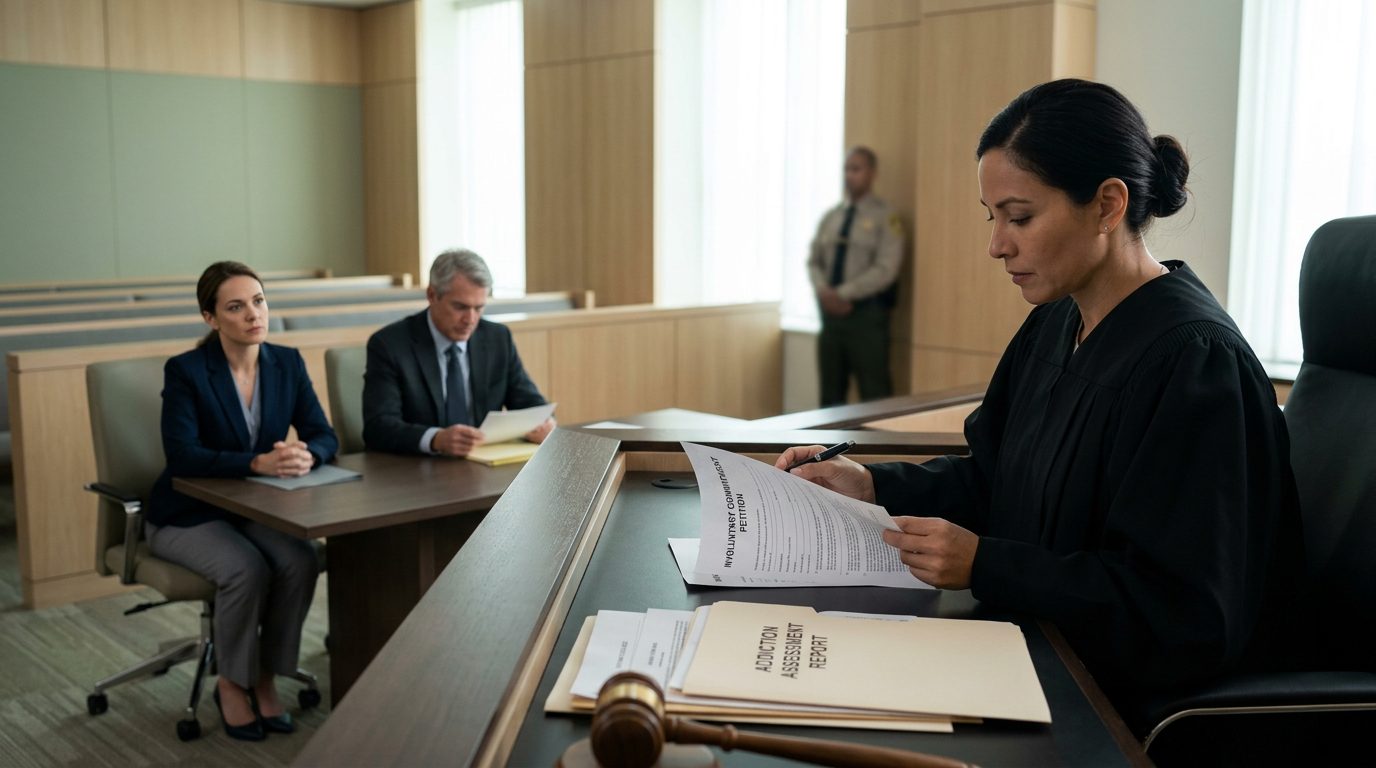
Marchman Act & Involuntary Commitment
Legal Requirements for Involuntary Commitment in Florida
Understanding the Marchman Act petition process, eligibility criteria, and court procedures for substance abuse intervention.
By Richard J. Casey III, Esq. · Published September 30, 2026
Legal Requirements for Involuntary Commitment in Florida
Florida recognizes two distinct involuntary commitment frameworks: the Baker Act for mental health crises and the Marchman Act for substance abuse disorders. Each has separate legal requirements, criteria, and procedures. Understanding which applies to your situation is the essential first step.
Not sure what your next step is?
Talk it through with our team — the first consultation is free, confidential, and carries no obligation.
Overview: Two Paths to Involuntary Commitment in Florida
Florida law recognizes that involuntary commitment—removing someone’s freedom without their consent—is a serious step that requires clear legal grounds. The state created two separate statutes because mental health crises and substance abuse disorders, while both serious, follow different legal pathways and timelines.
The Baker Act applies when someone is experiencing a mental health emergency. The Marchman Act applies when someone has a substance abuse disorder. A person cannot be committed under one statute simply because they qualify under the other. The criteria, the people who can file, and the procedural timelines are all different. Knowing which law applies prevents delays and ensures you follow the correct legal process.
What Are the Three Criteria for Involuntary Commitment?
Both the Baker Act and Marchman Act require that three legal conditions be met before involuntary commitment can occur.
Under the Baker Act (Fla. Stat. § 394.463), a person may be involuntarily examined if:
- They have a mental illness
- They are a danger to themselves or others, or are unable to care for themselves (grave disability)
- No less restrictive means of treatment is available or appropriate
Under the Marchman Act (Fla. Stat. § 397.675), involuntary commitment for substance abuse requires:
- The person has a substance abuse disorder
- They are a danger to themselves or others, or are unable to care for themselves
- They are unlikely to voluntarily seek or comply with treatment
Both acts emphasize that the person’s condition must pose imminent danger or result in grave disability—meaning they cannot meet their basic needs for food, shelter, or safety. Courts do not order involuntary commitment based on poor judgment alone or because someone is unhappy or unemployed.
Baker Act: Mental Health Involuntary Commitment Requirements
The Baker Act is Florida’s law for involuntary mental health examination and short-term commitment. It applies when someone is experiencing a mental health crisis and meets the legal criteria.
Who can initiate a Baker Act hold: A law enforcement officer, mental health professional, physician, or other authorized person may initiate an involuntary examination. In many cases, a police officer or mental health crisis team responds to a call and makes the decision to transport someone for evaluation.
The 72-hour hold: Once initiated, the person may be held for up to 72 hours for evaluation without a court order. This allows the facility to assess the person’s condition, stabilize them if needed, and determine whether they meet the legal criteria for continued commitment.
Court hearing requirement: If the facility wants to continue holding the person beyond 72 hours, a court hearing must be held within 5 days. At this hearing, the petitioner must prove by clear and convincing evidence—a high legal standard—that the person still meets all three criteria for involuntary commitment.
Right to counsel: The person has the right to an attorney at the hearing. If they cannot afford one, the court will appoint one.
Marchman Act: Substance Abuse Involuntary Commitment Requirements
The Marchman Act is Florida’s statute for involuntary commitment specifically for substance abuse disorders. Unlike the Baker Act, there is no automatic hold period; the process begins with a court petition.
Who can file: A family member, healthcare provider, law enforcement officer, or other authorized person may file a Marchman Act petition with the court in the county where the person resides or is located.
The petition and hearing: The petitioner must file a written petition with the court that includes facts supporting the three legal criteria. The court will schedule a hearing, typically within 5 days. The person has the right to be present, to have an attorney, and to present evidence.
Court decision: The judge must find by clear and convincing evidence that the person has a substance abuse disorder, meets the danger or grave disability standard, and is unlikely to voluntarily seek or comply with treatment. If the court agrees, it will issue an involuntary commitment order.
No automatic hold: Unlike the Baker Act’s 72-hour provision, the Marchman Act does not allow immediate detention without a court order. However, if the person is already hospitalized or in custody, the petition can be filed while they are there.
What Is Rachel’s Law in Florida?
Rachel’s Law is an expansion of the Marchman Act that specifically addresses opioid use disorder. Named after Rachel Melvin, a young woman who died from an opioid overdose, the law clarifies that individuals with opioid addiction can be committed under the Marchman Act.
Rachel’s Law does not change the underlying legal requirements for Marchman Act commitment. Instead, it removes any ambiguity about whether opioid use disorder qualifies as a “substance abuse disorder” under the statute. It confirms that family members and other authorized persons can petition for involuntary commitment specifically for opioid addiction, recognizing the severity of the opioid crisis in Florida and nationwide.
Have questions about what happened?
Ask our team directly. The first conversation is free, confidential, and there is no obligation to continue.
What Is the 33-Day Rule in Florida?
Under the Marchman Act, an initial involuntary commitment order may last up to 33 days. This period allows the treatment facility to evaluate the person, stabilize them medically if needed, and begin treatment.
After 33 days, the facility has three options:
- Release the person if they no longer meet the criteria for commitment
- Obtain the person’s written consent to continue treatment voluntarily
- Petition the court for an extended commitment order
The 33-day window is a procedural safeguard. It ensures that the court reviews the commitment’s necessity regularly and that people are not held indefinitely without ongoing judicial oversight. If the facility seeks extended commitment, it must again prove by clear and convincing evidence that the criteria are still met.
How Do I Get Someone Involuntarily Committed in Florida?
For mental health (Baker Act):
- Contact law enforcement or a mental health crisis team if the person is in immediate danger
- Alternatively, file a Baker Act petition with the court
- The person will be taken for a 72-hour evaluation
- If continued commitment is needed, a court hearing will be scheduled
For substance abuse (Marchman Act):
- File a written Marchman Act petition with the court in the county where the person resides or is located
- Include specific facts showing the person has a substance abuse disorder, meets the danger or grave disability standard, and is unlikely to voluntarily seek treatment
- Attend the hearing, which is typically scheduled within 5 days
- Present evidence to the judge
In both cases, the process moves quickly. Proper preparation of the petition and gathering supporting evidence—such as medical records, statements from family or healthcare providers, and documentation of dangerous behavior—increases the likelihood that the court will have the information needed to make an informed decision.
Key Legal Standards and Protections
Clear and convincing evidence: Both statutes require this high legal standard. It is stronger than “preponderance of the evidence” (more likely than not) but not as high as “beyond a reasonable doubt” (used in criminal cases). The court must be substantially certain that the criteria are met.
Right to legal representation: The person has the right to an attorney at any hearing. They can hire their own attorney or request a court-appointed one.
Less restrictive alternatives: Courts must consider whether less restrictive treatment options—such as outpatient counseling, medication management, or voluntary admission—are available and appropriate before ordering involuntary commitment.
Confidentiality: Records of involuntary commitment are confidential under Florida law. They are not public records and are protected from disclosure.
Right to petition for release: The person may petition the court to modify or terminate the commitment order at any time if circumstances change or if they believe the criteria are no longer met.
When to Seek Legal Guidance
If you are considering filing a petition for involuntary commitment, understanding the specific legal requirements and procedural steps is critical. A misstep—such as filing under the wrong statute, omitting required facts, or missing a procedural deadline—can delay the process or result in the petition being dismissed.
An attorney familiar with Florida’s commitment laws can help you determine which statute applies to your situation, prepare the petition correctly, gather supporting evidence, and represent you at the hearing. The process moves quickly, and proper preparation ensures the court has what it needs to make a sound decision.
Want to know where you stand?
Tell us what happened and our team will walk you through the options available to you, at no cost.
Frequently Asked Questions
What’s the difference between the Baker Act and Marchman Act?
The Baker Act addresses mental health crises and allows a 72-hour hold without a court order; the Marchman Act addresses substance abuse and requires a court petition and hearing from the start.
Can a family member file for involuntary commitment?
Yes, under the Marchman Act, family members can file a petition for substance abuse commitment; under the Baker Act, law enforcement or mental health professionals typically initiate holds, though family members can request one.
What happens if someone is released after 33 days under the Marchman Act?
If the facility does not petition for extended commitment or the person does not consent to continued treatment, they are released; however, family members may file a new petition if circumstances warrant it.
Do I need a lawyer for an involuntary commitment hearing?
No, it is not required, but having legal representation significantly strengthens your case and ensures proper procedure.
Are involuntary commitment records public in Florida?
No; records are confidential under Florida law and are not accessible to the general public.
If you’re navigating involuntary commitment for a family member or loved one in South Florida—whether for a mental health crisis or substance abuse disorder—the legal requirements and procedural steps can feel overwhelming, especially when time is short. Families in your situation reach out regularly to understand their options and ensure they follow the correct legal path. Contact us to discuss your circumstances and how we can help guide you through the process.
Key Legal Requirements Under the Marchman Act
Grounds for Petition
Florida law allows a petition for involuntary commitment when a person is unable or unwilling to care for themselves due to substance abuse, and their condition poses a substantial threat to their health, safety, or welfare.
Who Can File
Family members, caregivers, healthcare providers, law enforcement, or other concerned parties may file a Marchman Act petition. The petitioner must have personal knowledge of the person's substance abuse and its effects.
Court Hearing & Evidence
A judge reviews the petition and may order an immediate ex parte temporary commitment (up to 5 days) pending a full hearing. At the hearing, the petitioner must present evidence—medical records, witness testimony, or behavioral documentation—supporting the need for commitment.
Types of Commitment Orders
The court may order inpatient treatment, outpatient treatment, or a combination. Orders typically last 60 days initially and may be extended based on clinical assessment and court findings.
What Robinson & Casey Handles in Involuntary Commitment Cases
Petition Preparation & Filing
We draft and file Marchman Act petitions on behalf of families and concerned parties, ensuring all legal requirements and procedural rules are met from the outset.
Court Representation
We represent petitioners at hearings, present evidence to the court, and advocate for the commitment order necessary to access treatment and intervention.
Emergency & Temporary Commitment
When immediate action is needed, we pursue emergency temporary guardianship and ex parte temporary commitment orders to protect someone in acute crisis.
Guidance on Legal Process
We explain the Marchman Act framework, what to expect at each stage, and how involuntary commitment differs from other interventions like the Baker Act for mental health crises.
Important Distinction: Marchman Act vs. Baker Act
The Marchman Act addresses substance abuse and requires a court petition and hearing from the start. The Baker Act, by contrast, addresses mental health crises and allows a 72-hour hold without a court order. Understanding which law applies to your situation is critical to pursuing the right legal path.
Common Questions About Florida Involuntary Commitment
Can a family member file for involuntary commitment?
Yes. Under the Marchman Act, family members can file a petition if they have personal knowledge of the person's substance abuse and its impact on their health, safety, or welfare.
What happens after a petition is filed?
The court may issue an ex parte temporary commitment order (valid up to 5 days) while scheduling a full hearing. At the hearing, evidence is presented and the judge decides whether to order inpatient or outpatient treatment.
How long does an involuntary commitment last?
Initial commitment orders typically last 60 days. Extensions are possible based on clinical findings and court approval. The duration depends on the individual's progress and treatment needs.
What evidence is needed to support a petition?
Medical records, documented substance use, prior treatment attempts, witness testimony about behavioral changes, and evidence of harm or danger strengthen a petition. Our firm helps gather and organize this evidence for court.