
Involuntary Commitment in Florida
Three Criteria for Involuntary Commitment in Florida
Understanding the legal standards that allow the state to seek involuntary commitment for addiction and mental health crises.
By Richard J. Casey III, Esq. · Published September 30, 2026
Three Criteria for Involuntary Commitment in Florida
Involuntary commitment in Florida requires meeting three specific legal criteria. A court must find incapacity, likelihood of serious harm, and inability to consent to voluntary treatment. All three must exist simultaneously. Understanding these criteria helps families recognize when a legal petition may be necessary.
Robinson & Casey handles involuntary commitment for addiction and mental health cases throughout South Florida and statewide.
If you're weighing whether involuntary commitment might be the right step for someone you care about, you don't have to figure out the legal criteria alone—reach out to discuss your situation. Talk it through with our team — the first consultation is free, confidential, and carries no obligation.

Understanding the Three Criteria for Involuntary Commitment
Involuntary commitment is a legal process, not a medical decision made by doctors alone. A judge reviews a petition and evidence before ordering commitment. These three criteria balance individual liberty with public safety and access to treatment.
They apply across addiction cases (under Florida’s Marchman Act) and mental health cases (under Florida’s guardianship law). Both statutes require the same legal foundation.
Criterion 1: The Person Meets the Definition of Incapacity
Incapacity means the person cannot manage property, care for themselves, or make informed decisions about treatment. For addiction, incapacity appears as inability to stop using despite harm. The person neglects basic needs like food or shelter. They refuse help despite repeated consequences.
For mental health conditions, incapacity means symptoms prevent self-care, decision-making, or safe daily functioning.
Incapacity must be demonstrable—based on specific, recent behavior or statements. A judge looks at whether the person has actually stopped caring for themselves. Family worry alone is not enough.
Criterion 2: There Is a Likelihood of Serious Harm
Serious harm includes danger to self (suicide risk, overdose, self-injury) or danger to others (violence, threats, aggression). It also includes severe neglect of basic needs that threatens health or survival.
The harm must be reasonably foreseeable based on recent behavior or statements. Courts evaluate past incidents together with current circumstances. A single statement or incident may not be enough. The pattern and context matter.
Criterion 3: The Person Lacks the Capacity to Consent to Voluntary Treatment
Even if someone needs help, involuntary commitment requires that they refuse treatment or cannot understand it. Lack of capacity means the person cannot appreciate the need for treatment or make a reasoned decision about it.
Denial of illness or addiction is often part of the condition itself. A person with severe mental illness or substance use disorder may not recognize the danger or need for treatment. This criterion preserves individual autonomy when possible.
What Qualifies Someone for Involuntary Commitment?
All three criteria must be present simultaneously. A person cannot be committed based on incapacity alone, serious harm alone, or refusal of treatment alone. The person’s condition must meet Florida’s legal definition.
Recent evidence is required. Old history—even a serious incident from years ago—is insufficient by itself. Courts look at what has happened recently and what the person is doing now.
Not sure what your next step is?
Talk it through with our team — the first consultation is free, confidential, and carries no obligation.
How Florida Law Applies These Criteria
Florida’s Marchman Act (Chapter 397) governs involuntary commitment for substance abuse. Chapter 744 covers guardianship for mental health and incapacity. Both statutes codify these three criteria as the legal foundation.
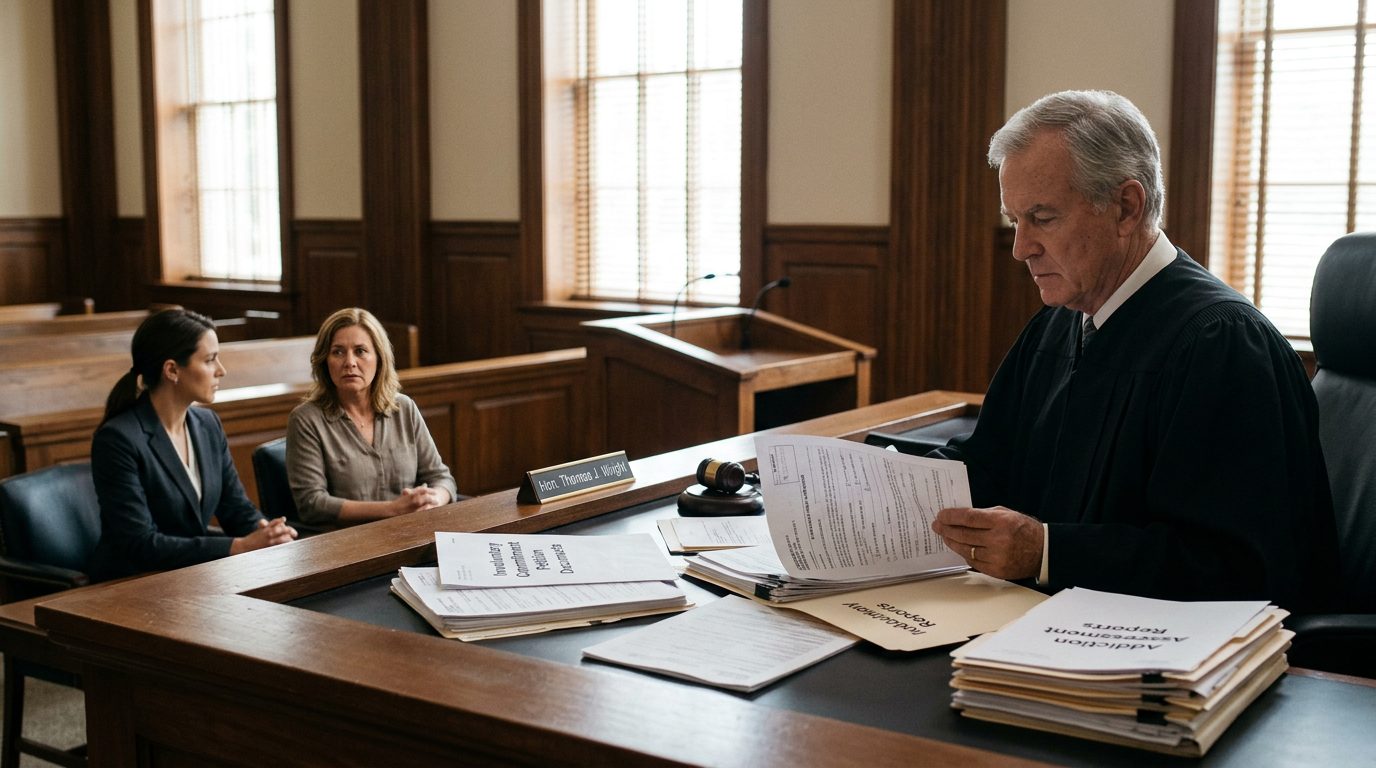
A judge reviews the petition and evidence presented. The person has the right to be heard and contest the petition at a hearing. They can present their own evidence and testimony. Commitment is reviewed regularly and can be terminated if criteria no longer apply.
Filing a Petition for Involuntary Commitment
A petition can be filed by a family member, friend, physician, or other authorized person. The petition must allege specific facts showing all three criteria are met. It should describe recent incidents, statements, or behaviors that demonstrate incapacity, serious harm, and refusal of treatment.
A judge holds a hearing and may order an evaluation by a physician or mental health professional. If the court finds criteria are satisfied, it may order emergency temporary commitment (typically up to 72 hours) or longer-term commitment for evaluation and treatment.
Learn more about how to file an involuntary commitment petition in Florida.
What Happens During an Involuntary Commitment Hearing
Law enforcement or emergency services transport the person to a designated facility. The facility conducts a medical and psychiatric evaluation to confirm the criteria and begin treatment planning. The person is informed of their rights and the reason for commitment.
A hearing is scheduled, typically within a few days, where the person can contest the commitment with an attorney if they wish. Treatment begins while legal proceedings continue. The person’s condition is monitored, and commitment is reviewed regularly.
For more information, see what happens during an involuntary commitment hearing in Florida.
Next Steps When Involuntary Commitment May Be Necessary
If you believe someone meets these three criteria, start by documenting specific incidents, statements, or behaviors. Write down dates, what happened, what was said, and how the person’s condition affects their safety and self-care. This documentation becomes evidence.
Consult with an attorney who handles involuntary commitment petitions to evaluate your situation against Florida law. Understand that the burden is on the petitioner to prove all three criteria to a judge. Be prepared to present evidence and testimony at a hearing.
Involuntary commitment provides access to treatment when voluntary options have failed. It is a necessary first step when someone is in crisis and refuses help.
FAQ: Three Criteria for Involuntary Commitment
What is the difference between emergency temporary commitment and longer-term commitment?
Emergency temporary commitment is typically 72 hours for initial evaluation and stabilization. Longer-term commitment follows a hearing and can extend beyond that period for ongoing treatment.
Can someone contest an involuntary commitment order?
Yes, the person has the right to a hearing where they can contest the commitment and present evidence that the criteria are not met.
How long can someone be involuntarily committed in Florida?
Emergency temporary commitment lasts up to 72 hours. Longer-term commitment is ordered by a judge after a hearing and can be extended if criteria remain met. It is reviewed regularly.
Can a family member petition for involuntary commitment?
Yes, a family member, friend, physician, or other authorized person can file a petition. A physician’s evaluation often supports the petition but is not required to initiate it.
What is the difference between involuntary commitment for mental health versus addiction?
The legal criteria are the same under both the Marchman Act (addiction) and guardianship law (mental health). The statutes and procedures differ slightly in how they define and address each condition.
If you're weighing whether involuntary commitment might be the right step for someone you care about, you don't have to figure out the legal criteria alone—reach out to discuss your situation. Talk it through with our team — the first consultation is free, confidential, and carries no obligation.

Robinson & Casey Handles Involuntary Commitment Cases
If you’re weighing whether involuntary commitment might be necessary for someone you care about—whether due to addiction, mental health crisis, or both—the legal criteria can feel complex during a difficult situation. Many families in South Florida and across the state reach out to discuss whether their circumstances meet Florida’s legal standards.
Robinson & Casey handles involuntary commitment for addiction and involuntary mental health commitment cases. We also assist with mental health guardianship matters.
Call (561) 849-4149 to schedule a consultation and discuss what you’re facing and whether a consultation would help clarify your options.
The Three Legal Criteria
Criterion 1: Likelihood of Serious Harm
Florida law permits involuntary commitment when a person is likely to cause serious bodily harm to themselves or others in the near future. This includes threats, recent violent acts, or clear statements of intent to harm. The standard focuses on imminent danger, not remote or speculative risk.
Criterion 2: Inability to Care for Oneself
A person may be committed if they cannot provide for their own food, clothing, shelter, or medical care due to mental illness or substance use disorder. This criterion recognizes situations where untreated addiction or mental health conditions have left someone unable to meet basic survival needs.
Criterion 3: Likelihood of Deterioration Without Treatment
Commitment is appropriate when there is substantial likelihood that a person will experience significant deterioration in their mental or physical condition if they do not receive involuntary treatment. This protects individuals whose conditions will worsen without intervention.
Important: Burden of Proof
The state must prove at least one of these three criteria by clear and convincing evidence—a high legal standard. The person subject to commitment has the right to contest the order and to be represented by an attorney during any hearing.
How Robinson & Casey Can Help
Marchman Act Petitions
We prepare and file involuntary commitment petitions under the Marchman Act for individuals struggling with addiction who meet one or more of these criteria.
Court Representation
We represent families and petitioners at commitment hearings, presenting evidence and legal arguments to support the case for involuntary treatment.
Emergency Temporary Commitment
We handle urgent situations requiring emergency temporary commitment orders, which provide initial evaluation and stabilization for up to 72 hours.
Clear Legal Guidance
We explain which criterion or criteria apply to your situation and what evidence will be needed to support a commitment petition in court.