
Florida Involuntary Civil Commitment
Understanding the Burden of Proof in Involuntary Commitment Cases
Florida law sets a high evidentiary standard to protect individual rights. Learn what the petitioner must prove and how Robinson & Casey can guide your family through the process.
By Richard J. Casey III, Esq. · Published September 30, 2026
What Burden of Proof Is Required for Involuntary Civil Commitments?
Involuntary civil commitment requires clear and convincing evidence—a legal standard higher than “more likely than not” but lower than “beyond a reasonable doubt.” This means the evidence must produce in the mind of the judge a firm belief that the person meets one or more criteria for commitment: danger to self, danger to others, or grave disability. The U.S. Supreme Court established this standard in Addington v. Texas (1979), and it applies nationwide, including in Florida.
Understanding this burden of proof is essential if you’re considering filing a Marchman Act petition (for involuntary commitment due to addiction) or any involuntary commitment petition. It tells you what evidence you need to gather and what a court will actually require before ordering commitment.
Not sure what your next step is?
Talk it through with our team — the first consultation is free, confidential, and carries no obligation.

The Constitutional Standard: Clear and Convincing Evidence
The U.S. Supreme Court held in Addington v. Texas that due process requires clear and convincing evidence in involuntary civil commitment cases because commitment deprives a person of liberty—one of the most fundamental constitutional rights.
Clear and convincing evidence sits between two other standards used in civil law. It’s more demanding than the standard used in most civil lawsuits, but less demanding than the standard used in criminal trials. This middle ground reflects the seriousness of what’s at stake: the loss of freedom, balanced against the state’s duty to protect public safety and care for people with serious mental illness or addiction.
The Supreme Court reasoned that a lower standard—mere preponderance of the evidence—would risk committing people who don’t truly meet the criteria. A higher standard would make it too hard for states to protect vulnerable individuals and the public. Clear and convincing evidence struck the right balance.
The Three Burdens of Proof in Civil Cases
To understand where involuntary commitment sits legally, it helps to know the three standards courts use:
Preponderance of the evidence (lowest): The evidence shows it’s more likely than not—just over 50%—that the claim is true. This standard applies to most civil cases: contract disputes, personal injury lawsuits, divorce proceedings.
Clear and convincing evidence (intermediate): The evidence must be substantially more likely to be true than untrue. It must produce a firm belief in the judge’s mind about the truth of what’s alleged. This standard applies to involuntary commitment, guardianship, and other cases involving fundamental rights or serious consequences.
Beyond a reasonable doubt (highest): The evidence must be so strong that no reasonable person could doubt the defendant’s guilt. This standard applies only in criminal cases, where a person’s freedom and reputation are at stake.
Involuntary commitment sits in the middle because it involves loss of liberty—serious—but isn’t a criminal proceeding.
The Three Criteria for Involuntary Commitment
Before a court can order involuntary commitment, the petitioner must prove by clear and convincing evidence that the person meets at least one of these three criteria:
Danger to self: The person poses a substantial risk of serious bodily harm to themselves through suicide, self-injury, or reckless behavior driven by mental illness or substance use disorder.
Danger to others: The person poses a substantial risk of serious bodily harm to another person through violence, threats, or behavior driven by mental illness or substance use disorder.
Grave disability: The person is unable to care for themselves—unable to obtain or use food, clothing, shelter, or medical care—as a result of mental illness or substance use disorder, and lacks the judgment to seek help.
A single criterion, proven by clear and convincing evidence, is enough. The court does not need to prove all three.
How Florida Applies the Burden of Proof
Florida law requires clear and convincing evidence before a court may order involuntary commitment. This applies to Marchman Act petitions (involuntary commitment for addiction) and mental health commitments alike.
In the cases Robinson & Casey handles, the petitioner—typically a family member, caregiver, or healthcare provider—bears the burden of presenting evidence. The respondent (the person whose commitment is sought) is not required to prove they don’t meet the criteria. The burden is entirely on the petitioner to prove they do.
This distinction matters. It means you cannot simply ask the court to commit someone and expect them to disprove it. You must affirmatively present evidence—testimony, medical records, behavioral observations, or expert witness testimony—that meets the clear and convincing standard.
What Evidence Satisfies the Clear and Convincing Standard?
Courts look for concrete, documented evidence. Vague concerns or general worry typically won’t suffice. Here’s what courts actually consider:
- Specific, documented incidents: A dated account of self-harm, suicide attempt, threat of violence, or violent act. For example, “On March 15, he said he was going to kill himself and had a knife in his hand.”
- Medical or psychiatric evaluations: A diagnosis from a physician or licensed mental health professional who has examined the person.
- Testimony from family members or witnesses: Direct observation of behavior—what the person said, did, or threatened—that demonstrates danger or grave disability.
- Testimony from a physician or mental health professional: An expert witness who has evaluated the person and can testify about their condition and risk.
- Records of prior hospitalizations or emergency interventions: Documentation of past crises, psychiatric admissions, or emergency department visits.
- Evidence of inability to care for self: Records showing the person hasn’t eaten, bathed, obtained shelter, or taken prescribed medications due to their condition.
- Records of substance use or intoxication: Drug screens, arrest records, or observations of active use.
The more specific and recent the evidence, the stronger the case. A single incident from years ago, without more, may not meet the standard. A pattern of recent, documented incidents is more persuasive.
Not sure what your next step is?
Talk it through with our team — the first consultation is free, confidential, and carries no obligation.
The Role of the Hearing in Establishing Burden of Proof
At an involuntary commitment hearing, the process works like this:
The petitioner presents evidence first—witness testimony, medical records, and arguments about why the person meets one or more criteria. The respondent then presents their own evidence and arguments. The judge or hearing officer listens to both sides.
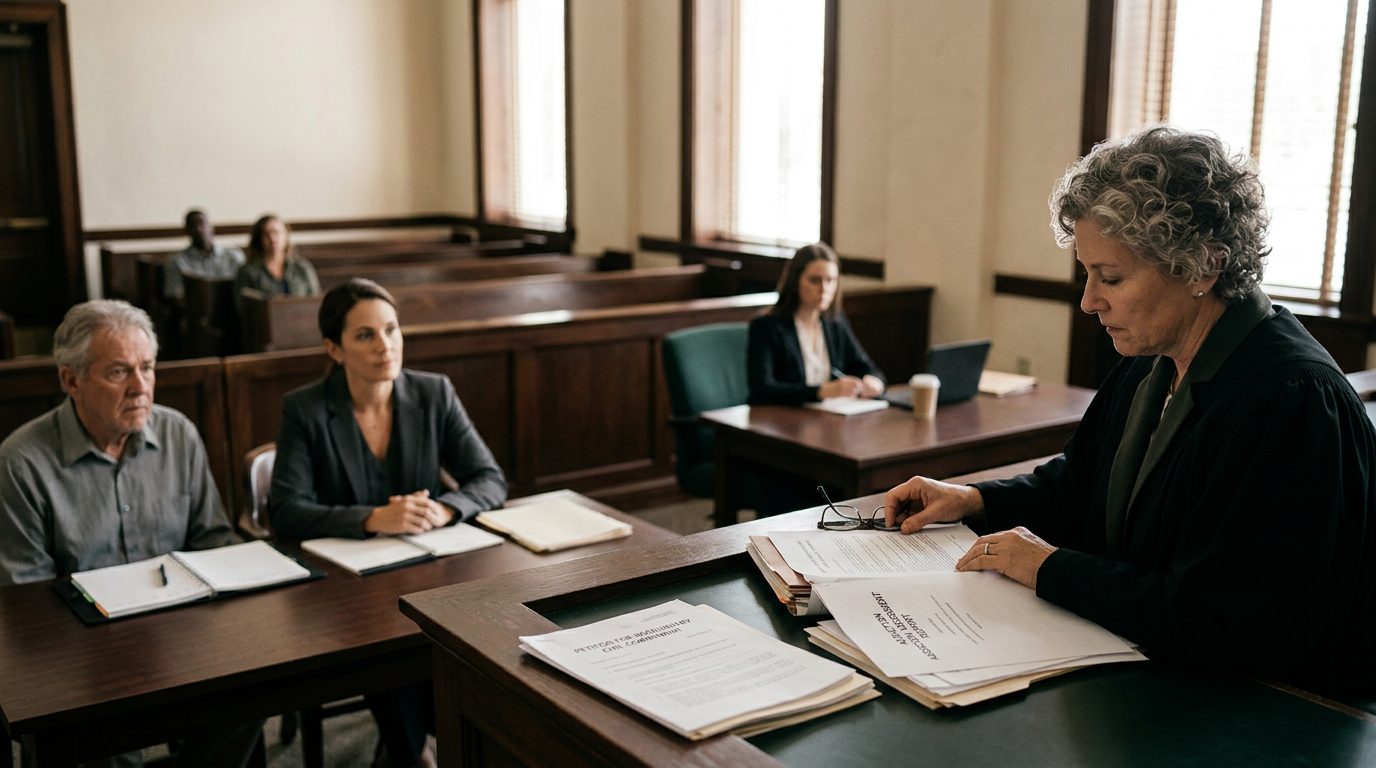
The judge must then decide: Does the evidence presented meet the clear and convincing standard? If yes, the court may order involuntary commitment. If no—even if the judge believes commitment might help—the petition is denied.
This is a critical protection. It means a court cannot order commitment based on sympathy, hunches, or the belief that treatment would be good. The evidence must actually meet the legal threshold.
Addington v. Texas and Its Nationwide Impact
The 1979 Supreme Court decision in Addington v. Texas established the clear and convincing standard as a constitutional requirement. The Court recognized that involuntary commitment is one of the most serious deprivations of liberty a state can impose outside the criminal justice system.
The decision balanced two competing interests: the state’s legitimate interest in protecting public safety and providing care to people with serious mental illness or addiction, and the individual’s constitutional right to freedom. The Court concluded that clear and convincing evidence was the right balance.
This ruling applies in every state, including Florida. No state can use a lower standard. Some states use the same standard; a few use an even higher one. But clear and convincing evidence is the constitutional floor.
Why This Matters When You’re Facing a Commitment Decision
If you’re considering filing a petition for someone you care about—someone struggling with addiction, mental illness, or both—understanding the burden of proof changes how you prepare.
It means you need to gather specific, documented evidence. Emotional appeals or general concern, without concrete incidents or professional assessment, won’t persuade a court. It also means that even if you believe commitment is necessary, a court may deny your petition if the evidence falls short—and that’s by design. The standard protects people from being committed on weak grounds.
At the same time, if the evidence genuinely meets the clear and convincing standard, a court will order commitment. The burden exists to ensure that commitment is used appropriately, not arbitrarily.

Frequently Asked Questions
What’s the difference between clear and convincing evidence and preponderance of the evidence?
Preponderance means “more likely than not”—just over 50%. Clear and convincing means substantially more likely to be true than untrue, with a firm belief in the judge’s mind. Clear and convincing is a higher bar.
Can a Marchman Act petition be granted without clear and convincing evidence?
No. Florida law requires clear and convincing evidence before a court may order involuntary commitment for addiction or mental health reasons.
Who has the burden of proof—the petitioner or the person being committed?
The petitioner (the person filing the petition) has the burden. The respondent is not required to prove they don’t meet the criteria.
What happens if the evidence doesn’t meet the clear and convincing standard?
The petition is denied. The court will not order commitment, even if it believes commitment might be helpful.
Does a physician or mental health professional’s testimony automatically satisfy the burden?
Not automatically. The professional’s testimony must be specific, based on examination or observation, and address the criteria for commitment. General opinions without factual support may not carry enough weight.
If you’re in the middle of a crisis or decision about whether someone needs involuntary commitment for addiction or mental health reasons, you’re likely gathering evidence, talking to doctors, and trying to understand what a court will actually require. Many families in South Florida find themselves in exactly this position—uncertain about the process, the evidence needed, and what comes next. Reach out to discuss your situation and get clarity on what the law requires in your case.
The Two Standards of Proof in Florida Commitment Cases
Preponderance of the Evidence
The lower standard, meaning "more likely than not"—just over 50% certainty. This applies to initial temporary involuntary placement orders and some guardianship proceedings.
Clear and Convincing Evidence
The higher standard, requiring substantially more certainty that the facts are true than untrue, with a firm belief in the judge's mind. This applies to extended involuntary commitment orders under the Marchman Act and certain guardianship determinations.
Critical Distinction
A Marchman Act petition for involuntary commitment of an adult for substance abuse treatment cannot be granted on preponderance alone. Florida law requires clear and convincing evidence that the person meets the statutory criteria for involuntary placement.
What Robinson & Casey Brings to Your Case
Evidence Preparation
We help gather and organize medical records, witness statements, and clinical documentation to meet the clear and convincing standard.
Legal Representation
We present your case before the court, ensuring the evidence meets Florida's strict burden of proof for involuntary commitment.
Family Guidance
We explain what the court will require and what to expect throughout the involuntary commitment process.
Time-Sensitive Action
Involuntary commitment matters move quickly. We act promptly to protect your family member's rights and pursue appropriate treatment.