
Marchman Act & Guardianship | Miami-Dade and South Florida
Refused Treatment? Start With the Right Words, and the Right Plan
Robinson Casey focuses on Marchman Act petitions and guardianship matters for families in Miami-Dade and across South Florida. Richard J. Casey III, Esq. is the responsible lawyer for this page.
By Richard J. Casey III, Esq. · Published October 25, 2026
If someone you love refuses addiction treatment, a calm, private talk when they are sober is a good place to start. What you say, how you say it, and what you do after a “no” all matter. This guide explains what to say to someone who refuses addiction treatment, what to avoid, and how Florida’s Marchman Act may come into play if talking is not enough.
This page is written by Richard J. Casey III, Esq., the responsible attorney at Robinson Casey. The firm limits its practice to Marchman Act and guardianship matters.
You may be scared, worn out, or responsible for someone else’s safety. That is a hard place to be. You don’t have to work through it alone.
Why an Adult Often Refuses Addiction Treatment
Refusal often comes from denial, fear, shame, or not feeling ready. Some people don’t see the problem as serious. Others fear losing control, or they feel too ashamed to admit they need help.
A first “no” doesn’t end the conversation. Florida law also says that a refusal alone is not proof of a lack of judgment. Under Fla. Stat. § 397.675, mere refusal to receive services does not constitute evidence of lack of judgment about the need for them. Under Fla. Stat. § 397.675, a person meets the criteria for involuntary admission only if there is good faith reason to believe the person is substance abuse impaired (or has a substance use disorder and a co-occurring mental health disorder) and, because of that, has lost the power of self-control over substance abuse, and either needs substance abuse services but has judgment so impaired that they cannot appreciate that need or make a rational decision about it, or, without care, is likely to suffer neglect posing a real and present threat of substantial harm that it is not apparent can be avoided through the help of willing, able, and responsible family members or friends or other services, or there is a substantial likelihood that they have inflicted, threatened or attempted to inflict, or, unless admitted, are likely to inflict physical harm on themselves or another.
This guide covers words, boundaries, and legal options. It can’t promise that any single conversation will change a person’s mind. Think of it as a plan for the next talk, not a script that always works.
If your loved one keeps saying no and your family's safety feels at risk, you don't have to face it alone. Call (561) 849-4149 to talk it through. Talk it through with our team — the first consultation is free, confidential, and carries no obligation.

Prepare Before You Start the Conversation
Pick a calm, private time when the person is sober and not in the middle of an argument. Preparation helps you stay steady when the talk gets hard.
Write down two or three recent, specific examples. Missed work, unsafe driving, missing money, or a change in health are concrete. “You always ruin everything” is not. Specifics are harder to dismiss and easier to discuss.
Decide what you are asking for before you talk. Is it a conversation with a doctor, an assessment, or a specific program? Then decide what you will do if the answer is no. A plan keeps you from making threats in the heat of the moment.
Keep the group small. Involve only people the person trusts and who can stay calm. A meeting with many people can feel like an ambush and make defensiveness worse.
What to Say: Opening Words That Lower Defensiveness
Start with “I” statements about your own worry, then name one or two examples. For instance: “I’m worried about you. You missed the last two family dinners, and I’ve been scared about you driving at night.”
Ask an open question, then listen. “What do you think is going on with you lately?” invites more talk than a question that gets a yes or no. Let the person finish before you respond.
Say your goal plainly. “I want you safe, and I want you in our lives” tells them the talk is about love, not punishment.
Offer one small, specific next step. “Would you see a doctor for a checkup with me this week?” is easier to accept than a broad demand to “get help.”
Expect anger or denial the first time. If the talk escalates, end it calmly. Say, “Let’s pick this up tomorrow,” and then keep that promise.
What to Avoid Saying and Why It Backfires
Avoid arguing about whether the person is an addict. Debate usually hardens a refusal. The person ends up defending the label instead of looking at the problem.
Avoid threats you won’t carry out. An ultimatum you don’t follow through on weakens every later conversation, because the person learns your words don’t carry weight.
Avoid shame, name-calling, and comparisons with siblings or friends. These usually push someone further away from the people trying to help.
Avoid promises to “fix” things, and avoid keeping secrets that could put anyone at risk. A promise you can’t keep damages trust. A secret about safety can cause real harm.
Set Boundaries Without Enabling
Enabling means making it easier for someone to keep using. Covering for missed work, paying bills tied to substance use, or making excuses to others are common examples.
Choose limits you can actually keep. You might decide not to lend money, or not to allow use in your home. State the limit once, calmly, and then follow it.
Keep the door open. Tell your loved one that your offer to talk, and to get help when they are ready, still stands. This makes clear that your boundary is about their choices, not about cutting them off.
Protect your own health and sleep, too. Set limits on late-night calls, surprise visits, and repeated arguments. Keep your own support in place so you aren’t carrying this alone.
When Talking Is Not Enough: Florida’s Marchman Act
Florida’s Marchman Act is the state’s law for helping people who are severely impaired by substance abuse. The Florida Department of Children and Families says the Act allows voluntary admission and involuntary assessment, stabilization, and treatment for adults and youth. Whether the criteria are met depends on the facts.
Voluntary treatment comes first in many cases. Under Fla. Stat. § 397.601, a person who wants treatment may apply to a service provider for voluntary admission.
If the person refuses, the court process is different. Under Fla. Stat. § 397.68112, an adult respondent’s petition may be filed by a spouse or legal guardian, any relative, a service provider, or an adult with direct personal knowledge of the respondent’s substance abuse impairment and his or her prior course of assessment and treatment.
Venue matters too. Under Fla. Stat. § 397.681(1), a Marchman Act petition must be filed with the clerk of the court in the county where the person is located.
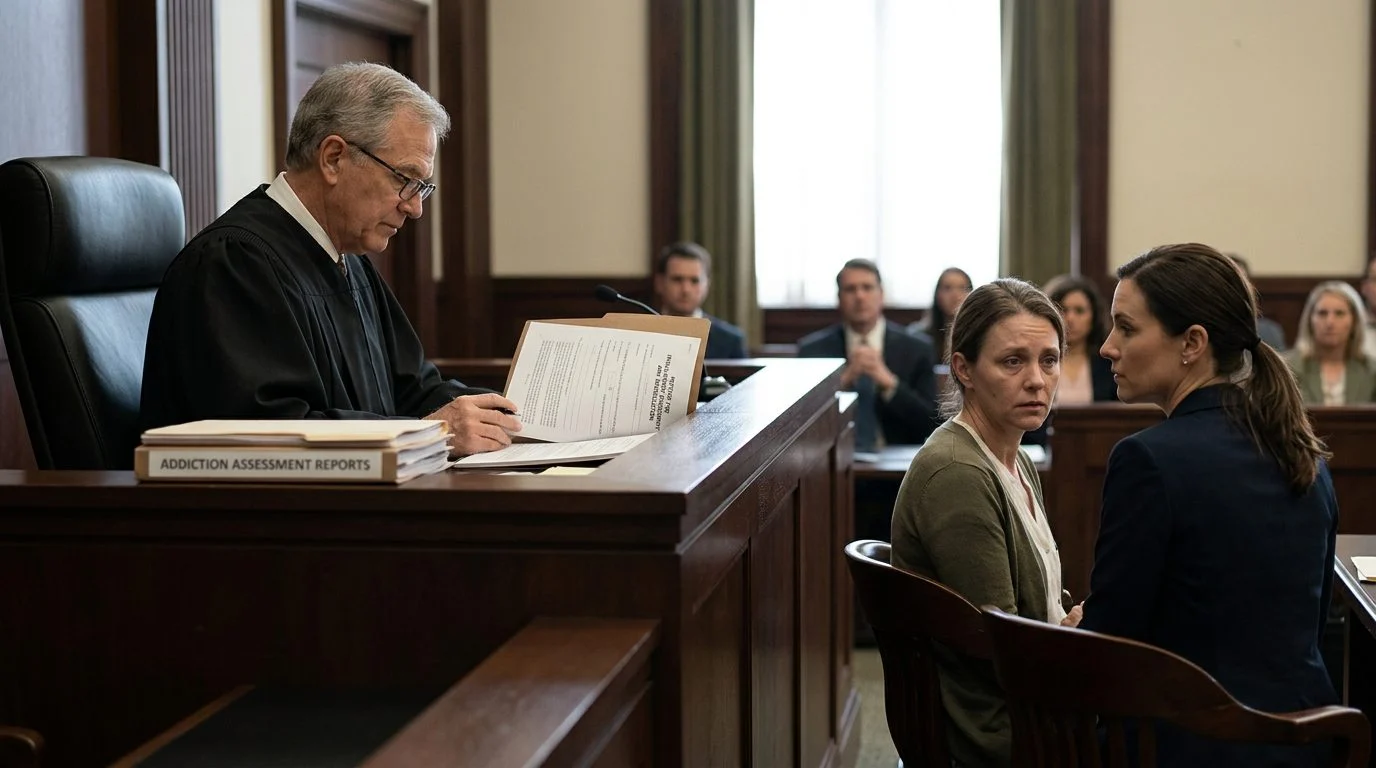
The respondent has a right to counsel at every stage, unless the respondent may waive that right if the respondent is present and the court finds that such waiver is made knowingly, intelligently, and voluntarily, under Fla. Stat. § 397.681. A court must schedule a hearing within 10 court working days unless a continuance is granted, under Fla. Stat. § 397.68151.
Not sure what your next step is?
Talk it through with our team — the first consultation is free, confidential, and carries no obligation.

Next Steps If You Are Facing This Now
If you are in the middle of this now, you may be watching someone you love put themselves or others at risk. That is exhausting, and you don’t have to decide your next step alone.
Can a Florida court force an adult into addiction treatment?
A court can order involuntary treatment for up to 90 days. The court must first find the conditions proved by clear and convincing evidence, under Fla. Stat. § 397.697.
Who can file a Marchman Act petition for an adult?
For an adult respondent, a spouse or legal guardian, any relative, a service provider, or an adult who has direct personal knowledge of the respondent’s substance abuse impairment and his or her prior course of assessment and treatment can file. For a minor respondent, a parent, legal guardian, or service provider can file. Florida law sets out who may file a petition for involuntary treatment services.
If you’re facing this decision now, call (561) 849-4149 or reach out through our contact page. Your first consultation is free, confidential, and carries no obligation to continue.
How Robinson Casey Can Help Your Family
Confidential Conversations
Talk through your concerns about a loved one's addiction in a private, judgment-free setting.
Clear Explanation of Options
Learn how a Marchman Act petition, guardianship, or other court process may apply to your situation.
Focused Legal Work
Our team concentrates on Marchman Act and guardianship matters, so your case is handled by people who work in these areas every day.
Support for Families
We understand how painful it is to watch someone you love refuse help, and we work to keep you informed at every step.
Important: Act Promptly if Safety Is at Risk
If your loved one is in immediate danger, call 911 or go to the nearest emergency room. Do not wait for a conversation to go well before seeking legal guidance about court options.
What to Say, and What to Avoid
Lead With Love and Concern
Say, "I love you and I am worried about you." Specific, calm words about your feelings are easier to hear than arguments about their behavior.
Describe What You Have Seen
Share concrete examples, such as missed work or unsafe driving, without blame or labels. Facts are harder to dismiss than accusations.
Offer Options, Not Ultimatums
Invite a conversation about treatment options. Pressure and threats often make people dig in, so keep the door open even after a refusal.
Avoid Arguing or Bargaining
Don't debate whether they have a problem in the middle of a crisis. Step back, stay calm, and return to the conversation when emotions settle.