

Marchman Act Guidance | Miami-Dade & South Florida
Not Ready for Help? Here's What to Say Next
Calm, specific words can keep the conversation open with someone who refuses addiction treatment. Learn how Florida's Marchman Act works if the situation becomes urgent.
By Richard J. Casey III, Esq. · Published October 23, 2026
Knowing what to say to someone who refuses addiction help starts with calm, specific facts and real concern. Avoid labels, threats, and debates. If talking does not work, Florida’s Marchman Act offers a court process. This page explains both steps in plain language.
Where You Are Right Now
If you are reading this, you are probably worried about an adult you love. You may not have chosen this situation. You may be the one who has to decide what comes next, even though the person says they do not need help.
This page covers three things. It covers the first conversation and what to avoid saying. It covers support that does not force the issue. It also explains, in general terms, how Florida’s Marchman Act fits in if talking is not enough.
This is general information about addiction and Florida law. It is not advice about any one person’s case. Every family’s facts are different, and the right next step depends on those facts.
When a loved one keeps refusing help, the next choice can feel impossible to make alone, and our team is glad to talk through your facts with you. Talk it through with our team — the first consultation is free, confidential, and carries no obligation.
Why an Adult May Refuse Help
An adult who says no to help is often not just being stubborn. Substance use affects a person’s choices, and it affects the people around them too. A review of family and social aspects of substance use disorders notes that family and community supports can help address these problems and support recovery.
Common reasons for a “no” include:
- Denial. The person does not see the problem the way you do.
- Fear. They may fear withdrawal, losing a job, or losing a home or partner.
- Shame. Admitting a problem can feel like admitting failure.
- Feeling judged. Lectures and corners make people defensive.
Arguing about whether there is a problem often leads to more refusal. When someone feels attacked, they defend the use, not the idea of treatment. Florida’s statute also says that mere refusal to receive services does not constitute evidence of lack of judgment with respect to his or her need for such services.
What to Say in the First Conversation
Start with a calm moment. Pick a time when the person is sober, if possible, and a private place with no audience.
Describe specific things you have seen. Use dates and facts, such as “On March 3 you did not come home, and I could not reach you.” Avoid labels like “addict” or “alcoholic.” Labels make people defensive, and they shut down the talk.
Use “I” statements that show concern and love. Try lines like these:
- “I am worried about you, and I want you to be safe.”
- “I love you, and I can’t keep watching this without saying something.”
- “I want us to find a doctor you trust to talk about this.”
If the person is already in treatment or thinking about it, say so out loud. Acknowledge their effort and tell them they are not alone. CRAFT, a family training approach, focuses on positive communication and reinforcing sober behavior.
Keep the goal small. One honest talk is enough for now. You are not trying to win the argument or get a final answer that day.
What to Avoid Saying and Doing
Avoid guilt, threats you do not plan to carry out, and ultimatums said in anger. A threat you do not follow through on teaches the person that your words carry little weight.
Watch for enabling. Enabling means shielding the person from the results of their use. Examples include paying bills they should handle, lending cash that may fund use, or making excuses to their boss or family. Partnership to End Addiction gives general guidance on telling supportive help from enabling.
Financial boundaries protect you and your household. You might decide not to pay for items that fund use. Say it calmly, then keep to it.
Do not debate while the person is intoxicated. Arguments with someone under the influence rarely lead to clear decisions. Wait for a sober moment, if one comes.
Offering Support Without Forcing the Issue
Support can keep the door open even after a no. Many people accept a checkup with their own doctor more readily than a treatment program. Suggest it as a simple first step, not a verdict.
Offer concrete help. You might drive them to an appointment or sit with them while they make a call. Do this without making it a condition of your relationship.
The adult keeps the right to decide. You can say, “The offer stands. If you change your mind, I’ll help.” Then follow through. Your steady follow-through builds trust over time. Partnership to End Addiction’s family therapy guidance describes coached behavior changes and constructive limits that families can practice at home.
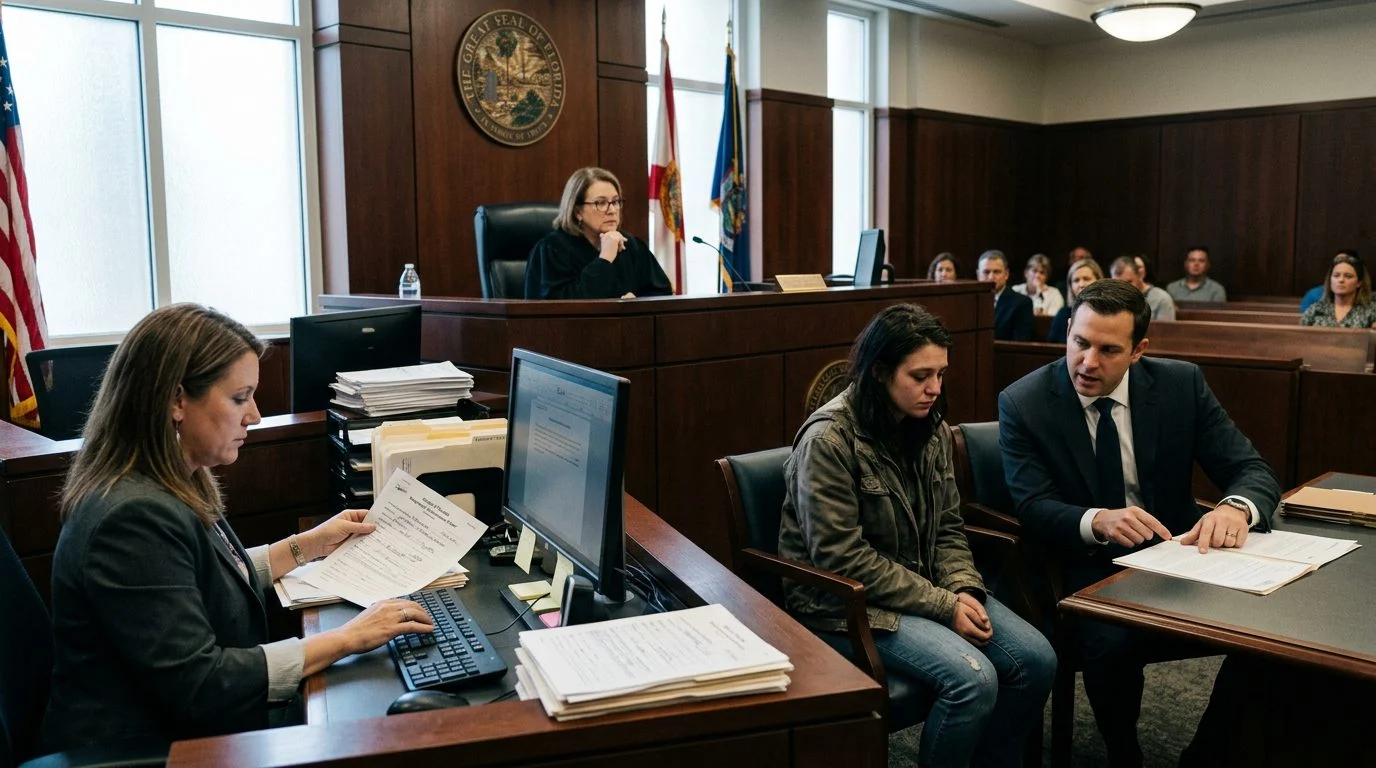
When Conversation Is Not Enough: The Marchman Act in Florida
It sets up a court process for involuntary assessment and stabilization for substance use. A judge may act only if the statutory criteria are met. Those include a good faith reason to believe the person is substance abuse impaired, and that the impairment has caused them to lose the power of self-control with respect to substance use (§ 397.675).
For an adult, a petition may be filed by a spouse or legal guardian, any relative, a service provider, or an adult with direct personal knowledge of the impairment and his or her prior course of assessment and treatment (§ 397.68112). The petition goes to the clerk in the county where the person is located, and the clerk may not charge a filing fee (§ 397.681). The respondent has a right to counsel at every stage of the case, though the respondent may waive that right if present and the court finds the waiver is made knowingly, intelligently, and voluntarily (§ 397.681).
The petition must name the people involved and state the facts that support the request (§ 397.68141). The court schedules a hearing within 10 court working days unless a continuance is granted (§ 397.68151). At the hearing, the court reviews evidence, including testimony from family members who know the person’s history (§ 397.6957).
If the conditions are proved by clear and convincing evidence, treatment may be ordered for up to 90 days (§ 397.697). The outcome depends on the facts, and no page can predict how a court will rule. Florida appellate courts have also split on how a hearing runs when the petitioner is absent, so that question is not settled statewide.
Not sure what your next step is?
Talk it through with our team — the first consultation is free, confidential, and carries no obligation.
Frequently Asked Questions
What do I say to someone who refuses addiction help?
Start with specific facts, use “I” statements, and keep the talk short. Say you are worried and that the offer of help stands.
Is involuntary treatment available in Florida?
Florida’s Marchman Act provides a court process for involuntary assessment and treatment for substance use. The process has set steps and standards, described above.
Do I have to file if the person refuses help?
Can I talk to a lawyer without committing to anything?
Yes. Robinson Casey offers a free, confidential initial consultation with no obligation to continue (Spanish: “consulta inicial gratuita, confidencial y sin compromiso”).
Talking Through Your Situation With Robinson Casey
If you’re still wondering what to say to someone who refuses addiction help, you may also be weighing legal steps while still hoping for change at home. That is a hard place to stand, and you don’t have to sort it out alone. This page was written for Robinson Casey by Richard J. Casey III, Esq., whose practice concentrates on Marchman Act and guardianship matters. Families in Miami-Dade and South Florida are welcome to call (561) 849-4149 or ask for a consultation through our contact page to talk through their specific facts, with no pressure to move forward.
Why families bring these questions to Robinson Casey
Focused practice
Robinson Casey focuses on Marchman Act petitions and guardianship matters for families across South Florida and statewide.
Free first consultation
Your first consultation is free, confidential, and carries no obligation to continue.
Support for families
Our team helps relatives understand their options and the steps involved, so they can decide what comes next.
Easy to reach
Call (561) 849-4149 or request a consultation to talk through your situation.
If someone is in immediate danger
If the person may hurt themselves or someone else, call 911 right away.
Ways to open the conversation
Choose a calm moment
Talk when you both are sober, rested, and not in the middle of an argument. Short, private conversations usually go better than group confrontations.
Name specific facts
Describe what you have seen, such as missed work, unsafe driving, or changes in health. Specific examples are harder to dismiss than general labels.
Speak in "I" statements
Try "I am worried about you" instead of "You have a problem." This lowers defensiveness and keeps the focus on your concern.
Keep the offer of help open
Let them know that help is still available whenever they want it. Ending on an open door makes it easier for them to return to the conversation later.