
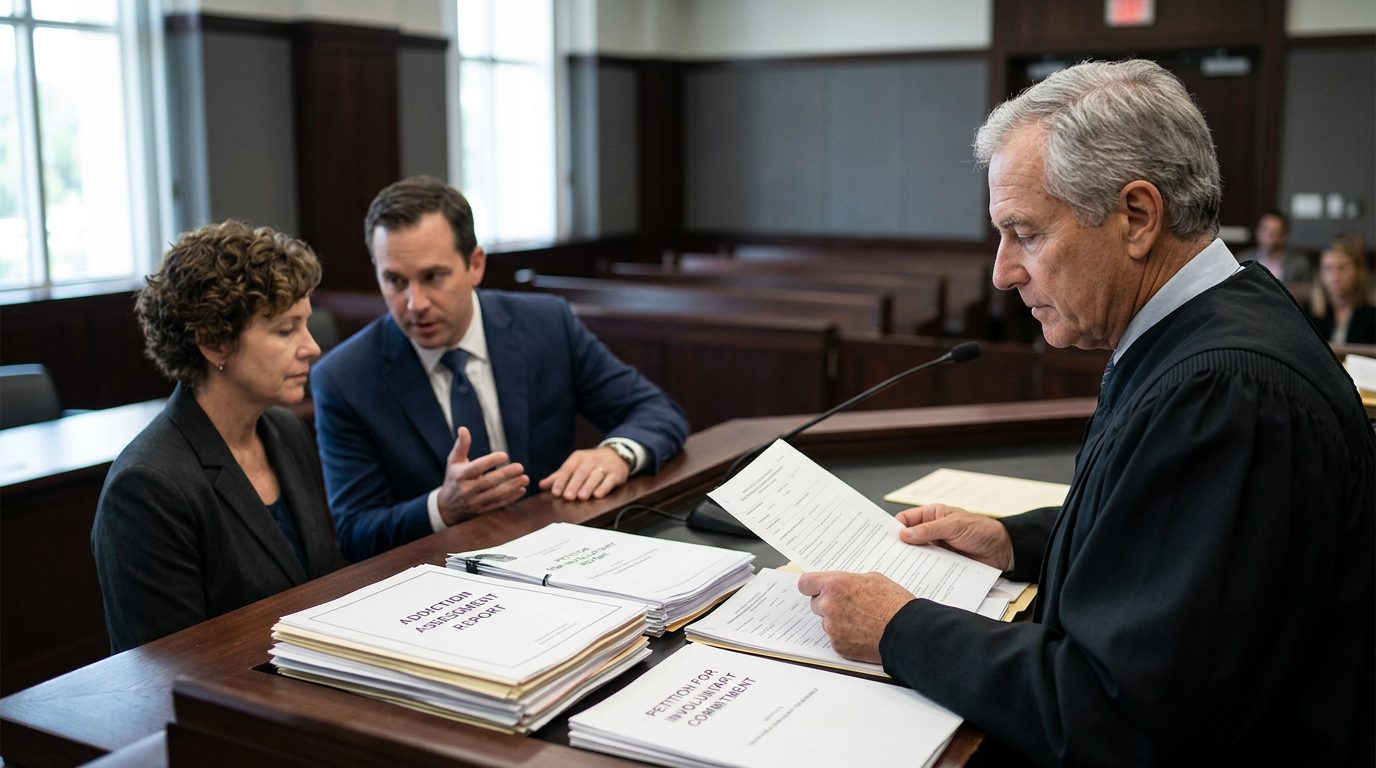
Involuntary Commitment for Addiction
Who Can File for Involuntary Commitment in Florida
Understanding who has the legal standing to petition for addiction treatment under Florida law
By Richard J. Casey III, Esq. · Published October 03, 2026
Who Can File an Involuntary Commitment for Addiction in Florida
Florida law allows specific people to file a petition for involuntary commitment for addiction—your spouse, relatives, guardians, or any three adults with personal knowledge of the addiction can petition a court for treatment. Not everyone concerned about someone’s substance abuse has the legal right to file, though. Understanding who can file helps you know whether you’re the right person to take this step.
If you’re trying to help a family member struggling with addiction and wondering whether you can take legal action, you’re not alone. Talk it through with our team — the first consultation is free, confidential, and carries no obligation.

Who Has Legal Standing to File an Involuntary Commitment Petition for Addiction
Legal standing means the law recognizes you as having the right to bring a petition to court. In Florida, standing to file a Marchman Act petition for involuntary commitment rests with people who have a direct connection to the person and knowledge of their addiction.
Family Members Who Can File
Spouses have standing to file a petition for an addicted partner. Adult children can petition for a parent; parents can file for an adult child. Siblings may have standing if they can demonstrate direct knowledge of the addiction and its impact.
Grandparents, aunts, uncles, and other relatives may also file if they meet the core requirement: personal knowledge of the person’s substance abuse problem. The law recognizes that family members often have direct, firsthand knowledge of the addiction and its consequences—missed work, dangerous behavior, deteriorating health, or involvement with substances.
Family members are often the first to recognize when addiction has reached a point where intervention is necessary. Your relationship to the person and your ability to describe specific incidents strengthen your petition.
Healthcare Providers and Medical Professionals
Physicians who have examined or treated the person can file a petition. Mental health professionals with direct clinical knowledge of the person’s condition may have standing. Treatment providers and counselors who work with the person may also be able to file in certain situations.
Medical professionals bring clinical documentation and professional assessment to the petition, which can be powerful evidence in a hearing. A physician’s written observations about the person’s substance abuse and its medical consequences carry significant weight with the court.
Law Enforcement and Government Officials
Police officers and law enforcement may file in emergency situations when they have direct knowledge of substance abuse. Probation or parole officers can file if the person is under their supervision and the addiction violates the terms of supervision.
The Florida Department of Children and Families may file in cases involving child welfare or when a child’s safety is at risk due to a parent’s or caregiver’s addiction. Other government agencies may have standing depending on their involvement with the person.
What Personal Knowledge Requires
The core requirement for filing is personal knowledge of the person’s substance abuse problem. You must be able to describe specific behaviors, incidents, or evidence of addiction—not just a general belief that someone has a problem.
Personal knowledge means you have witnessed the addiction directly or have reliable, firsthand information about it. Examples include:
- Observing the person using substances
- Witnessing intoxication or impairment
- Finding evidence of substance use in their home or vehicle
- Hearing admissions from the person themselves
- Observing deterioration in health, employment, or relationships tied to substance abuse
- Being told by medical providers or treatment professionals about the addiction
You don’t need to be a lawyer or have formal training to file. However, your petition must meet legal requirements and describe the situation clearly enough for a judge to understand why involuntary commitment is necessary.
Not sure what your next step is?
Talk it through with our team — the first consultation is free, confidential, and carries no obligation.
Can You Have a Family Member Involuntarily Committed?
Yes, Florida law allows family members to petition for involuntary commitment for addiction. The person does not have to consent to the petition. The petition goes to a court, which decides whether the legal criteria for commitment are met.
A judge will review the evidence and hold a hearing before ordering commitment. The goal is treatment and stabilization, not punishment. Under the Marchman Act, involuntary commitment is designed to get the person into assessment and treatment when they cannot or will not seek help on their own.
How the Petition Process Works
A person with standing may file a written petition with the circuit court. The petition describes the person’s addiction, specific incidents that demonstrate substance abuse, and why you believe treatment is necessary.
In emergency situations, a judge may issue a temporary ex parte order (an order made without the person being present) for involuntary assessment and stabilization, as the Marchman Act provides, with the timing of any further proceedings subject to the court’s discretion and schedule. A full hearing may then be held, on the court’s schedule, where both the petitioner and the person being petitioned against can present evidence and witnesses.
The judge decides whether to order involuntary commitment based on whether the legal criteria are met. If the criteria are satisfied, the court may issue an order for involuntary commitment, and the person may be admitted to a treatment facility for evaluation and care.
When You Might Need Legal Help
Filing a petition requires understanding Florida’s specific legal requirements and procedural rules. The petition must contain sufficient factual detail and meet the court’s procedural standards, or it may be rejected or delayed.
An attorney can review your petition before you file it. An attorney can help you gather documentation, organize your evidence, and prepare for the hearing. Legal guidance can help you understand the requirements for filing your petition.

FAQ
What does personal knowledge mean in the context of a Marchman Act petition?
Personal knowledge means you have direct, firsthand information about the person’s substance abuse—you’ve witnessed it, observed its effects, or received reliable information from someone with direct knowledge.
Can three unrelated adults file a petition together?
Yes, any three adults who are not related to each other and have personal knowledge of the person’s substance abuse can jointly file a petition.
What happens at the Marchman Act hearing?
Both sides present evidence and arguments; the judge decides whether the legal criteria for involuntary commitment are met and issues an order if they are.
How quickly does the court act on a Marchman Act petition?
In emergency situations, a judge may issue a temporary ex parte order, and the timing of a full hearing depends on the court’s schedule and the circumstances of the case.
If you’re in the middle of a family crisis involving addiction and you’re trying to figure out whether you have the legal right to file for involuntary commitment, this is the kind of question an attorney can help you think through. We can walk you through the requirements, review your circumstances, and help you understand your next steps. Contact us to discuss your situation with an attorney.
Who Has Standing to File
Family Members
A spouse, parent, adult child, or sibling of the person struggling with addiction may file a petition for involuntary commitment.
Three Unrelated Adults
Any three adults who have personal knowledge of the person's substance abuse and its impact may jointly file a petition together.
Healthcare Providers
A physician, mental health professional, or other healthcare provider with direct knowledge of the person's addiction may initiate a petition.
Law Enforcement & Officials
Police officers, sheriffs, and other law enforcement personnel, as well as certain state officials, may file petitions based on observed substance abuse.
Personal Knowledge Matters
Florida law requires that whoever files the petition have personal knowledge of the person's substance abuse—meaning direct, firsthand observation or reliable information from someone with direct knowledge. Secondhand rumors or assumptions are not sufficient grounds.
Key Points About Filing for Involuntary Commitment
No Relationship Required (In Some Cases)
While family members and healthcare providers commonly file, Florida law also allows three unrelated adults to petition together if they have personal knowledge of the addiction.
Documentation Strengthens Your Petition
Medical records, treatment history, incidents of substance abuse, and observations from witnesses with personal knowledge all support a stronger petition.
Legal Process Protects Rights
Florida's involuntary commitment process includes judicial review to ensure the person's rights are protected while addressing the substance abuse crisis.
Time-Sensitive Situations
If someone is in immediate danger due to substance abuse, emergency temporary commitment may be available through law enforcement or emergency services.