
Marchman Act Petitions · South Florida
Who Gets Notified of a Marchman Act Petition in Florida?
A plain-language guide from Robinson Casey, a firm that focuses on Marchman Act petitions and guardianship matters for families across South Florida and statewide. Responsible attorney: Richard J. Casey III, Esq.
Casey III, Esq. · Published November 6, 2026
Here is the short answer to who gets notified of a Marchman Act petition Florida courts handle. The person named in the petition gets a copy of it and a notice of the hearing. The petitioner, the respondent’s attorney if known, a spouse or guardian if one applies, a parent, guardian, or legal custodian if the respondent is a minor, and anyone else the court directs also receive copies under Fla. Stat. § 397.68151.
If you’re reading this, a loved one may be in crisis. You didn’t choose that position. This page explains who receives each document, in plain terms, so you know what to expect.
The Marchman Act is Florida’s civil process for court-ordered assessment and treatment of substance use impairment. For the full process, start with our Marchman Act guide.
What the Marchman Act Is and Why Notice Matters
Notice matters because it tells each person what was filed and when the hearing is set. It also tells the person named that they have the right to counsel. Many families first learn about a petition from a phone call or a knock at the door. The papers can arrive fast. The rules below come from the current text of Chapter 397, which was amended in 2024 and 2025. Older online explainers may describe earlier rules.
If a petition about your loved one has been filed, or you expect one, you don't have to sort out the notice steps alone. Our team can talk it through with you at (561) 849-4700 or at https://robinsoncasey.com/contact/. Talk it through with our team — the first consultation is free, confidential, and carries no obligation.

Who Can File a Marchman Act Petition in Florida
For an adult, a spouse, legal guardian, any relative, or a service provider can file. So can an adult with direct personal knowledge of the loved one’s impairment and past treatment, under Fla. Stat. § 397.68112. For a minor, a parent, legal guardian, or service provider can file.
The person who files is the petitioner. The person the petition is about is the respondent. Under Fla. Stat. § 397.681, the alleged impaired person is named as the respondent. The petition also names the petitioner, their relationship to the respondent, and the facts that support treatment, under Fla. Stat. § 397.68141.
Where the petition is filed also matters. J.P. v. J.N. states: “However, the filing of the petition in the wrong county did not divest the circuit court in Putnam County of jurisdiction.”
Notice to the Person Named in the Petition
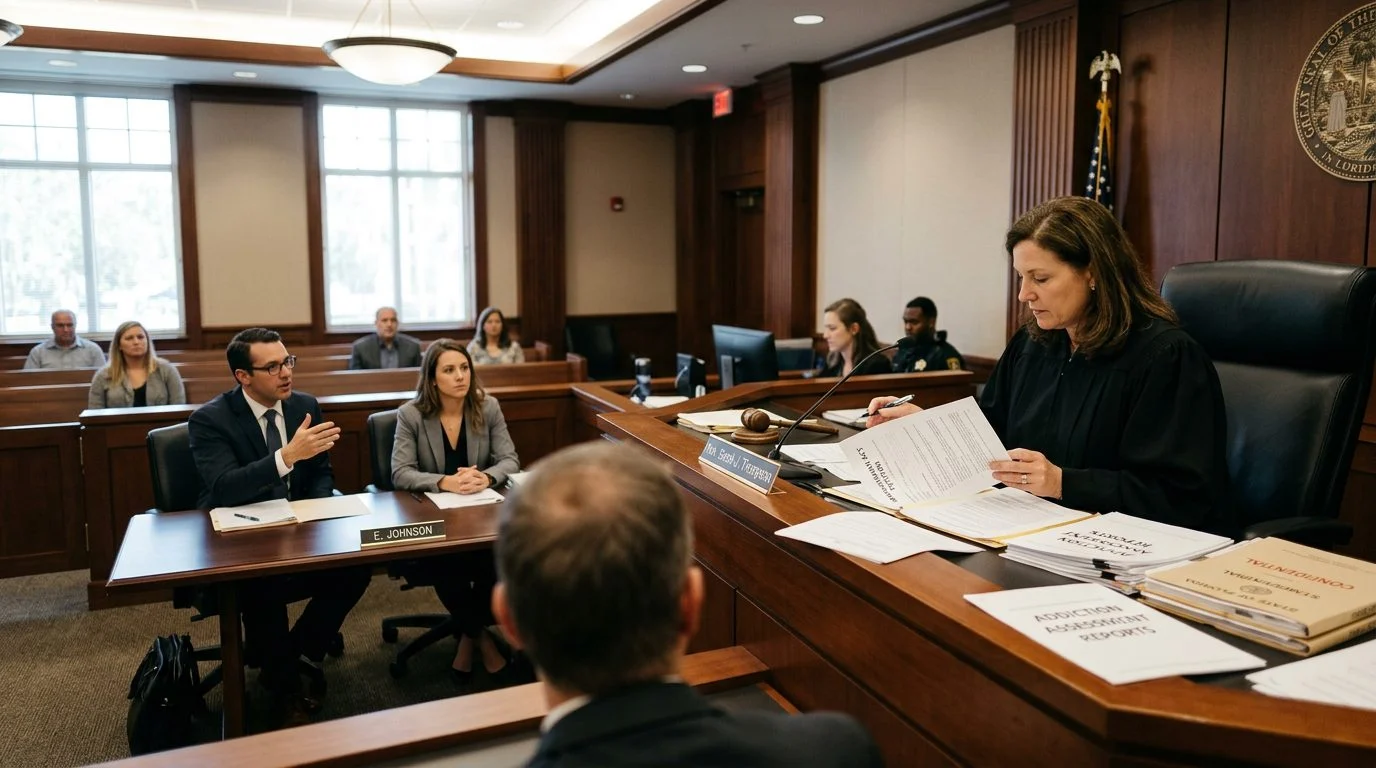
Florida law sets out who gets notified of a Marchman Act petition, and the person named comes first. That person receives a copy of the petition and a notice of the hearing. The clerk issues a summons. Unless a circuit court’s chief judge authorizes disinterested private process servers, the clerk must electronically submit the summons and petition to a law enforcement agency within 6 hours after the summons is issued. So a deputy often delivers the papers, not a private server.
In an emergency, the steps move faster. A court may enter an ex parte assessment and stabilization order without appointing an attorney, under Fla. Stat. § 397.6818. Law enforcement can then be ordered to serve the notice and petition. If that order is not executed by the initial hearing date, it is deemed void.
The person named also has the right to counsel at every stage. The court must appoint counsel if it believes the respondent needs or desires it, under § 397.681. Each individual must be informed that he or she has the right to be represented by counsel in any judicial proceeding for involuntary treatment services, and may apply immediately to the court to have an attorney appointed if he or she cannot afford one.
Notice to the Court, the Petitioner, and Appointed Counsel
The court and the petitioner handle the next notices. When the petition is filed, the court must decide whether the respondent has a lawyer or needs one appointed, under § 397.68151. If counsel is appointed, the clerk must immediately notify the office of criminal conflict and civil regional counsel. That office represents the person until the petition is dismissed, the court order expires, the person is discharged from involuntary treatment services, or the court otherwise discharges the office.
The court must schedule the hearing within 10 court working days unless a continuance is granted. The petitioner gets a copy of the petition and the notice of hearing. So does the respondent’s attorney, when known. Appointed counsel also has access to the person, witnesses, and records relevant to the case.
In Miami-Dade County, the Miami-Dade Clerk’s mental health court page directs people seeking involuntary alcohol or drug abuse treatment to the Clerk’s Office Probate Court for adults.
Where Family Members and Others Fit In
Family members can receive notice in two ways. A spouse or guardian gets a copy if one applies. The court may also direct copies to other people. Family members can also be witnesses. The court hears testimony from family members familiar with the respondent’s prior history, under Fla. Stat. § 397.6957. A witness who attends remotely must give documents to the parties by the close of business the day before the hearing.
Receiving notice does not open the whole file. Under Fla. Stat. § 397.6760, petitions, court orders, and related records are confidential. The clerk may release them to listed people, including the petitioner, the respondent, and the respondent’s attorney. Others need a court order based on good cause. The clerk also may not publish personal identifying information on a court docket.
Keep a copy of every document. Write down each hearing date as soon as you learn it.

Talk With Robinson Casey About Your Family’s Situation
If a petition has been filed, or you expect one, you can talk through the notice steps with Robinson Casey. You didn’t choose this situation, and you may be worried about someone you love. Robinson Casey is a Florida law firm that limits its practice to Marchman Act and guardianship matters. It serves families across South Florida and statewide. The first consultation is free, confidential, and comes with no obligation to continue. Call (561) 849-4700 or visit our contact page to start.
Who gets notified of a Marchman Act petition Florida?
The person named in the petition receives a copy and a notice of the hearing. The petitioner, the respondent’s attorney if known, a spouse or guardian if applicable, a minor’s parent or custodian, and others the court directs also receive copies under Fla. Stat. § 397.68151.
Who can file a Marchman Act petition in Florida?
For an adult, the respondent’s spouse or legal guardian, any relative, a service provider, or an adult who has direct personal knowledge of the respondent’s substance abuse impairment and his or her prior course of assessment and treatment can file. Florida law sets out who may file a petition for involuntary treatment services.
Does a family member automatically get the court file?
No. Records are confidential, and the clerk releases them to listed people. Others need a court order based on good cause.
How Robinson Casey Works With Families
Focused practice
The firm focuses on Marchman Act petitions and guardianship matters, so our attention stays on these cases.
Confidential first consultation
Your first consultation is free, confidential, and carries no obligation to continue.
Support for the whole family
Our team helps families understand the process, the people involved, and the steps ahead.
Direct access
Call (561) 849-4700 to speak with our office about your situation.
Notice Rules Are Detailed
Notice requirements in a Marchman Act case involve specific recipients and timing. Do not assume you know who must be notified. Speak with a lawyer about your situation as early as possible.
Steps to Take Now
Gather your information
Write down the names of the people involved, any court papers you have received, and key dates.
Note the hearing details
Keep any notice of hearing or petition documents together so they are easy to review with an attorney.
Reach out to our office
Schedule a free, confidential consultation to discuss your questions about Marchman Act notice and next steps.