
Marchman Act & Guardianship | South Florida
When Your Adult Son Refuses Help, You Still Have Options
Robinson Casey focuses on Marchman Act petitions and guardianship matters for families across South Florida and throughout Florida.
Casey III, Esq. · Published November 18, 2026
You’ve spent years paying for treatment, trying interventions, and holding firm boundaries. Now your adult son lives alone and is still using drugs. The real question is whether his substance use and the risk it creates meet the statute’s criteria. This page explains how that works in plain terms.
Where You Are Right Now, With a Son Who Lives Alone
It makes sense that you feel worn out. You’ve likely spent money, time, and nerves on help that didn’t hold, and each crisis seems worse than the last. Maybe it was an overdose, a hospital visit, an arrest, or a stretch of days when no one could reach him.
Each moment pushes a parent to ask whether the law can do what the family couldn’t. You’re probably also afraid of the worst: an overdose, jail, homelessness, and losing hope that anything will work. Those fears are real. Let’s take your question one piece at a time.
Can a Marchman Act Petition Be Filed for an Adult Son Who Lives Alone?
Yes, a parent can file for an adult son who lives alone. Florida law lets a relative file a petition for an adult, and the statute doesn’t list the son’s consent as a requirement to file.
Questions about the Marchman Act often come up when a family is worried about a loved one’s substance use.
Living alone is not one of the tests. The criteria focus on impairment, lost self-control, and harm. They say nothing about where a person lives. But living alone can matter in the facts. The statute asks whether harm could be avoided through willing, able, and responsible family or friends. If your son has lost stable housing, see this guide for a homeless adult son.
What the Marchman Act Looks For in an Adult
First, your son must be substance abuse impaired, or have a substance use disorder along with a co-occurring mental health disorder, and there must be a good faith reason to believe that is so. Second, because of that, he must have lost the power of self-control with respect to substance use.
Third, the facts must show that he has lost the power of self-control with respect to substance abuse, and either that he can’t appreciate his need for help and make a rational decision about it, or that he is likely to neglect his own care in a way that poses a real and present threat of substantial harm that cannot apparently be avoided through the help of willing, able, and responsible family or friends or other services. The statute also covers a substantial likelihood of physical harm to himself or someone else. Fla. Stat. § 397.675 reads: “(b) Without care or treatment, is likely to suffer from neglect or refuse to care for himself or herself; that such neglect or refusal poses a real and present threat of substantial harm to his or her well-being; and that it is not apparent that such harm may be avoided through the help of willing, able, and responsible family members or friends or the provision of other services, or there is substantial likelihood that the person has inflicted, or threatened to or attempted to inflict, or, unless admitted, is likely to inflict, physical harm on himself, herself, or another.” Read the full involuntary admission criteria for the exact wording.
Facts that bear on these points often include repeated overdoses, a pattern of relapse, or dangerous behavior at home.
Does Your Son Have to Agree to Be Assessed?
No. His refusal alone does not decide the case. Florida law says mere refusal to receive services is not, by itself, evidence of lack of judgment about his need for help. A petition has to show that he is substance abuse impaired and has a history of lack of compliance with treatment, and that either he is unlikely to voluntarily take part in the recommended services or is unable to decide whether services are needed. It also has to show either a likely neglect or refusal of care posing a real and present threat of substantial harm, with a substantial likelihood he will cause serious bodily harm to himself or another in the near future, as evidenced by recent behavior, or judgment so impaired by substance abuse that he cannot appreciate his need for care.
A petition can include a report from a qualified professional who examined him within 30 days before filing. If he was never assessed or refused an evaluation, the petition must say so, under the petition contents rules.
The Second District has held that a Marchman respondent has a constitutional right to counsel.
What a Marchman Act Petition Can and Cannot Do
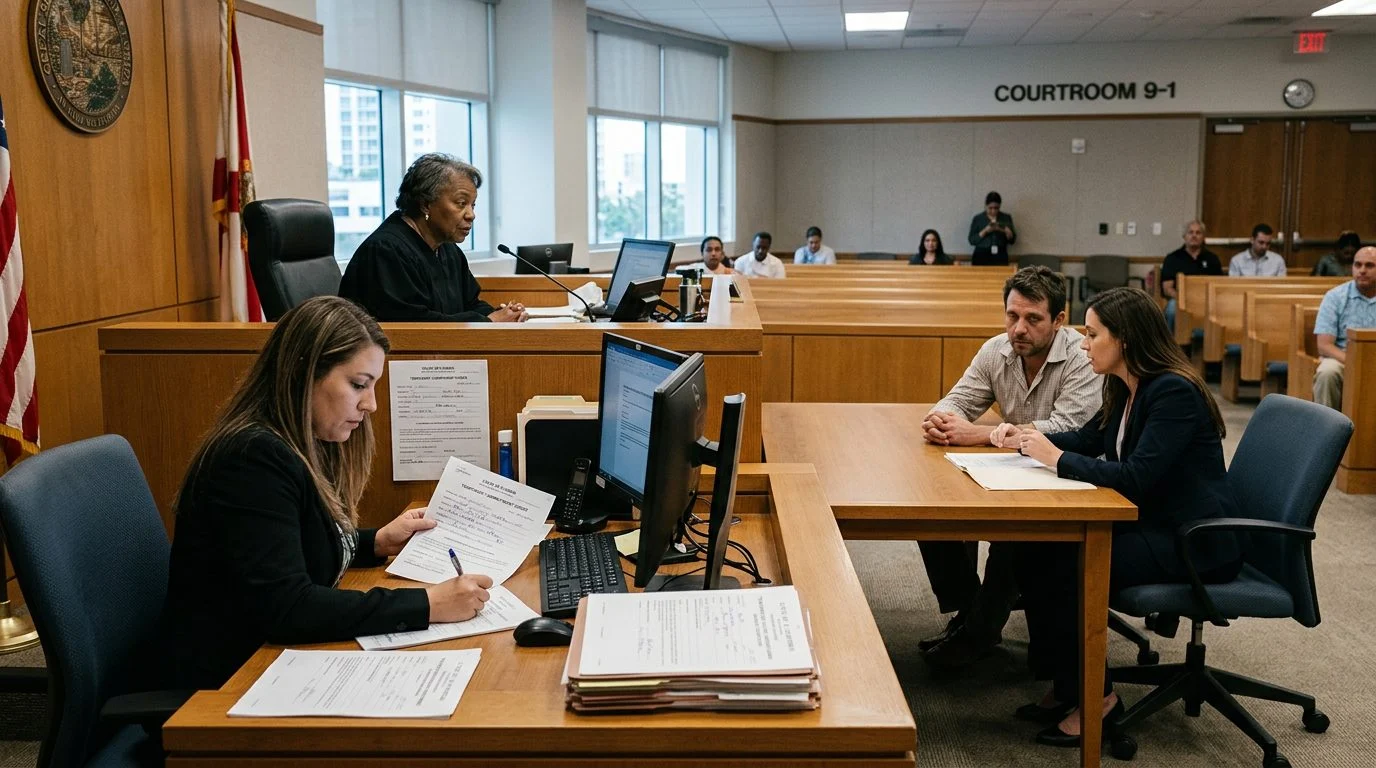
A petition can lead to an assessment and, if the court finds the conditions proved, to court-ordered treatment. The petitioner has the burden of proving those conditions by clear and convincing evidence. It may then order treatment for a period not to exceed 90 days, under the court order rules.
The order can be renewed. A renewal petition must be filed before the period ends, and the court may add up to another 90 days if the conditions still exist, under the renewal rules. Once a qualified professional determines that he qualifies for early release under those grounds, the provider must immediately discharge him, under the early release rules.
A petition cannot make your son recover. A court order can require treatment, but it cannot change how he responds to it. A petition is also one legal tool among other options. A lawyer can explain how it fits your family’s specific facts.
How the Process Moves, Step by Step
A petition is filed with the clerk of the court in the county where your son is physically located. A Fifth District case held that a petition filed in the wrong county is a venue defect, not a loss of jurisdiction. The clerk may not charge a fee to file it, under the filing rules.
The courts have jurisdiction of involuntary treatment petitions for substance abuse impaired persons. The jurisdiction statute does not itself address ex parte assessment and stabilization orders in an emergency. A Second District case held that such an order must rest on petition facts giving a good-faith reason to believe the criteria are met. D.H. v. K.J.R. shows why the petition’s facts need care.
Can a parent file for an adult son in Florida?
Yes. Florida law lets a relative file a petition for an adult respondent.
How long does a Marchman Act order last?
An initial treatment order may run up to 90 days. A renewal may add up to another 90 days if the conditions still exist.
Does the clerk charge a fee to file?
The clerk may not charge a fee for filing an involuntary treatment petition under the statute.
Not sure what your next step is?
Talk it through with our team — the first consultation is free, confidential, and carries no obligation.
Bring Your Son’s Situation to a Free First Consultation
You don’t have to decide anything today. The next step is a conversation about your son’s specific facts and what you’ve been through.
Robinson Casey focuses on Marchman Act petitions and guardianship matters, and serves families in Miami-Dade, South Florida, and statewide. Richard J. Casey III, Esq. is responsible for this page. The first consultation is free, confidential, and carries no obligation to continue.
Matters We Handle
Marchman Act Petitions
Petitions asking a court to order an adult into assessment or treatment for substance use when the person's condition puts them or others at risk.
Involuntary Commitment for Addiction
Court-ordered commitment for adults with addiction whose safety or the safety of others is at serious risk.
How Robinson Casey Works With Families
Listening First
We start by understanding your son's situation, your concerns, and what has already been tried.
Clear Paperwork
We prepare and organize the petition and supporting filings so the court has the information it needs.
Focused Advocacy
Our attorneys concentrate in Marchman Act and guardianship law, so these matters receive focused attention.
Support Throughout
Our team keeps you informed about each step and answers your questions along the way.
Direct Contact
Call our office to talk through your situation before deciding on next steps.
Do Not Wait Until a Crisis
Waiting for a dangerous situation to escalate can leave your family with fewer options. Speaking with a lawyer early helps you understand what the process involves.