
Marchman Act Petitions | Miami-Dade and South Florida
Your Adult Child Refuses Help. You Don't Have to Face It Alone.
Robinson Casey represents families who need a court-supervised path to treatment for a loved one, and who need clear answers about what happens next.
Casey III, Esq. · Published November 9, 2026
You’ve paid for treatment, tried interventions, and held firm on boundaries. Your adult child still keeps getting worse, and you’re looking for a legal way to get help.
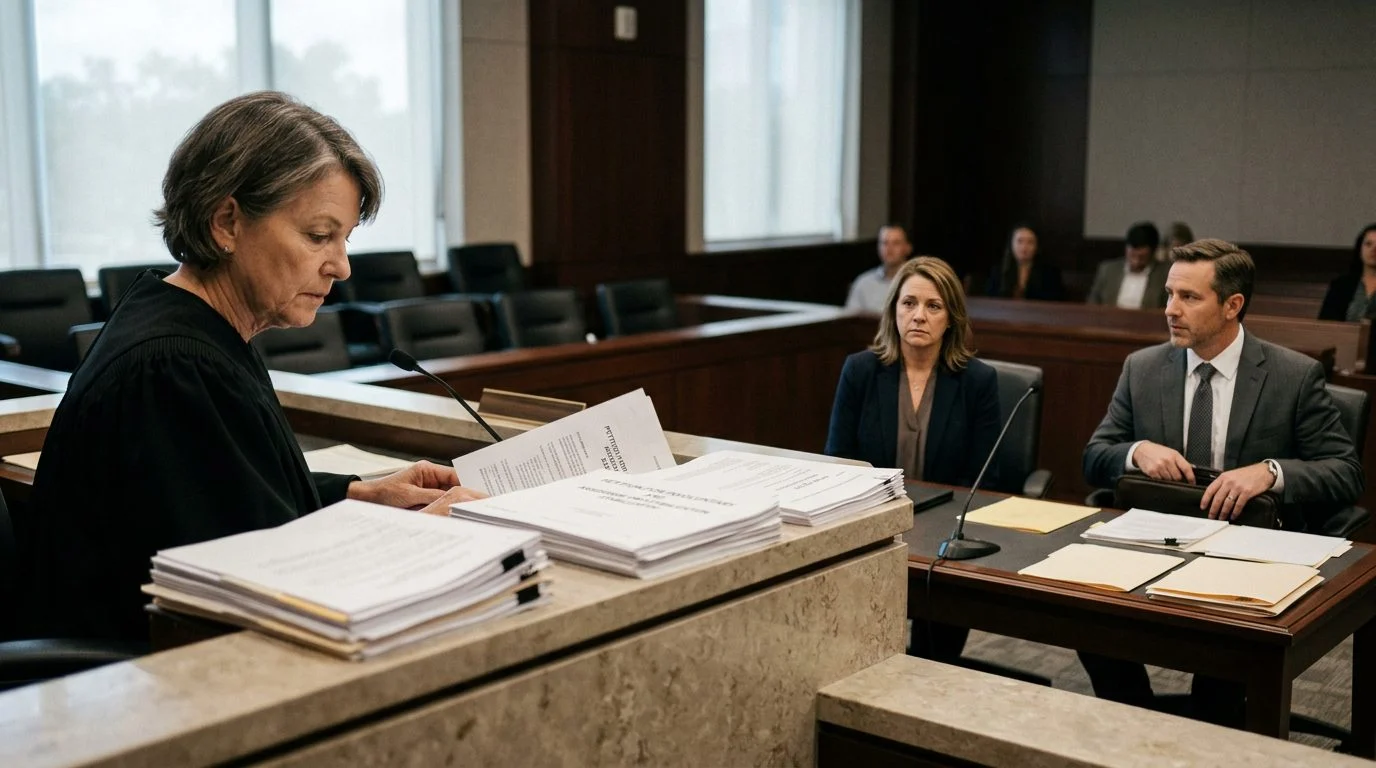
A Marchman Act petition is a request filed with a Florida court. It asks a judge to order an adult into assessment and treatment for substance use when the legal criteria are met. Florida law also lets a qualifying relative file one.
Why You Are Looking at This Right Now
A recent overdose, relapse, hospital stay, arrest, or disappearance can change everything in a single day. You may be asking, “My adult son won’t get help. What can I do in Florida?”
If you’re in this place, you may be afraid of:
- An overdose that ends in death
- Incarceration after a legal problem
- Homelessness when housing falls apart
- Losing hope that anything will work
Managing each crisis alone wears you down. You want a legal path into proper treatment, with people who understand addiction.
If your adult child keeps getting worse and you feel you're carrying this alone, you don't have to take the next step by yourself. Talk with our team about your family's options. Talk it through with our team — the first consultation is free, confidential, and carries no obligation.

What the Marchman Act Is and Who It Covers
The Marchman Act is Florida’s law for involuntary assessment and treatment of substance use.
To qualify, a person must meet the criteria for involuntary admission. There must be a good faith reason to believe the person is substance abuse impaired or has a substance use disorder and a co-occurring mental health disorder. Because of that impairment, the person must have lost the power of self-control with respect to substance use. Fla. Stat. § 397.675 sets out the full criteria.
Refusal alone is not the whole test. The statute says mere refusal to receive services does not, by itself, show a lack of judgment about the need for services. Fla. Stat. § 397.675 reads: “(b) Without care or treatment, is likely to suffer from neglect or refuse to care for himself or herself; that such neglect or refusal poses a real and present threat of substantial harm to his or her well-being; and that it is not apparent that such harm may be avoided through the help of willing, able, and responsible family members or friends or the provision of other services, or there is substantial likelihood that the person has inflicted, or threatened to or attempted to inflict, or, unless admitted, is likely to inflict, physical harm on himself, herself, or another.”
The Baker Act is a different Florida law. It deals with mental illness. The Marchman Act is the one built around substance use.
Can You File a Marchman Act Petition for an Adult Child?
Yes, a relative can file. For an adult respondent, the petition may be filed by a spouse or legal guardian, any relative, a service provider, or an adult with direct personal knowledge of the person’s impairment and prior treatment. Fla. Stat. § 397.68112 sets out who may file.
The petition must name both people and explain their relationship. It must also lay out the facts that show why services are needed. Fla. Stat. § 397.68141 lists what the petition must contain.
If your child has not been assessed, or refused an evaluation, the petition must say so. A petition may also include a report from a qualified professional who examined the person within 30 days before filing.
The facts you can document matter most. Helpful information often includes:
- Recent overdoses, emergency visits, or hospital stays, with dates
- Incidents where your child was a danger to self or others
- The pattern of use over time
- Treatment tried before, and what happened
- Names of any providers already involved
How the Marchman Act Process Works, Step by Step
The petition goes to the clerk of the court in the county where your adult child is located. Fla. Stat. § 397.681 also says the clerk may not charge a fee for filing the petition.
- Review the facts. Write a timeline of recent events, with dates, places, and who was present.
- Gather records. Collect hospital, emergency, and treatment records you already have.
- Counsel. Your child has the right to a lawyer at every stage. Hillsborough County v. Albrechta held that this right rests on due process.
- Emergency path. In an emergency, the court may enter an order for assessment and stabilization based on the petition alone. A provider may not hold the person for more than 72 hours of observation, unless a listed exception applies. Fla. Stat. § 397.6818
- Assessment and hearing. A person generally cannot be ordered into treatment without a clinical assessment. The court shall hear and review all relevant evidence, including testimony from family members familiar with your child’s prior history. Fla. Stat. § 397.6957
Timing depends on the facts of your case and the court’s calendar. No timeline can be promised in advance.
What a Marchman Act Petition Can and Cannot Do
The court keeps jurisdiction to monitor compliance.
The court may then add up to another 90 days. Fla. Stat. § 397.6975 covers renewal. Fla. Stat. § 397.6971
A petition cannot cure addiction. It cannot make your child stay in treatment, and it cannot promise a particular result. A court order is time-limited, so planning for what comes after matters.
Guardianship is a separate court process.
How Robinson Casey Approaches Your Family’s Case
Robinson Casey is a Florida law firm for families who need a Marchman Act attorney. The firm focuses on Marchman Act petitions and guardianship matters. It serves families in Miami-Dade County, across South Florida, and statewide.
Richard J. Casey III, Esq. is the responsible lawyer for this page. The firm limits its practice to Marchman Act and guardianship matters, including involuntary commitment for addiction and emergency temporary guardianship.
Our team includes support staff who help families gather records, keep dates in order, and track each step. Before any filing decision, the firm explains each step in plain language and reviews the facts honestly with you.
Not sure what your next step is?
Talk it through with our team — the first consultation is free, confidential, and carries no obligation.
Questions Parents Ask Before Filing
How long can a person be held under the Marchman Act?
Under an emergency order, a provider may hold a person for no more than 72 hours of observation, unless a listed exception applies. A court-ordered treatment period can run up to 90 days.
What is the difference between the Baker Act and the Marchman Act?
The Marchman Act deals with substance use. The Baker Act is a separate Florida law for mental illness.
Does my adult child have to agree to be assessed?
Generally, no court can order treatment without a clinical assessment. The exception is when the person is present in court and expressly waives it.
Does refusing help mean my child doesn’t qualify?
Not by itself. The statute says mere refusal is not, on its own, evidence of lack of judgment.
Can I file without a lawyer?
A qualifying relative may file. A consultation can help you understand your position before you decide.

Take the Next Step Toward Getting Your Adult Child Help
Watching your adult child decline while you wait for the next crisis is exhausting. The next decision can feel urgent and heavy.
A confidential conversation can cover your facts, your petition options, and the steps that follow. The first consultation is free, confidential, and carries no obligation to continue.
Call (561) 849-4700 or request a consultation with Robinson Casey.
Don't Wait Until the Situation Becomes a Crisis
Substance use can escalate quickly. Families who speak with a Marchman Act attorney early often have more options and a clearer picture of the process. Call (561) 849-4700 to talk through your situation.
How Robinson Casey Can Help
Marchman Act Petitions
We prepare and file petitions for court-ordered assessment and treatment when an adult family member is struggling with substance use.
Involuntary Commitment for Addiction
We guide families through the court process for involuntary commitment for addiction, from the initial filing through the hearing.
Guardianship Matters
We handle guardianship petitions, including plenary, limited, and mental health guardianship, for families who need legal authority to protect a loved one.
Emergency Temporary Guardianship
When a loved one faces an immediate risk, we help families request emergency temporary guardianship and move quickly through the court.
Why Families Contact Robinson Casey
A Focused Practice
Our practice focuses on Marchman Act petitions and guardianship matters, so our work centers on the legal issues families in these situations face.
Confidential Free Consultation
Your first consultation is free, confidential, and carries no obligation to continue.
Support for Families
Our team, including our attorneys and support staff, works to keep you informed and to answer your questions at each step.
Serving South Florida and Statewide
We represent families across Miami-Dade and South Florida, and we also assist families throughout Florida.