
Marchman Act Attorney
Marchman Act Petitions for Alcohol Addiction in Florida
Legal guidance for families seeking involuntary treatment and recovery support.
By Richard J. Casey III, Esq. · Published October 02, 2026
Marchman Act for Alcohol Addiction in Florida: How Involuntary Treatment Works
The Marchman Act is a Florida law that allows families, healthcare providers, and law enforcement to petition a court for involuntary assessment and stabilization of someone struggling with alcohol addiction who refuses voluntary help. The law explicitly covers alcohol abuse—not just drugs—and provides a legal pathway when someone’s drinking poses serious risk to their health or safety.
If you’re watching a loved one spiral into alcohol addiction despite repeated attempts to help, and they refuse treatment, the Marchman Act may offer a court-ordered intervention. This page explains what the law is, who can file, what the legal requirements are, how the process works, and what happens after a court order is issued.
If you're watching someone you care about struggle with alcohol and refuse help, you're not alone—families in your situation reach out to us regularly to understand whether the Marchman Act is the right step forward. Talk it through with our team — the first consultation is free, confidential, and carries no obligation.

What Is the Marchman Act and Does It Apply to Alcohol?
The Marchman Act, formally called the Hal S. Marchman Alcohol and Other Drug Services Act, is codified in Florida Statute Chapter 397 and provides for involuntary assessment and stabilization of individuals with substance abuse disorders.
Yes, alcohol is explicitly included. The law applies to both drug and alcohol addiction. It’s designed for situations where someone refuses voluntary help and their drinking has become dangerous—to themselves or others—and less restrictive alternatives have failed or aren’t available.
The Marchman Act is not a long-term commitment or guardianship. It initiates court-ordered assessment and short-term stabilization, typically lasting 5 days to 65 days depending on clinical findings. It’s an emergency legal tool, not a permanent solution.
Who Can File a Marchman Act Petition for Alcohol Addiction?
Several groups can file a Marchman Act petition:
- Family members: spouse, parent, adult child, or sibling
- Healthcare providers: physicians, mental health professionals, addiction counselors, or hospital staff
- Law enforcement: police officers can initiate emergency admission without a court order
- State officials: representatives of the Department of Children and Families (DCF)
You do not need to be a lawyer to file a petition. However, many families choose to work with an attorney to ensure the petition is complete, legally sound, and persuasive to the court.
What Are the Requirements for the Marchman Act in Florida?
To meet the legal criteria for involuntary admission under the Marchman Act, the person must satisfy all of the following:
Substance abuse disorder. The person must have a documented or observable pattern of alcohol use that impairs functioning in work, school, family, or social life.
Refusal of voluntary treatment. The individual must have refused voluntary assessment or treatment, or it must be clear they’re unlikely to accept it.
Likelihood of serious harm. Without intervention, the person is likely to suffer serious physical or mental deterioration. This could include overdose risk, organ damage, accidents, suicide, or severe withdrawal.
No less restrictive alternative. Voluntary measures must be shown to be inadequate or unavailable.
Affidavit requirement. The petition must include a detailed, sworn affidavit describing the person’s specific alcohol use, behavioral changes, failed attempts at voluntary treatment, and any incidents (DUIs, hospitalizations, job loss, family crises).
A judge reviews all of these factors and must find probable cause that they’re met before issuing an order.
How to Help an Addict Who Doesn’t Want Help: The Marchman Act Process
If you’ve decided to pursue a Marchman Act petition for someone struggling with alcohol addiction, here’s what the process typically looks like:
Step 1—Gather documentation. Collect specific, dated examples of the person’s alcohol use and behavior: failed attempts at voluntary treatment, incidents (DUIs, arrests, hospitalizations), job loss, family crises, medical diagnoses, or statements from people who’ve witnessed the impairment. Write these down clearly—the judge will need concrete facts, not general complaints.
Step 2—File the petition. Complete the Marchman Act petition form (available through the circuit court clerk or DCF) and file it with the circuit court in the county where the person resides. Include your detailed affidavit. Pay the court filing fee, or request a fee waiver if you qualify.
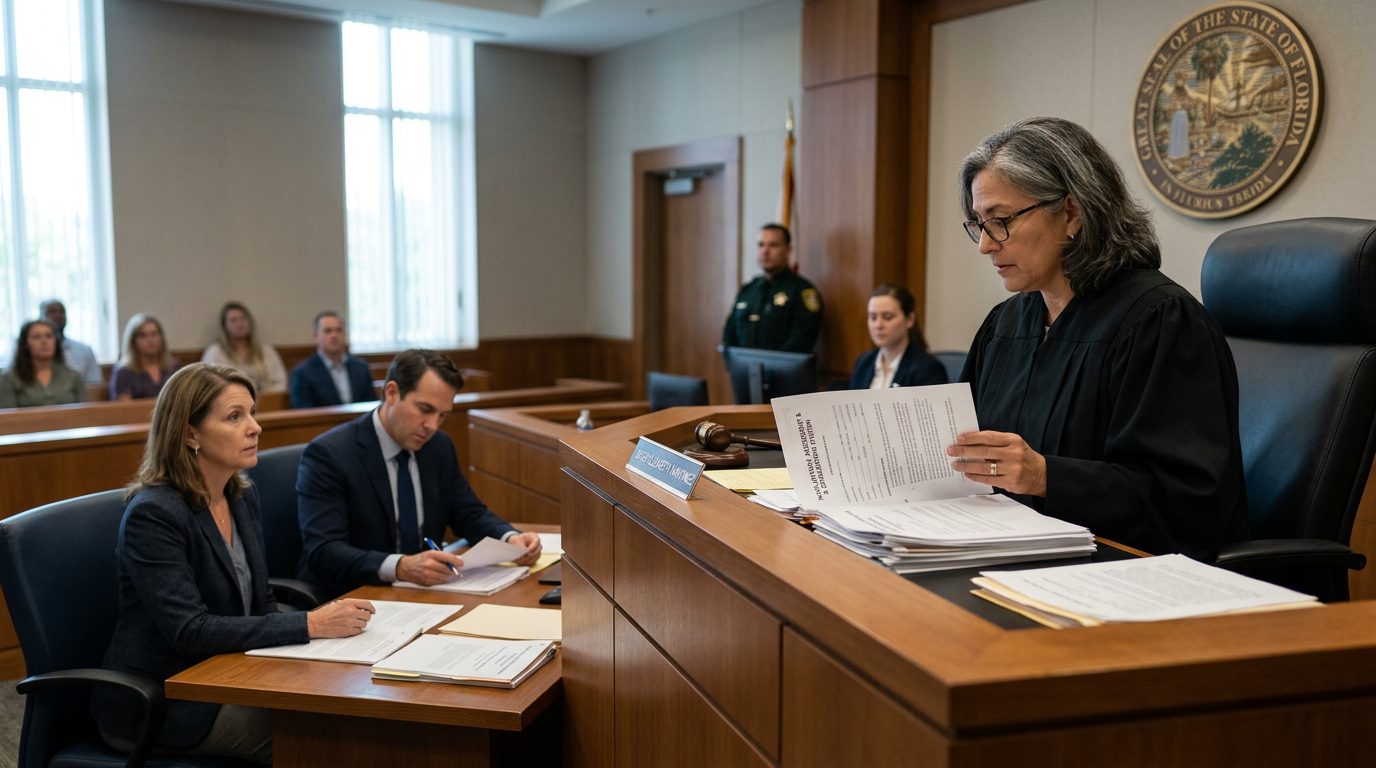
Step 3—Attend the hearing. The court schedules a hearing, usually within 5 business days. You (the petitioner) and the respondent (the person you’re petitioning about) both attend. You present your evidence; they can contest it and present their own testimony.
Step 4—Court order. If the judge finds probable cause that all criteria are met, an order for involuntary assessment and stabilization is issued.
Step 5—Transport and assessment. The person is transported to a designated assessment facility. A physician and mental health professional conduct a medical and psychological evaluation, assess the severity of alcohol addiction, manage withdrawal symptoms, and develop a treatment plan.
How Long Can You Be Held on the Marchman Act in Florida?
The duration depends on the stage of the process:
Initial assessment and stabilization. Up to 5 days following the court order.
Extension for treatment. If the assessment shows a medical need for continued treatment, the facility may petition the court for an additional 60 days of involuntary treatment.
Total possible duration. Up to 65 days from the initial court order, depending on clinical findings and court approval.
The Marchman Act is not indefinite. It’s designed for short-term intervention and stabilization, not permanent commitment. After the order expires, the person is discharged with a treatment plan and referrals for ongoing outpatient or residential care.
Not sure what your next step is?
Talk it through with our team — the first consultation is free, confidential, and carries no obligation.
Involuntary Assessment and Stabilization: What Happens During This Time
Once the court order is issued and the person arrives at the assessment facility, here’s what typically occurs:
- Medical evaluation: A physician assesses physical health, withdrawal risk, and any acute medical conditions.
- Substance abuse evaluation: Mental health professionals and addiction specialists determine the severity of alcohol dependence and appropriate level of care.
- Stabilization: Medical management of withdrawal symptoms (tremors, seizures, delirium tremens) and treatment of any acute health crises.
- Treatment planning: Development of a discharge plan and recommendations for ongoing care—outpatient counseling, residential treatment, support groups, or medication-assisted therapy.
- Rights protection: The person retains legal rights, can request a hearing to contest the order, and can appeal.
Emergency Admission by Police Officers
Law enforcement has a separate authority under the Marchman Act. Police officers can initiate emergency admission to an assessment facility without a court order if they observe probable cause that someone is severely impaired by alcohol and poses a risk.
An emergency admission typically lasts up to 72 hours. Within 5 days, a court hearing must be held to determine whether to continue the order. Family members or others can file a formal Marchman Act petition to extend the emergency hold into a full court-ordered assessment and stabilization order.
Criteria for Involuntary Admission Under the Marchman Act
The legal criteria are specific. The person must have:
- A substance abuse disorder (documented pattern of alcohol use causing impairment)
- Refused or be unlikely to accept voluntary assessment or treatment
- A likelihood of serious physical or mental harm without intervention
- The harm must be directly related to alcohol use
- A judge must find probable cause that all criteria are met
These aren’t subjective. The court requires concrete evidence—not suspicion or concern alone.
What Happens After the Court Hearing?
If the petition is denied: The person is released. You may refile if circumstances change or new evidence emerges.
If the petition is granted: An order for involuntary assessment and stabilization is issued. The person is transported to a licensed facility.
During the 5-day assessment period: Clinicians evaluate whether extended treatment is medically necessary. They may recommend outpatient care, residential treatment, or other services.
If treatment extension is warranted: The facility petitions the court for up to 60 additional days of involuntary treatment. Another hearing may occur.
Upon completion: The facility develops a discharge plan, provides referrals to outpatient care, support groups, or ongoing treatment, and releases the person.
Marchman Act Forms and the Petition Process
Florida provides official Marchman Act petition forms through the Department of Children and Families. The core of the petition is a detailed, sworn affidavit describing the person’s alcohol use and behavior.
Petitions are filed with the circuit court clerk in the county where the respondent resides. Court filing fees apply; fee waivers may be available for those with limited income. While not required, an attorney can ensure the petition is complete, accurate, and persuasive.
If you're watching someone you care about struggle with alcohol and refuse help, you're not alone—families in your situation reach out to us regularly to understand whether the Marchman Act is the right step forward. Talk it through with our team — the first consultation is free, confidential, and carries no obligation.
Rights and Protections During Marchman Act Proceedings
The respondent (the person being petitioned about) has important legal protections:
- Right to a hearing: Before an involuntary order is finalized, the person has the right to a court hearing.
- Right to counsel: They may be represented by an attorney.
- Right to contest: They can present evidence and testimony against the petition.
- Right to appeal: An order can be appealed to a higher court.
- Confidentiality: Marchman Act records are generally confidential under Florida law.
- No criminal record: A Marchman Act petition and order do not create a criminal record.
These protections ensure due process and fairness, even in an involuntary proceeding.
When to Consider Filing a Marchman Act Petition for Alcohol Addiction
Consider pursuing a Marchman Act petition if:
- Repeated attempts at voluntary treatment have failed
- Health, legal, or safety crises are escalating (DUIs, hospitalizations, job loss, family breakdown)
- There is imminent risk of serious harm (overdose, accident, medical emergency, suicide)
- The person explicitly refuses help despite obvious impairment
- Loved ones are deeply concerned about the person’s survival
The Marchman Act is a legal tool for crisis situations—when someone’s alcohol addiction has become life-threatening and they won’t accept help on their own.

FAQ
Can I file a Marchman Act petition for a family member without a lawyer?
Yes, you can file without legal representation. However, an attorney can help ensure your petition is complete, legally sound, and persuasive.
Does a Marchman Act order create a criminal record?
No. A Marchman Act petition and order do not create a criminal record.
How long does the Marchman Act process take from filing to court hearing?
The court typically schedules a hearing within 5 business days of filing.
What if the person is already in the hospital or jail when I want to file?
You can still file a Marchman Act petition. The court will hold the hearing, and if the order is granted, the person will be transferred to an assessment facility.
Can the person appeal a Marchman Act order?
Yes. The respondent can appeal the court’s decision to a higher court.
If you’re watching someone you care about struggle with alcohol and refuse help, you’re facing a difficult decision about whether to take legal action. Many families in South Florida and across Florida find themselves in this position—uncertain whether a Marchman Act petition is appropriate, worried about the process, or unsure how to move forward. Robinson & Casey handles Marchman Act petitions for alcohol and drug addiction. If you’d like to discuss your situation and explore whether the Marchman Act is the right option, reach out for a consultation. We can walk you through the legal requirements, help you gather the documentation you’ll need, and guide you through the court process.
Time Matters
If a family member's alcohol use is creating immediate safety concerns, contact Robinson & Casey to discuss your options. The sooner you understand the Marchman Act process, the sooner you can take action.
How the Marchman Act Works
Petition Filing
A family member, healthcare provider, or law enforcement can file a petition in circuit court requesting involuntary assessment and treatment for alcohol addiction.
Initial Hearing
The court holds a hearing to determine whether there is probable cause that the person meets the legal criteria for involuntary treatment under Florida law.
Assessment & Treatment
If the court finds probable cause, the person is referred for a professional assessment and may be ordered into treatment.
Ongoing Support
Treatment plans are developed based on the assessment. The court may monitor compliance and modify orders as circumstances change.
Why Robinson & Casey
Petition Preparation & Filing
We draft petitions that clearly present the facts and legal grounds for involuntary assessment and treatment, filed with the appropriate Florida court.
Court Representation
We represent petitioners at hearings, present evidence, and advocate for the court's approval of involuntary treatment orders.
Family Guidance
We explain the Marchman Act process, answer your questions, and help you understand what to expect at each stage.
Focused Practice
Robinson & Casey focuses exclusively on Marchman Act petitions and guardianship matters—we know this area of Florida law inside and out.
Common Questions
Can I file a Marchman Act petition without a lawyer?
Yes. You can file a petition yourself. An attorney can help you prepare a complete and legally sound petition and represent you in court.
Does a Marchman Act order create a criminal record?
No. A Marchman Act petition and order do not create a criminal record.
Who can file a Marchman Act petition?
Under Florida law, a family member, healthcare provider, law enforcement officer, or other authorized person may file a petition for involuntary assessment and treatment.
What happens after the court approves the petition?
The person is referred for professional assessment. Based on that assessment, a treatment plan is developed and may be ordered by the court.
Ready to Discuss Your Situation?
Related practice areas
- Marchman Act Attorney | Florida Involuntary Commitment for Addiction
- Emergency Marchman Act Petition in Florida: Urgent Situations
- Marchman Act Rights in Florida: Legal Protections