
Marchman Act & Guardianship | Miami-Dade & South Florida
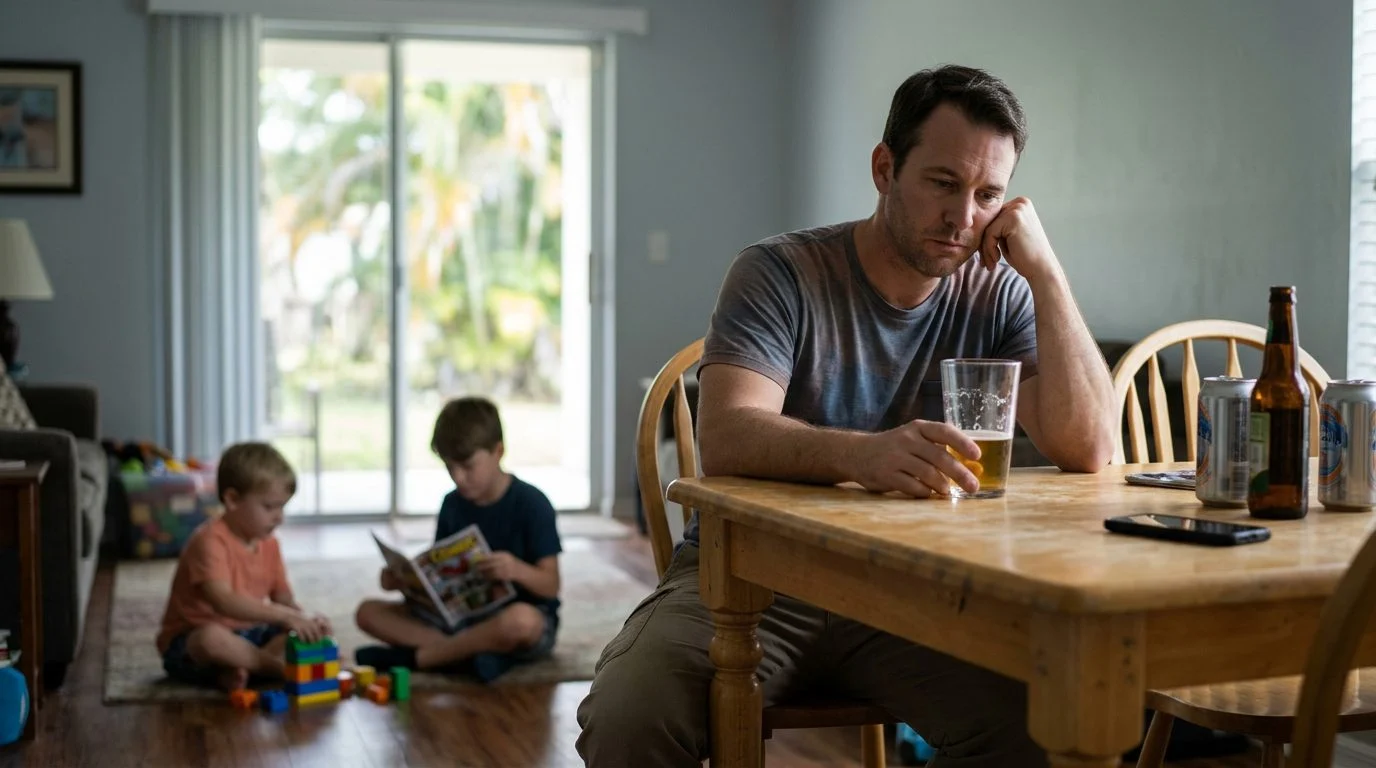
When Your Spouse Drinks at Home With the Kids, You Have Legal Options
Robinson Casey focuses on Marchman Act petitions and guardianship matters for families across South Florida and statewide. Learn how Florida law may help protect your children and your household.
Casey III, Esq. · Published November 9, 2026
When a Spouse Drinks at Home With Kids: Florida Legal Options
If your spouse drinks at home while the kids are there, you already know how heavily it weighs on the whole house. You did not choose this, and it can feel like nothing you try makes a difference.
Florida law gives a family member a legal route. The Marchman Act, found in Florida Statutes, Chapter 397, lets a family member ask a court to order an assessment and, if the legal criteria are met, treatment. If your spouse drinks at home while the children are present, you may be wondering what Florida law allows you to do about it.
You do not have to work out these legal steps alone, and we can talk through your family's situation whenever you are ready to reach out. Talk it through with our team — the first consultation is free, confidential, and carries no obligation.

Where You Are Right Now
You are living with a problem you did not choose, and it reaches every part of your home. The drinking may bring unpredictable moods and sudden anger. Money may be running short. You may lie awake worrying about what the children see and hear.
Maybe you have tried talking, pleading or waiting it out. Maybe nothing has changed. That sense of being stuck is one of the hardest parts.
So alcohol use can be part of a legal case. This page walks through the steps in order: safety first, then a written record, how to talk with your spouse, the petition, what commitment involves, and what happens if drinking returns.
Start With the Children’s Immediate Safety
If anyone is in immediate danger, call 911 now. A court petition can ask for emergency action: when emergency circumstances exist, the court may rely solely on the petition and enter an ex parte order for assessment and stabilization without first appointing an attorney, and that order must be executed while the hearing on the petition is pending.
Safety planning comes before any legal step. Think about which adult nearby you trust to step in and take the children if needed. Pick a room or exit that gives you a fast way out with the children. Keep car keys and any firearms out of reach when drinking is going on.
Pack a bag with important papers, prescriptions, phone chargers and the children’s essentials. Keep it in one place you can grab in seconds.
Talk with the children in simple, honest words. Tell them the drinking is not their fault and that they can go to a safe adult when they feel scared. Don’t wait for a bad night to make these choices. Make them now, while things are calm enough to think clearly.
Keep a Written Record of What Is Happening
Write down each incident as close to the event as you can, with the date, time, place and who was present.
Record what you saw and heard, what was said, and what was done. Note any injury, any missed school day, and any change in the children’s sleep, eating or behavior. Write down what the children tell you, using their words where you can.
Save texts, voicemails and photos that you lawfully have. Keep copies somewhere your spouse cannot easily reach. Keep your entries factual. Write what happened, not what you think it means.
A written record helps a lawyer understand your family’s history, and it can help a court follow the facts. A record does not decide a case by itself, because the court weighs all the evidence against the legal criteria.
Talking With Your Spouse Without Making Things Worse
Talk when both of you are sober and calm, and keep the focus on what you have seen and what the children need.
An argument in the middle of drinking rarely helps. Pick a quiet time. Say something specific, such as “The kids were scared last night when the door slammed.” Avoid threats you cannot carry out, and avoid name-calling, which tends to end the conversation before anything is settled.
Avoid covering for the drinking. Calling in sick for your spouse, hiding bottles or cleaning up every mess can keep the pattern going. As far as you safely can, let the results of drinking land with the person who is drinking.
If your spouse denies the problem or refuses help, the legal route matters more, and a free, confidential first consultation can explain how that situation is handled.
How a Marchman Act Petition Can Bring Your Spouse Before a Judge
A spouse can file a Marchman Act petition for an adult. Under § 397.68112, for an adult, a spouse, legal guardian, any relative, a service provider or an adult who has direct personal knowledge of the impairment and of the prior course of assessment and treatment may file.
The petition goes to the clerk of the court. Under § 397.681, it must be filed in the county where the person is located, and the clerk may not charge a fee to file it.
Location matters.
The petition must name the person and the petitioner and state their relationship. Under § 397.68141, it must also lay out the facts behind your belief that the person is impaired, has lost the power of self-control, and either has inflicted or is likely to inflict physical harm on himself, herself, or others unless the court orders services, or has refused care because impaired judgment keeps them from appreciating the need for care.
In an emergency, § 397.6818 lets the court enter an order based on the petition, without first appointing a lawyer. A provider generally may not hold the person for more than 72 hours of observation, unless a statutory exception applies.
The petitioner carries the burden of proof. The statutory burden of proof is set out in § 397.6957(2), Florida Statutes. For the full process, read the Marchman Act overview.
Not sure what your next step is?
Talk it through with our team — the first consultation is free, confidential, and carries no obligation.
What Involuntary Commitment for Addiction Involves
Involuntary commitment for addiction means a court can order an assessment and, if the criteria are met, treatment, even when the person does not agree.
Under § 397.675, the court looks for a good faith reason to believe the person is substance abuse impaired or has a substance use disorder and a co-occurring mental health disorder. The person must also have lost the power of self-control and meet one of the statute’s harm or need standards.
The court must hold a hearing within 10 court working days, unless a continuance is granted, under § 397.68151. Under § 397.6957, testimony is taken under oath, and family members familiar with the person’s history may testify.
Treatment can be ordered only when the conditions are proved by clear and convincing evidence, under § 397.697. The judge makes that decision. No particular outcome can be promised.
Quick answers
Can a spouse start this process?
Yes. A spouse may file a petition for an adult under § 397.68112.
How long can a court order last?
An involuntary treatment order can last up to 90 days under § 397.697. Any longer period requires a renewal request.
When the Drinking Returns After Treatment
A return to drinking after treatment can be raised with the court, because the court keeps authority over the case after an order.
Addiction can return after treatment ends. Under § 397.697, the court keeps jurisdiction after an order and can enter further orders, including orders on monitoring treatment compliance.
Timing matters. Under § 397.6977, the respondent is automatically discharged at the end of the 90-day period unless a renewal motion was filed. A renewal request must come before that period ends, under § 397.6975. The court may then order up to another 90 days if the conditions still exist.
Early release under § 397.6971 may be granted when any of several listed conditions applies, including when the reasons for treatment no longer exist or when the provider’s director determines the person is beyond the provider’s safe management capabilities. Your written record from earlier can help show a pattern. The court decides what the evidence shows.
For the next stage, read about what happens after a new order.

Take the Next Step Toward a Safer Home
The next step is a conversation about your family’s facts, so you can see which Florida options fit.
You want to protect your children, get your spouse proper help, bring stability back to the home, and no longer carry this alone. Those are the goals behind the steps on this page. No result can be promised, because the court decides each step based on the evidence.
Your first consultation is free, confidential and carries no obligation to continue. When you are ready, call (561) 849-4700 or send a request through the contact page.
Richard J. Casey III, Esq. is the responsible lawyer for this page. Robinson Casey limits its practice to Marchman Act petitions and guardianship matters.
How Robinson Casey Can Help Your Family
Marchman Act Petitions
We focus on Marchman Act petitions for families seeking court-ordered assessment and treatment for a loved one struggling with substance use.
Guardianship Matters
Our attorneys handle guardianship filings, from emergency temporary guardianship to plenary, limited, and mental health guardianship.
Family-Centered Representation
We understand that a spouse's drinking affects the whole household, and we work to address the concerns that matter most to your children.
A Free, Confidential First Consultation
Your first consultation is free, confidential, and comes with no obligation to continue. Call (561) 849-4700 to get started.
If Your Children Are in Immediate Danger
Do not wait for a legal process to protect your children. If anyone is in immediate danger, call 911 first. Then contact our office to discuss the court options available to your family.
Florida Legal Paths for Families
Marchman Act Petition
A petition under Florida's Marchman Act asks the court to review a family member's substance use and consider assessment and treatment. Our team walks you through what the process involves.
Involuntary Commitment for Addiction
When a loved one refuses help, the court may be asked to order treatment. We explain how this process works and what your family can expect.
Guardianship Options
Guardianship can take several forms, including emergency temporary, plenary, and limited guardianship. We help you understand which structure fits your family's circumstances.