
Marchman Act & Guardianship | Miami-Dade & South Florida
Marchman Act Methadone & Suboxone in Florida: A Plain-Language Guide
Robinson Casey focuses on Marchman Act petitions and guardianship matters for families across South Florida and statewide. Learn how these cases work and where medication fits in.
By Richard J. Casey III, Esq. · Published October 31, 2026
Marchman Act Methadone & Suboxone in Florida: A Parent’s Guide
Your adult child stopped Suboxone last month. Or the methadone program discharged them after a relapse. Now you’re asking whether a court can require treatment. A Marchman Act petition can ask a Florida judge to order involuntary assessment and treatment for an adult with a substance use problem. The treatment plan comes from a licensed provider’s evaluation, and that is where methadone or Suboxone would be decided.
If your adult child has stopped Suboxone or methadone after an overdose or discharge, you don't have to work out the court process alone. Our team can talk it through with you. Talk it through with our team — the first consultation is free, confidential, and carries no obligation.

What the Marchman Act Is and Who Can File
The Marchman Act is Florida’s court process for involuntary assessment and treatment of substance use problems. For an adult, Fla. Stat. § 397.68112 allows a spouse or legal guardian, any relative, a service provider, or an adult who has direct personal knowledge of the respondent’s substance abuse impairment and his or her prior course of assessment and treatment to file. A parent is a relative, so a parent can file.
Fla. Stat. § 397.681 says the clerk may not charge a fee to file it. The person named in the petition is called the respondent. For how this law differs from the Baker Act, read Marchman Act vs. Baker Act.
Methadone, Suboxone and Other Medication-Assisted Treatment
Medication-assisted treatment, or MAT, pairs a medication with counseling and monitoring. For opioid use disorder, methadone and Suboxone are two medications used in that approach. The dose, the medication and the setting are clinical decisions made by the treating provider.
Why do families treat a stopped medication as urgent? Florida law asks whether a person, because of substance abuse impairment, is unlikely to voluntarily participate in recommended services or is unable to determine whether services are necessary, and either (1) without services the person is likely to neglect their own care or refuse to care for themselves, where that neglect poses a real and present threat of substantial harm, and there is a substantial likelihood of serious bodily harm to self or others in the near future, as evidenced by recent behavior; or (2) the person’s refusal to voluntarily receive care is based on judgment so impaired by reason of substance abuse that the person is incapable of appreciating their need for care and of making a rational decision regarding that need for care. A relapse or overdose after stopping treatment can be the kind of recent fact that shows that risk. Dated, specific events matter most.
Where Medication Fits Inside a Marchman Act Case
A petition asks the court to order assessment and treatment through a licensed service provider. The order points to that provider. The provider’s clinical team then decides the treatment, including any medication.
Before a final hearing, the respondent generally must receive a clinical assessment. When an assessment was attached to the petition, the respondent can ask for an independent assessment, or the court can order one on its own, and the court must tell the respondent about that right. Fla. Stat. § 397.6957 also requires the qualified professional to file a written assessment with the clerk by the close of business the day before the hearing. That report must recommend the level of substance abuse treatment the respondent requires, if any, and must note any co-occurring mental health needs. Failure to include a treatment recommendation, much like a recommendation of no treatment, results in dismissal of the petition.
After an order, the court keeps authority over the case. It can monitor compliance, change the treatment type, or start contempt proceedings for violating a valid order, under Fla. Stat. § 397.697. The specific medication plan depends on the facts of the case and the provider’s evaluation.
What the Court Looks At: The Petition and the Evidence
The petition must name the respondent and the petitioner, and state their relationship. It must also name the respondent’s attorney if known. Fla. Stat. § 397.68141 requires factual reasons. The petitioner must explain why they believe the person is impaired and has lost self-control with respect to substance use.
The petition must show the petitioner’s reason for believing the person is substance abuse impaired and has lost the power of self-control with respect to substance abuse, and either that the person has inflicted or is likely to inflict physical harm on themselves or others unless the court orders involuntary services, or that the person’s refusal of care comes from judgment so impaired by substance abuse that they cannot appreciate their need for care or make a rational decision about it.
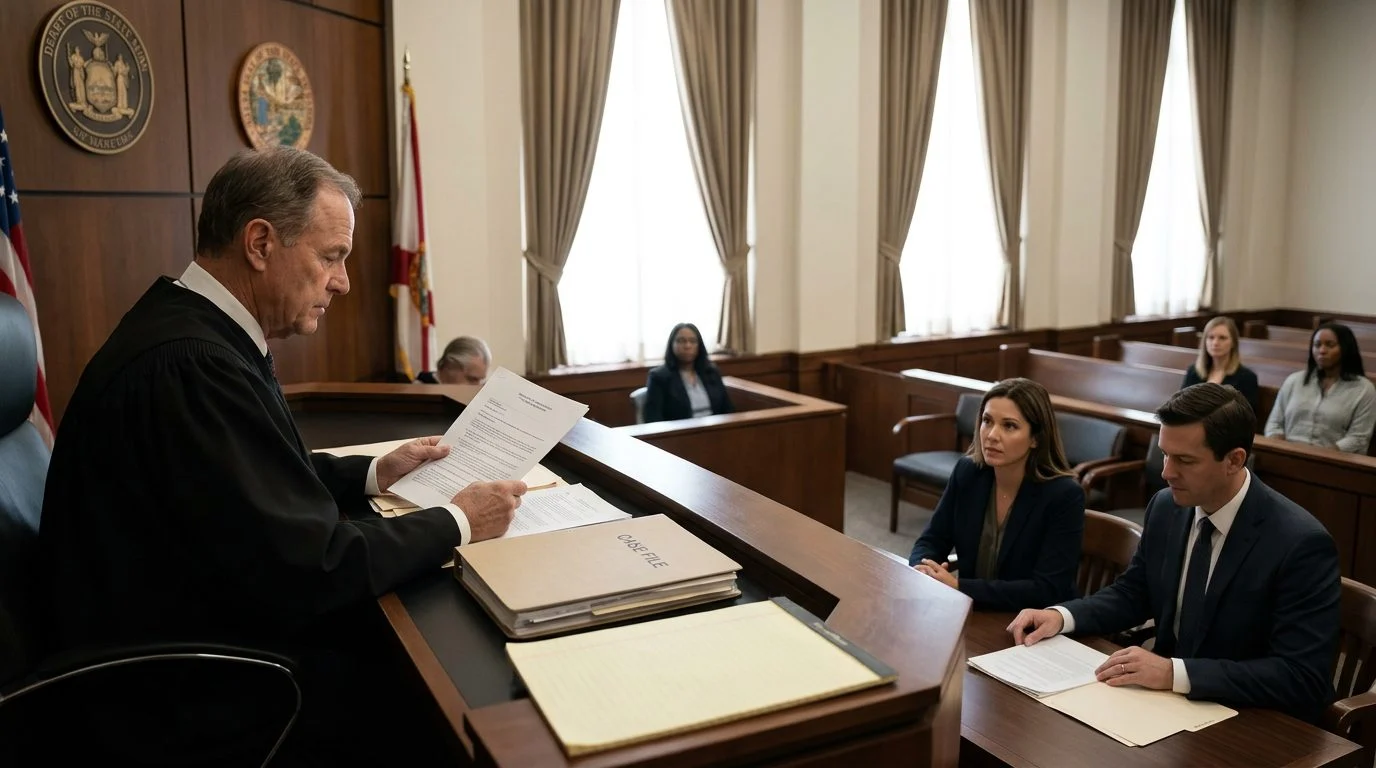
The court can order involuntary services only when the conditions are proved by clear and convincing evidence. Family members who know the person’s history can testify, and testimony is under oath.
A judge may not step in to present the petitioner’s case when the petitioner is absent. See J.C. v. State. The Fourth District reached a different view and certified a conflict in J.J.J. v. D.G.. So treat that rule as Fifth District law, not settled statewide law.
A common mistake is a vague petition. In D.H. v. K.J.R., the Second District held that an ex parte order was improper because the petition gave no good-faith reason to believe the statutory criteria were met.
Common Worries: Will My Child Be Forced onto Methadone?
The Marchman Act sections on petitions and orders do not name methadone or Suboxone. The order sends the person to a licensed provider, and that provider’s evaluation sets the plan.
Your child has rights in this process. The respondent has the right to counsel at every stage. If the respondent can’t afford a private lawyer, the respondent can get court-appointed counsel, under Fla. Stat. § 397.681. If the court believes the respondent needs or desires counsel, the court must appoint counsel even if the respondent doesn’t want one. The Second District has said due process supports that right, in Hillsborough County v. Albrechta.
The respondent must receive a copy of the petition and notice of the hearing. Fla. Stat. § 397.68151 covers those notice steps. The respondent may also refuse to testify at the hearing.
Time limits matter too. The court shall schedule a hearing on the petition within 10 court working days under Fla. Stat. § 397.68151.
Outcomes turn on each record. Don’t assume how a judge will rule on your petition.
Not sure what your next step is?
Talk it through with our team — the first consultation is free, confidential, and carries no obligation.
Insurance, Costs and Confidentiality Questions
The clerk may not charge a fee to file the petition. Service of process fees may be waived for a petitioner found indigent, under Fla. Stat. § 397.68112.
Coverage for Suboxone or methadone turns on the health plan and the treatment program. Ask the provider directly what they bill and what your child’s coverage includes.
Petitions, court orders and related records are confidential under Fla. Stat. § 397.6760. Certain people can receive them on request, including the petitioner and the respondent’s attorney. The clerk may not publish identifying information on a public docket.
Location matters, too. In J.P. v. J.N., the Fifth District noted that the filing of the petition in the wrong county did not divest the circuit court in Putnam County of jurisdiction. A petition filed in the wrong county did not remove the circuit court’s jurisdiction. For what happens when an order needs enforcing, see the order enforcement and transport guide.

A Legal Path When Your Child Keeps Stopping Treatment
If your adult child keeps leaving treatment or stopping medication, a Marchman Act petition is one legal path to ask a court for treatment. You may be watching your child leave a program after an overdose, stop Suboxone at home, or refuse to return after a hospital stay.
Robinson Casey limits its practice to Marchman Act petitions and guardianship matters. Richard J. Casey III, Esq., is the responsible lawyer for this page.
Frequently asked questions
Can a parent file a Marchman Act petition in Florida?
Yes. Florida law lets any relative of an adult respondent file, and a parent is a relative.
Does a Marchman Act order name methadone or Suboxone?
No. The sections on petitions and orders do not name either medication. The licensed provider’s evaluation sets the treatment plan.
Does it cost money to file the petition?
The clerk may not charge a fee to file it.
Ready to talk through your child’s medication history and what a petition would need to say? Contact our office or call (561) 849-4149. Our first consultation is free, confidential, and comes with no obligation to continue.
A prospective client may not obtain the same or similar results. Nothing on this page promises or predicts any outcome.
Medication decisions belong with the treating provider
Questions about methadone or Suboxone dosing, tapering, or treatment plans should be answered by the licensed provider treating the patient. Our role is the legal side: petitions, guardianship, and court process.
Matters We Handle
Marchman Act Petitions
Help preparing and filing petitions for involuntary assessment, stabilization, and treatment for adults with substance use disorders.
Involuntary Commitment for Addiction
Guidance through the court process for families seeking involuntary commitment under the Marchman Act.
Guardianship Matters
Representation in guardianship proceedings, including emergency temporary, plenary, and limited guardianships.
Mental Health Guardianship
Support for families navigating guardianship when a loved one's mental health affects their ability to make decisions.
Why Families Contact Robinson Casey
Focused Practice
Our practice focuses on Marchman Act and guardianship matters, so these cases are the core of our work.
Miami-Dade & South Florida
We serve families in Miami-Dade and across South Florida, and we handle matters statewide.
Free First Consultation
Our initial consultation is free, confidential, and carries no obligation to continue.
Support for Families
Our team works with families in urgent and stressful situations, explaining each step of the process.