
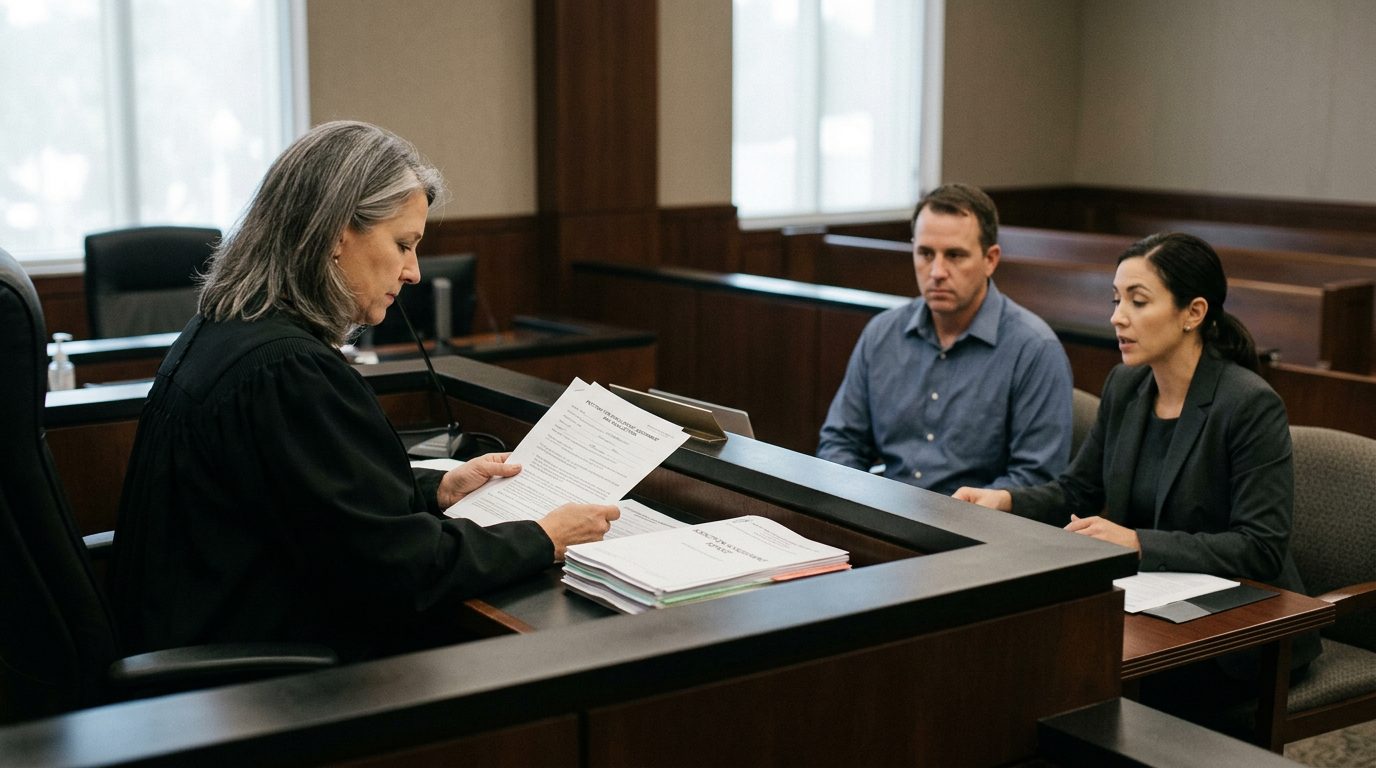
Marchman Act Attorney
Petition for Involuntary Treatment in Florida
Robinson & Casey guides families through Marchman Act proceedings to secure court-ordered addiction treatment for a loved one.
By Richard J. Casey III, Esq. · Published October 05, 2026
Marchman Act Attorney Consultation: Florida’s Civil Commitment Law for Addiction
When a loved one refuses treatment for drug or alcohol addiction and their condition is worsening, you may have a legal option: the Marchman Act. This is Florida’s civil commitment law that allows family members and concerned parties to petition a court for involuntary examination and treatment when someone cannot or will not seek help on their own. Understanding how it works—and when to file—is the first step toward getting your loved one the care they need.

Not sure what your next step is?
Talk it through with our team — the first consultation is free, confidential, and carries no obligation.
What Is the Marchman Act?
The Marchman Act is Florida’s civil commitment law for substance use disorders, codified in Fla. Stat. § 397.675, which allows involuntary examination and treatment when there is good-faith reason to believe a person has a substance use disorder, has lost self-control over substance use, and either has impaired judgment or poses a risk of harm to themselves or others. The law applies statewide across Florida—in Miami-Dade, Broward, and all South Florida counties—and is designed to intervene before addiction causes irreversible damage or death.
The Marchman Act is often confused with the Baker Act, but they serve different purposes. The Baker Act addresses mental health crises and allows involuntary psychiatric examination. The Marchman Act targets addiction specifically. Both allow involuntary examination and include court hearings and individual rights protections, but the focus and criteria differ. If your loved one is struggling with addiction—not a mental health crisis—the Marchman Act is the relevant law.
Who Can File a Marchman Act Petition?
You don’t have to be an attorney or a government official to start the process. Florida law allows several categories of people to file a Marchman Act petition:
- Family members: spouse, parent, adult child, or sibling
- Healthcare providers and treatment professionals: doctors, nurses, counselors, and addiction treatment staff
- Law enforcement and correctional officers: police, sheriff’s deputies, and prison staff
An attorney can help you determine whether your relationship and knowledge of the situation meet the legal standard.
How Does the Marchman Act Process Work?
The Marchman Act process unfolds in several steps, each with specific timelines and legal requirements.
Step 1: Petition Filed with the Court
You (or an attorney on your behalf) file a petition with the court describing the individual’s substance use, how it’s affecting their life, and why you believe they pose a danger to themselves or others or lack the judgment to seek treatment. The petition must include specific facts, not just general concerns.
Step 2: Judge Reviews for Probable Cause
The judge reviews your petition. If there is probable cause to believe the person meets the legal criteria, the judge issues an order for involuntary examination.
Step 3: Involuntary Examination at a Receiving Facility
The individual is transported to a designated receiving facility (a hospital or treatment center) for assessment. The examination takes place at the facility during this step. During this time, facility staff evaluate the severity of the substance use disorder, medical needs, and whether treatment is necessary.
Step 4: Facility Recommendation
The facility determines whether to recommend continued involuntary treatment or release. If no treatment is recommended, the person is released. If treatment is recommended, the process moves to the next step.
Step 5: Hearing
If continued treatment is recommended, a hearing is scheduled. The individual has the right to an attorney, the right to present evidence, and the right to contest the petition.
Step 6: Judge’s Decision on Treatment Order
At the hearing, the judge decides whether to order involuntary treatment. The individual retains the right to legal representation and to challenge the order at any time.
How Much Does a Marchman Act Cost in Florida?
Cost is a practical concern for families already stressed by their loved one’s addiction. Here’s what you should expect:
- Court filing fees: These vary by county, and the amount is set by the clerk of court in the county where you file. Miami-Dade, Broward, and other South Florida counties may differ.
- Attorney fees: If you hire an attorney to prepare the petition and represent you at the hearing, fees depend on the complexity of your case and the firm’s rates. A consultation can clarify what a particular attorney charges.
- Treatment facility costs: These are separate from court and attorney fees. Costs depend on the facility, length of stay, and whether insurance covers the treatment. Some facilities accept insurance; others operate on sliding scales or payment plans.
Robinson & Casey can discuss the specific fee structure for your situation during a consultation. The goal is to help you understand the full financial picture before you commit to the process.
Can You Sue for Being Wrongfully Marchman Acted?
One concern families have is whether their loved one could be held against their will without legal basis. Florida law protects against wrongful detention.
Individuals subject to a Marchman Act order retain the right to counsel, notice of charges, and a hearing. If someone believes they are being detained without legal foundation—for example, if the petition contains false information or the judge’s order violated procedure—they may challenge the detention through a habeas corpus petition (a request to the court to review the legality of the detention) or through a civil rights claim.
Wrongful detention claims require evidence that the detention lacked legal foundation or violated procedural rights. For example, if a petition was filed without any factual basis for believing the person met the legal criteria, or if the individual was not given proper notice of the hearing, those could support a challenge.
The burden of proof is on the person filing the petition to show probable cause that the individual meets the criteria for involuntary examination. If that burden is not met, the order may be challenged or overturned.
Have questions about what happened?
Ask our team directly. The first conversation is free, confidential, and there is no obligation to continue.
Who Can Lift or Terminate a Marchman Act Order?
An order isn’t permanent. Several parties can seek to modify or end it:
- The court that issued the order can modify or terminate it upon motion or petition.
- The individual subject to the order may petition for release or modification.
- The treatment facility may recommend early discharge if the individual no longer meets the criteria for continued treatment.
- Family members or legal representatives may petition to modify the order if circumstances change.
A judge will review any petition and hold a hearing if necessary before deciding whether to modify or lift the order. This protects both the individual’s rights and the family’s ability to respond to changes in the person’s condition or progress.
Marchman Act vs. Baker Act: Key Differences
Because these two laws are often confused, here’s a clear comparison:
| Aspect | Marchman Act | Baker Act |
|---|---|---|
| Focus | Substance use disorder (addiction) | Mental health crisis |
| Who files | Family, healthcare providers, law enforcement, state attorneys, any concerned person | Law enforcement, healthcare providers, judges |
| Purpose | Involuntary examination and addiction treatment | Involuntary psychiatric examination and stabilization |
| Hold periods are set by statute and are not summarized here. | ||
| Rights protections | Court hearing, right to counsel, right to contest | Court hearing (if treatment is recommended), right to counsel, right to contest |
Both laws include strong protections for the individual’s rights. Both require court involvement and give the person a chance to be heard. The main difference is the condition being addressed: addiction versus mental health.
What Happens After a Marchman Act Order Is Issued?
Once a judge issues an order for involuntary treatment, the individual enters a designated treatment facility. Here’s what typically follows:
The facility staff conduct a comprehensive assessment of the person’s substance use, medical history, mental health, and social situation. They develop a treatment plan tailored to the individual’s needs. The person has the right to medical care, communication with family and counsel, and legal representation throughout.
If the facility recommends continued treatment, a hearing is held. At the hearing, the individual can present evidence, call witnesses, and argue against continued involuntary treatment. The judge then decides whether to order continued treatment.
If treatment is ordered, the individual participates in a treatment program—which may be inpatient (residential) or outpatient (daily visits to a facility). If the treatment team believes continued involuntary treatment is necessary, the order may be renewed.
Throughout this process, the individual retains legal rights and the ability to challenge the order or seek modification.
When Should You Consider Filing a Marchman Act Petition?
Not every case of addiction warrants a Marchman Act petition. Here are signs that it may be appropriate:
- Your loved one refuses voluntary treatment despite clear signs of addiction.
- Substance use is causing immediate danger to themselves or others (overdose risk, reckless behavior, violence).
- Previous attempts at intervention or treatment have failed.
- The person is unable to make rational decisions about their own care due to the addiction.
- You’re concerned about overdose, legal consequences, or deteriorating physical or mental health.
- A healthcare professional has assessed the person and confirmed a substance use disorder requiring intervention.
The Marchman Act is not a punishment. It’s a tool to interrupt the cycle of addiction and connect someone with treatment when they won’t seek it themselves. Timing matters: the sooner you act, the sooner your loved one can begin recovery.
Next Steps: Getting Legal Guidance
Understanding the Marchman Act is the first step. Applying it correctly—filing the petition properly, presenting evidence to the court, and representing your interests at the hearing—requires knowledge of Florida statutes and local court procedures. An attorney can evaluate your specific situation, explain your options, and guide you through each stage of the process.
If you’re uncertain whether the Marchman Act is the right path for your loved one, or if you need help preparing a petition and representing your case at the hearing, a consultation can clarify your next move and answer your questions about timeline, costs, and what to expect.

Want to know where you stand?
Tell us what happened and our team will walk you through the options available to you, at no cost.
Frequently Asked Questions
How long does the entire Marchman Act process take?
The total time depends on the stages set by statute, including examination and, if treatment is recommended, a court hearing. The statute sets time limits for the examination period and the hearing.
Can someone refuse treatment after a Marchman Act order?
A treatment order is issued by a court, so the person is expected to follow its terms. Treatment professionals also work to engage the person in their own recovery.
What if the person completes treatment early?
The facility can recommend early discharge, and the court can modify or lift the order if the person is no longer a danger or no longer meets the criteria for involuntary treatment.
Does insurance cover Marchman Act treatment?
Many treatment facilities accept insurance. Coverage depends on your policy. Some facilities also offer sliding-scale fees or payment plans for uninsured individuals.
Can a Marchman Act order be appealed?
Yes. Whether the court’s order can be appealed or modified, including if circumstances change or a person believes their rights were violated, depends on the details of each case, and an attorney can review those specifics with you.
If a loved one is struggling with addiction and won’t seek help, you don’t have to navigate this alone. When you’re ready to move from research to action—to understand your legal options and take the next step—contact Robinson & Casey or call (561) 849-4700 to schedule a consultation. We’ll listen to your situation, explain the process, and help you decide the best path forward.
How We Help
Petition Preparation & Filing
We prepare and file your Marchman Act petition with the court, ensuring all required documentation is complete and submitted on time.
Fast-Track Process
Petition preparation and filing are the first steps in a Marchman Act case, and we explain each one as it comes up.
Court Representation
We represent you at the examination period and hearing, presenting your case to the judge and advocating for treatment.
Ongoing Guidance
We answer your questions throughout the process and explain what to expect at each stage.
Time Matters
The Marchman Act sets time limits for the examination period and for the hearing.
Common Questions About Marchman Act Petitions
Who can file a Marchman Act petition?
A family member, physician, mental health professional, or other interested party may petition the court. We help you understand your standing and guide you through the filing process.
What happens after the petition is filed?
The court schedules an examination period (up to 5 days) where the person is evaluated. A hearing follows within 10 days. If the judge finds grounds, a treatment order is issued.
Can someone refuse to comply with a Marchman Act order?
A court-ordered treatment plan is a court order, and what happens if it is not followed depends on the terms of the order and the circumstances of the case. An attorney can explain the legal obligations that come with the order.
What if the person needs emergency intervention now?
We also handle emergency temporary guardianship and involuntary commitment matters for immediate situations. Contact us right away to discuss urgent options.