
Marchman Act
Marchman Act Hearing in Florida
Legal guidance for involuntary commitment proceedings. Robinson & Casey handles Marchman Act petitions and hearings across South Florida and statewide.
By Richard J. Casey III, Esq. · Published October 01, 2026
Marchman Act Hearing in Florida: What Happens & How to Prepare
A Marchman Act hearing is a court proceeding where a judge decides whether to order involuntary assessment and treatment for someone struggling with substance abuse under Florida law. If you’re filing a petition or preparing to attend one, understanding the process, timeline, and what judges evaluate can reduce uncertainty and help you present a stronger case.
This guide walks you through what happens at a Marchman Act hearing in Florida, how to prepare your evidence and testimony, and what to expect from filing through the judge’s decision.
If you're considering filing a Marchman Act petition for a family member struggling with substance abuse, you don't have to navigate the court process alone—reach out to discuss your situation and how we can help you prepare. Talk it through with our team — the first consultation is free, confidential, and carries no obligation.

What Is a Marchman Act Hearing and Who Needs One
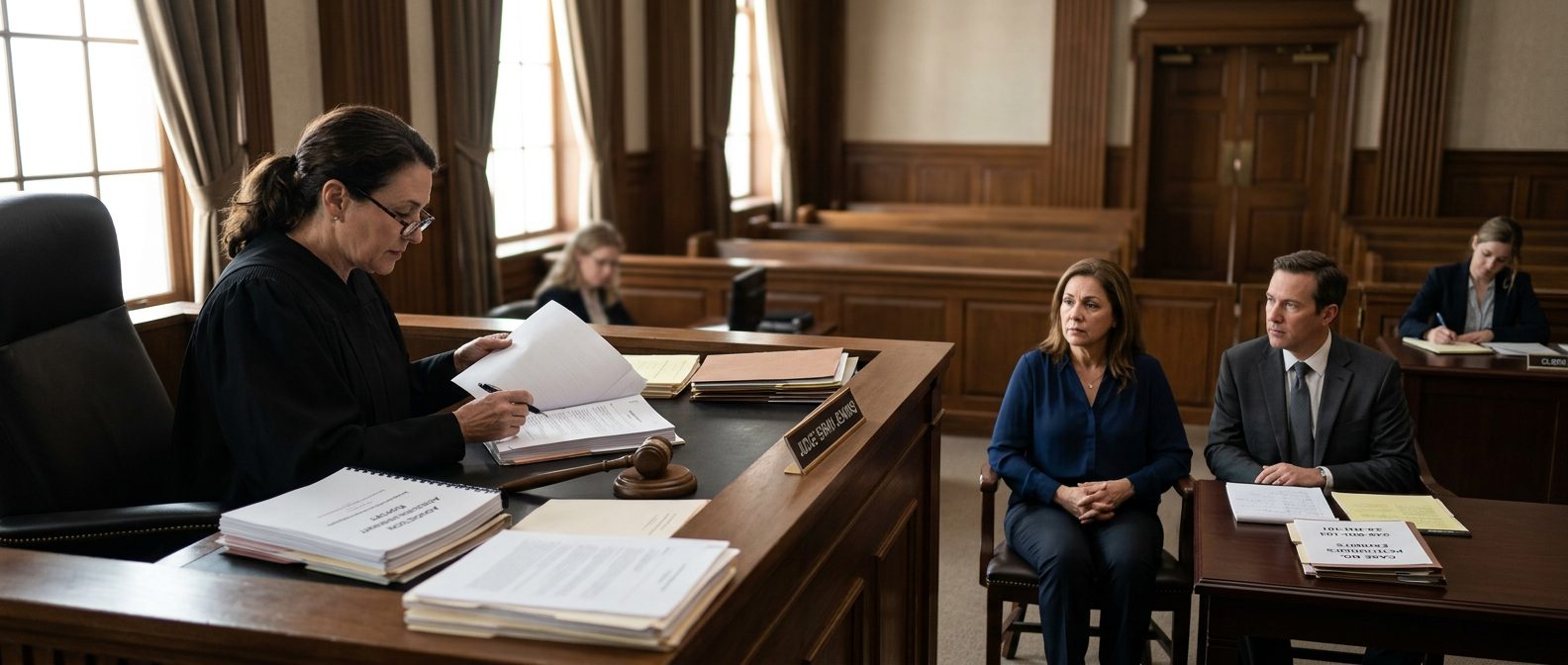
A Marchman Act hearing is the formal court event where a judge determines whether the legal criteria for involuntary commitment are met. The hearing gives both sides—the petitioner (the person filing) and the respondent (the person whose treatment is sought)—a chance to present evidence and be heard.
Who files a petition: – Family members (spouse, parent, adult child, sibling) – Healthcare providers or treatment facilities – Law enforcement officers – The Department of Children and Family Services – Any other person with knowledge of the respondent’s substance abuse
Who attends the hearing: – The petitioner or their attorney – The respondent (the person whose treatment is sought) – Witnesses (family, medical professionals, law enforcement) – The judge – Court clerk and potentially a court-appointed advocate
What the judge evaluates: The judge must find that the respondent meets all of these criteria:
- Has a substance abuse disorder (alcohol or drugs)
- Poses a threat to self (risk of serious bodily harm, death, or severe deterioration without treatment)
- Poses a threat to others (risk of harming another person due to impaired judgment)
- Is likely to benefit from treatment
- Has no less restrictive alternative available (meaning voluntary treatment or outpatient care won’t work)
Possible outcomes: – Order for assessment only (respondent goes to a facility for evaluation) – Order for short-term treatment (typically up to 5 days) – Order for extended treatment (longer-term residential or intensive outpatient care) – Denial of the petition (no order issued; respondent remains free to refuse treatment)
Marchman Act Hearing Timeline: How Long Does It Take
Understanding the timeline helps you plan and reduces stress about delays.
Petition filing to hearing: Most Florida counties schedule hearings within 5–10 business days of filing. This varies by county and court caseload, but you can expect roughly one to two weeks.
Emergency or expedited hearings: If you allege immediate danger (imminent overdose risk, violent behavior, severe medical crisis), the court may schedule an emergency hearing within 24–72 hours. You must request this and provide specific facts showing urgency.
Standard hearing duration: The actual hearing typically lasts 15–45 minutes, depending on the number of witnesses and complexity of the case.
Judge’s decision: The judge usually rules the same day or within 1–2 business days after the hearing. The order is entered in the court record.
Appeal window: If the judge denies the petition, you have 30 days to appeal or file a new petition if circumstances change significantly.
Post-order transport: If the judge grants the order, the respondent is typically transported to a designated assessment facility or treatment provider within 24 hours.
Step-by-Step: What Happens at a Marchman Act Hearing
Knowing the order of events reduces anxiety and helps you prepare mentally.
Step 1: Petitioner presents opening statement and evidence
You (or your attorney) begin by explaining why you filed the petition. You present documents, medical records, incident reports, and a timeline of the respondent’s substance abuse. You describe specific incidents with dates and details, not general complaints.
Step 2: Witnesses testify
Family members, healthcare providers, law enforcement, or others with direct knowledge speak under oath. They describe what they’ve observed: the respondent’s behavior, missed work, overdose events, arrests, deterioration, or threats. Each witness is asked questions by you (or your attorney) and then by the respondent or their attorney.
Step 3: Respondent speaks and presents their side
The respondent has the right to testify, present witnesses, and contest the petition. They may claim substance use is under control, treatment isn’t needed, or that specific incidents didn’t happen. They may present character witnesses or medical evidence supporting their position.
Step 4: Judge asks clarifying questions
The judge may ask both sides questions to fill gaps in the record or clarify facts. This is not an argument—it’s the judge gathering information to apply the law.
Step 5: Judge rules
The judge announces the decision from the bench. If the criteria are met, the judge issues an order specifying the type of treatment (assessment, short-term, or extended). If criteria aren’t met, the petition is denied.
Step 6: Respondent is transported (if order granted)
Court staff or law enforcement transports the respondent to the designated assessment facility or treatment provider, usually within 24 hours. The facility begins the assessment and treatment planning process.
How to Prepare for a Marchman Act Hearing: Essential Documents and Evidence
The stronger your evidence, the clearer the case. Judges rely on concrete facts, not emotion or general statements.
Petition form
File the completed petition with the circuit court clerk in the correct county. Ensure it’s filed correctly to avoid dismissal or delay.
Medical or clinical records
Gather any prior treatment records, psychiatric evaluations, addiction assessments, or diagnoses related to substance abuse. These show a pattern and establish the respondent’s condition.
Incident documentation
Collect police reports, DUI arrests, emergency room visit summaries, overdose events, or calls to 911. Include dates, what happened, and the outcome. These are powerful evidence of threat and escalation.
Witness statements or affidavits
Ask family, employers, healthcare providers, or others to write brief statements describing what they’ve observed. An affidavit (sworn statement) carries more weight than casual conversation. Include specific dates and incidents.
Photographs or videos
If available and appropriate, photos of drug paraphernalia, unsafe living conditions, or physical deterioration strengthen your case. Do not include images that violate privacy or are inflammatory.
Financial or employment records
Documentation of job loss, eviction notices, missed payments, or financial decline tied to substance use shows the impact and severity.
Timeline
Create a chronological summary showing how substance abuse has escalated over weeks or months. Example: “March 2024: First DUI arrest. June 2024: Lost job due to absences. August 2024: Overdose, hospitalized. October 2024: Refuses treatment.”
Preparing Your Testimony: What the Judge Needs to Hear
Your testimony is often the most persuasive evidence. Judges listen for specific facts tied to the legal criteria.
Speak to specific incidents, not generalities
Don’t say “He uses drugs all the time.” Instead: “On October 15, I found him unconscious with a needle on the bathroom floor. I called 911. The paramedics said he overdosed.”
Show a pattern of escalation
Describe how the substance abuse has worsened over time. This demonstrates the threat is real and growing.
Explain the threat to self or others
Connect substance abuse to specific risks: “Without treatment, he will overdose again. He’s already survived two overdoses in six months.” Or: “When he’s high, he’s verbally abusive and has threatened violence. My children are afraid.”
Mention failed attempts at help
If the respondent has refused treatment, broken promises, or relapsed, say so. This shows why involuntary intervention is necessary.
Establish your relationship and knowledge
Explain why you know the respondent’s condition: “I’m his mother. I see him three times a week. I’ve witnessed his behavior change dramatically.”
Be clear about what you’re asking for
State whether you seek assessment only, short-term treatment, or extended care. Explain why that level of care is appropriate.
Not sure what your next step is?
Talk it through with our team — the first consultation is free, confidential, and carries no obligation.
What Are the Legal Requirements the Judge Will Evaluate
Florida law requires judges to find specific facts before issuing a Marchman Act order. Understanding these helps you frame your evidence.
Substance abuse
The respondent has a substance abuse disorder—not just occasional use, but a pattern of use that impairs functioning. Medical records or testimony describing addiction supports this.
Threat to self
The respondent is at risk of serious bodily harm, death, or severe physical or mental deterioration without treatment. Overdose history, suicide attempts, or severe medical decline are evidence.
Threat to others
The respondent’s impaired judgment or behavior creates risk of harm to another person. Examples: driving under the influence, violence, neglect of children or dependents.
Likelihood of benefit
Treatment is reasonably likely to help the respondent. This means the respondent is not terminally ill or in a condition where treatment won’t help. Most substance abuse cases meet this standard.
Least restrictive means
The court must consider whether less restrictive options (voluntary treatment, outpatient programs, medication-assisted treatment) are viable first. If the respondent refuses voluntary help or has failed outpatient treatment, involuntary commitment becomes justified.
Frequently Asked Questions About Marchman Act Hearings
Q: Can the respondent refuse to attend the hearing?
A: No. If they don’t appear, the judge may proceed without them and issue an order based on evidence presented.
Q: Can I bring a lawyer to the hearing?
A: Yes. Having legal representation strengthens your case and ensures proper procedure.
Q: What if the judge denies the petition?
A: You may appeal within 30 days or file a new petition if circumstances change significantly.
Q: Will the respondent know I filed?
A: Yes. They must be served with the petition and given notice of the hearing date.
Q: What happens after the hearing if the order is granted?
A: The respondent is typically transported to an assessment facility within 24 hours.
Q: Can I request a specific treatment facility?
A: You may recommend one, but the court and assessment team determine placement based on availability and clinical need.
How Robinson & Casey Helps You Prepare and Present Your Case
Navigating a Marchman Act hearing alone is stressful and risky. Our team handles the legal work so you can focus on your family.
Petition drafting and filing
We prepare and file the petition correctly to avoid delays or dismissal. We ensure all required information is included and the petition is filed in the right county.
Evidence organization
We help you gather, organize, and present medical records, incident reports, and witness statements in a way that persuades the judge.
Witness preparation
We coach you and other witnesses on how to testify clearly, calmly, and persuasively. We explain what questions to expect and how to answer them.
Legal strategy
We identify the strongest arguments under Florida law and anticipate the respondent’s likely defenses. We build a case tailored to your county and judge.
Court representation
We present your case at the hearing, examine witnesses, respond to legal challenges, and advocate for the outcome you seek.
Timeline management
We ensure all deadlines are met and you understand what to expect at each stage. You’re never surprised or left wondering what comes next.
Common Objections and How They Are Addressed in Court
The respondent will likely contest the petition. Knowing how to respond strengthens your position.
“My substance use is under control.”
Your evidence of recent incidents, failed treatment, or escalation contradicts this claim. Judges rely on facts, not the respondent’s assertion.
“I don’t need treatment.”
The judge evaluates whether treatment is likely to benefit the respondent, not whether the respondent believes they need it. Your evidence of threat and harm demonstrates the need.
“I’ve never refused treatment before.”
If the respondent has previously refused help or relapsed, this strengthens your case for involuntary intervention.
“The petition has procedural problems.”
Proper filing and service prevent these challenges from succeeding. Our team ensures all procedural requirements are met.
“Those incidents didn’t happen.”
Corroborating witnesses, medical records, police reports, and documentation overcome denial. Specific dates and details are harder to dispute than general allegations.

Next Steps: What to Do Now
If you’re considering filing a Marchman Act petition, start gathering information now.
-
Collect all available documentation: Medical records, incident reports, photos, witness contact information.
-
Write a detailed timeline: Document the respondent’s substance abuse and escalating behavior with dates and specific events.
-
Identify witnesses: List family members, medical providers, law enforcement, or others who can testify about what they’ve observed.
-
Contact Robinson & Casey: Reach out to discuss your situation. We’ll review your case, answer your questions, and explain the next steps specific to your county.
-
Schedule a consultation: Meet with our team to begin petition preparation and hearing strategy.
If you’re facing the difficult decision of filing a Marchman Act petition for a loved one, know that this process is designed to help. Families in South Florida and across the state reach out to us regularly when substance abuse reaches a crisis point and voluntary treatment has failed. We understand the emotional weight of this decision and the practical challenges of navigating the court system. Contact us today to discuss your situation and how we can guide you through the hearing process.
What to Expect in a Marchman Act Hearing
Petition and Evidence
The court reviews the filed petition, medical or clinical evidence, and testimony from those with personal knowledge of the respondent's substance use and danger to self or others.
Respondent's Rights
The respondent may attend, present evidence, cross-examine witnesses, and have legal representation. The judge determines whether grounds for involuntary commitment exist.
Legal Representation Matters
Having an attorney present strengthens your case, ensures proper procedure, and protects your rights throughout the hearing process.
Timeline and Outcome
The judge issues an order based on the evidence presented. Understanding the process and preparing thoroughly improves your position in court.
Key Point
If the respondent does not appear at the hearing, the judge may proceed without them and issue an order based on evidence presented. Proper legal preparation is essential.
Common Questions About Marchman Act Hearings
Can the respondent refuse to attend?
No. If they do not appear, the judge may proceed without them and issue an order based on the evidence presented.
Can I bring a lawyer to the hearing?
Yes. Having legal representation strengthens your case, ensures proper procedure, and protects your rights.
What happens if the judge denies the petition?
If denied, the respondent is released. An attorney can advise you on next steps and whether additional action is appropriate.
What if the judge approves the petition?
The respondent may be ordered into treatment or evaluation. Your attorney can explain the specific terms and your ongoing obligations.