
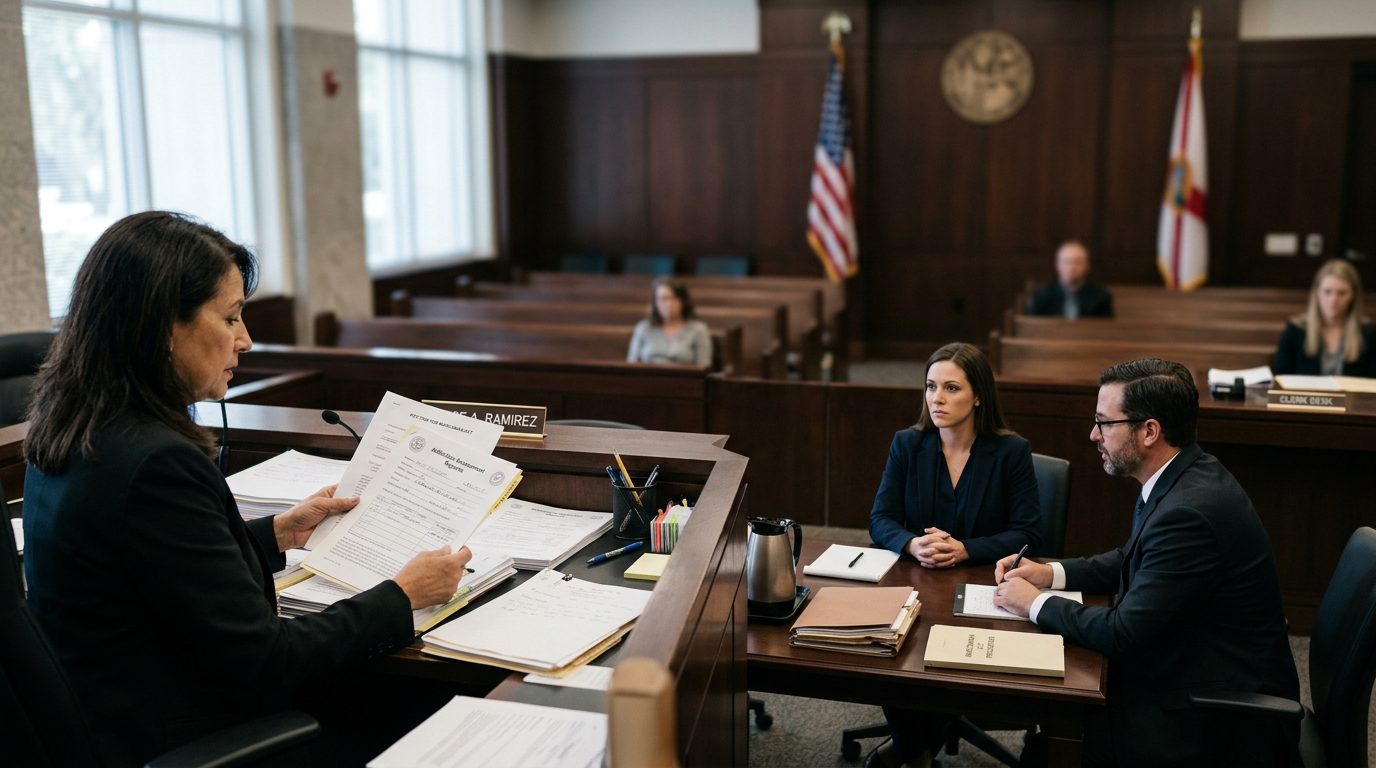
Marchman Act Process
Marchman Act Petition Timeline in Florida: How Long Does It Take?
The Marchman Act process unfolds in distinct phases. Understand what to expect at each stage—from filing through emergency hold, hearing, and commitment.
By Richard J. Casey III, Esq. · Published September 22, 2026
How Long Does a Marchman Act Petition Take in Florida? Timeline & Process Duration
The Marchman Act process in Florida isn’t instantaneous—it unfolds in distinct phases, each with its own timeframe. From filing through emergency hold, hearing, and final commitment, the entire process typically takes days to weeks, depending on your county, whether the petition is contested, and how quickly medical evaluations are completed.
Understanding the realistic timeline helps you prepare emotionally, arrange support, and know what to expect at each stage—without false hope or unnecessary panic.
If you're facing a loved one's substance use crisis and wondering how quickly the Marchman Act process moves, families in your situation can reach out to us—call (561) 849-4149 or contact us to discuss your timeline and next steps. Talk it through with our team — the first consultation is free, confidential, and carries no obligation.

Overview: The Marchman Act Timeline in Florida
The Marchman Act process involves multiple stages governed by Florida Statutes Chapter 397, which establishes the legal framework for involuntary treatment of substance use disorders. The total duration typically ranges from days to weeks, depending on the type of petition and court circumstances.
Each phase has a specific legal purpose and timeframe. Understanding them helps you prepare documentation, arrange time off work, and mentally prepare for what comes next—reducing uncertainty during an already stressful situation.
Emergency Temporary Hold: The First 72 Hours
An emergency temporary hold can be initiated immediately upon filing and typically lasts up to 72 hours. During this window, law enforcement or designated personnel may take the individual into custody for evaluation by medical professionals.
The 72-hour hold serves two purposes: it stabilizes the immediate situation and allows time for a full Marchman Act hearing to be scheduled. The individual is evaluated during this period to assess whether ongoing commitment is medically necessary. This evaluation is critical—it provides the medical foundation for the judge’s decision at the hearing.
The 72 hours is measured from the time the hold is issued, not from when the individual is physically taken into custody. If the hold is issued on a Friday evening, for example, it may expire Monday afternoon, which can affect when the hearing is scheduled.
Scheduling the Marchman Act Hearing
After an emergency hold is initiated, Florida law requires that a hearing be scheduled within a specific timeframe. The exact timing varies by county court schedule and case circumstances.
Hearing dates are typically set within 5–10 business days of the emergency hold, though this can vary significantly. Some Florida counties have dedicated Marchman Act dockets that move more quickly; others have longer backlogs. Your county’s court schedule is one of the biggest factors affecting total duration.
Both the petitioner (the person filing) and the respondent (the individual subject to the petition) have the right to be present and represented by an attorney. If either party requests a continuance, the hearing date may be pushed back, extending the overall timeline.
The Marchman Act Hearing and Court Decision
The hearing itself typically lasts 30 minutes to a few hours, depending on complexity and whether the respondent contests the petition. The judge reviews evidence, hears testimony from the petitioner, medical professionals, and the respondent, and determines whether grounds for commitment exist under Florida law.
A judicial decision is usually rendered on the same day or within a few days of the hearing. If the petition is granted, the court issues a commitment order. If denied, the petitioner may file again under certain circumstances, though this requires new grounds or changed circumstances.
The hearing is not a criminal trial—it’s a civil proceeding focused on medical necessity. The standard is whether clear and convincing evidence shows that the individual is unable to manage their substance use and poses a threat to themselves or others.
Factors That Affect How Long the Process Takes
Several variables influence the total duration of a Marchman Act petition:
County court schedules. High-volume counties may have longer waits between filing and hearing; smaller counties may move faster. Your location in South Florida or elsewhere in Florida directly affects this.
Whether the respondent contests the petition. Uncontested cases move faster than those requiring a full evidentiary hearing with witnesses and cross-examination.
Availability of medical evaluations. Delays in obtaining physician evaluations—especially if the individual is not yet in custody—can extend the timeline by days or weeks.
Whether an emergency temporary hold is used. Emergency holds can accelerate the process by securing the individual immediately. Standard petitions without an emergency hold may take longer to schedule.
Completeness of the petition. Incomplete or incorrectly filed petitions may require amendments, adding days or weeks to the process.
Holiday schedules and court closures. Timing relative to weekends, holidays, and court closures can affect scheduling. A petition filed on a Friday before a holiday weekend may not be heard until the following week.
Not sure what your next step is?
Talk it through with our team — the first consultation is free, confidential, and carries no obligation.
From Hearing to Commitment: What Happens Next
If the court grants the petition, the individual is typically transported to a designated treatment facility. Initial commitment orders are often for a specific duration—commonly 30 days, 60 days, or longer—depending on the judge’s determination and the facility’s assessment.
The individual retains legal rights during commitment, including the right to petition for release and the right to legal representation. Treatment facilities provide ongoing evaluation and may recommend extended commitment or discharge based on progress.
The commitment order is not permanent. It’s a court-ordered treatment period designed to stabilize the individual and provide access to medical and therapeutic services. Many individuals are discharged before the full order duration if they make sufficient progress.
Why Timeline Matters for Your Family
Knowing the realistic timeline helps you prepare for the hearing, gather documentation, and arrange support. Understanding the process reduces uncertainty during an already stressful situation.
Realistic expectations about duration help families plan for treatment, work, and childcare arrangements. The timeline also affects how quickly your loved one can access treatment and stabilization—which is often the most pressing concern.
The National Institute on Drug Abuse recognizes addiction as a disease, which supports the medical and legal basis for the Marchman Act process. Understanding the timeline is part of understanding that this is a medical intervention, not a punishment.

Get Help Understanding Your Specific Timeline
Every situation is unique. Your county, the specific circumstances of the case, and whether the petition is contested all affect duration. A Marchman Act attorney familiar with your local court system can give you a more precise estimate based on current court schedules and case complexity.
If you’re navigating a loved one’s substance use crisis and wondering how the Marchman Act timeline works in your situation—or if you need to file immediately and want to understand what to expect—reach out. Families in your position can contact us to understand the process, prepare documentation, and move forward with confidence. Call us at (561) 849-4149 or contact us online to discuss your specific timeline and next steps.
The Four Phases of a Marchman Act Petition
Phase 1: Filing & Emergency Hold
Your petition is filed with the court. If approved, an emergency hold (up to 5 days) is issued, allowing law enforcement or medical personnel to bring the individual in for evaluation. This phase typically takes 24–48 hours from filing.
Phase 2: Medical Evaluation
A physician evaluates whether the individual meets Marchman Act criteria. This evaluation must be completed within the emergency hold period. Timeframe: 2–5 days, depending on facility availability and evaluation complexity.
Phase 3: Hearing & Adjudication
The court holds a hearing to determine whether involuntary commitment is warranted. The hearing must occur within 10 days of the emergency hold. Contested cases may take longer; uncontested cases may proceed more quickly.
Phase 4: Commitment & Treatment
If the court orders commitment, the individual enters treatment. The duration depends on the commitment type (emergency, temporary, or long-term) and the treatment facility's program length.
Timeline Varies by County & Circumstances
The overall process typically takes days to weeks. Factors that affect speed include your county's court schedule, whether the petition is contested, how quickly medical evaluations are completed, and the availability of treatment facilities. Emergency temporary guardianship or other concurrent proceedings may also extend the timeline.
What Affects Your Marchman Act Timeline
County & Court Availability
Different Florida counties have different court schedules. Some move faster than others. Your location matters.
Petition Type & Completeness
A complete petition filed correctly moves through the system faster. Errors or missing information can cause delays.
Whether the Petition Is Contested
If the respondent contests the petition, the hearing takes longer and may require additional evidence and testimony.
Medical Evaluation Speed
Facility availability and how quickly a physician can complete the evaluation directly impact the timeline.
Treatment Facility Placement
Finding an appropriate treatment bed can add days to the process, especially during high-demand periods.
Ready to Move Forward? We Can Help.
Related practice areas
- Marchman Act Attorney | Florida Involuntary Commitment for Addiction
- Marchman Act for Family Members: When Loved One Refuses Help