
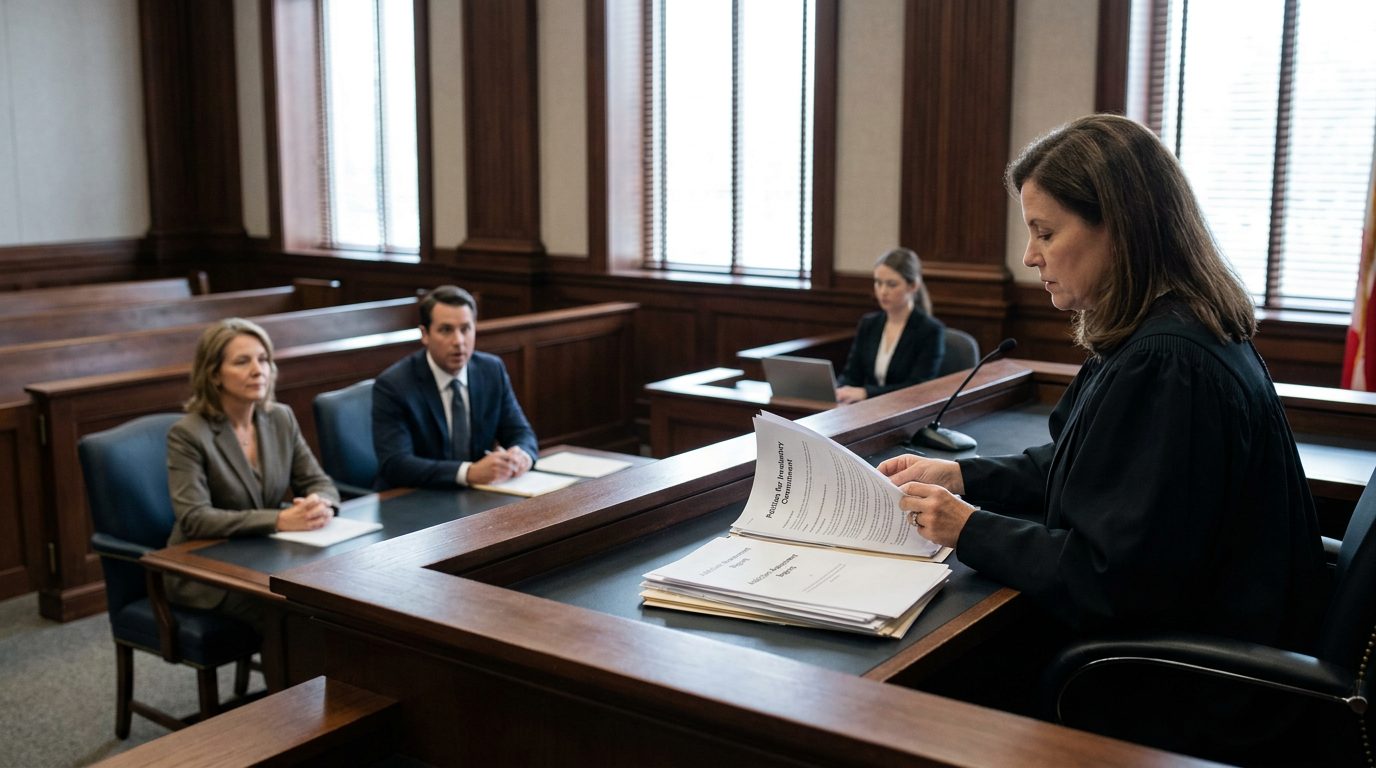
Marchman Act Timeline
The 33-Day Rule in Florida Marchman Act Petitions
Understanding the critical deadline that governs temporary relief orders and what happens when the clock runs out.
By Richard J. Casey III, Esq. · Published October 01, 2026
The 33-Day Rule in Florida’s Marchman Act: What Families Need to Know
The 33-day rule sets the maximum holding period for involuntary evaluation under Florida’s Marchman Act. This timeframe, established in Florida Statute § 397.675(1), follows a temporary relief hearing. It protects individuals’ rights while allowing time for assessment and stabilization.
Understanding the 33-day rule is critical for families considering involuntary commitment for addiction. This guide explains how the rule works, what happens during those 33 days, and what comes next.

Not sure what your next step is?
Talk it through with our team — the first consultation is free, confidential, and carries no obligation.
How the 33-Day Rule Works Under the Marchman Act
The 33-day rule comes directly from Florida’s civil commitment law for substance use disorders. Florida Statute § 397.675(1) establishes this as the maximum duration for a temporary relief order.
A temporary relief order is the initial court-ordered hold issued after a judge finds grounds at a temporary relief hearing. This is not criminal detention. The Marchman Act is civil law designed to protect people struggling with addiction. Family members, healthcare providers, and other authorized petitioners can seek court-ordered evaluation and treatment.
The 33-day period serves a specific purpose: it gives medical and psychiatric professionals time to assess the person’s condition, begin stabilization, and develop a treatment plan. The person’s rights remain protected throughout.
The rule applies only to people subject to a temporary relief order issued after a temporary relief hearing. Not every addiction case involves a 33-day hold. It depends on whether a court orders involuntary commitment.
When the 33-Day Period Begins and Ends
The 33-day clock starts when the court enters the temporary relief order. This is the specific date the judge signs the order—not when the person arrives at a treatment facility or gets admitted.
From that date, the person can be held involuntarily for exactly 33 days. Calendar days count. Weekends and holidays are included. On day 33, one of three things must happen:
- The facility releases the person.
- The person agrees to continue treatment voluntarily.
- The petitioner files for a more permanent legal arrangement, such as a plenary guardianship.
There is no automatic extension. The 33 days does not roll into a longer commitment simply because time has passed. A new legal proceeding—with notice to the person, a hearing, and a new court order—is required for any continued involuntary hold beyond day 33.
What Occurs During the 33-Day Period
During the 33 days, the treatment facility conducts a comprehensive evaluation. Medical doctors and psychiatrists assess the person’s substance use history, current physical and mental health, medical complications, and treatment needs.
Stabilization is a primary focus. If the person is in acute withdrawal or intoxication, medical staff manage those symptoms. Medications may be started. Crisis intervention and counseling begin. The goal is to move the person from immediate danger to a stable baseline.
By the end of the 33-day period, the facility must develop a written treatment plan. This plan outlines the person’s diagnosis, recommended level of care, therapeutic interventions, medication (if any), and discharge or transition planning. The person and their family should receive a copy and discuss it.
Throughout this time, the person retains important rights. They have the right to legal representation and can consult with an attorney. They can petition the court to modify or terminate the temporary relief order. They retain the right to contact family and legal counsel. They’re entitled to appropriate medical care. They must be informed of the order and its terms in plain language.
Have questions about what happened?
Ask our team directly. The first conversation is free, confidential, and there is no obligation to continue.
What Happens After the 33 Days End
As day 33 approaches, decisions must be made. The most common outcomes are:
Voluntary continuation: If the person agrees to remain in treatment, they may stay as a voluntary patient. Many people, once stabilized and engaged in treatment, choose to continue. This requires their informed consent and is documented in writing.
Discharge: If no further legal action is taken and the person does not consent to remain, they must be released. The facility cannot hold them involuntarily past day 33 without a new court order.
Extended commitment: If the petitioner believes longer-term protection is necessary, they may file for a plenary guardianship or seek an extended involuntary commitment order. This requires a new court petition, notice to the person, and another hearing. It is not automatic.
Transition to outpatient care: Some people transition to intensive outpatient programs, sober living homes, or other lower-level services after the 33-day period.
Good treatment facilities communicate early about the person’s progress, the treatment plan, and what options exist at the end of the 33-day period. Families should not be left guessing on day 32.
Rights of the Person During the 33-Day Hold
A person subject to a temporary relief order has legal protections. They have the right to an attorney. If they cannot afford one, they may request a public defender or court-appointed counsel. This attorney can review the order, advise the person on their options, and represent them in court.
The person can challenge the temporary relief order. If they believe it was issued without proper grounds, they can petition the court to modify or terminate it. The burden is on the petitioner to justify the order.
The person generally retains the right to communicate with family, legal counsel, and others, subject to facility rules that protect safety and treatment integrity. They have the right to appropriate medical and psychiatric care. They must receive notice of the order in writing, in a language they understand.
These protections exist because the Marchman Act, while allowing involuntary commitment, recognizes that the person’s liberty is at stake. The law balances the need to protect people in crisis with their fundamental rights.
Common Misconceptions About the 33-Day Rule
Families often misunderstand what the 33-day rule does and does not do.
It’s not a promise of recovery. The 33 days is a legal holding period for evaluation and initial treatment, not a promise that the person will recover or complete a full treatment program. Recovery takes time, often much longer than 33 days.
It doesn’t automatically convert to a longer commitment. After 33 days, the person is not automatically placed under guardianship or committed for another period. A new legal action is required.
It’s not a criminal sentence. The Marchman Act is civil law. The 33-day hold is not a punishment; it’s a protective measure. The person has not been convicted of a crime.
It’s not indefinite. After 33 days, the person cannot be held involuntarily without a new court order. They cannot be held “until they’re better” or “as long as the facility thinks is necessary” without ongoing legal authorization.
Understanding these distinctions helps families make informed decisions and reduces fear and confusion during an already stressful time.
How Robinson & Casey Helps Families Navigate the 33-Day Period
Robinson & Casey represents families and individuals throughout the Marchman Act process, including the critical 33-day period and what comes after.
We help families prepare and file Marchman Act petitions, ensuring they include all necessary facts and meet statutory requirements. We represent petitioners at the temporary relief hearing, presenting evidence and legal arguments to establish grounds for the temporary relief order.
Once the 33-day period begins, we track the deadline and advise families on what must happen before day 33 expires. If longer-term care is needed, we guide families through the process of filing for a plenary guardianship or other extended commitment options. We ensure all procedures comply with Florida law and that the person’s rights are respected throughout.
Many families in South Florida and across the state reach out when they’re in the middle of a Marchman Act case, unsure of timelines, their options, or what to expect next. Understanding the legal framework—including the 33-day rule—is essential to making the right decisions for your loved one.

Want to know where you stand?
Tell us what happened and our team will walk you through the options available to you, at no cost.
Frequently Asked Questions
What exactly triggers the start of the 33-day clock?
The 33-day period begins when the court enters the temporary relief order following the temporary relief hearing, not when the person arrives at the facility.
Can the 33-day period be extended?
Only by court order. The facility cannot extend it unilaterally; a new legal proceeding is required.
What if the person refuses treatment during the 33 days?
The person can be held involuntarily during the 33-day period even if they refuse treatment, but they retain the right to legal representation and can petition the court to challenge the order.
Does the 33-day rule apply to all addiction cases in Florida?
No, only to cases where a temporary relief order is issued following a temporary relief hearing under the Marchman Act.
What’s the difference between the 33-day temporary relief order and a plenary guardianship?
The temporary relief order is short-term (33 days maximum) and focused on evaluation and stabilization. A plenary guardianship is a longer-term legal arrangement that may follow if extended protection is needed.
If you’re navigating a loved one’s addiction crisis and facing decisions about involuntary commitment, Robinson & Casey is here to help. Contact us today to discuss your situation and learn how we can guide your family through this process. Call (561) 849-4149.
The Clock Starts After the Order
The 33-day period begins when the court enters the temporary relief order following the temporary relief hearing—not when the person arrives at the facility. Timing matters in Marchman Act proceedings, and missing this distinction can affect your next steps.
Key Points About the 33-Day Rule
When the Clock Starts
The 33-day period begins on the date the court enters the temporary relief order, not on the date of admission to the treatment facility or the hearing itself.
What Happens at Day 33
At the end of 33 days, the temporary relief order expires unless the court has already entered a plenary (long-term) guardianship order or another court order extends the temporary status.
Extension Requirements
The 33-day period cannot be extended by the facility unilaterally. Any extension requires a new court order, which means filing additional legal proceedings before the deadline passes.
Planning Ahead Matters
Understanding where you are in the 33-day window is essential for preparing the next phase—whether that is a plenary guardianship petition, a limited guardianship, or another form of ongoing legal authority.
Why the 33-Day Rule Matters to Your Family
Time-Sensitive Decisions
The 33-day window is your opportunity to decide whether temporary relief is sufficient or whether a longer-term guardianship arrangement is necessary. Waiting until day 32 leaves little room for error.
Court Filings Must Be Timely
If you need to move from temporary relief to plenary guardianship, mental health guardianship, or limited guardianship, the petition must be filed and processed before the temporary order expires.
Legal Authority Continuity
Without a new order in place by day 33, your legal authority to make decisions on behalf of the person in treatment may lapse, potentially disrupting their care and recovery plan.
Early Legal Guidance
Consulting with a Marchman Act attorney early in the temporary relief period ensures you understand your options and can file the right petition at the right time.
Don't Let the Deadline Pass
Many families discover too late that they need to file a plenary guardianship petition or another motion before the 33 days expire. The sooner you understand where you stand in the timeline and what your next legal step should be, the better positioned you are to protect your family member's interests and ensure continuity of care.