
Marchman Act & Guardianship | Miami-Dade and South Florida
When a Parent Can't Make Decisions, Here's What to Do Next
Robinson Casey focuses on Marchman Act petitions and guardianship matters for families across South Florida and statewide. Your first consultation is free, confidential, and comes with no obligation to continue.
By Richard J. Casey III, Esq. · Published October 25, 2026
If a parent can’t handle bills, medicine, or personal safety, contact Robinson Casey to explain emergency options now. You don’t have to wait for a full guardianship case. This page explains what to do when a parent can’t make decisions in Florida.
This page is general information, not legal advice for any one family. It is written by Richard J. Casey III, Esq. Robinson Casey focuses its practice on Marchman Act petitions and guardianship matters for families across South Florida and statewide. The first consultation is free, confidential, and carries no obligation to continue.
When a Parent Cannot Manage Bills, Medication, or Safety: Start With a Lawyer Now
Contact Robinson Casey as soon as you see real danger. Florida has an emergency path for cases where waiting could cause serious harm.
Under Fla. Stat. § 744.3031, a court may appoint an emergency temporary guardian. The court can do that only after a petition to determine incapacity has been filed.
The judge must also find that there appears to be imminent danger. The danger must be that the person’s physical or mental health or safety will be seriously impaired, or that the person’s property is in danger of being wasted, misappropriated, or lost, unless immediate action is taken.
That test is narrow. It asks about immediate danger, not general worry about an aging parent. Knowing this helps you decide what to bring to a lawyer first.
If your parent's medicine, bills, or safety are slipping right now, you don't have to work out the emergency options alone; call (561) 849-4149 or request a consultation. Talk it through with our team — the first consultation is free, confidential, and carries no obligation.
Signs a Parent Can No Longer Make Safe Decisions
A parent may need help when daily tasks start failing in ways that cause real harm. Look for patterns over time, not one bad day.
Warning signs usually fall into three areas:
- Money: unpaid rent or utilities, bank or landlord notices, bills paid twice, or large gifts to people outside the family.
- Medicine: missed doses, doubled doses, or prescriptions that never get picked up.
- Safety: wandering, falls, a stove left on, unsafe driving, or refusal of care the parent clearly needs.
Dementia, stroke, and serious illness often sit behind these changes. Describe what you have seen yourself. Don’t lead with a diagnosis. A petition must state the facts behind the belief that the person is incapacitated, and it must name people who know those facts firsthand (Fla. Stat. § 744.3201).
Step 1: Document the Safety Problem
Start a dated written log now. Write down what happened, when, who saw it, and what harm occurred or nearly occurred. Note what the family did in response.
Gather the papers that show the problem. Useful items include bills, pharmacy printouts, bank or landlord notices, and any medical records the family already has. Keep originals safe and work from copies.
Specific, recent examples carry more weight than general worry. “Mom left the burner on twice this week” tells a judge more than “Mom seems confused.” Include names and dates.
Keep notes on the parent’s own words, too. A court must consider the wishes an incapacitated person has expressed about who should serve as guardian (Fla. Stat. § 744.312).
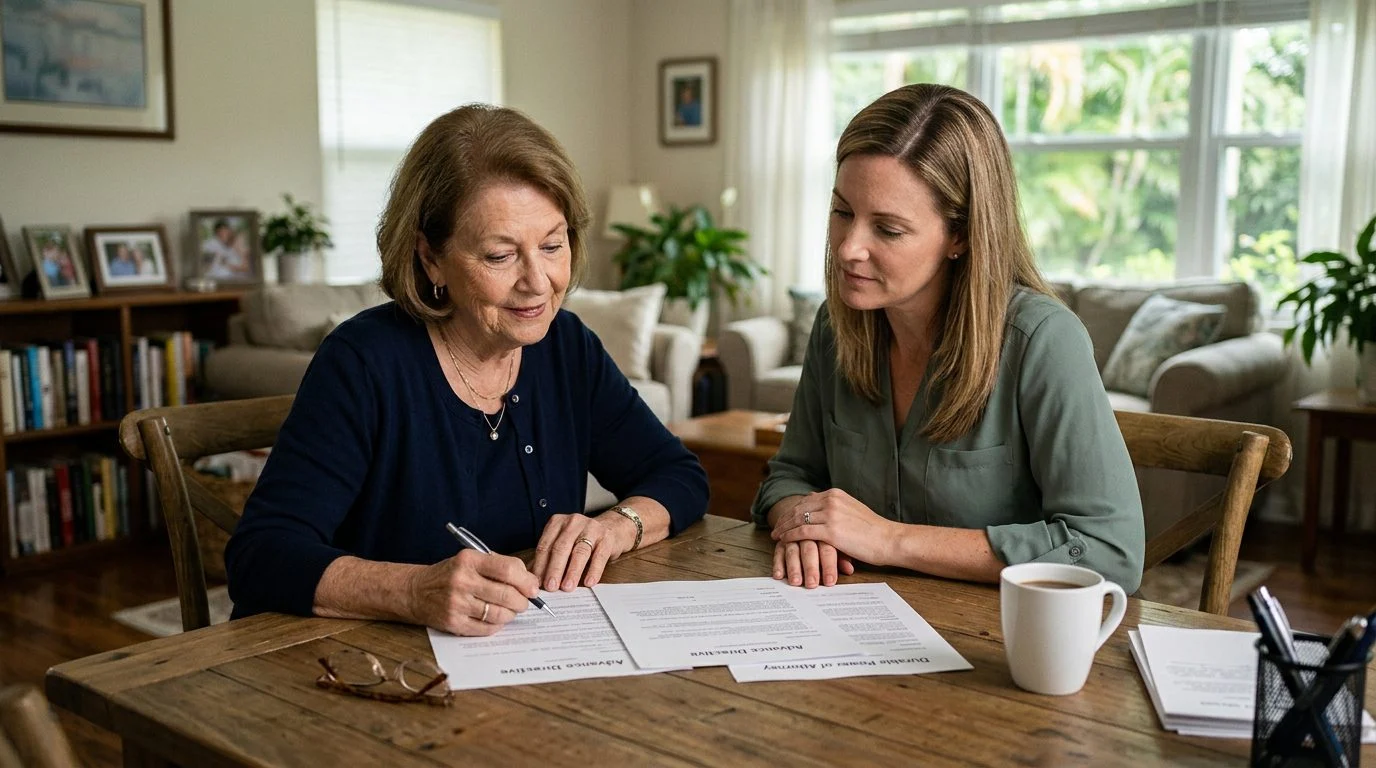
Step 2: Check for an Existing Power of Attorney or Advance Directive
Find out first whether the parent signed a document before problems began. An existing document can change what the family needs to do next.
It stays in effect after incapacity only if it has durability language. Read the document for words saying it is not ended by later incapacity, or similar words showing that intent (Fla. Stat. § 709.2104).
Section 709.2104 addresses only whether a power of attorney is durable; a health care surrogate designation is a separate document to bring for review. Section 709.2104 doesn’t set any witness rules; it only says a power of attorney is durable if it contains words showing the principal’s intent that the authority can be used even after the principal’s later incapacity. For a health care surrogate designation, at least one adult witness must be neither the principal’s spouse nor a blood relative.

Step 3: Identify the Most Urgent Risk
The most urgent risk sets the first legal step. Eviction, a dangerous medicine pattern, someone draining accounts, or an unsafe living situation each calls for a different response.
Make a short list with two columns. In one column, write what could happen this week. In the other, write what can wait a month. Bring that list to Robinson Casey.
Trying to fix everything at once can slow the step that protects the parent most. Protect the person first, then build the rest of the plan.
Keep the list factual. Write what you know, not what you suspect. Which step comes first depends on the facts.
Step 4: Consider Emergency Temporary Guardianship and What a Court Looks For
Emergency temporary guardianship is for cases of imminent danger, and it has firm time limits. In an emergency temporary guardianship proceeding, the court must appoint counsel to represent the alleged incapacitated person.
Notice must reach that person and the person’s attorney at least 24 hours before the hearing. The exception applies only if the petitioner shows substantial harm would occur with 24-hour notice.
The emergency guardian’s authority expires 90 days after appointment or when a guardian is appointed, whichever comes first. It can be extended 90 more days if the emergency conditions still exist. A final report is due within 30 days after the emergency period ends.
A judge looks at evidence of decline, evidence of imminent harm, and whether less restrictive options exist. No outcome is promised. The result depends on the evidence the court hears.
Not sure what your next step is?
Talk it through with our team — the first consultation is free, confidential, and carries no obligation.
Why the Lawyer Question Matters Before Filing
Guardianship petitions follow strict content rules. An emergency petition must be verified and must name the proposed emergency guardian and state whether that person is qualified to serve (Fla. Prob. R. 5.648).
A regular petition must also say whether alternatives to guardianship exist. It must explain why any alternative falls short (Fla. Prob. R. 5.560).
Missing one required item can slow a case when speed matters most. Early advice helps you gather the right facts the first time. Families in Miami-Dade and across South Florida face these questions, and the firm serves families statewide too.
Quick Answers
How long does emergency guardianship last?
Its authority generally ends 90 days after appointment or when a guardian is appointed, whichever comes first. It can be extended 90 more days if the emergency still exists.
Does a power of attorney replace guardianship?
A valid, durable power of attorney can be an alternative to guardianship. Bring the document to Robinson Casey so it can be reviewed.
Talk to Us About Your Parent’s Situation
Picture a father who has stopped taking his heart medicine. His rent is past due, and he is alone at home at night. That family needs to handle the medicine, the money, and the documents at the same time.
If your parent’s medicine, bills, or safety are slipping now, you don’t have to work out the options alone. Call (561) 849-4149 or request a consultation. We’ll review your parent’s documents, the most urgent risk, and the options that fit your facts.
What Families Can Expect When They Reach Out
Focused Practice
Robinson Casey limits its practice to Marchman Act petitions and guardianship matters, so every case is handled within those areas.
Confidential Conversations
Your first consultation is free and confidential, and there is no obligation to continue after it.
Support for the Whole Family
Our team works with families who are worried about a loved one's safety, health, and daily decisions, and helps them understand the options.
South Florida and Statewide
We represent families in Miami-Dade and across South Florida, and we handle matters throughout Florida.
Don't Wait for a Crisis to Ask Questions
When a parent's health or safety is at immediate risk, call 911 first. For non-emergency questions about the Marchman Act or guardianship, reach out early so you can understand your options while there is still time to plan.
Matters Robinson Casey Handles
Marchman Act Petitions
Guidance on petitioning for involuntary assessment, stabilization, or treatment for a loved one struggling with substance use.
Guardianship
Help navigating guardianship petitions in Florida, including plenary, limited, and mental health guardianship.
Emergency Temporary Guardianship
Support when a parent needs immediate court-supervised protection and a decision-maker cannot wait for a full proceeding.
Involuntary Commitment for Addiction
Assistance with the court process for involuntary commitment when a family member's addiction puts their health and safety at risk.