
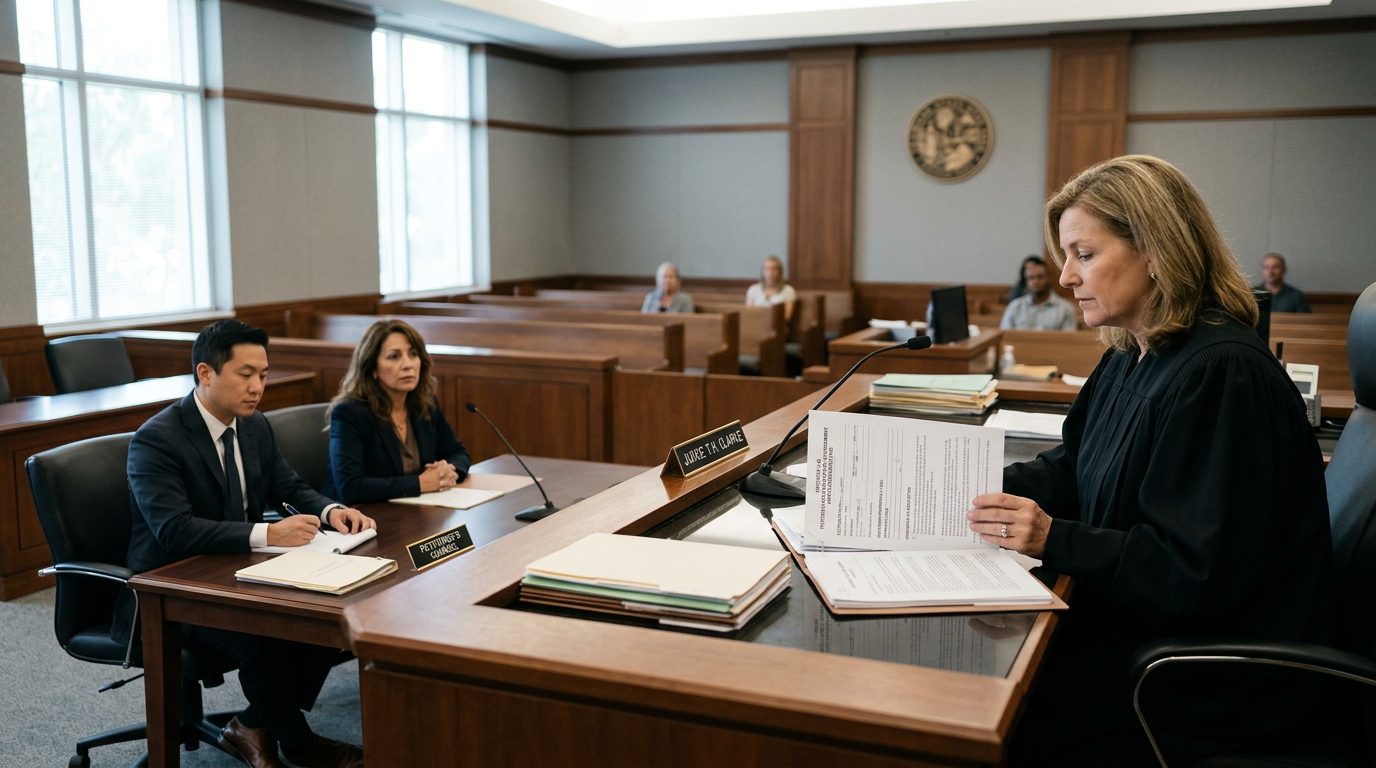
Marchman Act Petitions | Miami-Dade and South Florida
Marchman Act Petitions for Fentanyl Addiction: Understanding the Process
Robinson Casey focuses exclusively on Marchman Act petitions and guardianship matters for families across South Florida and statewide. Your first consultation is free, confidential, and carries no obligation to continue.
By Richard J. Casey III, Esq. · Published October 18, 2026
A Marchman Act petition asks a Florida court to order an assessment and, when the law allows, involuntary treatment for a person with substance abuse impairment, or co-occurring substance abuse impairment and mental health disorders. Fentanyl use can fall within that process when the statutory criteria are met. This page explains how a Marchman Act fentanyl Florida case works, who can file, and what the court reviews. Robinson Casey limits its practice to Marchman Act and guardianship matters.
What the Marchman Act Is and Who It Covers
The Marchman Act is Florida’s civil court process for substance abuse impairment. Its goal is to get a person assessed and, if the law allows, into treatment.
Fla. Stat. § 397.311 defines involuntary treatment services as an array of behavioral health services that may be ordered by the court for persons with substance abuse impairment or co-occurring substance abuse impairment and mental health disorders. These are behavioral health services a court may order for people with substance abuse impairment.
Florida’s Marchman Act covers illegal drugs, prescription drugs, and alcohol, according to the Flagler County Clerk of Court. Fentanyl, whether illegally made or misused from a prescription, falls within that description.
The criteria below explain the details.
Richard J. Casey III, Esq. is the lawyer responsible for this page.
If you are watching a loved one's fentanyl use from the outside, you do not have to sort out the court process alone. Call Robinson Casey at (561) 849-4149. Talk it through with our team — the first consultation is free, confidential, and carries no obligation.

Why Fentanyl Makes the Situation Urgent
Fentanyl makes these cases urgent because an overdose can happen fast. Families often cannot wait months for a loved one to choose treatment.
Fentanyl is a synthetic opioid. Its strength leaves little room for error, so the risk can feel immediate.
If someone is unresponsive, struggling to breathe, or has overdosed more than once, call 911 now. Emergency medical care comes first. A court petition comes after the person is safe.
Many families face a loved one who denies the problem or refuses help. Families often assume that refusal settles the question. It does not. The statute says mere refusal to receive services is not, by itself, evidence of lack of judgment about the need for services (§ 397.675). Fla. Stat. § 397.675 reads: “(b) Without care or treatment, is likely to suffer from neglect or refuse to care for himself or herself; that such neglect or refusal poses a real and present threat of substantial harm to his or her well-being; and that it is not apparent that such harm may be avoided through the help of willing, able, and responsible family members or friends or the provision of other services, or there is substantial likelihood that the person has inflicted, or threatened to or attempted to inflict, or, unless admitted, is likely to inflict, physical harm on himself, herself, or another.”
Legal Criteria and Who Can File a Petition
A court can order involuntary treatment only when the person meets the criteria in § 397.675.
- A good faith reason to believe the person is substance abuse impaired, or has a substance use disorder and a co-occurring mental health disorder.
- Because of that impairment, a loss of self-control with respect to substance abuse.
- Either an inability to appreciate the need for care and to make a rational decision about it, or, without care or treatment, a likelihood of neglect or refusal to care for himself or herself that poses a real and present threat of substantial harm to his or her well-being, where it is not apparent that such harm may be avoided through the help of willing, able, and responsible family members or friends or the provision of other services, or a substantial likelihood that the respondent has inflicted, threatened, or attempted, or unless admitted is likely to inflict, physical harm on himself, herself, or another.
For an adult, § 397.68112 lets a spouse or legal guardian, any relative, a service provider, or an adult who has direct personal knowledge of the impairment and prior course of assessment and treatment file a petition. For a minor, a parent, legal guardian, or service provider may file.
The petition goes to the clerk of court in the county where the person is located. The clerk may not charge a filing fee for it (§ 397.681). In J.P. v. J.N. (Fifth District, 2017), the court held that filing in the wrong county is a venue problem, not a loss of jurisdiction.
Appellate districts do not always agree on procedure. A Fourth District opinion disagreed with Fifth District decisions on whether a judge may question a witness when the petitioner is absent. Each case turns on its own facts.
How to Request a Marchman Act Petition in Florida
A request starts with facts. You gather them, write the petition, and file it with the clerk in the county where the person is located.
- Gather the facts. Write down the person’s substance use history, recent incidents, the substances involved, and past treatment. The petition must list both parties’ names, their relationship, the respondent’s attorney if known, and facts showing a need for services (§ 397.68141).
- Add an assessment if one exists. A petition may include a report from a qualified professional who examined the person within 30 days before filing. If there was no assessment, or the person refused one, the petition must say so (§ 397.68141).
- Know the emergency steps. In an emergency, the court may enter an ex parte assessment and stabilization order based on the petition alone (§ 397.6818). A service provider may not hold the person for more than 72 hours of observation unless an exception applies.
- Prepare for the hearing. The court schedules a hearing within 10 court working days unless a continuance is granted (§ 397.68151). Testimony is under oath and recorded (§ 397.6957). If the court finds the conditions proven by clear and convincing evidence, it may order treatment for up to 90 days (§ 397.697).
Court calendars vary by county, so timing differs from one courthouse to the next. Petition facts matter. In D.H. v. K.J.R., the Second District held that an ex parte order was error where the petition did not give a good-faith reason to believe the criteria were met.
What Legal Representation Covers in a Marchman Act Matter
Legal help covers reviewing the facts, drafting and filing the petition, and preparing for the court process. In practice, that means:
- Reviewing the family’s situation to see whether a Marchman Act petition fits the facts.
- Drafting the petition and supporting documents for filing with the clerk.
- Preparing for hearings, including the testimony the court is likely to hear.
- Explaining related options. When a loved one cannot manage their own affairs, guardianship is a separate process, and whether it fits depends on the facts.
- Answering questions about court records and confidentiality.
The person named in the petition has the right to a lawyer at every stage, though they may waive that right if they are present and the court finds the waiver is made knowingly, intelligently, and voluntarily. The court can appoint one for someone who cannot afford it (§ 397.681). The Second District has held that due process gives a Marchman Act respondent a constitutional right to counsel in Hillsborough County v. Albrechta.
Why Work With Robinson Casey
Robinson Casey limits its practice to Marchman Act petitions and guardianship matters. Because the focus is narrow, the work stays on one area of Florida law.
- Richard J. Casey III, Esq. is the lawyer at Robinson Casey responsible for this page.
- Our team includes assistants and office staff who help with scheduling and document preparation.
- The practice serves South Florida, including Miami-Dade County, and families across Florida.
- Petitions are filed where the person is located, so South Florida families follow the same county-based rule that applies anywhere in the state.
Not sure what your next step is?
Talk it through with our team — the first consultation is free, confidential, and carries no obligation.
Frequently Asked Questions
Who can file a Marchman Act petition in Florida?
For an adult, a spouse or legal guardian, any relative, a service provider, or an adult with direct knowledge of the impairment can file. For a minor, a parent, legal guardian, or service provider can file.
How do I request a Marchman Act petition for someone with fentanyl addiction?
Gather the person’s history, prepare a written petition with the required facts, and file it with the clerk in the county where the person is located.
Is a Marchman Act case the same as a criminal case?
Is the Marchman Act process public?
Petitions, court orders, and related records are confidential under § 397.6760. Read our guide on Marchman Act records for more.
What does the first consultation cover?
The first consultation is a chance to review your facts with Robinson Casey. It is free, confidential, and comes with no obligation to continue.

Talk With Robinson Casey About Your Situation
Watching a loved one’s fentanyl use from the outside can leave you stuck, unsure whether a court petition is the right step. You do not have to work through the Marchman Act process by yourself. Call (561) 849-4149 or send your details through the contact page to talk through the facts.
Why Families Contact Robinson Casey
A Focused Practice
Robinson Casey limits its practice to Marchman Act petitions and guardianship matters, so the work we take on sits squarely within those areas.
Plain-Language Guidance
We explain each step of the petition process in clear terms so you know what to expect before you decide on a course of action.
A Confidential First Step
Your initial consultation is free and confidential, with no obligation to continue. Call (561) 849-4149 to get started.
Serving South Florida Statewide
We represent families throughout Miami-Dade and South Florida and across the state.
When Time Matters
A loved one struggling with fentanyl addiction may face serious, immediate risk. Waiting can make a difficult situation harder. If you are worried about someone's safety, reach out to our office promptly.
Matters We Handle
Marchman Act Petitions
We prepare and file petitions under the Florida Marchman Act for families seeking court-ordered assessment and treatment for a loved one with substance use disorder.
Involuntary Commitment for Addiction
We guide families through the court process for involuntary commitment when substance use places a person or others at risk.
Guardianship Matters
We handle guardianship petitions, including emergency temporary, plenary, limited, and mental health guardianship, for families who need the court's help in protecting a loved one.