
Marchman Act Petitions & Guardianship | South Florida and Statewide
Florida Addiction Involuntary Treatment Attorney for Families in Miami-Dade and South Florida
Robinson Casey focuses on Marchman Act petitions and guardianship matters. Richard J. Casey III, Esq. helps families understand the options when a loved one cannot make safe decisions about addiction treatment.
By Richard J. Casey III, Esq. · Published October 19, 2026
If you need an addiction involuntary treatment attorney in Florida, the first question is usually whether a court can order treatment. Yes. Florida’s Marchman Act lets a judge order substance abuse services for a person whose drug or alcohol use leaves them unable to make a safe choice about treatment. This page explains who can start the process, how it moves through the court, and what to expect.
What Involuntary Addiction Treatment Means in Florida
Involuntary addiction treatment is treatment a court orders when a person will not seek help on their own. The state’s Marchman Act guidance from DCF explains that the law allows voluntary admission and also involuntary assessment, stabilization, and treatment for adults and youth severely impaired by substance abuse.
This page is written for families in Miami-Dade, across South Florida, and elsewhere in the state. Many readers are worried about a spouse, adult child, parent, or friend. Many are acting for someone else and have not decided to hire a lawyer.
Robinson Casey limits its practice to Marchman Act petitions and guardianship matters. The firm’s work on involuntary commitment for addiction is one part of that focus.
If your loved one's substance use has become dangerous and you aren't sure a court can help, we're here to talk through the facts with you. Talk it through with our team — the first consultation is free, confidential, and carries no obligation.

Involuntary Commitment vs. Voluntary Addiction Treatment
Voluntary treatment depends on the person’s own consent. Involuntary treatment depends on a court order, which can proceed without the person’s agreement. The court acts only after it reviews a petition and the evidence.
- Voluntary: The person chooses treatment and agrees to enter care.
- Involuntary: A judge may order treatment when the conditions for involuntary treatment services have been proved by clear and convincing evidence. The court may order services for up to 90 days under § 397.697.
Many families reach this point because a loved one refuses to admit a problem or refuses to go. The law addresses refusal directly. Under § 397.675, mere refusal to receive services does not by itself show a lack of judgment about the need for services. Fla. Stat. § 397.675 reads: “(b) Without care or treatment, is likely to suffer from neglect or refuse to care for himself or herself; that such neglect or refusal poses a real and present threat of substantial harm to his or her well-being; and that it is not apparent that such harm may be avoided through the help of willing, able, and responsible family members or friends or the provision of other services, or there is substantial likelihood that the person has inflicted, or threatened to or attempted to inflict, or, unless admitted, is likely to inflict, physical harm on himself, herself, or another.”
Involuntary care can also end with a return to voluntary status. A person who no longer meets the criteria and gives informed consent may move to voluntary treatment, under § 397.6971. For more, see our involuntary and voluntary treatment guide.
Who Can File a Marchman Act Petition and When
For an adult, a petition can be filed by a spouse or legal guardian, any relative, a service provider, or an adult with direct personal knowledge of the person’s impairment and treatment history, under Florida’s petition filing rules.
The core standard is in § 397.675. A court may act when there is good faith reason to believe the person is substance abuse impaired. The person must also have lost the power of self-control with respect to substance use.
Petitions are filed with the clerk of court in the county where the person is located, under Florida’s rules on filing and counsel. A 2017 appeals court decision, J.P. v. J.N., held that a petition filed in the wrong county is a venue problem, not a loss of the court’s power to hear it.
Whether a family’s facts fit this standard depends on the details. A lawyer should review them before anything is filed. Chapter 397 is one legal path for a family facing a loved one who refuses help.
Emergency Holds and the First Days After a Crisis
Under § 397.679, a person who meets the criteria for involuntary admission in s. 397.675 may be admitted on receipt of a substance-abuse-specific certificate from a listed professional and completion of an application for emergency admission.
An emergency admission is a separate step from a court petition. It can also lead to one.
For the emergency sequence, read our guide on emergency room holds for drug addiction in Florida. If your family is in a crisis right now, call (561) 849-4149 to talk through what is happening.
How the Marchman Act Process Works Step by Step
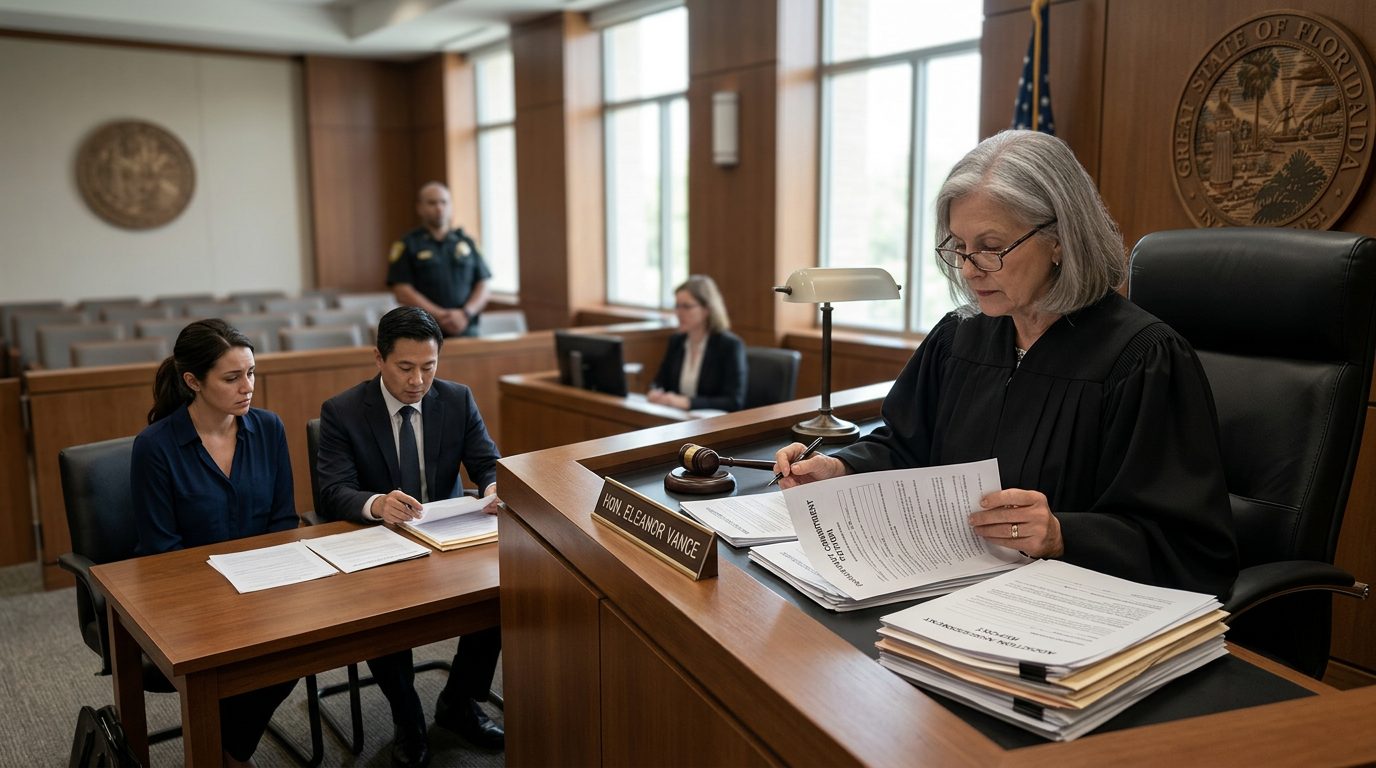
The process moves from a filed petition to a hearing, then to a treatment order if the court grants one. The statute on petition contents sets what a petition must include.
- Filing. The petition names the respondent, the petitioner, their relationship, and the facts showing the need for services. It may include a professional’s report from within 30 days of filing.
- Counsel. The court decides right away whether the respondent has a lawyer or needs one. Appointed counsel gets access to the person, witnesses, and records, under § 397.68151.
- Hearing. The court sets a hearing within 10 court working days unless a continuance is granted.
- Assessment. A person generally cannot be ordered into treatment without a clinical assessment. An assessment report must be filed with the court no later than the close of business the day before the hearing, under § 397.6957.
- The petitioner must prove by clear and convincing evidence that the respondent is substance abuse impaired and has a history of lack of compliance with treatment for substance abuse, along with the other conditions in § 397.6957(2), such as a refusal to voluntarily receive care that is based on judgment so impaired by reason of substance abuse that the respondent is incapable of appreciating his or her need for care and of making a rational decision regarding that need. At the end of the hearing, the court must either dismiss the petition or order involuntary treatment services, and any treatment order must include findings on the respondent’s need for treatment and on the appropriateness of less restrictive alternatives.
- Renewal or discharge. A renewal petition must be filed before the period ends. At the end of 90 days, the person is discharged unless a renewal motion is filed, under § 397.6977.
The statute sets each time limit. The court applies those limits to the facts of each case.
What the Court Looks at and Co-Occurring Mental Health Conditions
The court hears all relevant evidence. That includes testimony from family members familiar with the person’s history and the results of the assessment. The court may also order drug tests.
The petitioner carries the burden of proof. In J.C. v. State, the Fifth District reversed where the trial court questioned the only witness after the petitioner was absent. A different result appeared in J.J.J. v. D.G. from the Fourth District, so this split is district-specific, not a settled statewide rule.
Florida law also covers a substance use disorder that occurs with a co-occurring mental health disorder. Under § 397.675, that combination can meet the admission criteria. If at any point during the hearing the court has reason to believe that mental illness, other than or in addition to substance abuse impairment, meets the commitment provisions of Part I of chapter 394, the Baker Act, it may initiate involuntary examination proceedings under § 397.6957.
A Marchman Act petition deals with substance use. Questions about a person’s ability to manage their own affairs can also arise in guardianship matters, which the firm handles.
Not sure what your next step is?
Talk it through with our team — the first consultation is free, confidential, and carries no obligation.
How Robinson Casey Handles Marchman Act and Involuntary Addiction Matters
Robinson Casey limits its practice to Marchman Act petitions and guardianship matters. The firm serves families across South Florida, Miami-Dade, and statewide. Robinson Casey works as an addiction involuntary treatment attorney in Florida for families who need a clear path through the court process.
Richard J. Casey III, Esq. is the lawyer responsible for this page and handles these matters. The firm’s support staff, including assistants and office staff, handle scheduling, document intake, and communication. Our team keeps families informed about each stage and what comes next.
The firm’s offerings include Marchman Act representation, involuntary commitment for addiction, and guardianship matters. Those guardianship matters include emergency temporary, plenary, limited, and mental health guardianship.
Frequently Asked Questions About Involuntary Addiction Treatment in Florida
How do I help someone with addiction who won’t accept help?
Florida’s Marchman Act gives families a court route when a loved one cannot make a safe decision about treatment. A lawyer can explain whether the facts fit the statute.
Who can file a petition for an adult?
A spouse, legal guardian, relative, service provider, or an adult with direct knowledge of the person’s impairment can file. The petition goes to the clerk in the county where the person is located.
Does the person have a right to a lawyer?
Yes. A respondent has the right to counsel at every stage of a judicial proceeding (§ 397.681), which the respondent may waive if the respondent is present and the court finds that the waiver is made knowingly, intelligently, and voluntarily, and a respondent who cannot afford private counsel has the right to court-appointed counsel. Under § 397.6957, the respondent must be present at a hearing on a petition for involuntary treatment services unless the court makes the findings the statute requires. Fla. Stat. § 397.6957 reads: “(1)(a) The respondent must be present at a hearing on a petition for involuntary treatment services unless the court finds that he or she knowingly, intelligently, and voluntarily waives his or her right to be present or, upon receiving proof of service and evaluating the circumstances of the case, that his or her presence is inconsistent with his or her best interests or is likely to be injurious to self or others.”
Does a petition lead to court-ordered treatment?
No one can promise a result. The court decides based on the evidence and the statutory criteria.

Next Step: Talk Through Your Situation with Robinson Casey
If you are watching someone you love use more, get more dangerous, and refuse help, you may feel stuck. Reading this page is a sensible first step. Talk through the facts of your loved one’s situation with Richard J. Casey III, Esq., and our team. Call (561) 849-4149 or request a consultation. The first consultation is free, confidential, and carries no obligation to continue.
How Robinson Casey Works With Families
Confidential Conversations
Our team listens to the facts of your family's situation in a private setting, so you can speak openly about what you are seeing.
Focused Practice Area
The firm focuses on Marchman Act petitions and guardianship matters, so every case is handled within these areas of Florida law.
Clear Explanation of Filings
We explain the petition process, the paperwork involved, and how the court will review the information your family provides.
Statewide Reach
Robinson Casey serves families across South Florida and throughout Florida, bringing the same focused approach to each matter.
If Someone Is in Immediate Danger
If a loved one is at risk of harm to themselves or others, call 911 or go to the nearest emergency room first. A lawyer can address the legal options afterward.
Common Questions Families Bring to Us
Can a family ask a court for help?
Florida's Marchman Act provides a court route for certain situations where a person cannot make a safe decision about treatment. We review the facts to explain whether the statute may apply.
Who can file a petition?
Eligibility to file depends on the relationship to the person and the circumstances involved. We explain who may file and what information the court will need.
What about guardianship?
Guardianship matters can involve emergency, limited, plenary, or mental health guardianship. We discuss which type of proceeding fits your family's needs.
Where do we start?
Start with a free, confidential first consultation. There is no obligation to continue after we talk, so you can decide what makes sense for your family.
Talk With Richard J. Casey III, Esq. Today. Your First Consultation Is Free, Confidential, and Without Obligation.
Related practice areas
- Florida ER Hold for Drug Addiction: What the Law Allows