
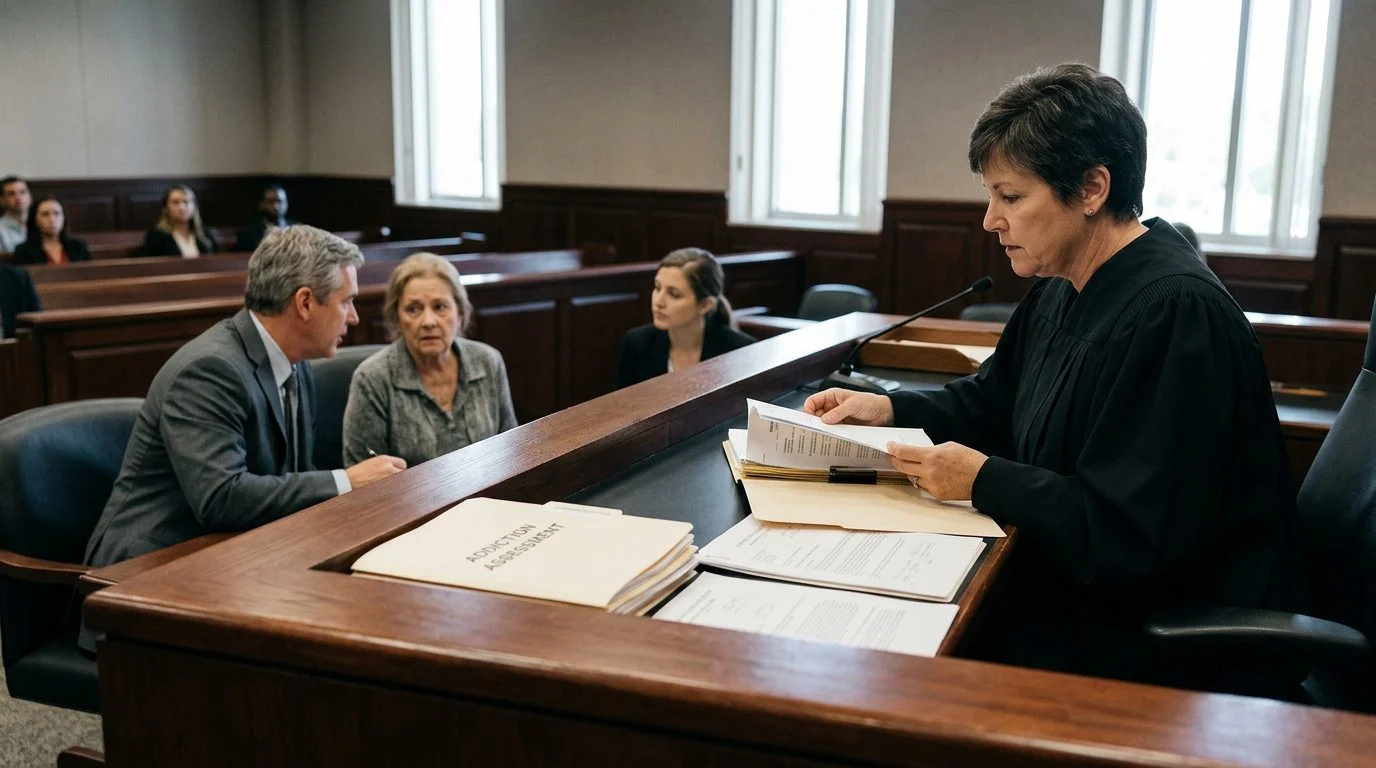
Marchman Act & Guardianship | South Florida
Help for Florida Families Seeking Addiction Treatment for an Adult Child
Robinson Casey focuses on Marchman Act petitions and guardianship matters for families in Miami-Dade, across South Florida, and statewide. Start with a free, confidential first consultation with no obligation to continue.
By Richard J. Casey III, Esq. · Published October 30, 2026
Your Adult Child Was Arrested, and the Cycle Keeps Repeating
A parent can ask a Florida court to consider court-ordered treatment for an adult child under the Marchman Act. This page explains how that civil process works, what it does not do, and what to decide next.
If you are looking for a lawyer for arrested adult child addiction treatment Florida, you may be at a hard point. The call came from jail, a hospital, or a police officer who found your child after an overdose. Then your child was released, and the same pattern started again.
You have already paid for treatment. You have tried interventions and set boundaries. Still, the crisis returns. Many parents feel trapped between paying again and waiting for a change that may never come.
This page is for parents of adults, ages 18 to 40, who have a substance use disorder. It explains the law in plain words. It promises no outcome, and a judge decides each case on its own facts.
Robinson Casey limits its practice to Marchman Act and guardianship matters. The firm serves families across South Florida, including Miami-Dade, and statewide. Richard J. Casey III, Esq. is the responsible lawyer for this page.
Not sure what your next step is?
Talk it through with our team — the first consultation is free, confidential, and carries no obligation.

What the Marchman Act Is and Who Can File
It is found in Florida Statutes chapter 397. The law concerns assessment and treatment. It is not a criminal case.
A parent can file as a relative. Under Fla. Stat. § 397.68112, a petition for an adult may be filed by a spouse or legal guardian, any relative, a service provider, or an adult who has direct personal knowledge of the impairment and of his or her prior course of assessment and treatment.
The petition must name the adult child and the petitioner, and state their relationship. It must also give the facts. Fla. Stat. § 397.68141 requires the petitioner to explain why they believe the person is impaired and has lost self-control. It must also state either a risk of harm or impaired judgment that blocks acceptance of care.
Florida’s admission criteria ask whether there is a good faith reason to believe the person is impaired. Fla. Stat. § 397.675 sets out those criteria.
Why the Criminal Case Is Handled Separately
A Marchman Act petition is a separate civil matter. It does not, by itself, drop or resolve a criminal charge. The criminal case runs in criminal court, under its own rules and its own lawyer.
Keep the two matters apart in your mind. A civil petition asks whether a person needs treatment. A criminal case asks what happened and what penalty applies. Your child may face both at once.
Timing and coordination matter. Ask at the first consultation how the two matters might fit together. Treatment records also carry privacy limits. Under 42 C.F.R. § 2.65, a court must find strict criteria met before patient records are used to investigate or prosecute a patient. One criterion is that the crime is extremely serious.
The firm handles the civil Marchman Act petition. It does not handle criminal charges. If a matter falls outside this practice, the firm may refer it to another lawyer.
What a Marchman Act Attorney Handles for Parents
A Marchman Act attorney reviews the facts, prepares the petition, and represents the petitioning family in court. The work starts at intake and continues through the court’s order.
Filing location matters. The petition goes to the clerk in the county where the person is located, and the clerk may not charge a filing fee (Fla. Stat. § 397.681). In J.P. v. J.N., the Fifth District held that a wrong-county filing is a venue defect, not a lack of jurisdiction. However, the filing of the petition in the wrong county did not divest the circuit court in Putnam County of jurisdiction (J.P. v. J.N.). Miami-Dade directs these petitions to the Clerk’s Office Probate Court for adults, per the Miami-Dade Clerk of Courts.
The court must schedule a hearing within 10 court working days unless a continuance is granted (§ 397.68151).
The firm organizes records and witness information. It also keeps the family updated on each step of the case.
Evidence Families Gather Before Filing
A petition needs specific, dated facts about your child’s recent condition and treatment history. General worry does not meet the statute’s factual requirements.
Useful records include:
- Arrest and incident reports, plus booking information
- Emergency room or hospital records from an overdose or crisis
- Prior assessments and treatment records, with dates and providers
- A timeline of overdoses, relapses, and disappearances
- Names of people who saw your child’s recent condition firsthand
If your child was never assessed, the petition must say so. A report from a qualified professional who examined the person within 30 days may accompany the petition (§ 397.68141).
Family members may testify about the prior history and how it relates to current condition (§ 397.6957). Testimony is taken under oath. The consultation is where you decide which records matter for your facts.
How the Process Unfolds, Step by Step
A Marchman Act case usually moves through five stages, from first call to a court order. A court order for involuntary treatment can last up to 90 days, and a renewal of the order may be requested before the 90-day period ends if the conditions are expected to continue (Fla. Stat. § 397.697(1)(a)).
Step 1: First consultation. You describe the arrest, the history, and your goals. No petition is filed yet.
Step 2: Intake and records. The firm reviews the records and the arrest situation. It checks whether the facts fit the statute.
Petition and filing. Such petitions must be filed with the clerk of the court in the county where the person is located (Fla. Stat. § 397.681).
Court action. The court shall schedule a hearing to be held on the petition within 10 court working days unless a continuance is granted (Fla. Stat. § 397.68151). A provider may hold the person for no more than 72 hours of observation, subject to statutory exceptions (§ 397.6818). The firm’s separate guide on the ex parte order explains that step in more detail.
Hearing and order. When the court finds that the conditions for involuntary treatment services have been proved by clear and convincing evidence, it may order the respondent to receive involuntary treatment services from a publicly funded licensed service provider for a period not to exceed 90 days (Fla. Stat. § 397.697). If the conditions justifying involuntary treatment services are expected to exist after 90 days of treatment services, a renewal of the involuntary services order may be requested under § 397.6975 before the end of the 90-day period (§ 397.697).
Not sure what your next step is?
Talk it through with our team — the first consultation is free, confidential, and carries no obligation.
Common Questions Parents Ask
Most parents first ask whether a petition can remove the charges. It cannot.
Can I ask for treatment if my child is in jail right now?
A parent may be able to file. The answer turns on the record, so bring the details to the first consultation.
Does a Marchman Act petition get my child’s charges dropped?
Do I need a lawyer for both the petition and the criminal case?
The criminal case needs its own criminal defense lawyer. The firm handles the civil Marchman Act petition. Ask how the two matters fit together.
What if my child lives in a different county or is missing?
The petition belongs in the county where the person is located. Raise a missing-person situation at the consultation.
What does the first consultation cost?
The first consultation is free, confidential, and carries no obligation to continue.
Is a Marchman Act petition the same as guardianship?
No. The Marchman Act covers involuntary admission of a person who is substance abuse impaired, or who has a substance use disorder and a co-occurring mental health disorder, and who meets its criteria (Fla. Stat. § 397.675). Guardianship is a separate court process, and the firm also handles guardianship matters.

Why Families Work With Robinson Casey
Robinson Casey limits its practice to Marchman Act and guardianship matters. The firm serves families across South Florida, including Miami-Dade, and statewide.
Richard J. Casey III, Esq. is the responsible lawyer for this page. Our team, including office and assistant staff, keeps the paperwork organized and the family informed.
The firm explains the statute in plain words. It separates the civil petition from any criminal charge. It checks the county where the person is located. It also names its scope limits early, so you can decide with clear facts.
If your adult child was arrested and you are weighing whether a Florida court can order treatment, call (561) 849-4700 or schedule a consultation through our contact page.
How Robinson Casey Supports Your Family
Confidential First Consultation
Your first consultation is free, confidential, and carries no obligation to continue. Bring the details you have, and we will explain the options.
Focused Florida Practice
Our practice focuses on Marchman Act petitions and guardianship matters, so your family's case is handled by attorneys who work in these areas every day.
Support for the Whole Family
Our team, including our support staff, helps families organize records, prepare for hearings, and understand each step of the process.
Clear Next Steps
We explain what documents and information are needed, and what happens next, in plain language.
If Your Child Is in Immediate Danger
If someone is at immediate risk of harm, call 911 first. Then contact Robinson Casey to talk through the legal options for getting your child into addiction treatment.
Matters We Handle
Marchman Act Petitions
Petitions under Florida's Marchman Act for an adult who may need assessment, stabilization, or treatment for substance use.
Involuntary Commitment for Addiction
Guidance on court-ordered addiction treatment and the petition process that leads to it.
Emergency Temporary Guardianship
Help with urgent requests for a temporary guardian when a loved one needs immediate protection.
Plenary, Limited, and Mental Health Guardianship
Guardianship petitions and proceedings tailored to the level of authority your family's situation requires.