
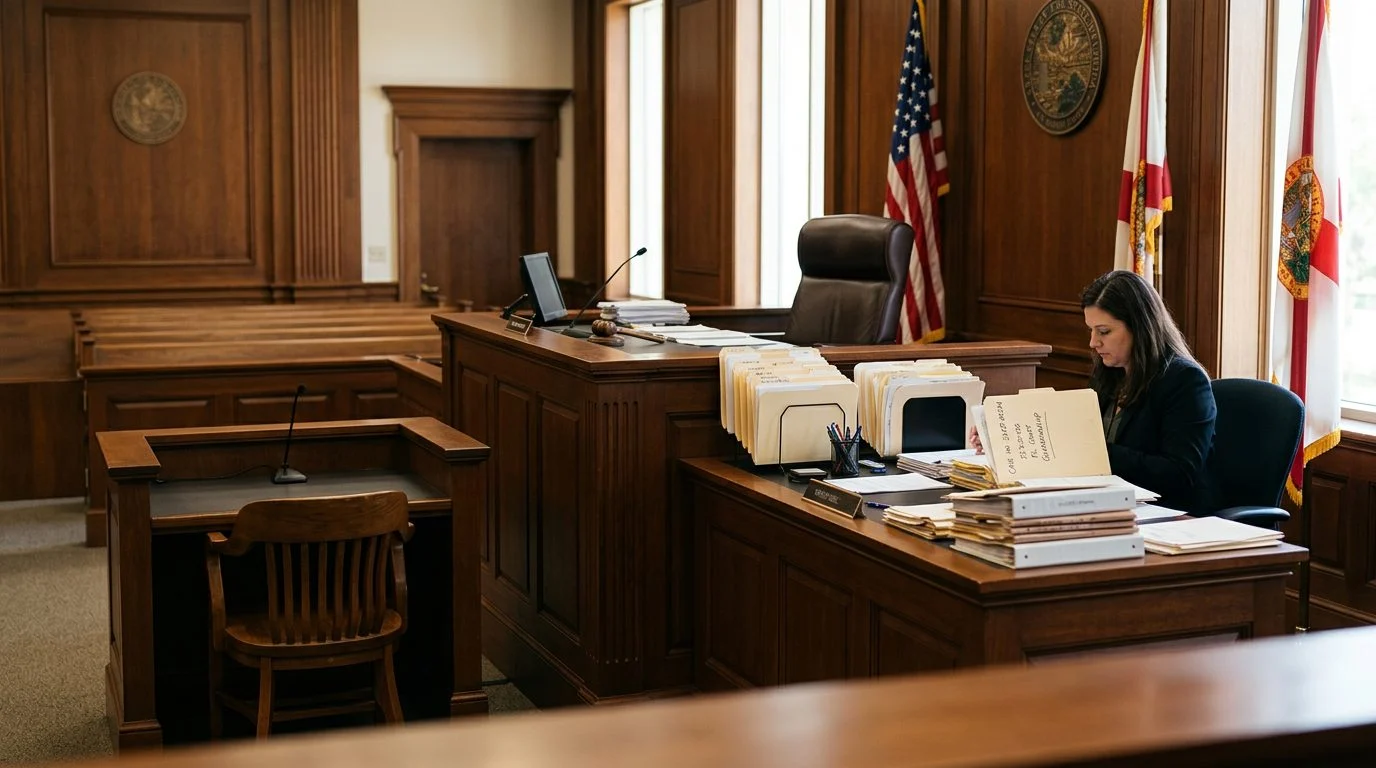
Involuntary Commitment for Substance Abuse
Florida Court Petitions for Addiction Treatment
When a loved one struggles with substance abuse, the Marchman Act provides a legal path to court-ordered treatment. Robinson & Casey guides families through the petition process.
By Richard J. Casey III, Esq. · Published September 21, 2026
Involuntary Commitment for Substance Abuse: Florida’s Court Process Explained
When someone you love struggles with addiction and refuses help, involuntary commitment for substance abuse offers a legal pathway to connect them with treatment. The court process can feel overwhelming—but understanding each step, from petition filing through the judge’s decision, helps you prepare and know what to expect.

Not sure what your next step is?
Talk it through with our team — the first consultation is free, confidential, and carries no obligation.
What Is Involuntary Commitment for Substance Abuse?
Involuntary commitment for substance abuse is a court-ordered intervention that places an individual into treatment when their addiction poses a danger to themselves or others. Florida law permits this action under Chapter 397 of the Florida Statutes, commonly called the Marchman Act. This is distinct from voluntary admission (where someone agrees to treatment) and from other legal remedies like guardianship or criminal prosecution.
Families typically pursue involuntary commitment when other interventions—counseling, family conversations, rehabilitation offers—have failed. The goal is medical: to interrupt the cycle of active addiction and connect the person to evidence-based treatment, not to punish them.
Who Can File a Petition for Involuntary Commitment?
Not everyone can file. Under Florida law, eligible petitioners include:
- Family members (spouse, parent, adult child, sibling)
- Law enforcement officers
- Healthcare providers or mental health professionals
- State officials, including the Department of Children and Families
Each petitioner has specific standing requirements. A family member must typically have personal knowledge of the person’s substance abuse and its dangers. Law enforcement may file based on observations or calls for service. The petitioner remains involved throughout the process, often presenting evidence at the hearing.
Step 1: Filing the Petition
The petition is a formal document filed with the county court in the jurisdiction where the respondent (the person you’re seeking to commit) lives or is currently located. It must include:
- The respondent’s name, age, and location
- A detailed description of the substance abuse and specific incidents showing danger
- Medical or behavioral documentation (arrests, overdose incidents, treatment refusals, threats)
- The petitioner’s relationship to the respondent and basis for knowledge
- A request for either emergency temporary commitment or extended commitment
You’ll file the petition at your county courthouse. Filing fees apply, though amounts vary by county. The court acts quickly—often within hours or a day—to review the petition and determine whether probable cause exists to move forward. This urgency reflects the law’s recognition that addiction-related danger can escalate rapidly.
Step 2: The Preliminary Hearing or Ex Parte Review
After filing, the judge conducts an ex parte review (meaning without the respondent present at this initial stage). The judge examines the petition and supporting documents to determine whether probable cause exists—that is, whether there’s reasonable ground to believe the person meets the legal criteria for commitment.
If the judge finds probable cause, they may issue a temporary hold or custody order. This order authorizes law enforcement or a designated official to take the respondent into custody and transport them for evaluation. This phase typically occurs within 24 to 72 hours of filing.
The respondent is not present during this preliminary review, but they have the right to be informed of what’s happening and to respond once they’re notified.
Step 3: Notice and Service on the Respondent
The respondent must be formally notified of the petition and their right to a hearing. Service (legal notification) follows Florida court procedures and may occur in person, by certified mail, or through law enforcement. The respondent receives a copy of the petition and notice of the hearing date and time.
This step is critical: it ensures the respondent knows what they’re facing and has time to prepare a response or secure legal representation. If the respondent cannot be located, the court may authorize alternative service methods or proceed with a hearing in their absence (though they retain the right to appeal later).
Step 4: The Full Hearing
The full hearing is where the case is decided. It typically occurs within 5 to 10 days of the petition filing, though this timeline can vary. The hearing is held in county court before a judge.
Who attends: the judge, the petitioner (or their attorney), the respondent, the respondent’s attorney (if they have one or if one is appointed), and potentially witnesses such as family members, medical providers, or law enforcement.
The burden of proof is high: the petitioner must present clear and convincing evidence—a rigorous standard—that the respondent meets the statutory criteria for commitment. This protects against baseless or improper petitions.
Evidence presented typically includes:
- Medical records or evaluations documenting substance abuse
- Testimony from family members, healthcare providers, or law enforcement about specific incidents and danger
- Documentation of prior treatment attempts and refusals
- Records of overdoses, arrests, or behavioral crises related to addiction
The respondent has the right to legal representation. If they cannot afford an attorney, one may be appointed. The respondent can present their own evidence, call witnesses, and cross-examine the petitioner’s witnesses. This ensures fairness and protects due process.
The hearing usually lasts 30 minutes to an hour, depending on the complexity and number of witnesses.
Have questions about what happened?
Ask our team directly. The first conversation is free, confidential, and there is no obligation to continue.
Step 5: The Court’s Decision and Order
After hearing the evidence, the judge decides whether the respondent meets the criteria for commitment. The judge issues a written order specifying:
- Whether the petition is granted or denied
- The type of commitment: emergency temporary (usually up to 5 days) or extended (typically up to 60 days, with possible extension)
- The treatment facility or program where the respondent will be placed
- Any conditions or restrictions
- The respondent’s rights during commitment
All parties receive notice of the decision. If the petition is granted, the respondent is transported to the designated treatment facility.
What Happens After the Court Issues an Order?
Once committed, the respondent enters a treatment program. They retain certain rights: the right to humane treatment, the right to communicate with family and counsel, and the right to refuse non-emergency medical procedures (with limited exceptions).
The commitment order specifies its duration. An emergency temporary commitment typically lasts up to 5 days and is used when immediate danger requires rapid intervention. An extended commitment may last 60 days or longer, allowing time for stabilization and treatment planning.
During commitment, treatment providers evaluate the person’s progress. If they stabilize and engage in treatment, they may be discharged early. If they resist treatment or remain a danger, the commitment may be extended through a separate court process.
Key Differences: Emergency Temporary vs. Extended Commitment
Emergency temporary commitment is a short-term intervention (usually up to 5 days) used when there’s immediate danger—an overdose, a suicide threat, or acute intoxication. It requires only probable cause and is granted quickly to get the person into evaluation and stabilization.
Extended commitment is longer-term (typically up to 60 days) and requires a full hearing with clear and convincing evidence. It’s appropriate when the person has a pattern of substance abuse, has failed prior treatment, and poses ongoing danger.
You may petition for extended commitment at the outset, or the court may transition the person from emergency temporary to extended commitment if circumstances warrant.
Rights of the Respondent Throughout the Process
The respondent has constitutional and statutory protections:
- Right to notice and a hearing: They must be informed of the petition and given a chance to be heard before a judge.
- Right to legal representation: They can have an attorney, and one will be appointed if they cannot afford one.
- Right to present evidence and cross-examine: They can call witnesses and challenge the petitioner’s evidence.
- Right to appeal: If the court orders commitment, they can appeal the decision to a higher court.
- Protection against improper commitment: The clear and convincing evidence standard protects against weak or baseless petitions.
These protections ensure fairness and reduce the risk of abuse.
Common Challenges and Questions
What if the respondent refuses to cooperate or appear?
The court can proceed with the hearing in their absence. However, the respondent retains the right to appeal the order afterward.
Can the commitment be appealed or challenged?
Yes. The respondent can appeal the court’s decision to the appellate court, arguing that the evidence didn’t meet the legal standard or that their rights were violated.
What if circumstances change during the commitment?
If the person stabilizes, engages in treatment, or no longer meets the criteria for commitment, they or their attorney can petition the court to modify or terminate the order.
How does involuntary commitment interact with other legal matters?
Involuntary commitment is separate from guardianship or criminal charges, but they can run parallel. For example, a family member might pursue both involuntary commitment for treatment and guardianship to manage financial or medical decisions.
What records are created and who has access?
Court records are generally public, though medical records are protected by privacy laws. The respondent, their attorney, family members with a legitimate interest, and treatment providers have access to relevant documents.
Why Legal Guidance Matters
Florida’s involuntary commitment statutes and procedural rules are complex. Petition drafting must be precise—vague or poorly documented petitions can be denied. At the hearing, presenting evidence effectively and anticipating the respondent’s defenses requires familiarity with the law and courtroom practice.
An attorney helps you:
- Draft a petition that clearly establishes probable cause and meets statutory requirements
- Gather and organize evidence (medical records, incident documentation, witness statements)
- Prepare witnesses and present testimony effectively at the hearing
- Navigate procedural deadlines and service requirements
- Ensure the respondent’s rights are respected throughout—protecting the order from later challenge
Understanding the process also helps you set realistic expectations. Commitment is not instantaneous; it requires proper filing, notice, and a hearing. But when the evidence is strong and the legal requirements are met, the court can order treatment and interrupt the cycle of active addiction.

Want to know where you stand?
Tell us what happened and our team will walk you through the options available to you, at no cost.
Frequently Asked Questions
How long does the entire involuntary commitment process take?
From petition filing to a full hearing typically takes 5 to 10 days. Emergency temporary commitment can be ordered within 24 to 72 hours.
Do I need an attorney to file a petition?
You can file without an attorney, but legal guidance significantly improves the petition’s strength and your chances of success at the hearing.
What if the person has already been arrested for a drug-related crime?
Involuntary commitment and criminal prosecution are separate processes. Commitment focuses on treatment; criminal charges focus on legal accountability. Both can proceed independently.
Can someone be committed more than once?
Yes. If a person is discharged and relapses into substance abuse posing danger, a new petition can be filed.
Will my family member be forced to stay in treatment after commitment ends?
The commitment order specifies its duration. After that period, the person is generally free to leave unless a new order is issued or they agree to voluntary continued treatment.
If you’re watching someone’s addiction threaten their safety and you’re unsure how to navigate the legal process, families facing this decision reach out regularly. We can walk you through the petition process, help you gather the evidence courts need, and represent you at the hearing. Contact us for a consultation to discuss your situation and explore your options.
How Robinson & Casey Helps
Petition Preparation
We help you prepare and file a Marchman Act petition with the Florida court, ensuring all required information is included and properly documented.
Timeline Guidance
Emergency temporary commitment can be ordered within 24 to 72 hours; full hearings typically occur within 5 to 10 days. We explain each stage as it unfolds.
Court Representation
We represent you at hearings and work to present your petition clearly and persuasively to the court.
Direct Access
Call us at (561) 849-4700 to discuss your situation and learn how the Marchman Act process works in your case.
Legal Representation Matters
While you can file a Marchman Act petition without an attorney, having legal guidance helps ensure your petition is complete, well-documented, and presented effectively to the court.
Key Questions About the Marchman Act Process
What is the Marchman Act?
Florida's Marchman Act (Fla. Stat. § 397.675) allows family members and concerned parties to petition a court for involuntary assessment and treatment of someone struggling with substance abuse.
How long does the process take?
Emergency temporary commitment can be ordered within 24 to 72 hours. A full hearing typically occurs within 5 to 10 days of the petition filing.
What happens at the hearing?
The court reviews evidence about the person's substance abuse and whether involuntary treatment is necessary. You present your petition and supporting documentation; the respondent has the right to respond.
Do I need an attorney?
You can file without an attorney, but legal representation helps ensure your petition is thorough and properly presented to maximize clarity and effectiveness in court.
Ready to Discuss Your Situation?
Related practice areas
- Involuntary Commitment for Addiction in Florida