
Marchman Act and Guardianship | Miami-Dade and South Florida
Marchman Act Help for Families in Miami-Dade and South Florida
Robinson Casey focuses on Marchman Act petitions and guardianship matters. Schedule a free, confidential first consultation, with no obligation to continue.
By Richard J. Casey III, Esq. · Published November 1, 2026
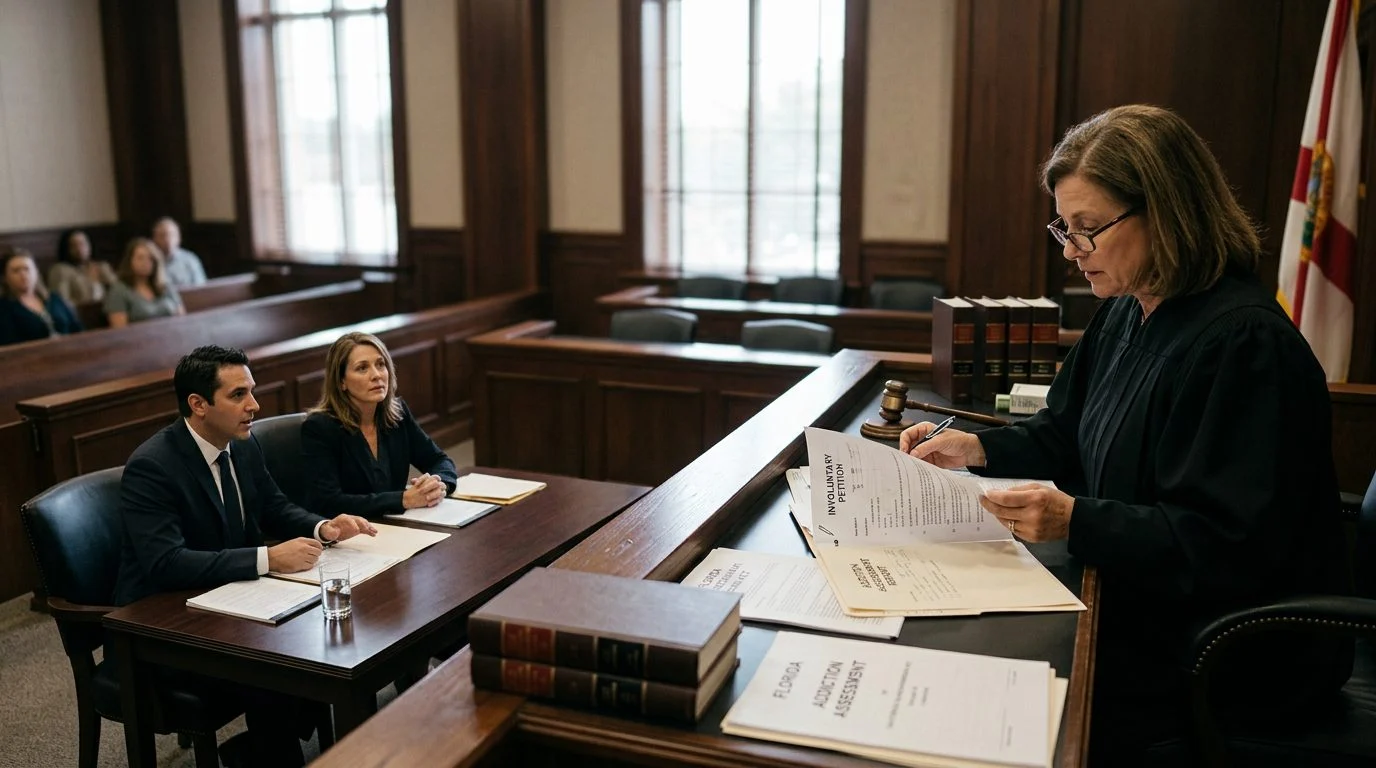
A Marchman Act petition asks a Florida court to order assessment and treatment for a loved one whose drinking or drug use has left them unable to stay safe. This page answers common questions about a Marchman Act mental illness and drinking Florida case, in plain terms. When mental illness is also present, a second Florida law can come into play.
When a Loved One Has Both Mental Illness and Drinking or Drug Use
Families in this spot usually describe the same cycle. A hospital stay ends, the person goes home, and the plan falls apart within days. Care gets refused. Money goes missing. Bills go unpaid, and the person may be living somewhere unsafe.
Clinicians call this a co-occurring disorder: a substance use problem alongside a mental health condition. The two often feed each other. Drinking can make symptoms worse, and symptoms can make it harder to accept help.
Florida law recognizes this combination. Under Fla. Stat. § 397.675, a person may meet involuntary admission criteria when there is good faith reason to believe they have a substance use disorder and a co-occurring mental health disorder.
If you’re reading this for someone you love, you don’t need to hire anyone yet. Learning your options is a sound first step.

What the Marchman Act Covers and Who It Is For
The Marchman Act is Florida’s law for court-ordered assessment and treatment of substance use impairment. It is part of Chapter 397 of the Florida Statutes.
For an adult, certain people may file a petition for involuntary treatment services, including the respondent’s spouse or legal guardian, any relative, a service provider, or an adult with direct personal knowledge of the respondent’s substance abuse impairment and prior course of assessment and treatment. That includes a spouse or legal guardian, any relative, a service provider, or an adult with direct personal knowledge of the impairment and prior treatment.
A petition names the person as the respondent. It also names the petitioner, explains their relationship, and states the facts behind the belief that the person is impaired. Fla. Stat. § 397.68141 sets out these contents. The petition goes to the clerk in the county where the person is located. The clerk may not charge a fee to file it.
Marchman Act or Baker Act: Which Applies to a Dual Diagnosis
Which law applies to a Marchman Act mental illness and drinking Florida case depends on the facts. The Marchman Act handles substance use. The Baker Act handles mental illness, so one case can touch both.
- Baker Act (Chapter 394): A person may be taken to a receiving facility for involuntary examination. That applies when there is reason to believe they have a mental illness and, because of it, they have refused voluntary examination after conscientious explanation and disclosure of the purpose of the examination, or are unable to determine whether examination is necessary, and, in addition, without care or treatment are likely to suffer neglect or refuse to care for themselves in a way that poses a real and present threat of substantial harm to their well-being that it is not apparent willing, able, and responsible family or friends or other services could avoid, or are substantially likely to cause serious bodily harm to themselves or others in the near future, as evidenced by recent behavior.
- Marchman Act (Chapter 397): A petition asks a court to order involuntary treatment for substance abuse impairment.
Sequence matters. Fla. Stat. § 394.463(1), titled “CRITERIA,” allows transport to a receiving facility for involuntary examination only if there is reason to believe that the person has a mental illness and, because of that mental illness, (a) the person has refused voluntary examination after the purpose of the examination was conscientiously explained and disclosed, or is unable to determine for himself or herself whether examination is necessary, and (b) without care or treatment, the person is likely to suffer from neglect or refuse to care for himself or herself in a way that poses a real and present threat of substantial harm to his or her well-being that it is not apparent willing, able, and responsible family members or friends or other services could avoid, or there is a substantial likelihood that the person will cause serious bodily harm to himself or herself or others in the near future, as evidenced by recent behavior. Under the Baker Act, a listed professional, such as a physician or clinical psychologist, may sign a certificate stating that he or she examined the person within the preceding 48 hours and that the person appears to meet the criteria for involuntary examination. Fla. Stat. § 397.68111 An earlier emergency step can make a petition possible, so the order of events matters.
How the Process Works, Step by Step
A Marchman case moves in clear stages. You gather facts, file, attend the hearing, then face assessment and any ordered treatment.
- Gather the facts. Write down recent incidents, hospital visits, drinking or drug history, past treatment, and who is affected. The court hears family members familiar with the person’s history.
- File in the right county. In J.P. v. J.N., a Fifth District decision, the court held that filing in the wrong county did not take away the circuit court’s jurisdiction.
- Attend the hearing. The court must schedule the hearing within 10 court working days unless a continuance is granted. Under Florida’s Marchman Act, the respondent must be present at the hearing on a petition for involuntary treatment services, unless the court finds that he or she knowingly, intelligently, and voluntarily waives the right to be present, or, after receiving proof of service and evaluating the circumstances of the case, that his or her presence is inconsistent with his or her best interests or is likely to be injurious to self or others. They may refuse to testify. In C.W.R.K., a Fifth District decision, the court held that the judge could not call and question the professional when the petitioner was absent. Another appeals court has taken a different view, so treat this as Fifth District law.
- Assessment and treatment. A respondent may not be ordered into treatment without a clinical assessment, unless they are present and expressly waive it. Fla. Stat. § 397.697 When the court finds that the conditions for involuntary treatment services have been proved by clear and convincing evidence, it may order the respondent to receive involuntary treatment services from a publicly funded licensed service provider for a period not to exceed 90 days.
The court decides based on the evidence. No one can promise a particular result.
Guardianship and Long-Term Stability Alongside the Marchman Act
A guardianship is a separate court case. It can give someone legal authority over decisions a person can no longer make safely. Under Fla. Stat. § 744.3215, rights that may be removed from a person by an order determining incapacity, and which may be delegated to the guardian, include the right to contract.
- Plenary or limited guardianship: The petition must state which type is sought. A limited guardianship covers only the areas the court sets.
- Mental health guardianship: Robinson Casey also handles mental health guardianship matters.
A Marchman case and a guardianship case answer different questions. One addresses substance use treatment. The other addresses who makes decisions. Each follows its own rules and timelines.
Why Families Work With Robinson Casey
Robinson Casey focuses on Marchman Act petitions and guardianship matters. The firm serves families in Miami-Dade, South Florida and across Florida.
Richard J. Casey III, Esq. is the responsible lawyer for this page. Our team includes assistants and office staff who help families organize documents and keep scheduling on track. We answer questions in plain language, so you can weigh your options with the facts in front of you.
The first consultation is free, confidential, and comes with no obligation to continue.
Not sure what your next step is?
Talk it through with our team — the first consultation is free, confidential, and carries no obligation.
Common Questions Families Ask
Most families ask the same questions early on, so here are short answers.
Can a family member file a Marchman Act petition in Florida?
Yes. For an adult, a spouse, legal guardian, relative, service provider, or adult with direct personal knowledge may file.
What if my loved one refuses to attend the hearing?
Fla. Stat. § 744.3215 gives a person who has been determined to be incapacitated the right to notice of all proceedings related to determination of capacity and guardianship, unless the court finds the incapacitated person lacks the ability to comprehend the notice.
How is the Marchman Act different from the Baker Act?
The Marchman Act covers substance use impairment. The Baker Act covers mental illness. A co-occurring case can involve both.
Does a Marchman Act case mean my loved one loses all rights?
No. An involuntary treatment order can last up to 90 days, but a renewal may be requested before that period ends if the conditions justifying treatment are expected to continue after 90 days of treatment services. The respondent has the right to a lawyer at every stage.
What should we bring to the first consultation?
Bring a dated list of incidents, hospital and discharge papers, any assessment reports, and the names of people affected. Clear notes make the first meeting more useful.

Talk With Robinson Casey About Your Loved One’s Situation
Watching someone you love move from crisis to crisis is exhausting. You don’t have to sort out the Marchman Act, the Baker Act and guardianship alone. Our team can help you see which steps may fit your family’s facts. Call (561) 849-4700 or use our contact form to start the conversation.
Why Families Contact Robinson Casey
A Focused Practice
Robinson Casey limits its practice to Marchman Act and guardianship matters, so every case is handled within these areas.
Free, Confidential First Consultation
Your first consultation is free, confidential, and carries no obligation to continue.
Support for Your Family
Our team works with families across South Florida and statewide, from the first call through each step of the process.
Direct Phone Line
Call (561) 849-4700 to speak with our office about your family's situation.
Facing an Urgent Situation?
If a loved one's safety or health is at risk, call (561) 849-4700. Our team can explain the process for emergency temporary guardianship and involuntary commitment for addiction and help you decide on next steps.
Matters We Handle
Guardianship Matters
Guidance on plenary and limited guardianship for adults who need a court-appointed guardian to make decisions for their well-being.
Emergency Temporary Guardianship
Assistance with petitions for emergency temporary guardianship when an adult's immediate safety or care is at risk.
Mental Health Guardianship
Support for families seeking guardianship for a loved one whose mental health condition affects their ability to manage daily life.