
Marchman Act | Miami-Dade and South Florida
Marchman Act Eligibility Checklist: Is Your Loved One Showing the Signs?
Robinson Casey focuses on Marchman Act petitions and guardianship matters for families across South Florida and statewide. Use this checklist to organize what you have observed, then speak with our team.
By Richard J. Casey III, Esq. · Published October 23, 2026
Marchman Act Eligibility Checklist: Is Your Loved One Qualified?
When someone you love struggles with addiction and refuses help, Florida law offers a path forward. The Marchman Act allows involuntary commitment for substance abuse when specific legal conditions are met. This checklist helps you assess whether your loved one may qualify.
If you've answered yes to most of these items and you're facing a decision about involuntary commitment, reach out to discuss your situation and what the law allows. Talk it through with our team — the first consultation is free, confidential, and carries no obligation.

What the Marchman Act Is
The Marchman Act is Florida law permitting involuntary admission to treatment when a person has lost control over substance use and poses a risk to themselves or others. It’s not punishment—it’s a legal tool for intervention when addiction reaches a critical point and voluntary treatment has failed.
Families turn to the Marchman Act after exhausting other options: when their loved one denies the problem, refuses help, or faces active danger. Before filing a petition, you need to know whether the law will support your case. This checklist explains the legal threshold courts apply.
Marchman Act Eligibility Checklist
Work through each item. Answer yes or no, then read the explanation to see if your situation fits.
Item 1: Does Your Loved One Have a Substance Abuse Disorder?
Yes or No: Is there evidence of ongoing, harmful use of alcohol, opioids, stimulants, or other drugs—diagnosed by a healthcare provider or evident from behavior and consequences?
What this means: The Marchman Act applies only to substance abuse. It does not cover mental health conditions alone (though they often occur together).
Item 2: Has the Substance Abuse Caused Serious Harm?
Yes or No: Have you seen physical health decline, accidents, overdoses, legal trouble, job loss, financial ruin, or family breakdown tied to their use?
What this means: Under Chapter 744 of the Florida Statutes, the phrase “meet essential requirements for health or safety” means taking the actions necessary to provide care without which serious and imminent physical injury or illness is more likely than not to occur. That definition applies to guardianship cases under that chapter, not to Marchman Act petitions. Courts don’t require one dramatic event. The harm must be serious and real, not speculative.
Item 3: Is Your Loved One Unable or Unwilling to Seek Treatment Voluntarily?
Yes or No: Have they refused help, minimized the problem, or denied how serious it is?
What this means: Involuntary commitment is a last resort. Courts consider it only when voluntary options have failed or are clearly unrealistic. If your loved one is willing to enter treatment, that is the preferred path. If they’ve tried treatment and relapsed, or refuse to acknowledge the problem, that strengthens the case for involuntary intervention.
Item 4: Is Your Loved One at Least 18 Years Old?
Yes or No: Are they an adult?
What this means: The Marchman Act applies to adults. Different rules apply to minors. An attorney can discuss those if your situation involves someone under 18.
Item 5: Is Your Loved One a Florida Resident or Currently in Florida?
Yes or No: Do they live in Florida or are they physically present in the state now?
What this means: Florida courts have jurisdiction over individuals in the state. If your loved one lives out of state, the law may not apply.
Item 6: Is There a Reasonable Belief Your Loved One Will Cause Serious Harm Without Intervention?
Yes or No: Is there evidence of dangerous behavior, threats, recklessness, or a pattern suggesting imminent risk—such as repeated overdoses, violence while intoxicated, driving under the influence, or suicidal thoughts?
What this means: “Likely to cause serious harm” does not mean certain. It means reasonable likelihood based on recent behavior and history. An attorney can help you gather and present evidence.
What “Serious Harm” Looks Like in Practice
Courts consider harm across several dimensions:
- Physical health: Overdose risk, organ damage, malnutrition, untreated infections, or medical emergencies.
- Safety: Accidents, injuries, or reckless behavior while under the influence.
- Mental health: Severe depression, suicidal ideation, or psychosis triggered by substance abuse.
- Social and financial collapse: Job loss, homelessness, family estrangement, or mounting legal consequences.
The harm must be serious and real—not theoretical or temporary.
Who Can File a Marchman Act Petition
Florida law allows a petition from:
- A family member (spouse, parent, adult child, sibling).
- A healthcare provider or treatment professional who knows the person.
An attorney can guide you through the Marchman Act petition process and help ensure your evidence is presented effectively.
What Happens After You File
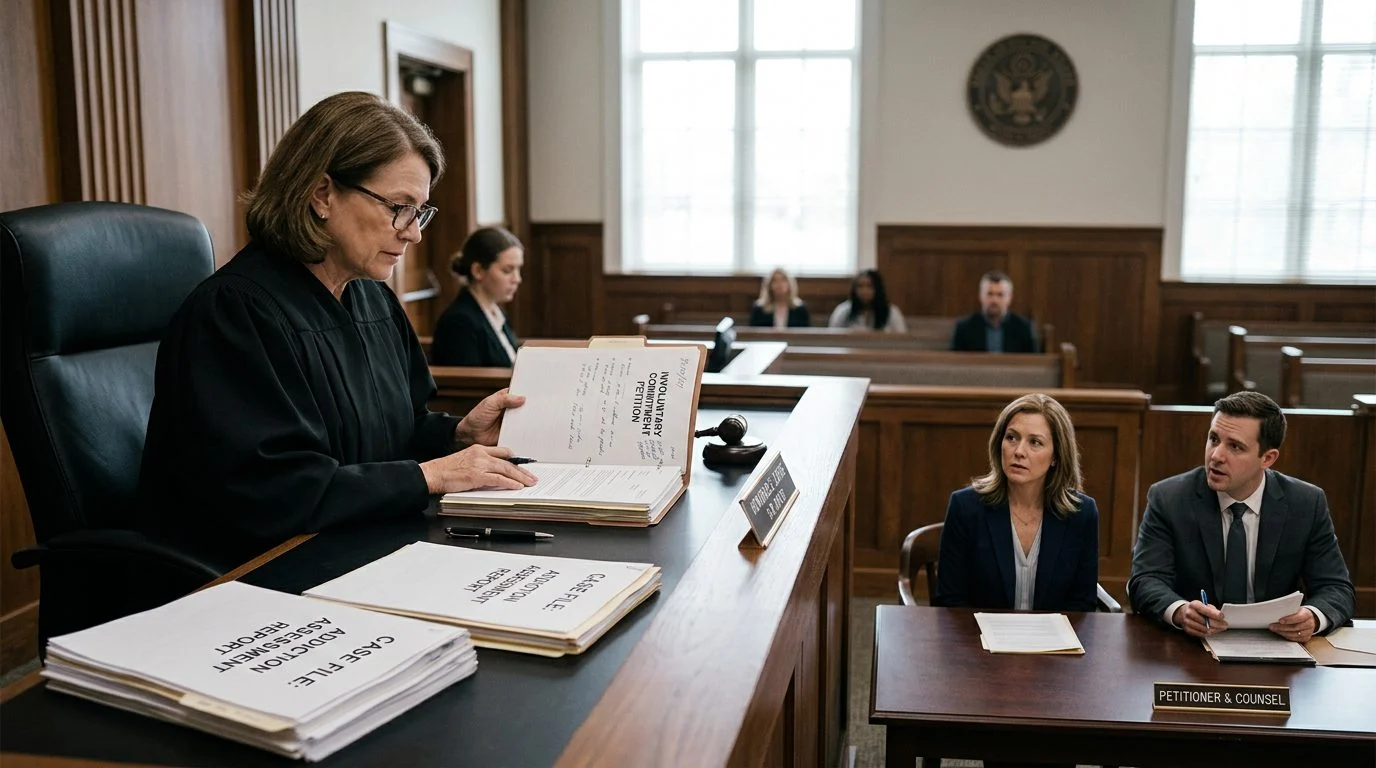
Once you file a petition, the court reviews it and supporting evidence. Miami-Dade directs petitioners to the Clerk’s probate or juvenile court. If the judge finds probable cause that your loved one meets the criteria, they are brought in for evaluation—usually within 72 hours. A hearing is held where both sides present evidence. The judge then decides whether to order involuntary treatment.
This checklist focuses on eligibility. The process after filing involves specific legal steps that an attorney can explain in detail. Learn more about preparing for a Marchman Act hearing.
Not sure what your next step is?
Talk it through with our team — the first consultation is free, confidential, and carries no obligation.
If Your Loved One Does Not Meet These Criteria
Not every situation qualifies for the Marchman Act. If you answered no to several items, other options may be more appropriate:
- Voluntary treatment and counseling.
- Family intervention or therapy.
- Guardianship (if the person lacks capacity in areas beyond substance abuse).
- Other legal or medical interventions.
Circumstances change. If the situation worsens, eligibility may shift. An attorney can discuss alternatives to involuntary commitment and help you understand what the law allows.
Next Steps
If you answered yes to most checklist items, your loved one may be eligible for a Marchman Act petition. If you’re unsure about any item or the situation is urgent, speaking with an attorney can clarify what the law allows and what your next move should be.
Robinson & Casey focuses on Marchman Act petitions and involuntary commitment for addiction across South Florida and statewide. If you’re facing this decision and want to understand your options, contact us to schedule a consultation.

Frequently Asked Questions
What is the difference between the Marchman Act and guardianship?
The Marchman Act is specific to substance abuse and focuses on involuntary treatment.
How long does involuntary commitment last?
The initial order typically allows for evaluation and stabilization. The length depends on the person’s progress and the court’s determination. An attorney can explain the timeline in your case.
Your loved one has the right to challenge the order in court. An attorney can advise on appeal options and rights.
What if my loved one refuses to go to the hearing?
The court can issue an order to bring them in. Law enforcement may be involved if necessary.
Observations to Write Down Before You Call
Substance use and its effects
Note the substances involved, how often they are used, and any overdoses, blackouts, or emergency room visits you know about.
Impact on daily life
Record missed work or school, lost housing, strained relationships, or money problems linked to substance use.
Safety concerns
Write down any threats of self-harm, harm to others, driving under the influence, or unsafe situations in the home.
Past attempts at treatment
List any prior detox, rehab, or counseling, including whether your loved one left early or refused to continue.
If someone is in immediate danger
Call 911 right away. A checklist cannot replace emergency help. Once the person is safe, you can contact our office to talk through your options.
Why Families Bring Their Questions to Robinson Casey
Focused practice
Our practice focuses on Marchman Act petitions and guardianship matters, so these issues are the core of the work we do.
Clear explanations
We explain the petition process, the court's role, and the documents involved in plain language.
Support for families
Our team works with the people who are worried about a loved one, from first call through the court process.
Confidential conversations
Your first consultation is free, confidential, and carries no obligation to continue.