
Marchman Act Attorney | South Florida
Marchman Act Help for Families Concerned About Kratom Use in Florida
Robinson Casey focuses on Marchman Act petitions and guardianship matters for families in Miami-Dade, across South Florida and statewide. Your first consultation is free, confidential and carries no obligation to continue.
By Richard J. Casey III, Esq. · Published October 30, 2026
A Marchman Act petition asks a Florida court to order assessment and treatment for an adult whose substance use puts them at risk. The law does not name kratom. Its definition is broad, though, and can reach any psychoactive or mood-altering substance when the legal criteria are met. If you’re searching for Marchman Act kratom Florida answers, this page explains how the process works.
When a Loved One’s Substance Use Has Become a Safety Crisis
A Marchman Act petition is a court request for help when substance use leaves an adult unable to keep themselves safe.
You may be checking your phone every morning. You may wonder whether they ate, paid rent, or came home. Maybe you’ve already taken them to the emergency room more than once. Many families in this spot share the same fears:
- Irreversible harm to their loved one
- Someone taking advantage of them financially
- Dangerous decisions and unmet basic needs
- Another psychiatric crisis or hospitalization
Florida’s Marchman Act gives families a court process for these situations. A petitioner can ask a judge to order assessment and treatment. Each family’s facts shape how the case moves, so the details matter from the start.
If your loved one's kratom use has you worried about their safety, you don't have to sort out the Marchman Act alone. We're ready to talk through your facts. Talk it through with our team — the first consultation is free, confidential, and carries no obligation.

Does the Marchman Act Cover Kratom and Other Non-Prescription Substances?
Marchman Act kratom cases turn on impairment and harm, not on a fixed list of drugs. Kratom can fall within a petition when the criteria are met.
The statute defines “substance abuse impaired” as having a substance use disorder, or a condition involving alcohol, illicit or prescription drugs, or any psychoactive or mood-altering substance. The use must cause mental, emotional or physical problems, or socially dysfunctional behavior.
Scheduling and impairment are separate questions. A drug’s controlled-substance status does not decide whether a petition can be filed. The same logic applies to prescription medicines such as tramadol.
A Marchman Act case is a treatment proceeding, not a criminal drug charge. Criminal questions are a separate matter.
What Are the Requirements for a Marchman Act Petition in Florida?
A petition must name the adult, name the person filing, explain their relationship, and state specific facts showing a need for treatment.
- Who may file: a spouse or legal guardian, any relative, a service provider, or an adult with direct personal knowledge of the person’s impairment and prior treatment.
- Where to file: with the clerk in the county where the person is physically located. The clerk may not charge a filing fee. Florida law requires that a petition for involuntary treatment of a substance abuse impaired person be filed with the clerk of the court in the county where that person is located.
- What to allege: why you believe the person is impaired, why they have lost power of self-control, and how they face harm or cannot appreciate their need for care.
- Assessment: a report from a qualified professional who examined the person within 30 days may accompany the petition. If there was no assessment, the petition must say so.
The criteria require a good-faith reason to believe the person is impaired and has lost self-control. The court, not the family, decides whether the criteria are met. For more on the legal grounds, read Marchman Act grounds in Florida.
How Does a Marchman Act Case Move Through Florida Courts?
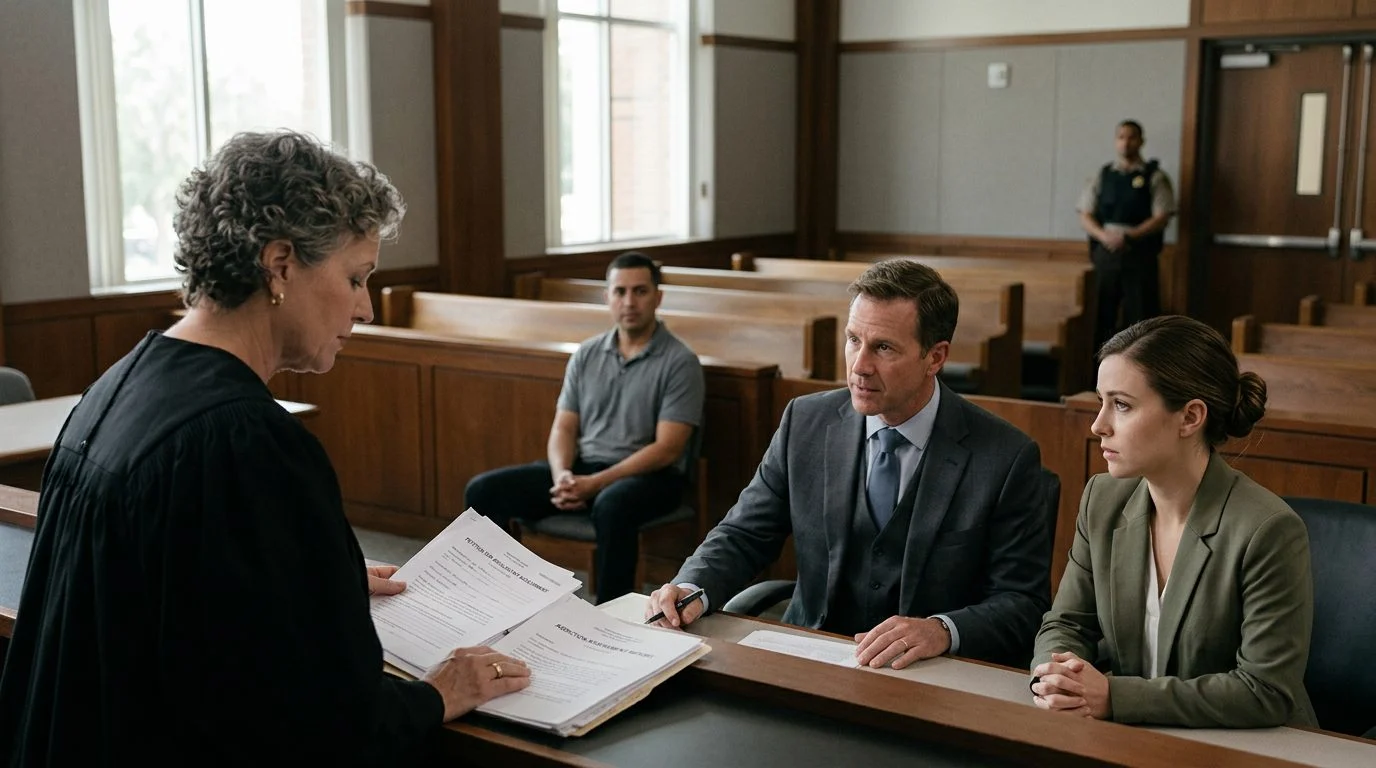
A case moves from filing to court review, then to a hearing and any treatment order. The court must schedule the hearing within 10 court working days unless it grants a continuance.
- Filing. The petition goes to the clerk in the county where the person is located.
- Court review. The judge decides right away whether the person has a lawyer or should get one.
- Emergency order, if needed. The court may act on the petition alone and issue an ex parte assessment order. A provider generally may not hold the person for more than 72 hours of observation. When emergency circumstances exist, the court may rely solely on the contents of the petition to enter an ex parte order for the respondent’s involuntary assessment and stabilization. D.H. v. K.J.R.
- Hearing. The court hears relevant evidence, including family testimony about the person’s history.
- Assessment. A person generally cannot be ordered into treatment without a clinical assessment, unless they are present and expressly waive it.
- Court order. If the conditions are proved by clear and convincing evidence, the court may order treatment for up to 90 days.
Timelines depend on the facts of each case. A consultation is where we review how your facts fit these steps.
What Should a Family Document Before Filing?
The court decides on evidence, so dated, specific facts matter more than general worry.
Start a written timeline that includes:
- Each incident, with dates, places and what happened
- Hospital, emergency room and detox visits, plus discharge papers
- Names of providers, and any treatment offered and refused
- Money and housing problems, such as unpaid bills, eviction notices or unusual purchases, with amounts where you know them
- Names of people who saw the events and can describe them under oath
Vague notes, like “he’s not himself,” give a judge little to weigh. Specific facts show what happened. Mere refusal of services is not, by itself, evidence of lack of judgment, so pair each refusal with the facts around it.
What Happens to the Adult Named in the Petition?
The adult named in the petition has the right to a lawyer at every stage of the case.
- Counsel: if they cannot afford a lawyer, the court can appoint one. They may waive counsel only if present and the court finds the waiver knowing and voluntary.
- Attendance: they must attend the hearing unless they waive it, or the court finds attendance would harm their best interests.
- Testimony: testimony is under oath and recorded. The respondent may refuse to testify.
- Rights: services must respect the person’s dignity and constitutional rights.
- Early release: treatment ends early when the conditions justifying it no longer exist.
The process centers on assessment, stabilization and court supervision. The judge decides based on the evidence presented in court.
Not sure what your next step is?
Talk it through with our team — the first consultation is free, confidential, and carries no obligation.
Why Families Work With Robinson Casey on Marchman Act Matters
Robinson Casey limits its practice to Marchman Act petitions and guardianship matters.
Richard J. Casey III, Esq. is responsible for this page. The practice has assistants and office staff who help with scheduling and paperwork.
If the crisis leads to longer-term decisions, the practice also handles guardianship matters, including emergency temporary, plenary, limited and mental health guardianship. It also handles involuntary commitment for addiction.
Frequently Asked Questions
What are the requirements for the Marchman Act in Florida?
A petition must name the parties, explain their relationship, and state specific facts showing impairment and a need for treatment. It is filed in the county where the person is located.
Is kratom considered a controlled substance?
Controlled-substance status is a separate question from whether a Marchman Act petition can be filed. The statute looks at impairment and harm from any psychoactive or mood-altering substance.
Is tramadol a controlled substance in Florida?
Schedule and impairment are different questions under the Marchman Act. A petition turns on impairment and harm.
What is the sentence for drug possession in Florida?
A Marchman Act case is a treatment proceeding, not a criminal charge. Criminal drug questions are a separate matter.
Can a sibling file a Marchman Act petition?
Yes. The statute allows any relative to file, along with an adult who has direct personal knowledge of the impairment.
Does the adult have to agree to treatment?
No, the process can move forward without their agreement. Refusal alone is not enough, though. The court looks at whether impairment has affected their judgment about needing care.

Talk Through Your Family’s Situation With Robinson Casey
If your loved one’s kratom or other substance use keeps getting worse, you may feel stuck between waiting and acting. You may not know whether a Marchman Act petition is the right legal path for your family.
Call (561) 849-4149 or request a consultation. The first consultation is free, confidential, and carries no obligation to continue (Spanish: consulta inicial gratuita, confidencial y sin compromiso).
How Robinson Casey Supports Families
Petition Preparation
We help families prepare a Marchman Act petition that identifies the parties, explains their relationship and sets out the specific facts about impairment and the need for treatment.
South Florida and Statewide
We represent families in Miami-Dade and across South Florida, and we handle matters statewide.
Plain-Language Guidance
We explain each step of the process in clear terms so you know what to expect before you decide on a next step.
Confidential Conversations
Your first consultation is free, confidential and carries no obligation to continue.
Focused on Your Family
Our team understands that a loved one's substance use affects the whole household, and we approach each matter with that in mind.
Don't Wait Until a Crisis
Concerns about a loved one's kratom use can escalate quickly. Talking with a Marchman Act attorney early can help you understand your options and organize the facts before a situation becomes urgent.
Matters We Handle
Marchman Act Petitions
Petitions for assessment and treatment of individuals whose substance use impairs their functioning, filed under Florida's Marchman Act.
Involuntary Commitment for Addiction
Guidance on involuntary commitment proceedings connected to substance use and the steps families may need to take.
Guardianship Matters
Help with guardianship petitions, including plenary and limited guardianship, for families who need court-supervised decision-making support.
Emergency Temporary Guardianship
Assistance with emergency temporary guardianship requests when a family member needs immediate court protection.