
Marchman Act Attorneys | Florida Statewide
Marchman Act Legal Help for Families Across Florida
Robinson Casey focuses on Marchman Act petitions and guardianship matters, and we work with families in Miami-Dade, South Florida and throughout the state.
Casey III, Esq. · Published November 8, 2026
Marchman Act Legal Services Florida Statewide | Robinson Casey
The Marchman Act lets a family ask a Florida court to order a loved one into assessment and treatment for substance use. It applies when the person is causing harm and has refused help. When a loved one’s substance use has put your family in crisis, you need to know how the Marchman Act process works, and this page walks through it step by step, with services available across Florida.
If your loved one is refusing help and you must decide whether to file now, we can review your facts in a free, confidential first consultation with no obligation to continue. Talk it through with our team — the first consultation is free, confidential, and carries no obligation.

What the Marchman Act Is and Who It Helps
The Marchman Act lets a family ask a judge to order an assessment when a loved one’s substance use causes serious harm and the person won’t get help voluntarily. Florida’s Department of Children and Families describes the law as covering involuntary assessment, stabilization, and treatment for adults and youth severely impaired by substance abuse.
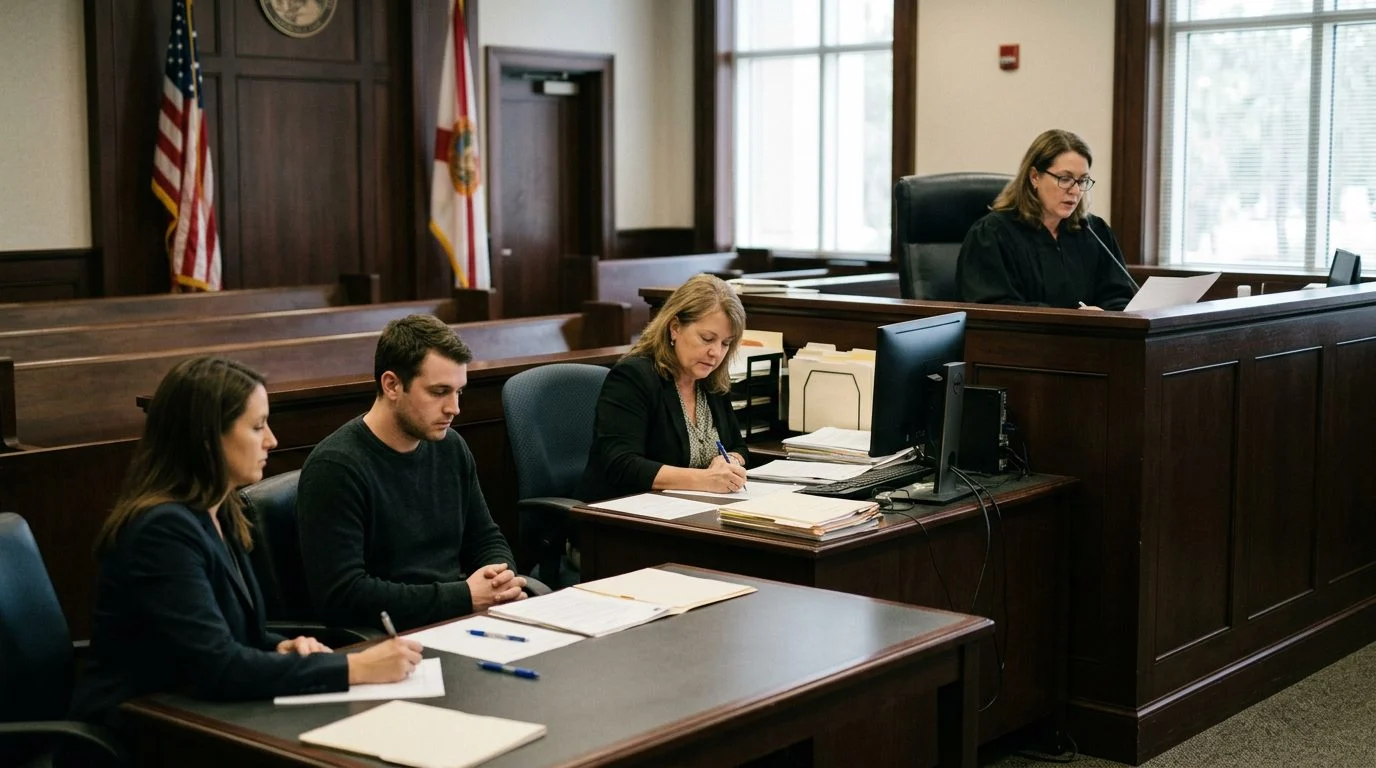
This is a court case. The judge decides whether the legal criteria are met.
A refusal alone is not enough. The statute says mere refusal to receive services does not prove a lack of judgment.
For an adult, Fla. Stat. § 397.68112 allows a spouse or legal guardian, any relative, a service provider, or an adult with direct knowledge of the person’s impairment and treatment history to file.
Robinson Casey limits its practice to Marchman Act petitions and guardianship matters. The firm serves families in Miami-Dade, across South Florida, and statewide.
What a Marchman Act Petition Requires
A petition must name the person and the petitioner, state how they’re related, and lay out the facts behind the request. In an emergency, the petition must also describe the respondent’s exigent circumstances and include a request for an ex parte assessment and stabilization order. Fla. Stat. § 397.68141 sets these content rules.
The factual allegations must demonstrate:
- Why the petitioner believes the person is substance abuse impaired.
- Why the impairment has taken away the person’s self-control over substance use.
- Why the person has harmed or is likely to harm self or others, or why their judgment is too impaired to accept care.
A report from a qualified professional who examined the person within 30 days before filing can go with the petition. If there was no assessment, or the person refused one, the petition must say so.
Venue matters. The petition goes to the clerk in the county where the person is physically located. Fla. Stat. § 397.681 says the clerk may not charge a filing fee for it. In J.P. v. J.N., the Fifth District held that filing in the wrong county did not remove the court’s jurisdiction. However, the filing of the petition in the wrong county did not divest the circuit court in Putnam County of jurisdiction.
Useful materials include:
- Dates and specific incidents, with as much detail as possible.
- Names of people who saw the behavior.
- Medical and treatment history.
- Records of help offered and refused.
What Robinson Casey’s Marchman Act Legal Services Include
Robinson Casey provides Marchman Act legal services Florida statewide, from first review through the court date. The work includes:
- Initial case review. We look at your loved one’s situation, your goals, and whether a petition fits the facts.
- Petition drafting and filing. The petition includes the content the statute requires and goes to the correct county.
- Hearing representation. We handle scheduling, hearing preparation, and appearances for the petitioner.
- Urgent filings. When immediate harm is a concern, we review whether an emergency request fits.
- Related matters. The firm also handles plenary, limited, emergency temporary, and mental health guardianship, plus involuntary commitment for addiction.
When Urgent Marchman Act Action Is Needed
Urgent action is needed when a loved one faces immediate danger and waiting for a routine hearing could leave them at risk. In an emergency, the petition must describe the respondent’s exigent circumstances and include a request for an ex parte assessment and stabilization order. Fla. Stat. § 397.68141 Fla. Stat. § 397.68141
An ex parte order lets the court act on the petition alone, without first appointing an attorney. Fla. Stat. § 397.6818 A service provider generally cannot hold the person for more than 72 hours of observation. The statute lists exceptions, such as a court-approved extension after a hearing.
Urgent does not mean thin. In D.H. v. K.J.R., the petition did not establish a good faith reason to believe D.H. met the statutory criteria for involuntary assessment and stabilization, so the trial court erred in entering the ex parte order. The trial court erred in entering that order on an insufficient petition.
Have these ready for an urgent call:
- Your loved one’s full legal name and date of birth.
- The county where they are right now.
- The most recent incident, with dates and what happened.
- Any current treatment provider or prior assessment.
- Your relationship to them and how you know their history.
If the situation is pressing, call (561) 849-4700 now.
The Process, the Hearing, and What Happens After an Order
The court must schedule the hearing within 10 court working days of filing, unless it grants a continuance. Fla. Stat. § 397.68151 The usual path looks like this:
- First consultation and fact review.
- Information gathering and petition drafting.
- Filing with the clerk in the county where the person is located.
- Notice and service. The clerk sends the summons to law enforcement for service within 6 hours, unless the chief judge authorizes private process servers.
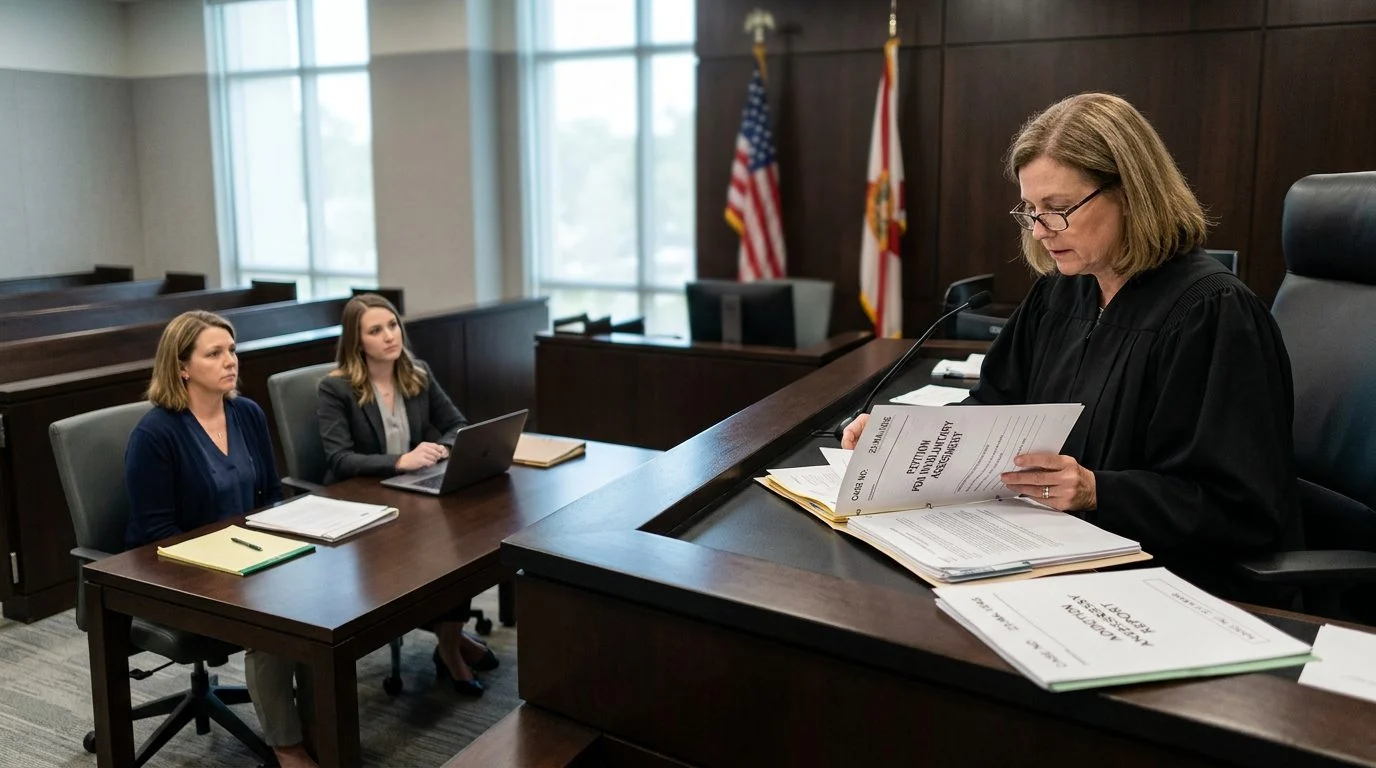
- Hearing. The respondent must attend unless a valid waiver applies or attendance is not in their best interests. Testimony is under oath and recorded.
- Order. If the criteria are proved by clear and convincing evidence, the court may order treatment from a publicly funded licensed service provider for up to 90 days. Fla. Stat. § 397.697
- Afterward. A renewal may be requested under Fla. Stat. § 397.6975 before the 90-day involuntary treatment services period ends. When the conditions justifying involuntary treatment no longer exist, the individual must be released. Fla. Stat. § 397.6971
Who must present the case can turn on the district. In J.C. v. State, the court failed to follow the applicable statute by essentially functioning as the absent petitioner. A judge who calls and questions the only witness while the petitioner is absent has gone too far (J.C. v. State). The Fourth District reached a different result and certified conflict (J.J.J. v. D.G.). Treat this as Fifth District law, not a rule for all of Florida.
On cost, treatment can be privately funded if the person can pay, or if someone on their behalf shows willingness and ability to pay. Fla. Stat. § 397.681
Not sure what your next step is?
Talk it through with our team — the first consultation is free, confidential, and carries no obligation.
Why Families Work With Robinson Casey
Robinson Casey limits its practice to Marchman Act petitions and guardianship matters, so its work centers on those two areas.
- Focus. The firm stays on court petitions and guardianship, rather than unrelated topics.
- Responsible lawyer. Richard J. Casey III, Esq. is the lawyer responsible for this page.
- Support team. Our team, including office staff and assistants, handles intake, scheduling, and document organization.
- Current law. This guide reflects the 2024 and 2025 amendments to the statutes cited, and it notes where appellate courts disagree.
- Reach. The firm serves families in Miami-Dade, across South Florida, and statewide.
- First step. The first consultation is free and confidential, with no obligation to continue, so you can ask questions before you decide.
Frequently Asked Questions About Marchman Act Legal Services
Can a Marchman Act case be dropped?
It depends on the facts and where the case stands. A case must be dismissed if the respondent remains unassessed after 90 days. Fla. Stat. § 397.6957
How long can someone be held?
A service provider generally cannot hold a person for more than 72 hours of observation, unless a listed exception applies. Fla. Stat. § 397.6818
Who pays for the Marchman Act process?
The clerk may not charge a filing fee for the petition.
Is a Marchman Act the same as guardianship?
No. The Marchman Act is a court process for substance use assessment and treatment. Guardianship is a separate court matter, and Robinson Casey handles both.
If your loved one is refusing help and you’re deciding whether to file now, request your free, confidential first consultation through the Robinson Casey contact page or call (561) 849-4700.
Why Families Turn to Robinson Casey
Focused Practice
Our firm focuses on Marchman Act petitions and guardianship matters, so the cases we handle are the ones we concentrate on every day.
Confidential First Consultation
Your first consultation is free, confidential and carries no obligation to continue.
South Florida and Statewide
We serve families in Miami-Dade and across South Florida, and we represent clients in matters throughout Florida.
Supported by Our Team
Our team of assistants and office staff helps keep your case organized and your questions answered.
Start With a Free, Confidential Consultation
A free first consultation is confidential and comes with no obligation to continue. Call (561) 849-4700 to speak with our office.
Matters We Handle
Marchman Act Attorney
Guidance on Marchman Act petitions for families seeking help for a loved one struggling with substance use.
Involuntary Commitment for Addiction
Legal support for families navigating involuntary commitment proceedings connected to addiction.
Emergency Temporary Guardianship
Representation in urgent guardianship matters where a person needs protection while the court considers the case.
Plenary and Limited Guardianship
Help with full and limited guardianship petitions, tailored to the level of support a person needs.
Mental Health Guardianship
Guardianship matters for adults whose mental health condition affects their ability to make decisions for themselves.