
Marchman Act & Guardianship Matters | Miami-Dade and South Florida
Florida Marchman Act Attorney for an Older Parent
Robinson Casey focuses on Marchman Act petitions and guardianship matters for families in Miami-Dade and across South Florida. Your first consultation is free, confidential, and comes with no obligation to continue.
By Richard J. Casey III, Esq. · Published October 23, 2026
A Marchman Act court order can be possible when an older parent’s drinking has become a serious safety and health concern for the family. Florida’s Marchman Act lets a court order an assessment and, if the legal tests are met, treatment. This guide explains the process in plain words, so you know what to expect before you decide on a next step.
What the Marchman Act Covers for an Adult With Alcohol Dependence
Families often have questions about the Marchman Act when a loved one’s substance use is causing serious concern. Courts have jurisdiction over involuntary treatment petitions for people who are substance abuse impaired, under Fla. Stat. § 397.681. It is a court process, not a medical order a family can sign on its own.
The Act is about substance use and treatment. A parent’s age can still matter to the facts, because health history and recent changes help show how the parent is doing now. The real question is whether the statute’s criteria are met.
If your parent's drinking has you worried about safety and what comes next, you don't have to sort out the court steps alone. Robinson Casey offers a free, confidential first consultation with no obligation to continue. Talk it through with our team — the first consultation is free, confidential, and carries no obligation.

Who Can File a Petition and How the Process Starts
For an adult, a petition can be filed by a spouse, a legal guardian, any relative, a service provider, or an adult with direct personal knowledge of the impairment. Florida law allows several categories of people to file a petition for involuntary treatment services for an adult, including the respondent’s spouse or legal guardian, any relative, a service provider, or an adult with direct personal knowledge of the respondent’s substance abuse impairment.
The petition goes to the clerk of the court in the county where the person is located. The clerk may not charge a fee to file it, under § 397.681. It must also state facts showing why the petitioner believes the parent is impaired, has lost power of self-control, and either has inflicted or is likely to inflict physical harm on himself or herself or others unless the court orders services, or refuses care because impaired judgment leaves the parent unable to appreciate the need for care, per § 397.68141. Vague worry is not enough; dates and specific events carry weight.
How an Older Parent’s Age and Health Affect the Case
Age is not listed as a separate test. Health history still matters because it shows the parent’s condition.
A petition may include a report from a qualified professional who examined the parent within 30 days before filing. If the parent was never assessed or refused an evaluation, the petition must say so, under § 397.68141. Families should expect the court to look for a clinical picture, not just a bad habit.
What Happens After a Petition: Assessment, Hearing, and Court Orders
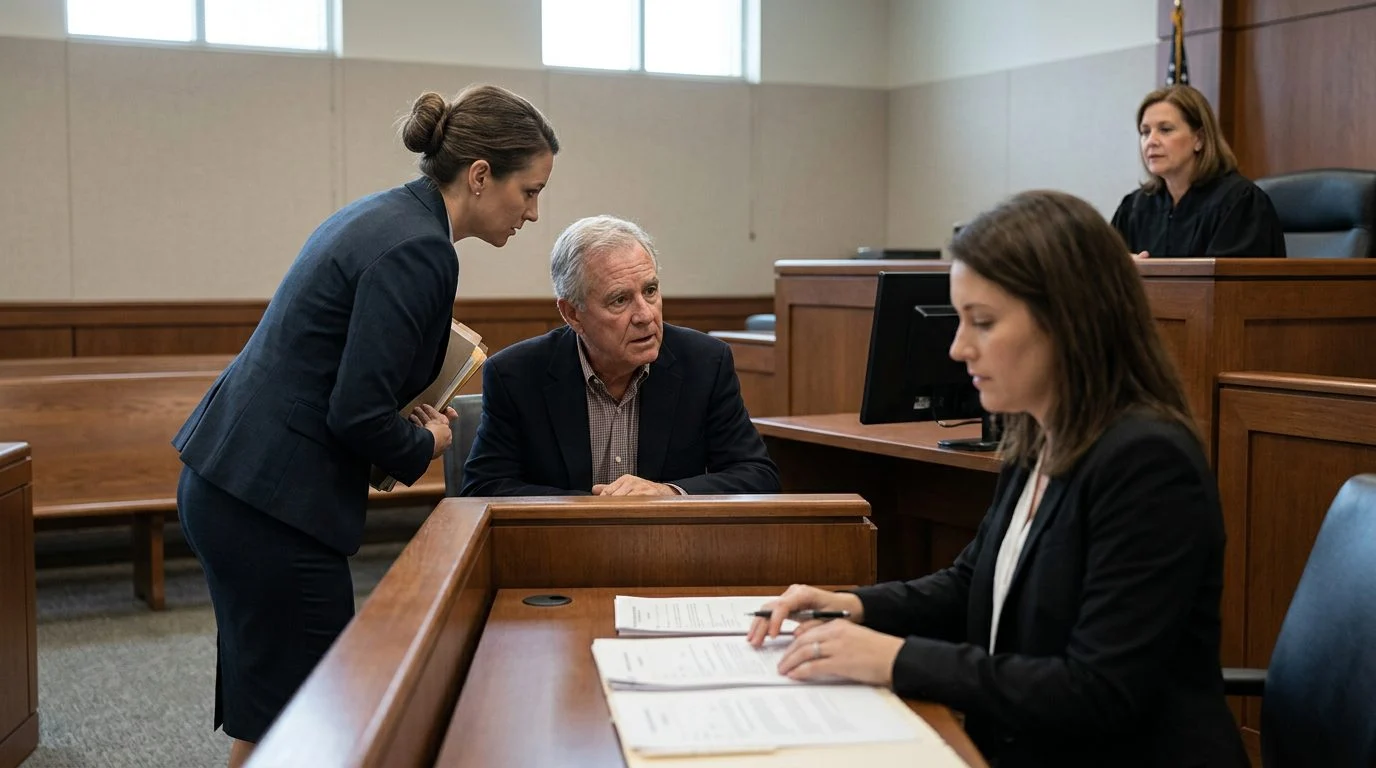
The court must schedule a hearing within 10 court working days unless a continuance is granted, under § 397.68151. The court must immediately determine whether the parent has an attorney or whether appointing counsel is appropriate, under § 397.68151. A parent who desires counsel and cannot afford private counsel has the right to court-appointed counsel, under § 397.681. The Second District has also held that a Marchman respondent has a constitutional right to counsel, in Hillsborough County v. Albrechta.
Testimony at the hearing is taken under oath, and the parent may refuse to testify, per § 397.6957. The petitioner carries the burden of proof, as the Fifth District explained in J.C. v. State. If the court finds the conditions proved by clear and convincing evidence, it may order involuntary treatment for up to 90 days, under § 397.697. The outcome depends on the facts of each case, and the court makes the final decision.
In an emergency, the court may rely on the petition and enter an ex parte assessment order without appointing an attorney, under § 397.6818. The petition must still give a good faith reason to believe the criteria are met, as D.H. v. K.J.R. explains.
When Guardianship May Be a Separate Question
Guardianship asks a court to make decisions for an adult who cannot manage personal or financial matters. That is a different question from treatment for alcohol use. A Marchman Act order addresses treatment, while a guardianship case addresses who makes decisions.
Emergency temporary guardianship is one tool. Under Fla. Stat. § 744.3031, a court may appoint an emergency temporary guardian only after a petition for determination of incapacity is filed. The court must find imminent danger to the person’s health or safety, or danger to property, unless immediate action is taken. Notice of the petition and hearing must be served on the alleged incapacitated person and on that person’s attorney at least 24 hours before the hearing, unless the petitioner demonstrates that substantial harm would occur if the 24-hour notice is given. The authority expires 90 days after appointment or when a guardian is appointed, whichever comes first, but may be extended for an additional 90 days upon a showing that the emergency conditions still exist.
Plenary guardianship and limited guardianship are longer-term court options. Which one fits turns on what the court finds about the person’s needs. Some families face both questions at once, so a Marchman petition and a guardianship petition can arise in the same situation.
Marchman Act and Baker Act: How They Differ
The Baker Act covers mental health crises, while the Marchman Act covers substance use impairment. The two laws use different tests for that reason.
A parent can have both problems. The Marchman Act’s criteria also cover a substance use disorder with a co-occurring mental health disorder, under § 397.675. A lawyer can help sort out which process fits the facts.
Not sure what your next step is?
Talk it through with our team — the first consultation is free, confidential, and carries no obligation.
What Families Can Document Before Speaking With a Lawyer
Start with a dated written record of what you have seen and what you have tried. Useful entries include incidents, falls or injuries, missed medications or appointments, medical visits, and what doctors or caregivers have told you. Write down the date, what happened, and who was present.
Keep a timeline of conversations about treatment. Note what you said, how your parent responded, and whether anyone else was there. These details matter because a petition must rest on facts, as § 397.68141 requires.
A lawyer can advise which records matter for a petition and how they are obtained. Bring your timeline, medication list, and any medical notes to that first conversation.

Talk With a Florida Marchman Act Attorney About Your Parent’s Situation
A Marchman Act attorney can review your facts and explain which court steps may apply. Watching a parent drink heavily is hard. Many families feel responsible, unsure, or afraid of making things worse. You don’t need every answer before you reach out.
Robinson Casey focuses on Marchman Act petitions and guardianship matters for families across South Florida and statewide, including Miami-Dade. Richard J. Casey III, Esq. is the responsible lawyer for this page.
Common Questions
Does a parent have a right to a lawyer?
Yes. The parent has the right to counsel at every stage, though the parent may waive it if present and the court finds the waiver is knowing, intelligent, and voluntary; a parent who wants counsel and cannot afford it can have the court appoint one, under § 397.681.
Is there a filing fee for a Marchman petition?
The clerk may not charge a fee to file the petition, under § 397.681.
Does age decide a Marchman case?
The criteria focus on impairment, loss of self-control, and harm or impaired judgment, per § 397.675.
If your parent’s drinking has you worried about safety and what comes next, you don’t have to sort out the court steps alone. The firm offers a free first consultation, which is confidential and carries no obligation to continue. Call (561) 849-4149 or use the contact page to talk about your parent’s situation.
How Our Practice Supports Families
Focused Practice
Our practice focuses on Marchman Act petitions and guardianship matters, so families work with attorneys who concentrate on these cases every day.
Support for Family Members
We understand that a parent's decline affects the whole family. We explain each step in plain language so you know what to expect.
Clear Preparation
Our team helps you gather the information the court will need, from medical and personal history to the details of your parent's current situation.
Confidential Consultation
Call (561) 849-4149 to speak with our office. Your first consultation is free, confidential, and carries no obligation to continue.
Act Early, Ask Questions Sooner
Waiting until a crisis is underway can leave families with fewer options and more pressure. If you are worried about an older parent's health, safety, or substance use, talk with our office now to understand the choices in front of you.
Matters We Handle
Marchman Act Petitions
Guidance for families seeking court-ordered assessment and treatment for a loved one struggling with substance use under Florida's Marchman Act.
Involuntary Commitment for Addiction
Help understanding the court process for involuntary commitment when a parent's substance use puts their health or safety at risk.
Emergency Temporary Guardianship
Representation for urgent situations in which an older parent needs immediate protection while the court considers the broader case.
Plenary, Limited, and Mental Health Guardianship
Guidance on guardianship options that match your parent's needs, from full guardianship to more limited arrangements tailored to specific areas of decision-making.