
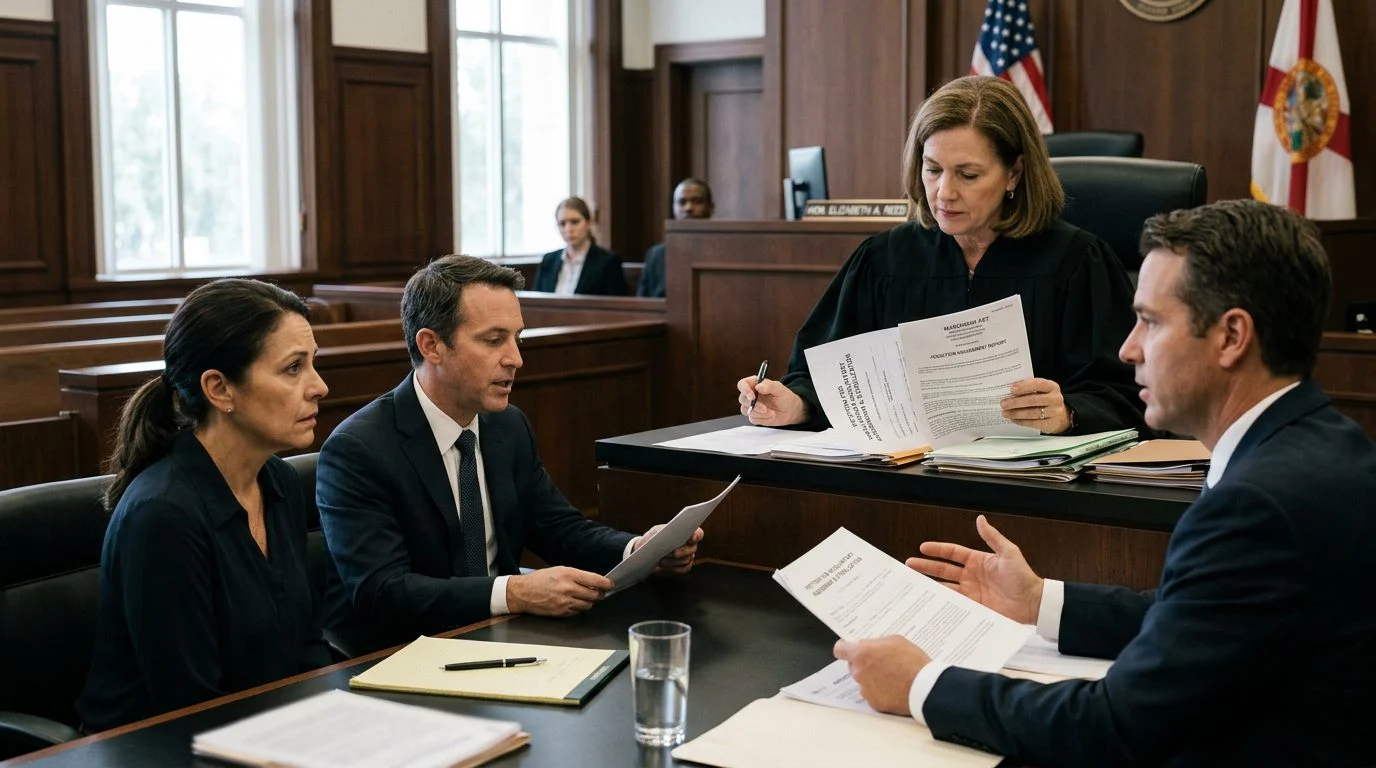
Marchman Act Attorney · Miami-Dade & South Florida
Your Adult Child Refuses Help? Talk With a Marchman Act Attorney
Robinson Casey focuses on Marchman Act petitions and guardianship matters for families across Miami-Dade, South Florida and statewide. Start with a free, confidential first consultation, with no obligation to continue.
Casey III, Esq. · Published November 4, 2026
Your child has said no again, and you are running out of options
A parent can ask a Florida court for help even when an adult child refuses treatment. Florida’s Marchman Act lets a relative file a petition for involuntary treatment services when substance abuse impairment is the problem (Fla. Stat. § 397.68112).
You have paid for treatment, tried every plan you could find, and held your boundaries. Maybe the call came from an emergency room. Maybe a text said “I’m fine,” and then your child went silent. The crisis keeps coming back, and you are tired.
Asking what to do when an adult child refuses mental health help is a hard question to sit with. This page explains what you can do now and what Florida law generally provides. It is general information, not advice about your child’s case.
If your child has refused help after an overdose, a hospital stay or an arrest, you do not have to sort out the legal side alone. Talk it through with our team — the first consultation is free, confidential, and carries no obligation.

Why an adult who refuses help is hard to reach
A parent usually cannot order an adult into treatment directly. A judge has to make that decision. Florida law also says that refusing services is not, by itself, evidence that the person lacks judgment about needing them (Fla. Stat. § 397.675). A refusal alone is not the whole story.
Refusal often comes from the illness itself. Denial can make a person believe nothing is wrong. Shame can push a child to hide use and pull away from the people trying to help. Substances also change thinking and mood. A child may reject help even when they are clearly struggling.
Your love and persistence matter to your child. They do not decide a case, though. The court and the treatment system apply their own legal standards. Knowing that can help you stop blaming yourself for a process you did not design.
The fears that keep you awake: overdose, jail, homelessness and losing hope
If your child is in immediate danger, call 911 first. A court petition is not a substitute for emergency care. Florida law also lets a court act fast. A judge may enter an ex parte order, meaning one entered without the other side present, for assessment and stabilization based on the petition when the petitioner asserts that emergency circumstances exist, or when upon review of the petition the court determines that an emergency exists, and the order must be executed while the hearing on the petition is pending. A service provider generally may not hold the person for more than 72 hours of observation, unless specific exceptions apply (Fla. Stat. § 397.6818).
About jail: the Marchman process is a court process for treatment. Whether it fits your child’s situation depends on the facts.
About homelessness and hopelessness: a court order is time-limited. A court may order involuntary treatment services for a period not to exceed 90 days. When the conditions that justify treatment no longer exist, the person must be released (Fla. Stat. § 397.697). No court order promises housing, recovery or a particular response from your child. Still, having a legal route is a real step forward when every other path has failed.
Steps you can take this week while your child is still refusing
Start a written log now, and keep crisis numbers close. Record each incident with the date, the time, what was said or done, and who saw it. A clear log helps you explain the timeline to a doctor, a court or a lawyer later.
Ask each treatment provider what they can share with you. Federal rules limit how a substance use treatment program may use or disclose patient records (42 C.F.R. § 2.13). Ask how the provider handles family involvement, and ask what you can offer.
For immediate emotional support, call or text 988. The Florida Department of Health says Florida residents can contact 988 for immediate crisis support (Florida Department of Health). For an emergency, call 911.
Avoid ultimatums you cannot sustain. A threat you do not follow through on teaches your child that the line can move. Plan one calm safety conversation instead. Decide ahead of time what you will and will not pay for or host.
How a Florida court process for treatment generally works
A Marchman petition is filed with the clerk of the court in the county where the adult is physically located. The clerk may not charge a fee for filing it (Fla. Stat. § 397.681). Filing in the wrong county is a venue problem, not a loss of court power, according to J.P. v. J.N.
The court also decides whether the adult needs appointed counsel (Fla. Stat. § 397.68151).
At the hearing, the court hears all relevant evidence. That can include testimony from family members who know the adult’s history. Testimony is taken under oath, and the adult may refuse to testify. The court must find the conditions proved by clear and convincing evidence before ordering treatment.
Appeals courts have also addressed how these hearings run. The Fifth District held that a judge may not call and question the assessing professional to supply the petitioner’s case when the petitioner is absent (C.W.R.K. v. Stewart Marchman Act Behavioral Healthcare). The Fourth District has certified conflict on that question, so the rule is not settled statewide.
What to gather before you speak with a lawyer
Gather the facts you already have before you call anyone. A petition must name the adult and the petitioner, state the relationship between them, and give the factual reasons for filing. It may include a report from a qualified professional who examined the adult within 30 days before filing (Fla. Stat. § 397.68141).
Bring these items to your first conversation:
- Hospital, emergency room or crisis records, including discharge papers.
- Police or crisis reports, and dates of any arrests.
- Your written incident log.
- A timeline of past treatment attempts, with program names and dates.
- Any messages in which your child refused care.
A lawyer can review what your family has and explain which options may apply. Robinson Casey limits its practice to Marchman Act petitions and guardianship matters. Richard J. Casey III, Esq. is the lawyer responsible for this page. For a broader view of the process, read the involuntary commitment for addiction guide.
Quick answers
Can I force my adult child into treatment in Florida?
Only a court can order involuntary treatment, and only after a petition, a hearing and the required findings.
Does my adult child have a right to a lawyer?
Yes. The adult has the right to counsel at every stage, but the adult may waive it if present and the court finds the waiver is knowing, intelligent, and voluntary, and the court must appoint counsel if it believes the adult needs or desires one, without regard to the adult’s wishes.
Not sure what your next step is?
Talk it through with our team — the first consultation is free, confidential, and carries no obligation.
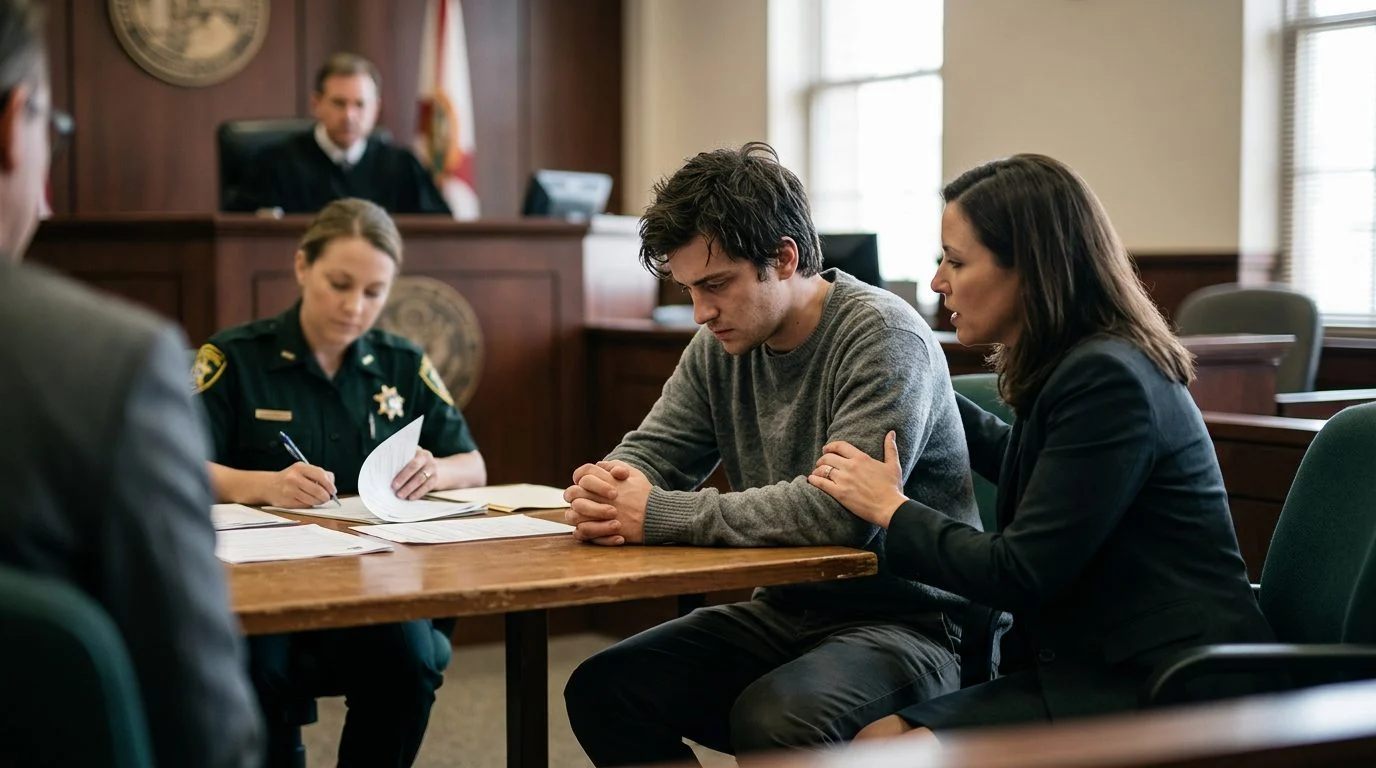
Talk with Robinson Casey about your child’s situation
If your child has refused help after an overdose, a hospital stay or an arrest, you do not have to sort out the legal side alone. A conversation about your child’s facts can show which options may apply. Robinson Casey offers a free first consultation that is confidential and carries no obligation to continue. Call (561) 849-4700 or request a consultation at robinsoncasey.com/contact.
How Robinson Casey Supports Families
Focused Practice
Our practice focuses on Marchman Act petitions and guardianship matters, so we concentrate on the court process families face when a loved one will not accept help.
Clear Explanations
We explain each option in plain language, including what a petition involves, what to expect at a hearing and how guardianship differs from involuntary commitment for addiction.
Confidential Conversations
Your first consultation is confidential. Share what is happening with your family, and we will help you understand your options.
Serving South Florida
We represent families in Miami-Dade, across South Florida and throughout Florida.
Support for Difficult Decisions
Our team understands how stressful it is to watch a grown child struggle. We approach every matter with patience and respect for your family.
If Someone Is in Immediate Danger
If your adult child is in immediate danger to themselves or others, call 911 or your local emergency number first. Then contact our office to discuss the court options available to your family.
Common Paths Families Ask About
Marchman Act Petitions
Florida's Marchman Act lets families ask a court to consider treatment for a loved one with substance use problems. We help you prepare the petition and understand each step.
Guardianship Matters
We discuss plenary, limited and mental health guardianship so you can compare the choices.
Emergency Temporary Guardianship
Some situations call for urgent court action. We explain when emergency temporary guardianship may be considered and what the process involves.
Involuntary Commitment for Addiction
We explain how involuntary commitment for addiction fits within the Marchman Act and what families should gather before speaking with a court.