
Marchman Act and Guardianship | Miami-Dade and South Florida
Your Loved One Refuses Treatment. You Don't Have to Figure Out the Next Step Alone.
Robinson Casey focuses on Marchman Act petitions and guardianship matters for families across South Florida and statewide. Start with a free, confidential consultation, with no obligation to continue.
By Richard J. Casey III, Esq. · Published October 23, 2026
If you’re searching for how to talk to someone who refuses addiction treatment Florida families face, start with a calm, private, specific conversation. Name what you have seen, ask for one small step, and stop if the talk turns hostile. If those talks keep failing and health or safety is at risk, Florida’s Marchman Act offers a court path.
The Short Answer: Talk Calmly First, Then Know Your Court Options
A calm, specific talk is often the first step, and it can open the door to treatment. When talks repeatedly fail and the person’s health or safety is at risk, the Marchman Act is the court route. The Marchman Act sits in Chapter 397 of the Florida Statutes, and it covers involuntary treatment for substance use. This page covers what to prepare, what to say, what to avoid, when a court petition may come up, and how the process works. Robinson Casey focuses on Marchman Act petitions and guardianship matters for families in Miami-Dade, South Florida, and statewide.
If your loved one keeps refusing treatment while you weigh a Marchman Act petition, our team can go over your facts with you in a free, confidential first consultation. Talk it through with our team — the first consultation is free, confidential, and carries no obligation.

Prepare Before You Start the Conversation
Preparation is the part of how to talk to someone who refuses addiction treatment Florida families can control. Start by picking a private moment when the person is sober and calm. Avoid the hours after a fight, a late-night call, or a crisis, because talks rarely go well then.
Write down two or three recent incidents with dates and plain facts. Examples include a missed shift, a fall, a car event, or a visit to the emergency room. Facts land better than labels like “addict.”
Decide in advance what you will ask for. One or two small requests, such as a doctor’s visit, work better than a long plan.
Agree on one message with other family members. Mixed demands from several people make it easy for the person to dismiss all of them.
Your notes also matter later. Fla. Stat. § 397.68141 lists what a petition for involuntary services must contain, including the factual allegations giving the reason the petitioner believes the respondent is substance abuse impaired and has lost the power of self-control with respect to substance abuse. Clear notes now make that step easier if a petition is ever considered.
What to Say: Opening Lines and Specific Phrasing
Open with care, describe what you saw, and ask one question. Short, specific words work better than a speech.
- “I love you, and I’m scared for your health and safety.”
- “Last weekend you didn’t come home, and I couldn’t reach you all night.”
- “I feel scared when you drive after drinking.”
- “What do you think would make things feel more manageable?”
- “Would you see your doctor with me this week? You can pick the day.”
Describe behavior, not diagnosis. Saying “you are an addict” starts an argument. Saying “you didn’t answer for a whole night” gives the person facts to respond to.
CRAFT family training is one family approach. Partnership to End Addiction describes it as a way to communicate positively, reinforce sober behavior, and encourage treatment.
What to Avoid Saying and Doing
Don’t argue about whether there is a problem. Stick to the effects you have seen. Debates over labels tend to end talks early.
Skip guilt, shaming, and long lectures. They shut the conversation down before any next step can come up.
Don’t give ultimatums you won’t enforce. If you say something will happen, be ready to follow through.
Don’t cover for the consequences of use. Paying debts or making excuses to others can shield the person from the effects of their choices.
Don’t talk while either of you is intoxicated, angry, or threatening. If a threat comes up, treat it as a safety issue. Step away and try again later.
Keep the Door Open and Follow Through on What You Can Keep
End each talk with respect and an invitation to talk again. A calm goodbye leaves room for the next conversation.
Only state consequences you are prepared to carry out. Follow through calmly and consistently, so your words keep their weight.
Keep a written log of conversations, incidents, and treatment offers, with dates. A clear record can matter if a court petition is later considered.
Look after your own support, too. Family counseling or a trusted friend can help you keep going, because this process wears people down over time.
When a Conversation Is Not Enough: Signs to Consider a Court Petition
Consider a court petition when talks keep failing and the person’s health or safety is at risk. Florida’s criteria center on harm and loss of self-control.
- Repeated overdoses, serious injuries, or medical emergencies the person does not take seriously.
- Risk of harm to self or others, including driving while impaired or threats of violence.
- Trouble meeting basic needs, such as food, housing, or medication.
- Steady refusal of help over time, despite calm and clear efforts by family.
Under Fla. Stat. § 397.675, a person meets the criteria for involuntary admission if there is good faith reason to believe that the person is substance abuse impaired or has a substance use disorder and a co-occurring mental health disorder and, because of such impairment or disorder, has lost the power of self-control with respect to substance abuse and either is in need of substance abuse services and, by reason of substance abuse impairment, his or her judgment has been so impaired that he or she is incapable of appreciating his or her need for such services and of making a rational decision in that regard, or meets the neglect standard in (2)(b), or there is substantial likelihood that the person has inflicted, or threatened to or attempted to inflict, or, unless admitted, is likely to inflict, physical harm on himself, herself, or another. The statute also looks at whether they are likely to neglect themselves in a way that poses a real and present threat of substantial harm, and whether it is not apparent that such harm may be avoided through the help of willing, able, and responsible family members or friends or the provision of other services. Whether a petition fits depends on the facts, so a short consultation can help you sort through yours.
Not sure what your next step is?
Talk it through with our team — the first consultation is free, confidential, and carries no obligation.
How the Marchman Act Works in Florida
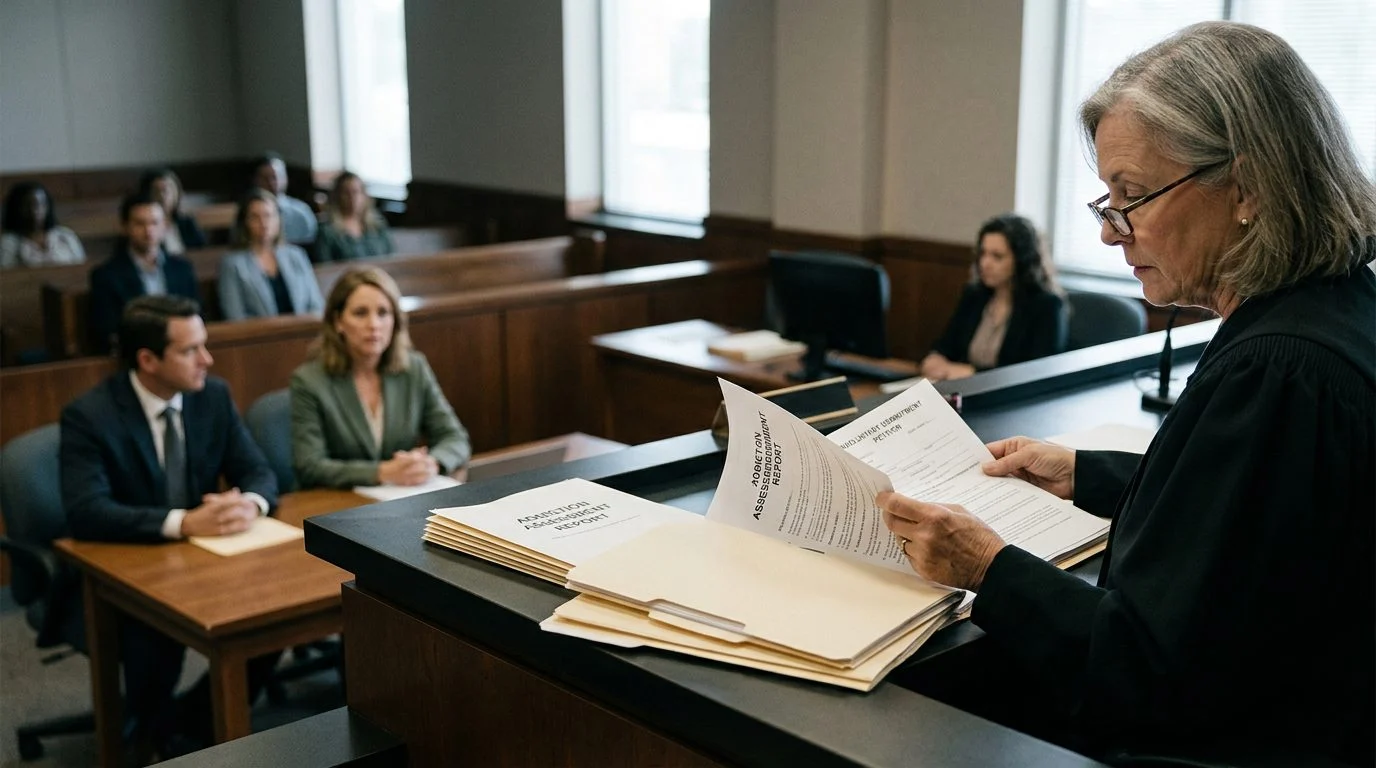
Under Florida’s Marchman Act, certain people can ask a court to order an assessment for an adult. For an adult, a spouse or legal guardian, any relative, a service provider, or an adult with direct personal knowledge of the respondent’s substance abuse impairment and his or her prior course of assessment and treatment may file. Fla. Stat. § 397.68112 sets out who may petition. Fla. Stat. § 397.68112 sets out who may petition.
The petition goes to the clerk in the county where the person is located. The Miami-Dade Clerk mental health court page directs requests for involuntary adult alcohol or drug treatment to its Probate Court.
The court must schedule a hearing within 10 court working days unless a continuance is granted, Fla. Stat. § 397.68151.
If emergency circumstances exist, the court may enter an ex parte order based on the petition alone, Fla. Stat. § 397.6818. Treatment orders require proof by clear and convincing evidence, and they can last up to 90 days, Fla. Stat. § 397.697.
No one can promise how a judge will rule on your facts.
Frequently Asked Questions
What should I say first to a loved one who refuses treatment in Florida?
Start with a calm, private talk when they are sober. Name one or two specific facts and ask one small question.
Who can file a Marchman Act petition in Florida?
For an adult, a spouse or legal guardian, any relative, a service provider, or an adult with direct personal knowledge of the respondent’s substance abuse impairment and his or her prior course of assessment and treatment can file.
Can a Florida clerk charge a fee to file a Marchman Act petition?
No, the clerk may not charge a fee for filing a petition under this section, Fla. Stat. § 397.681.

Talk With Robinson Casey About Your Situation
If your loved one keeps refusing treatment while you weigh a Marchman Act petition, you don’t have to sort out the next step alone. Robinson Casey focuses on Marchman Act petitions and guardianship matters for families across South Florida and statewide. The first consultation is free, confidential, and carries no obligation to continue. Call (561) 849-4149 or use the contact page to set up your consultation.
Why families start the conversation with Robinson Casey
A focused practice
Robinson Casey limits its practice to Marchman Act petitions and guardianship matters, so every conversation centers on the legal issues families face.
A confidential first talk
Share what is happening in your family in a private setting. Your consultation is confidential.
A free initial consultation
The first consultation is free, confidential and comes with no obligation to continue.
South Florida and statewide
The firm serves families in Miami-Dade and across South Florida, and takes matters statewide.
A team that supports you
Our team, including assistants and office staff, helps families through each step of the process.
Call when you are ready
Reach out at (561) 849-4149 to talk with the firm about your situation.
If someone is in immediate danger
Call 911 right away. A legal consultation is not a substitute for emergency help when a loved one is at risk of harm.
Practical steps to take before you call
Choose a calm moment
Talk when your loved one is sober and less agitated. Keep the conversation short and private.
Name specific facts
Describe one or two concrete events, such as a missed job or a dangerous situation, rather than general arguments.
Keep a written record
Note dates, incidents, and who was present. These details help a lawyer understand your family's situation.
Ask a lawyer early
A consultation can help you understand how the Marchman Act and guardianship proceedings work in Florida.