
Marchman Act & Guardianship | Miami-Dade and South Florida
When Your Adult Child Relapses, Clear Steps Can Help Your Family Act
Robinson Casey focuses on Marchman Act petitions and guardianship matters for families in Miami-Dade and across South Florida. Start with a free, confidential first consultation.
Casey III, Esq. · Published November 6, 2026
Your Child Has Relapsed, and You Don’t Know What Comes Next
If your adult child has relapsed, start with safety today, write down what has happened, and then learn your legal options. That order keeps you from making rushed decisions.
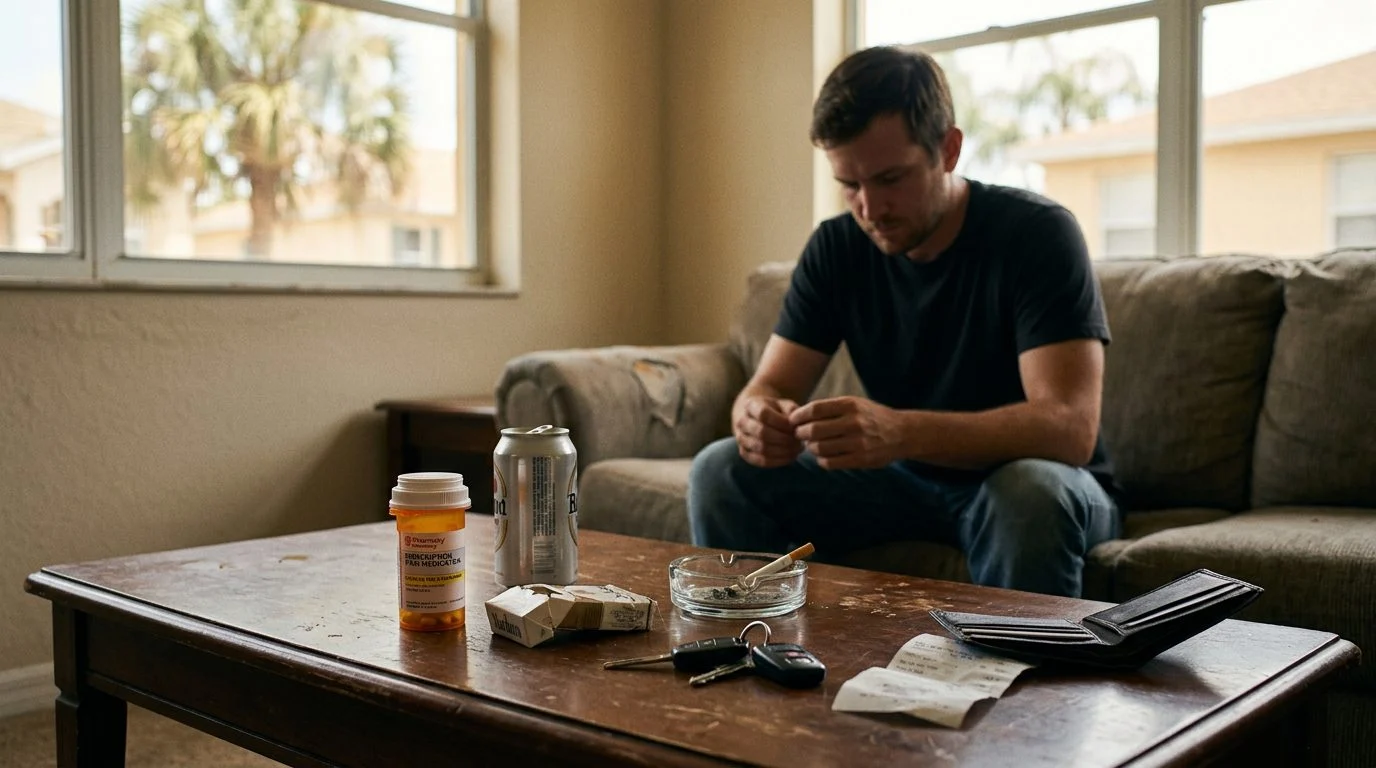
Maybe the call came from a hospital, a police station, or no one at all, because your child didn’t come home. After years of paying for treatment and setting boundaries, you may feel worn out and afraid of what comes next.
This page explains what to do when your adult child relapses, in plain words. It covers immediate safety steps, the records that help, and the Florida court tools families ask about most. You don’t need a finished plan tonight.
If your child's relapse has you weighing a court option, you don't have to face that decision alone, and we can talk through your situation. Talk it through with our team — the first consultation is free, confidential, and carries no obligation.

Start With Safety: Overdose Risk and Emergency Steps
When your child relapses, the first hours matter most. Call 911 right away for an overdose or any immediate danger to your child’s life. Stay with your child while you wait for help.
Keep naloxone at home, and make sure everyone in the house knows where it is kept. Keep a written list of your child’s medicines, allergies, recent hospital stays, and the names of treating facilities. Give a copy to a trusted person so it’s easy to find in an emergency.
If your child talks about hurting themselves, or you feel a crisis is building, you can call or text 988. The Florida Department of Health says Florida residents can contact 988 for immediate crisis support about a loved one’s substance use or emotional crisis.
Write Down What Is Happening Before You Act
Keep a dated log of every incident. Include relapses, overdoses, emergency room or hospital visits, police contacts, missed appointments, and money or property that went missing.
For each entry, write what your child said and did. Note what you tried and what happened afterward. Stick to facts: dates, times, who was present, and what you saw yourself.
Keep copies of discharge papers and any records you already have access to. This matters because a Florida petition must include specific facts. Under Fla. Stat. § 397.68141, if the person was not assessed before the petition was filed or refused to submit to an evaluation, the petition must note that lack of assessment or refusal.
Stopping the Enabling Cycle Is Not the Same as Walking Away
Enabling usually means paying for the next crisis, covering for missed obligations, or making excuses to others. Supporting recovery means backing treatment and letting your child feel the results of their choices. The Partnership to End Addiction offers guidance on telling these apart.
Set boundaries you can keep. Decide what you will pay for, what you will do, and what you will not do. State them calmly, and follow through.
If you already tried boundaries and nothing changed, that does not mean you failed. Many parents reach this point after years of trying. When voluntary steps have not worked, a court process may be worth understanding.
When Florida’s Marchman Act May Be Part of the Answer
Under Fla. Stat. § 397.681, the courts have jurisdiction over involuntary treatment petitions for substance abuse impaired persons, and such petitions must be filed with the clerk of the court in the county where the person is located. The Florida Department of Children and Families explains that it allows involuntary assessment, stabilization and treatment for adults severely impaired by substance abuse.
Under Fla. Stat. § 397.68112, an adult respondent’s petition may be filed by any relative, among others. A parent is a relative, so a parent may file. The court makes the decision, not the family.
The court must first have a good-faith reason to believe the person meets the criteria. Florida’s involuntary admission criteria for substance abuse include a loss of the power of self-control because of impairment, plus either an inability to make a rational decision about the need for services or a reason to believe the person has inflicted, or is likely to inflict, physical harm.
The petition is filed in the county where the person is located. In J.P. v. J.N., the Fifth District held that filing in the wrong county was a venue defect, not a loss of jurisdiction.
In an emergency, the court may enter an ex parte order under Fla. Stat. § 397.6818. A service provider generally may not hold the person for more than 72 hours of observation, subject to listed exceptions.
Guardianship When Your Child Cannot Make Safe Decisions
Guardianship is a separate court process under Chapter 744. Under Fla. Stat. § 744.102, an incapacitated person is one who has been judicially determined to lack the capacity to manage at least some property or to meet at least some essential health and safety requirements.
A limited guardian exercises only the powers the court designates. A plenary guardian exercises all delegable legal rights and powers of the ward. The court decides which form fits.
Emergency temporary guardianship is a faster tool. Under Fla. Stat. § 744.3031, the court must find that there appears to be imminent danger that the person’s physical or mental health or safety will be seriously impaired, or that the person’s property is in danger of being wasted, misappropriated, or lost unless immediate action is taken. Under Fla. Stat. § 744.3031, its authority expires 90 days after appointment or when a guardian is appointed, whichever comes first, but it may be extended for an additional 90 days upon a showing that the emergency conditions still exist.
Mental health guardianship is its own category. Whether any of these paths fits depends on the facts of your child’s case.
Common questions
What should I do when my adult child relapses?
Check for immediate danger first, call 911 for an overdose, and then start a dated log of what happened.
Can a parent file a Marchman Act petition in Florida?
Yes. Under Florida law, for an adult, a petition for involuntary treatment services may be filed by the respondent’s spouse or legal guardian, any relative, a service provider, or an adult who has direct personal knowledge of the respondent’s substance abuse impairment and prior course of assessment and treatment.
Does my adult child have a right to a lawyer?
Yes. A respondent has the right to counsel at every stage, though the respondent may waive that right if present and the court finds the waiver is knowing, intelligent, and voluntary, and a respondent who cannot afford private counsel has the right to court-appointed counsel.
Its authority generally ends 90 days after appointment, or sooner when a guardian is appointed, but it may be extended for an additional 90 days upon a showing that the emergency conditions still exist.
Not sure what your next step is?
Talk it through with our team — the first consultation is free, confidential, and carries no obligation.

Take the Next Step: A Free, Confidential First Consultation
You have watched this pattern repeat, and now you face a decision you should not carry alone. Richard J. Casey III, Esq. is the lawyer responsible for this page, which covers Marchman Act petitions and guardianship matters for families in South Florida and across the state.
Call (561) 849-4700 or request a consultation at Robinson Casey contact page. The first consultation is free, confidential, and carries no obligation to continue.
We can’t promise any result for your child’s treatment, a court’s decision, or your child’s recovery. We can talk through your facts and the steps available.
How Robinson Casey Supports Families
A Focused Practice
Our work centers on Marchman Act petitions, involuntary commitment for addiction, and guardianship matters, so we bring focused attention to the issues your family is facing.
Attention to Urgent Situations
When a relapse puts your child or your household at risk, we focus on helping you understand your options and the next practical steps.
Confidential First Consultation
Your first consultation is free and confidential, and there is no obligation to continue.
Direct Contact
Call (561) 849-4700 to speak with our office about your family's situation.
Safety Comes First
If your child is in immediate danger or has overdosed, call 911 before anything else. Then begin a dated written record of what you have seen and who you have contacted.
Four Steps to Take After a Relapse
1. Check for Immediate Danger
Make sure your child and anyone else in the home is safe. For an overdose or medical emergency, call 911 right away.
2. Document What Happened
Write down dates, times, behaviors, statements, and any treatment or police contact. Clear notes help when you speak with an attorney.
3. Learn Your Legal Options
Families often consider a Marchman Act petition, involuntary commitment for addiction, or a guardianship, depending on the facts. We can explain how each may apply to your situation.
4. Speak With Robinson Casey
Schedule your free, confidential first consultation to discuss your family's concerns and the next steps available to you.