
Marchman Act Petitions | Florida Courts
Know Where a Marchman Act Petition Is Filed Before You Act
Clear answers on the court process, the steps that come first, and how Robinson Casey can help your family move forward with confidence.
Casey III, Esq. · Published November 8, 2026
Short Answer: Which Court Hears a Marchman Act Petition?
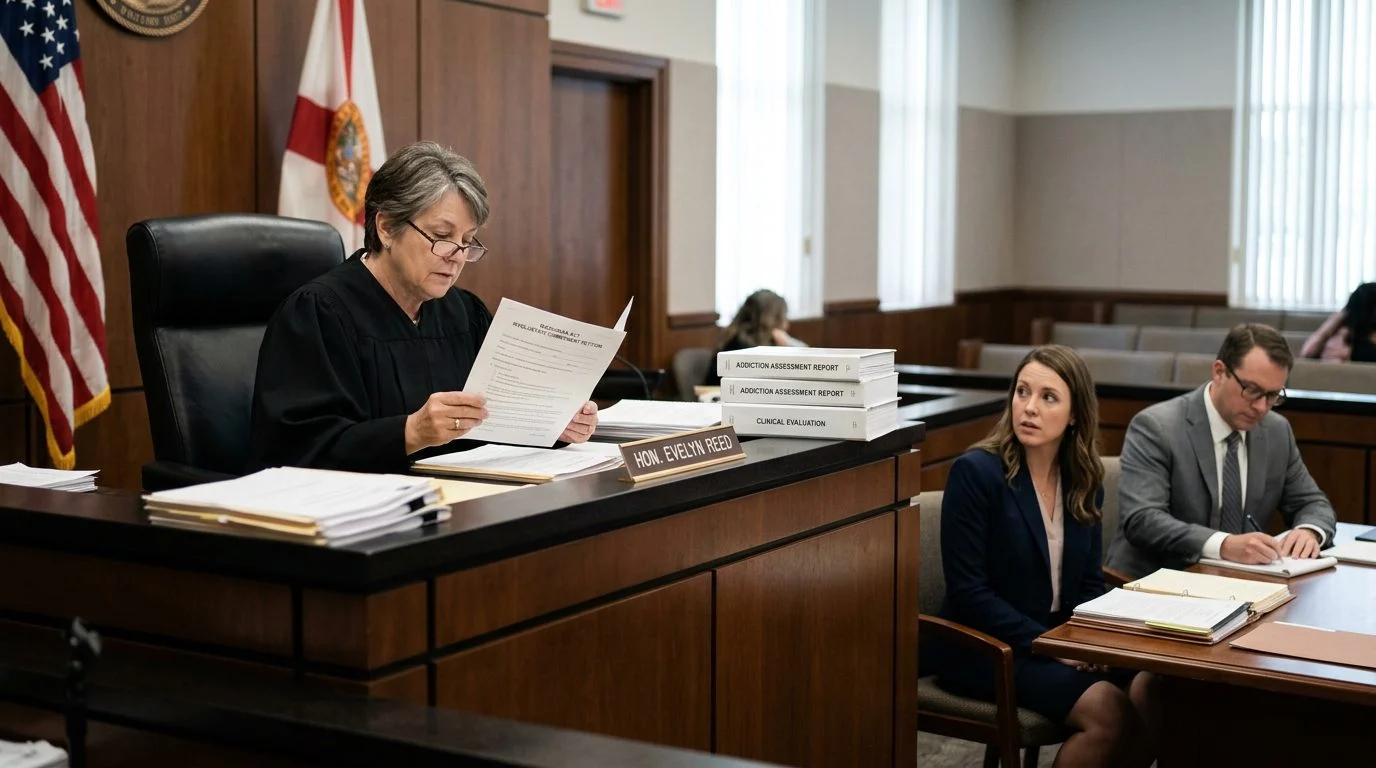
A Marchman Act petition is heard by the trial court in the county where the person is located. It must be filed with the clerk of that county. Fla. Stat. § 397.681 says the courts have jurisdiction over these petitions and that they must be filed where the person is.
The Marchman Act is Florida’s process for a judge to order assessment, stabilization, or treatment for a substance use disorder. It sits in Chapter 397 of the Florida Statutes.
The county matters from the first day. The filing location decides which clerk takes the petition and which courthouse hears the case. Knowing the right courthouse is a practical first step for any family.
Richard J. Casey III, Esq. is the lawyer responsible for this page. Robinson Casey limits its practice to Marchman Act petitions and guardianship matters. The practice serves families in Miami-Dade, across South Florida, and statewide.
If you are trying to get a loved one to the right courthouse, we are glad to talk through the county and the next steps with you. Talk it through with our team — the first consultation is free, confidential, and carries no obligation.

What the Marchman Act Is, and Why the Court Matters
A Marchman Act petition asks a judge to order involuntary assessment, stabilization, or treatment for a person with a substance use disorder. The judge reviews the petition and the evidence, but in an emergency the court may rely solely on the contents of the petition to enter an ex parte assessment and stabilization order.
A person may meet the criteria if the petitioner has a reason to believe they are substance abuse impaired, that because of this impairment they have lost the power of self-control over substance use, and that they have inflicted or are likely to inflict physical harm on themselves or others unless the court orders involuntary services. A person may also meet the standard if their refusal to voluntarily receive care is based on judgment so impaired by substance abuse that they are incapable of appreciating their need for care and of making a rational decision about it.
Who can start the process? For an adult, the petition may come from a spouse or legal guardian, any relative, a service provider, or an adult with direct personal knowledge of the person’s impairment and past treatment. Fla. Stat. § 397.68112
This is a civil court matter. Questions about criminal courts or misdemeanor dockets do not apply to a Marchman Act case. A reader who hears “court” and thinks of a criminal charge is picturing the wrong process.
The judge applies the statute to the evidence. The judge does not decide the case based on the family’s general worries. That is why the petition’s details and the court’s location both matter from the start.
How Florida’s Court System Is Organized
Florida’s courts work in layers. Trial courts hear a case first. Appeals courts review what trial judges decided, and the Florida Supreme Court sits at the top.
The trial level includes circuit courts and county courts. Probate and guardianship matters are handled in the circuit court. Marchman Act petitions are trial-level filings, so the reader should look to the trial court in their county.
Florida’s district courts of appeal take appeals from trial rulings. They do not usually take the first petition. A family looking for where to file should focus on the trial court in the county where the person is.
Courts also use different names for their divisions. The county clerk’s website is the place to find the local name for the probate or civil division that handles these filings.
Which Florida Court Hears the Petition in Your County
The petition goes to the trial court in the county where the person is physically located when the petition is filed. The family’s home county does not control that choice.
A court case shows why this matters. In J.P. v. J.N. (Fla. 5th DCA 2017), a petition was filed in one county while the person was in a detox facility in another. The court held that the wrong-county filing did not take away the circuit court’s jurisdiction. The problem was venue, meaning which place the case belongs.
That ruling answers one worry. It does not make location unimportant. The statute’s filing rule is written around where the person is.
Florida has 67 counties, and each county clerk takes its own filings. The Miami-Dade Clerk’s mental health court page directs people seeking involuntary alcohol or drug treatment to Probate Court for adults and to Juvenile Court for minors. A family with a loved one in Miami-Dade should look at that routing first.
How a Marchman Act Case Moves Through the Court
A case moves from petition to assessment, then to a hearing, then to a court order.
The petition must name the respondent and the petitioner. It must state how they are related and give the facts that show the need for services. Fla. Stat. § 397.68141 It may include a professional’s report from within 30 days before filing.
The court then decides whether the respondent has a lawyer or should get one. Fla. Stat. § 397.681 Fla. Stat. § 397.681
In an emergency, the court may enter an ex parte order, which means an order based on the petition alone. In an emergency, the court may enter an ex parte order without appointing a lawyer at that stage, but a respondent has the right to counsel at every stage of a judicial proceeding relating to a petition for involuntary treatment, and the court must appoint counsel if it believes the respondent needs or desires it. Fla. Stat. § 397.6818
At the hearing, the respondent may be absent: if the respondent does not appear for any reason, including lack of service, and the court reasonably believes the respondent meets this chapter’s commitment criteria and that a substance abuse emergency exists, the court may still issue or reissue an ex parte assessment and stabilization order valid for 90 days. Testimony is taken under oath and recorded. Under section 397.6818(4), Florida Statutes, if the respondent fails to appear at the hearing for any reason, including lack of service, the court may issue or reissue an ex parte assessment and stabilization order that remains in effect for 90 days, provided the court reasonably believes the respondent meets Chapter 397’s commitment criteria and that a substance abuse emergency exists.
The opinion in J.C. v. State states that, in doing so, the court failed to follow the applicable statute by essentially functioning as the absent petitioner. In the C.W.R.K. case, the trial court failed to follow the governing statute when, in the absence of the petitioner, it called and questioned the health care professional who executed the involuntary services certificate. Treat this as Fifth District law, and confirm whether it applies to your loved one’s case before relying on it.
Common Questions About Marchman Act Courts
A Marchman Act case is a civil court petition that asks a judge to order assessment or treatment for substance use. Here are short answers to questions readers often ask.
What does Marchman Act mean?
It is Florida’s law for court-ordered assessment, stabilization, and treatment of a person with a substance use disorder.
Does the person named in the petition have a lawyer?
The person has a right to counsel at every stage.
How is guardianship different?
A guardianship case asks a court to appoint someone to make decisions for a person who cannot make them safely. A Marchman Act case asks for an assessment or treatment order for substance use.
Not sure what your next step is?
Talk it through with our team — the first consultation is free, confidential, and carries no obligation.

Talk With Robinson Casey About Your Family’s Situation
If you are reading this because someone you love is drinking or using drugs, you may be carrying a lot right now. You may be trying to act for a person who does not see the problem.
Call Robinson Casey at (561) 849-4700 or reach out through the contact page. We can talk through which county and court fit your loved one’s situation. The first consultation is free, confidential, and carries no obligation to continue.
Related reading on this site includes the Marchman Act pillar guide, the Miami-Dade and South Florida pages, and the cocaine addiction Marchman Act page.
Why Families Start With Robinson Casey
Focused Practice
Robinson Casey focuses on Marchman Act petitions and guardianship matters, so our work centers on the court procedures these cases require.
Free First Consultation
Your first consultation is free, confidential, and comes with no obligation to continue.
Confidential Conversations
Share the details of your family's situation in a private setting and get straightforward guidance on your options.
Support for Families Statewide
We serve families in Miami-Dade, across South Florida, and throughout the state.
Ask Before You File
Choosing the right court and understanding the filing steps early can prevent delays for your family. Speak with a lawyer before submitting a petition so you know what to expect.
Matters We Handle
Marchman Act Attorney
Guidance on court-ordered assessment, stabilization, and treatment for a loved one with a substance use disorder.
Guardianship Attorney
Help with the petition process and the court's oversight of a guardianship for a person who needs protection.
Emergency Temporary Guardianship
Support when a situation calls for prompt court action to protect a person and their property.
Plenary and Limited Guardianship
Representation for families considering broad or narrowly tailored guardianship arrangements under Florida law.
Mental Health Guardianship
Assistance with guardianship matters involving a person's mental health and care needs.
Involuntary Commitment for Addiction
Guidance on the court process for involuntary commitment when addiction puts a person and their family at risk.