
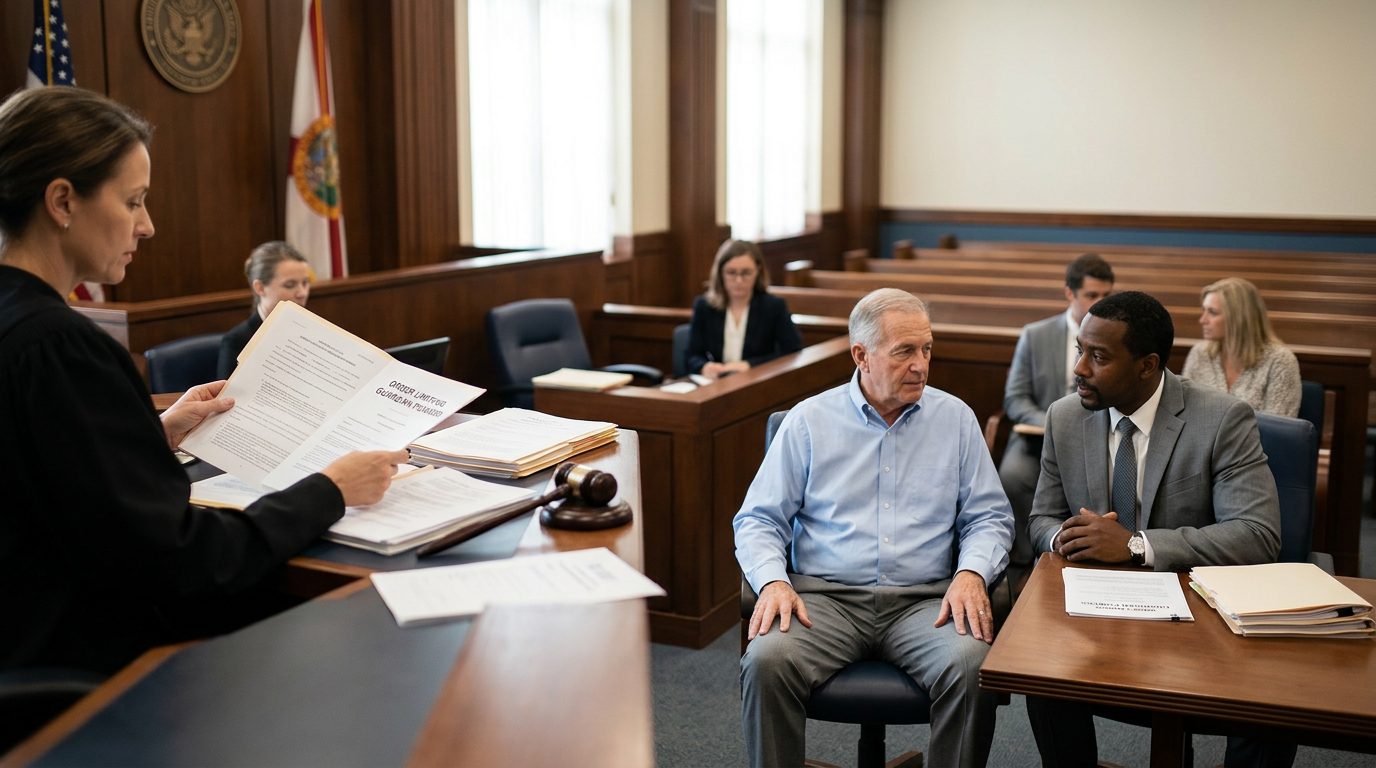
Guardianship in Florida
Limited Guardianship for Adults
Court-ordered protection when an adult needs help with specific decisions but retains other rights. Robinson & Casey handles limited guardianship petitions across Florida.
By Richard J. Casey III, Esq. · Published October 03, 2026
Limited Guardianship for Adults in Florida
Limited guardianship is a court-ordered arrangement where a judge appoints a guardian to make specific decisions for an incapacitated adult while that adult retains rights and decision-making authority in other areas. It’s a tailored alternative to full guardianship, designed to provide protection where it’s needed without stripping away unnecessary freedoms.
If you’re caring for an aging parent with early-stage dementia, a family member with a mental health condition, or an adult with an acquired brain injury who has some capacity but can’t handle all personal or financial decisions alone, limited guardianship may be the tool your family needs. Robinson & Casey can walk you through how this process works and what to expect. Here’s what you need to know.
Not sure what your next step is?
Talk it through with our team — the first consultation is free, confidential, and carries no obligation.

What Is Limited Guardianship for Adults in Florida?
Limited guardianship is a court-ordered protective arrangement where a guardian is appointed to make specific decisions for an incapacitated adult while the adult retains other rights and decision-making authority.
Under Florida Statutes Chapter 744, limited guardianship differs fundamentally from plenary guardianship (full authority over all decisions) and conservatorship (financial management only). The core principle is simple: the court grants a guardian authority only in the specific areas where the adult lacks capacity, preserving autonomy and dignity in all other respects.
Limited guardianship is appropriate for adults with cognitive decline, mental illness, developmental disability, or acquired brain injury who retain some decision-making capacity. The arrangement recognizes that incapacity is often not all-or-nothing—many people can make some decisions independently but need help with others.
What Does Limited Guardianship Cover?
Guardian authority in limited guardianship is tailored to the individual’s specific needs—not a one-size-fits-all arrangement.
The court may grant a guardian authority over:
- Medical decisions: consent to treatment, surgery, medication, and healthcare choices
- Living arrangements: where the adult lives and with whom
- Financial management: bill payment, asset management, and spending (partial or full authority)
- Education and vocational training: enrollment, program selection, and related decisions
- Social and recreational decisions: participation in activities and social engagement
What the ward retains depends on the guardianship order. In most limited guardianships, the adult keeps the right to:
- Vote in elections
- Marry or divorce
- Execute a will or make other estate decisions
- Make decisions in areas not explicitly granted to the guardian
The court specifies exact powers in the guardianship order. This document becomes the legal blueprint for what the guardian can and cannot do. Powers can be modified later if the adult’s circumstances change or capacity improves.
When Is Limited Guardianship the Right Choice?
Limited guardianship is appropriate when an adult has some capacity but cannot handle all personal or financial affairs independently, and specific decisions need oversight without requiring total control.
Common scenarios include:
- Early-stage dementia: the adult can manage daily tasks and social decisions but needs help with medical consent and finances
- Mental illness with support: the adult functions well with medication and family involvement but cannot independently manage complex financial or medical decisions
- Acquired brain injury with partial recovery: the adult regains some function but lacks capacity in specific areas like medical decision-making
- Developmental disability with independent functioning: the adult lives semi-independently but needs help with healthcare, finances, or major life decisions
Florida law requires that courts choose the least restrictive alternative appropriate to the person’s situation. Limited guardianship may be one way to meet this requirement, by granting only the powers necessary to protect the adult while preserving as much independence as possible, subject to the court’s discretion.
The Limited Guardianship Process: Step-by-Step
The path to limited guardianship involves nine key steps, each with specific legal requirements.
Step 1: Initial Consultation
You meet with an attorney to review the adult’s situation, medical history, and family circumstances. We assess whether limited guardianship is appropriate or whether another tool (power of attorney, healthcare proxy, or conservatorship) might serve your needs better.
Step 2: Petition Preparation
We draft a guardianship petition that specifies the proposed powers and limitations. This document forms the foundation of your case. We gather supporting documentation: physician affidavits, medical records, psychological evaluations, and evidence of the adult’s incapacity in specific areas.
Step 3: File With the Court
The petition is filed with the appropriate Florida circuit court. Filing fees apply and vary by county. We handle all administrative details.
Step 4: Notice and Service
The alleged incapacitated person and other required parties (spouse, adult children, parents, depending on circumstances) receive written notice of the petition and hearing date. This ensures due process and gives the adult the opportunity to respond or contest the guardianship.
Step 5: Medical Evaluation
Florida Statutes Chapter 744 requires that a court-appointed physician or psychologist evaluate the adult’s capacity. This independent evaluation is crucial—judges rely on it to determine whether guardianship is necessary and what scope of authority is appropriate.
Step 6: Hearing
The judge reviews evidence, hears testimony from you, medical professionals, and sometimes the alleged incapacitated person. The court must find clear and convincing evidence of incapacity in the specific areas where you’re seeking guardian authority.
Step 7: Order and Appointment
If the court approves, it issues a guardianship order specifying the guardian’s powers and limitations. This order is the legal instrument that authorizes your decisions.
Step 8: Oath and Bond
You take an oath of office as guardian. Depending on the court’s order and the scope of authority, you may be required to post a bond—a financial assurance that you’ll manage the ward’s affairs properly.
Step 9: Ongoing Duties
As guardian, you file annual reports with the court, maintain records of decisions and transactions, and act in the ward’s best interest. The court retains jurisdiction and can modify or terminate the guardianship if circumstances change.
Timeline and What to Expect
The path from consultation to guardianship appointment depends on the court’s schedule and the circumstances of each case, so timelines can vary by county and case complexity.
- Consultation to petition filing: 1–3 weeks (depending on how quickly you gather medical records and documentation)
- Court processing and scheduling: 4–8 weeks (varies by county docket and judge availability)
- Hearing to final order: timing depends on the court’s schedule and discretion.
Emergency situations may be handled on a different schedule, at the court’s discretion. If the adult is in immediate danger or needs urgent medical decisions, you can petition for emergency temporary guardianship while the limited guardianship case proceeds.
After appointment, you’re subject to ongoing court oversight: annual accountings, status reports, and potential modification petitions if the ward’s needs change.
Not sure what your next step is?
Talk it through with our team — the first consultation is free, confidential, and carries no obligation.
Why Robinson & Casey for Limited Guardianship
Limited guardianship and related guardianship matters are our core practice—not a sideline service. We can help you understand each step of the process.
Our approach is personalized. We listen to your family’s situation and tailor the guardianship scope to actual needs, not maximum authority. We can explain the ongoing reporting obligations that may apply after appointment, so you can focus on caring for your family member.
We represent you at the hearing, answer your questions, and guide you through post-appointment compliance. Your goal is protection and peace of mind, and we are glad to help you work toward it.
Common Questions About Limited Guardianship for Adults
Q: How is limited guardianship different from power of attorney?
Power of attorney is a voluntary document the adult signs; limited guardianship is court-ordered and used when the adult lacks capacity or cannot consent. Limited guardianship includes court oversight and protection.
Q: Can the ward challenge the guardianship?
Yes. The ward has the right to contest the petition, request a hearing, and present evidence. The court must find clear and convincing evidence of incapacity.
Q: What if circumstances change and the ward regains capacity?
Limited guardianship can be modified or terminated by petition to the court. The ward or guardian can request modification.
Q: Are there costs involved?
Yes. Court filing fees, physician evaluation fees, and attorney fees apply. Costs vary by county and case complexity. We discuss fees upfront during your consultation.
Q: Does the guardian have to be a family member?
No. Any qualified person can serve as guardian, including professionals. The court appoints whoever is in the ward’s best interest.
Q: What are the guardian’s ongoing responsibilities?
Annual financial accounting (if managing funds), annual status report to the court, maintaining records, acting in the ward’s best interest, and notifying the court of significant changes.
How Robinson & Casey Works With Your Family
Consultation: We meet with you to understand the adult’s condition, your concerns, and your goals.
Assessment: We review medical records and determine whether limited guardianship is the right tool.
Planning: We explain options, timelines, and costs; we answer your questions thoroughly.
Execution: We prepare and file all documents, coordinate with the court, and prepare you for the hearing.
Representation: We represent you at the guardianship hearing and handle all court communications.
Support: After appointment, we guide you through reporting requirements and can assist with modifications if needed.

Ready to Explore Limited Guardianship?
If you’re caring for an adult who needs help with specific decisions but still has capacity in other areas, limited guardianship may be the right path to explore.
Call Robinson & Casey at (561) 849-4149 to speak with an attorney about your family’s circumstances. Bring any relevant medical records and documentation about the adult’s situation. We’ll discuss your options, answer your questions, and outline the path forward. There’s no obligation—a consultation is simply the first step to understanding what limited guardianship can do for your family.
Why Limited Guardianship May Be Right for Your Situation
Targeted Court Protection
Limited guardianship is court-ordered and includes judicial oversight. Unlike a power of attorney, it applies when the adult lacks capacity or cannot consent to decisions.
Preserved Rights
The ward retains rights not removed by the court order. Limited guardianship affects only the specific areas the judge determines necessary—unlike plenary guardianship, which removes broader decision-making authority.
Legal Accountability
The guardian must report to the court and act in the ward's best interest. Court oversight provides protection and ensures decisions are made responsibly.
Ward's Right to Challenge
The ward has the right to contest the guardianship and request modification or termination. The process includes due process protections.
The Limited Guardianship Process
Petition & Filing
Robinson & Casey prepares and files the guardianship petition with the court, including medical evidence of incapacity and a proposed guardianship plan.
Notice & Hearing
The alleged incapacitated person is notified and has the right to an attorney and a hearing. The court examines evidence and determines whether limited guardianship is appropriate.
Court Order & Appointment
If the court finds clear and convincing evidence of incapacity, it issues an order appointing the guardian and specifying which rights are removed or limited.
Ongoing Duties
The guardian manages the specified decisions, maintains records, and files annual reports with the court as required by Florida law.
Limited Guardianship vs. Other Options
Limited guardianship is different from power of attorney (which requires the adult's voluntary consent and lacks court oversight), plenary guardianship (which removes broader rights), and mental health guardianship (which focuses on mental health treatment decisions). The right choice depends on the adult's capacity, the decisions that need protection, and whether court involvement is necessary.
Common Questions About Limited Guardianship
Can the ward challenge the guardianship?
Yes. The ward has the right to contest the guardianship and may request modification or termination. The court will review any challenge.
What decisions does a limited guardian make?
The court order specifies which decisions the guardian controls—for example, healthcare, finances, living arrangements, or education. The ward retains rights not removed by the order.
How long does limited guardianship last?
Limited guardianship continues until the court modifies or terminates it. The guardian must file annual reports, and either the guardian or the ward may petition the court for changes.
What is the difference between limited and plenary guardianship?
Limited guardianship removes only specific rights determined by the court. Plenary guardianship removes the adult's right to make most or all decisions. Limited guardianship is less restrictive and preserves more of the ward's autonomy.
Ready to Discuss Limited Guardianship?
Related practice areas
- Limited Guardianship in Florida: When Full Authority Isn’t Necessary
- Limited Guardianship of a Minor in Florida
- Limited Conservatorship Attorney | Florida | Robinson & Casey
- Limited Guardianship vs. Plenary Guardianship | Florida Law
- Adult Mental Health Guardianship in Florida | Robinson &
- How to Commit Someone to Rehab in Florida: Marchman Act