
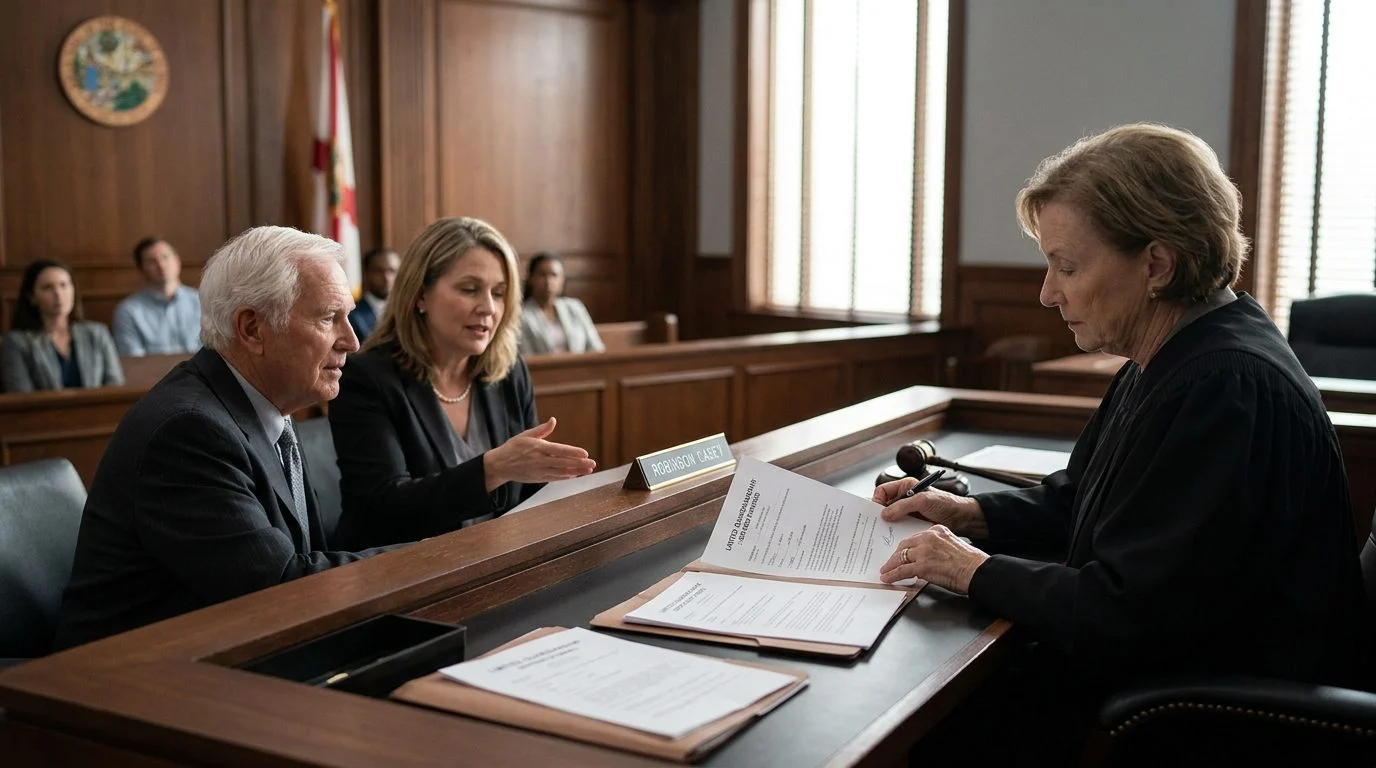
Limited Guardianship · Miami-Dade & South Florida
Limited guardianship, shaped around what your family member needs
Robinson Casey focuses on guardianship matters for families in Miami-Dade and across South Florida. Richard J. Casey III, Esq., can help you judge whether a narrower guardianship fits your situation.
Casey III, Esq. · Published November 8, 2026
A limited guardianship in Florida gives a guardian power over only the decisions the judge lists in the court order. The person keeps every right the court does not remove. Robinson Casey is a Florida law firm that limits its practice to Marchman Act petitions and guardianship matters.
What a Limited Guardianship Is and Who It Is For
A limited guardianship is a court-ordered arrangement for an adult who needs help with some decisions but not all.
Families who look at this option often include adult children, spouses, and other relatives. The concern may be memory decline, a developmental disability, or a health condition that affects money management or medical choices but leaves other areas intact.
Limited guardianship is one option among several. The petition must explain why alternatives, such as a durable power of attorney or a trust, are insufficient (Fla. Stat. § 744.334). The judge decides whether a limited guardianship fits.
Not sure what your next step is?
Talk it through with our team — the first consultation is free, confidential, and carries no obligation.

What a Limited Guardianship Covers
The court’s written order sets the scope, and the guardian may use only the powers it grants. A guardian of an incapacitated person is a fiduciary and may exercise only the rights removed from the ward and delegated to the guardian (Fla. Stat. § 744.361). The letters of guardianship must state whether the guardianship is limited and list the guardian’s powers and duties (Fla. Stat. § 744.345).
Rights a court may remove and delegate include the right to contract, manage property, apply for government benefits, determine residence, make health care decisions, and make decisions about social environment (Fla. Stat. § 744.3215). The order can be narrow. For example, a court might give a guardian authority over health care decisions only.
Some rights stay with the person unless the court removes them. A person who has been determined to be incapacitated retains certain rights, including the right to counsel, access to the courts, and privacy. Voting, driving, and travel can be removed by the order but are never handed to a guardian.
A guardian cannot commit the ward to a facility without a formal placement proceeding and specific court authority (Fla. Stat. § 744.3215).
How the Florida Limited Guardianship Process Generally Works
The process starts with a verified petition. If the court grants it, the case ends with letters of guardianship that list the powers granted. Timing depends on the court and the case.
- Consultation and fact-gathering. We review the person’s situation, existing documents, and family members, and identify which decisions are at issue.
- Verified petition. The petition must state the extent of guardianship desired, the proposed guardian’s reasons, and why alternatives are insufficient.
- Notice. The petition must be served on and read to the alleged incapacitated person. Notice also goes to that person’s attorney and to next of kin named in the petition (Fla. Stat. § 744.331).
- Hearing and order. The court must find incapacity on clear and convincing evidence. It may remove only the rights the person cannot exercise (Fla. Stat. § 744.331). The judge makes the final call.
- Letters and initial report. If granted, letters issue. The guardian must file an initial report within 60 days after the letters are signed (Fla. Stat. § 744.362).
Limited, Plenary, Emergency Temporary, and Mental Health Guardianship Compared
A limited guardian holds only the powers the order lists. A plenary guardian may exercise all delegable rights after the court finds the person lacks capacity for all tasks needed for care (Fla. Stat. § 744.102).
- Limited: targeted authority.
- Emergency temporary: a separate request for short-term authority with its own requirements. We review the facts before recommending a path.
- Mental health guardianship: a guardianship tied to a mental health condition, with its own evidence and requirements.
- Involuntary commitment for addiction: a Marchman Act process under Chapter 397, separate from guardianship. Our practice covers Marchman Act petitions.
Duties of a Florida Guardian and What Families Should Expect Afterward
A guardian must follow the court’s order and keep clear records. The guardian of property must keep clear, distinct, and accurate records of the ward’s property (Fla. Stat. § 744.361).
- Initial report: due within 60 days after letters are signed. For a guardian of the person, it is an initial guardianship plan (Fla. Stat. § 744.362).
- Objections: interested persons, including the ward, may file written objections within 30 days after an annual report is filed (Fla. Stat. § 744.367).
- Restoration: any interested person, including the ward, may file a suggestion of capacity. The court must give it priority (Fla. Stat. § 744.464).
Start early by gathering bank statements, benefit letters, insurance details, and medical records. Keep receipts for every payment made for the ward.
Why Families Work With Robinson Casey
Robinson Casey is a Florida law firm that limits its practice to Marchman Act petitions and guardianship matters. Our work covers Marchman Act petitions, emergency temporary, plenary, limited, and mental health guardianship, and involuntary commitment for addiction.
We serve families in Miami-Dade, South Florida, and across Florida. We do not promise results.
If a matter should go to another lawyer or firm, we will tell you before you decide anything. Robinson Casey is the firm responsible for this page.
Not sure what your next step is?
Talk it through with our team — the first consultation is free, confidential, and carries no obligation.
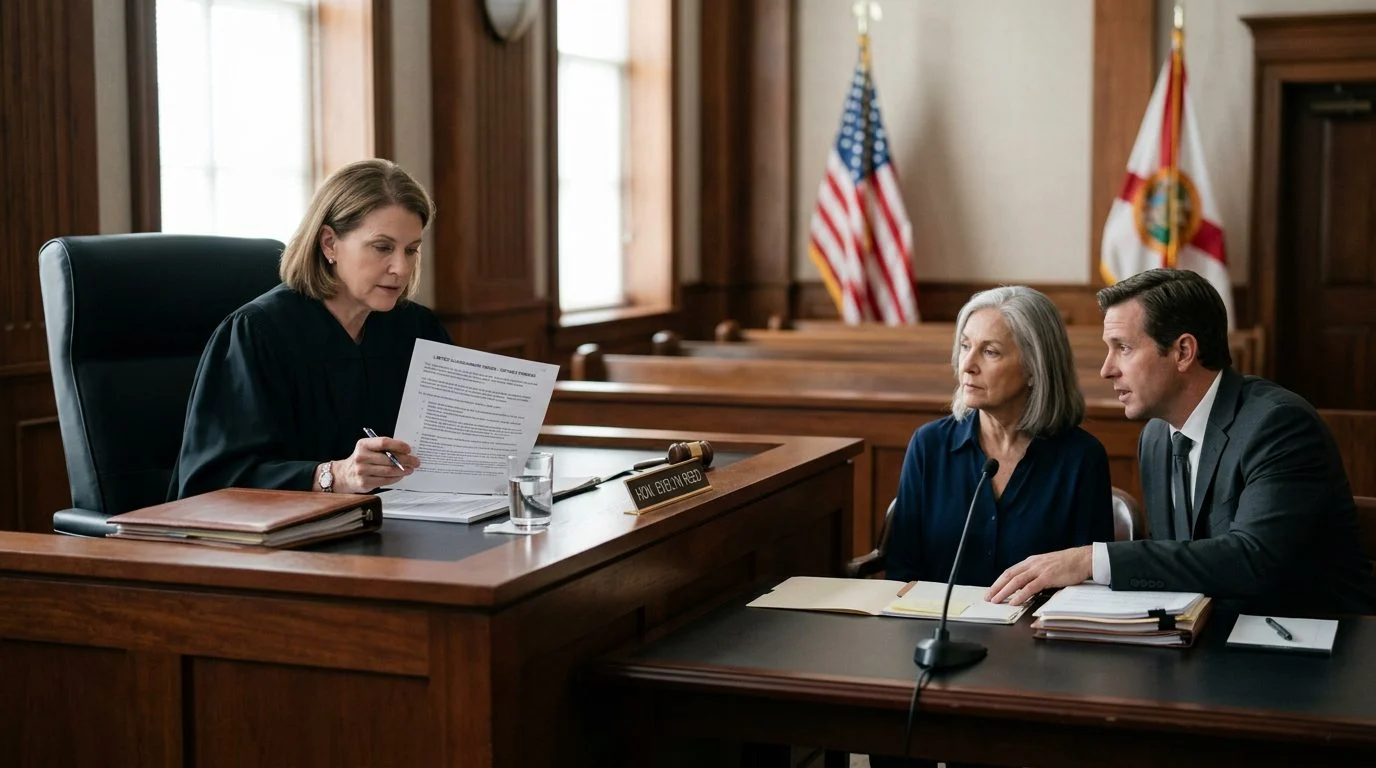
Frequently Asked Questions About Florida Limited Guardianship
Can a limited guardian make all decisions for my relative?
No. A limited guardian is appointed to exercise only the legal rights and powers specifically designated by court order (Fla. Stat. § 744.102).
Does my relative lose all rights?
No. The court removes only the rights it finds the person cannot exercise (Fla. Stat. § 744.331).
How long does the process take?
It depends on the court’s schedule and the case.
Is a limited guardianship the same as a plenary guardianship?
No. A plenary guardian may exercise all delegable legal rights and powers of the ward, while a limited guardian exercises only the rights and powers specifically designated by court order.
Will hiring an attorney decide the outcome?
No. The judge decides based on the evidence and the law, and no lawyer can promise a result.
Does the firm handle matters outside Florida?
Robinson Casey practices in Florida. If a matter needs a lawyer outside the firm, we will say so.
If your relative needs help with some decisions but can still manage others, call (561) 849-4700 or request a consultation to talk through whether a limited guardianship fits your family’s situation.
Guardianship matters we handle
Limited guardianship
A guardianship in which the court grants only the specific powers the individual needs help with.
Plenary guardianship
A broader guardianship for individuals whose needs extend across most areas of personal and financial life.
Emergency temporary guardianship
Court-ordered protection for urgent situations where a family member cannot safely wait for a full hearing.
Mental health guardianship
Guardianship matters involving a relative's mental health needs and their ability to make certain decisions.
Why families bring these questions to Robinson Casey
Guardianship is the focus
Our practice focuses on Marchman Act petitions and guardianship matters, so these cases stay at the center of our work.
Support staff who keep you informed
Our team, including assistants and office staff, helps you track each step and understand what comes next.
Free, confidential first consultation
Your first consultation is free, confidential, and carries no obligation to continue.
Patience with personal matters
Decisions about a family member's care and independence are personal, and we approach them with respect and care.
Serving South Florida and statewide
We represent families in Miami-Dade and across South Florida, and we assist clients statewide by phone and consultation.
Start the conversation early
Questions about a family member's ability to manage their own affairs are easier to work through before a crisis forces quick decisions. A confidential conversation can help you see your options clearly.