
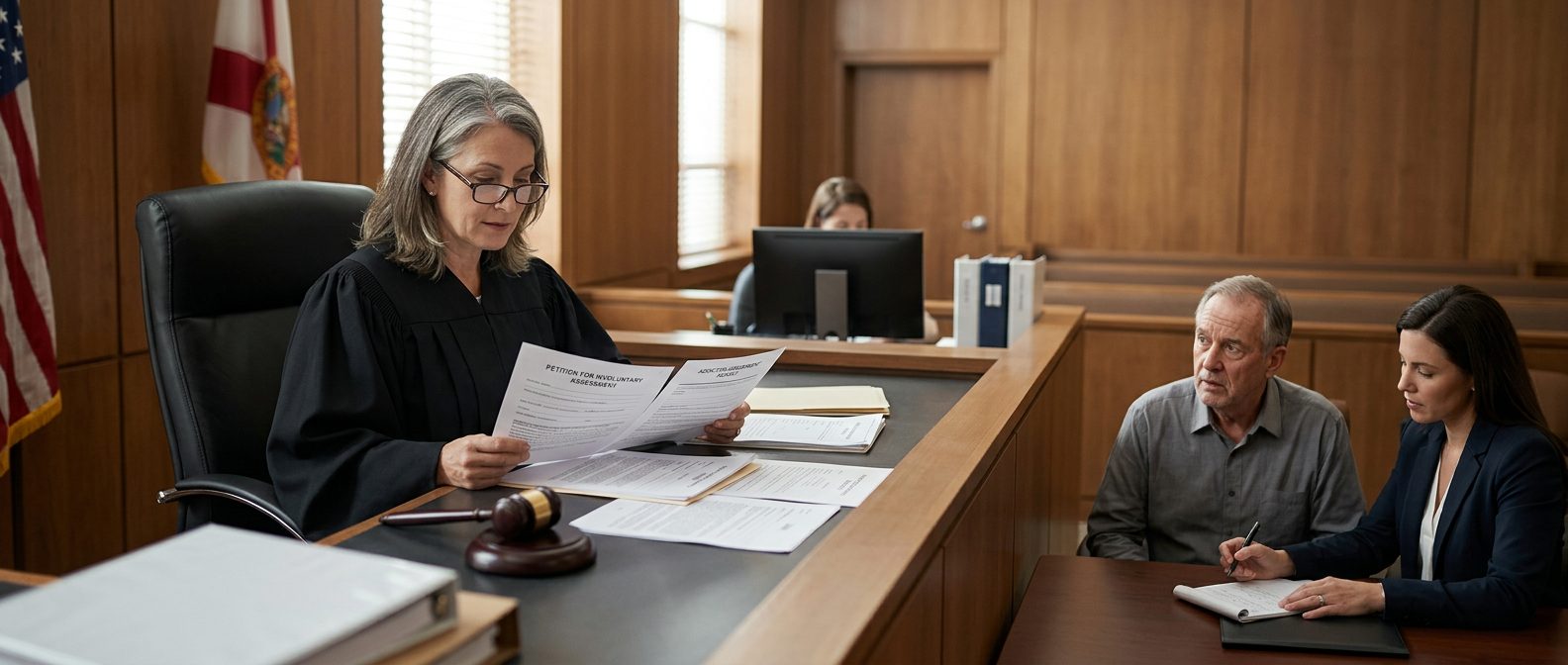
Marchman Act & Involuntary Commitment
Marchman Act Drug Addiction Florida: Involuntary Commitment
When a loved one refuses treatment, Florida law provides a path forward. Robinson & Casey guides families through emergency petitions and commitment proceedings.
By Richard J. Casey III, Esq. · Published October 02, 2026
Marchman Act for Drug Addiction in Florida: How Involuntary Commitment Works
The Marchman Act is a Florida law that allows families, caregivers, and other authorized persons to petition a court for involuntary assessment and treatment of someone struggling with drug addiction when voluntary help has failed or is not an option. Codified in Chapter 397 of the Florida Statutes, this civil statute provides a legal pathway to intervention when addiction poses a serious threat to a person’s health, safety, or welfare—or to others around them.
If you’re in the middle of a family crisis involving drug addiction, understanding how the Marchman Act works can help you determine whether it’s a tool you can use to help your loved one get treatment.
If you’re watching a loved one struggle with drug addiction and wondering whether involuntary treatment is an option, let’s talk about what the Marchman Act might mean for you. Talk it through with our team.

What Is the Marchman Act?
The Marchman Act is Florida’s civil commitment statute for substance abuse disorders, enabling courts to order involuntary assessment, stabilization, and treatment for adults and youth whose addiction has reached a critical point. Unlike voluntary admission to a treatment facility, a Marchman Act petition removes the requirement that the individual consent to evaluation or care. Instead, the court—not the family—makes the clinical and legal determination about whether treatment is necessary.
The law is named after Hal S. Marchman, and it reflects Florida’s recognition that severe addiction can impair a person’s judgment and decision-making capacity to the point where they cannot or will not seek help, even when their life is at risk. The statute operates within the civil court system, separate from criminal law, meaning a Marchman Act petition does not result in a criminal record and is not a criminal proceeding.
How Does the Marchman Act Address Drug Addiction?
The Marchman Act was designed specifically to address substance abuse disorders, including drug addiction. It acknowledges that addiction affects brain function and decision-making, and that individuals struggling with severe drug addiction may be unable to recognize the danger they face or to make rational choices about treatment.
When someone refuses voluntary treatment despite clear signs of harm—overdose risk, unsafe behavior, neglect of self-care, or danger to family members—the Marchman Act provides a legal mechanism to intervene. The court orders an assessment by a qualified professional, who evaluates whether involuntary treatment is clinically necessary. This shifts the burden of the decision from the family to trained professionals and the court, removing guilt from loved ones who worry about “forcing” treatment.
What Are the Grounds for Involuntary Commitment Under the Marchman Act?
For a Marchman Act petition to succeed, you must demonstrate that the individual meets specific legal grounds:
Substance Abuse Disorder: The person must have a diagnosable substance abuse disorder involving drugs (or alcohol). General use or recreational drug use does not meet this threshold; the addiction must be severe enough to cause significant impairment.
Threat to Health, Safety, or Welfare: The substance abuse must pose a threat to the person’s own health, safety, or welfare—or to the health, safety, or welfare of others. This threat can include:
- Risk of overdose or fatal drug use
- Unsafe or reckless behavior while under the influence
- Neglect of food, shelter, hygiene, or medical care
- Endangerment of children or other family members
- Driving under the influence
- Violence or aggression related to drug use
Unwilling or Unable to Seek Treatment: The individual must be unwilling or unable to seek treatment voluntarily. If someone is actively seeking help, a Marchman Act petition is not appropriate.
Reasonable Grounds: The petitioner must have reasonable grounds based on observable behavior, statements, or circumstances. Vague concerns or suspicion are not enough; the petition must include specific factual allegations.
What Are the Criteria for the Marchman Act in Florida?
The court applies a two-step legal test when reviewing a Marchman Act petition:
Working with an attorney may help you understand what your petition must include.
Petition Requirements: Your petition must include specific factual allegations describing the substance abuse, the threat it poses, and why voluntary treatment has failed or is not viable. Vague or conclusory statements will not support a court order.
Probable Cause Review: The court reviews your petition to determine whether probable cause exists to believe the person meets Marchman Act grounds. If the judge finds probable cause, an order is issued requiring the individual to appear for assessment.
Assessment and Determination: A qualified professional conducts a comprehensive evaluation. Based on the assessment, the court determines whether involuntary treatment is necessary. The assessment is not automatic approval of long-term commitment; it is a clinical evaluation that informs the court’s decision.
How to Help a Drug Addict Who Doesn’t Want Help
Many families try voluntary interventions first: family conversations, treatment referrals, support groups, or family counseling. These approaches work for some people, but not all. When addiction has progressed to the point where the person refuses help despite clear danger, voluntary methods often fail.
The Marchman Act exists for exactly this situation. It recognizes that addiction can render someone unable to make safe choices about their own care. By petitioning the court, you shift the responsibility from yourself to the legal system and clinical professionals. The court and treatment team—not you—decide whether involuntary treatment is necessary.
Involuntary assessment does not automatically mean long-term commitment. It means a qualified professional will evaluate your loved one and make a clinical recommendation. If treatment is warranted, the court can order it. This process removes the emotional burden of “forcing” treatment from family members and places it where it belongs: with trained professionals and the court.
Not sure what your next step is?
Talk it through with our team.
How Do I Get Someone Involuntarily Committed in Florida?
The Marchman Act petition process follows these general steps:
Step 1: Consult with an Attorney: An attorney reviews your situation and advises whether Marchman Act grounds are met. This consultation clarifies your options and identifies what factual information you’ll need for the petition.
Step 2: File the Petition: A petition is filed with the court. The petition includes detailed factual allegations of substance abuse and the threat it poses.
Step 3: Court Review: The judge reviews the petition to determine probable cause.
Step 5: Professional Evaluation: A clinician conducts a comprehensive assessment of the person’s substance abuse, medical history, mental health, and treatment needs.
Step 6: Court Hearing: A hearing is held to determine whether involuntary treatment is necessary based on the assessment and evidence presented. You may testify about your observations and concerns.
Step 7: Court Order or Dismissal: If the court finds grounds, it orders involuntary admission to treatment. If grounds are not met, no order for involuntary admission is entered.
The timeline varies depending on court schedules and case complexity. Emergency procedures can expedite this process when immediate danger is present.
Emergency Marchman Act Procedures
When a loved one is in acute danger from substance use, such as an imminent risk of overdose, emergency procedures may be available.
Emergency procedures may involve taking a person into custody for an emergency assessment, and the details depend on the circumstances of each case. Once in custody, the person may be held for evaluation as provided under the Marchman Act.
This temporary hold provides time for a comprehensive assessment. Emergency procedures are vital when addiction has created an acute safety crisis and waiting for a standard petition process is not safe.
What Happens After the Court Hearing?
If the court finds that grounds for involuntary treatment are met, the individual is ordered into a treatment program. The treatment facility then conducts its own comprehensive assessment to determine the appropriate level of care and treatment plan.
The length and type of treatment are determined by clinical need, not by the duration of the court order. A person may be ordered into treatment, but the facility determines whether inpatient, residential, or outpatient care is appropriate based on the assessment.
During treatment, the individual retains legal rights and protections. Family members may participate in treatment planning and aftercare coordination. Depending on the case, the court may schedule a follow-up review to assess progress and determine whether continued treatment is necessary.
Why Work With a Marchman Act Attorney
Marchman Act petitions must meet strict legal and factual requirements to succeed.,, supporting facts, and proper legal language. Your attorney represents you at the court hearing, presents evidence, and advocates for the court to order assessment and treatment.
Robinson & Casey can advise you on whether emergency procedures may be appropriate for your situation.

Frequently Asked Questions
Can I file a Marchman Act petition without a lawyer?
Yes, you can file without a lawyer. An attorney can help you organize the factual detail and legal language a petition requires.
What if the court denies my petition?
If the court finds insufficient grounds, the petition is dismissed. You may file again if new facts or circumstances support a new petition, but you’ll need to present additional evidence or changed circumstances.
Can someone be held indefinitely under the Marchman Act?
No. Treatment duration is determined by clinical need and the individual’s progress. The court does not order indefinite commitment; it orders assessment and treatment based on professional recommendation.
If you’re watching a loved one struggle with drug addiction and wondering whether involuntary treatment through the Marchman Act is an option for your family, you’re not alone. A consultation with a Marchman Act attorney can clarify whether the grounds are met in your situation, what the process looks like, and what your next steps might be. Contact Robinson & Casey today to discuss your case and learn how we can help guide your family through this challenging time.
Time Matters in Addiction Crises
Marchman Act petitions require careful preparation and detailed factual support. Each petition should be organized around clear, detailed factual support.
What Robinson & Casey Handles
Marchman Act Petitions
We prepare and file petitions for involuntary assessment and treatment of substance use disorders under Florida's Marchman Act, including emergency ex parte relief when immediate intervention is necessary.
Extended Commitment Proceedings
We represent families seeking longer-term involuntary commitment and guardianship arrangements when addiction requires ongoing court supervision and protective intervention.
Coordination with Guardianship
Many addiction cases benefit from guardianship protections. We handle the overlap between Marchman Act commitment and guardianship to ensure comprehensive legal protection.
Why Work with Robinson & Casey
Focused Practice
We focus on Marchman Act petitions and guardianship matters.
Precise Petition Drafting
Courts reject petitions that lack factual detail and legal precision. We draft petitions with the specificity judges require, grounding them in evidence and Florida statute.
.
Direct Access
You speak directly with the attorney handling your case. No referrals, no handoffs—we manage your matter from start to finish.
Serving Families Throughout Florida
We serve families throughout Florida facing addiction commitment decisions.
Family-Centered Approach
We understand the emotional weight of pursuing involuntary commitment. We listen, explain your options clearly, and support you through the process.
Common Questions About Marchman Act Petitions
Can I file a Marchman Act petition without a lawyer?
You can file without legal counsel. An attorney can help you organize the factual detail and legal language a petition requires.
What happens after I file a Marchman Act petition?
After filing, a hearing may be scheduled. You may present evidence of your loved one’s substance use and danger to themselves or others. If the judge finds grounds, the judge may order assessment and treatment, or grant temporary custody for involuntary commitment.
Does my loved one have the right to an attorney at the hearing?
Yes. Your loved one can be represented by counsel and may contest the petition. The court will consider both sides before deciding whether to grant involuntary commitment.
How long does the Marchman Act process take?
The timeline depends on court availability, the complexity of your case, and whether your loved one contests the petition.