
Marchman Act Petitions | Florida
Marchman Act Hearings Before a General Magistrate in Florida
Robinson Casey focuses exclusively on Marchman Act and guardianship matters. Richard J. Casey III, Esq. offers a free, confidential first consultation with no obligation to continue.
By Richard J. Casey III, Esq. · Published October 15, 2026
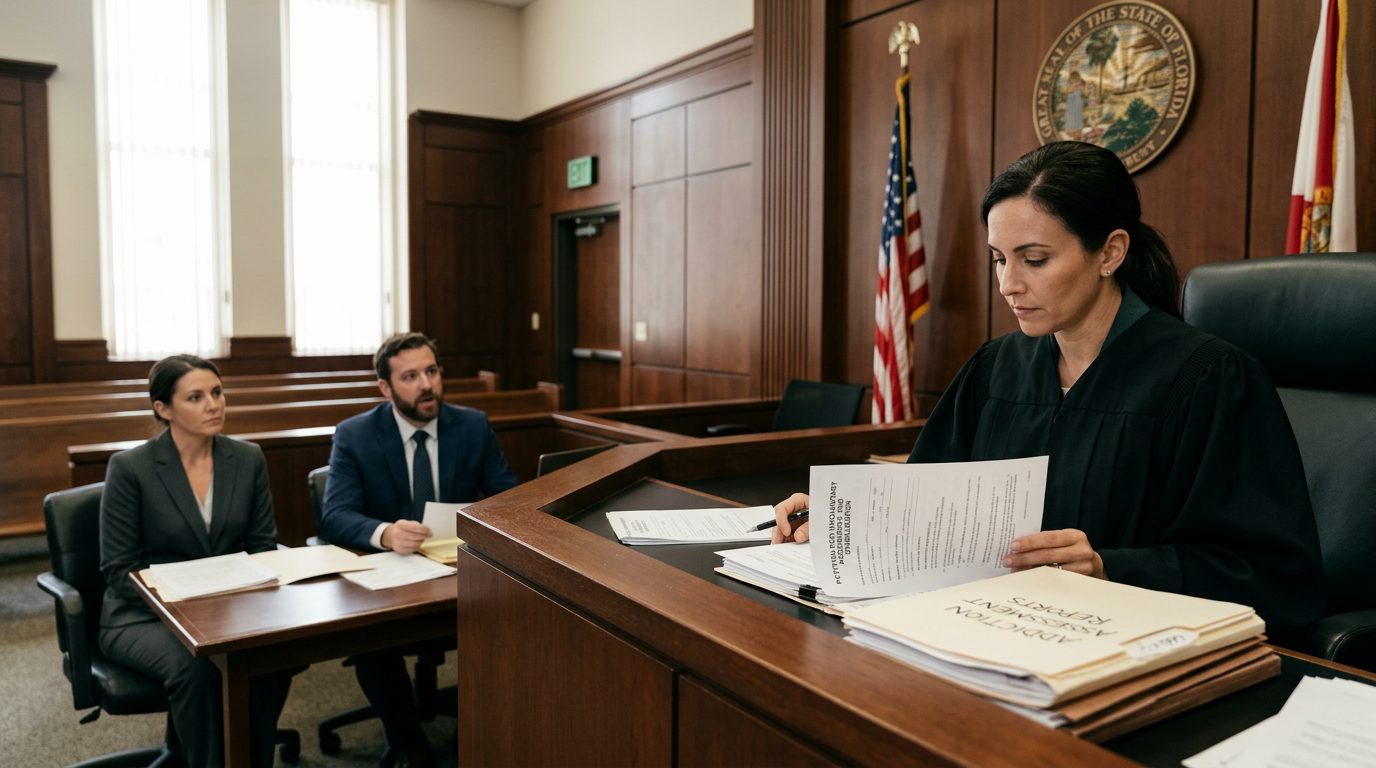
A Marchman Act hearing before a general magistrate is a court proceeding. Understanding what happens at the hearing—and what your rights are—helps you prepare and make informed decisions about representation.
What Is a Marchman Act Hearing Before a General Magistrate?
A Marchman Act hearing is a judicial proceeding where a judge or general magistrate reviews a petition for involuntary assessment or treatment of substance abuse. The hearing determines whether legal grounds exist to order the respondent (the person whose treatment is sought) into a treatment facility against their will.
The respondent, petitioner, magistrate, and often attorneys attend the hearing. The magistrate’s role is to examine evidence and testimony. In many Marchman Act matters, a general magistrate may preside and issue a report or recommendation, which the circuit court reviews under s. 397.681, F.S. Under Florida Probate Rule 5.095, general magistrates are members of The Florida Bar. They conduct hearings under the direction of the court.
Not sure what your next step is?
Talk it through with our team — the first consultation is free, confidential, and carries no obligation.
Who Needs Legal Representation at a Marchman Act Hearing?
Respondents facing involuntary commitment may wish to speak with an attorney. An attorney contests the petition, presents evidence, cross-examines witnesses, and protects constitutional rights. Respondents may wish to understand the procedures that apply to witness testimony and to the petitioner’s evidence.
Petitioners—family members or others seeking treatment for a loved one—benefit from counsel. Counsel helps present a clear, organized case with credible evidence and witness testimony.
Anyone without legal background navigating court procedure, evidence rules, and the burden of proof should consider representation. A petition may lead to involuntary commitment only if the court grants it, and the court decides what assessment or treatment to order, if any, based on the statute, the evidence and its discretion.
The Marchman Act Hearing Process: Step-by-Step
Understanding the sequence of events helps you know what to expect and how to prepare.
Pre-hearing phase: A petition is filed with the court. The respondent is served with notice of the hearing. Both sides exchange evidence and may file motions.
Opening statements: The petitioner’s attorney outlines the case and the grounds for commitment.
Petitioner’s case: The petitioner presents witnesses—family members, medical providers, law enforcement—who testify about the respondent’s substance use, behavior, and safety concerns. Documents such as medical records, police reports, and treatment history are introduced.
Respondent’s case: The respondent and any defense witnesses testify. The respondent may present evidence of recovery efforts, stability, or reasons why commitment is not warranted.
Cross-examination: Each side questions the other’s witnesses. Weaknesses in testimony are exposed and credibility is tested.
Closing arguments: Both attorneys summarize their positions. They explain why the evidence does or does not meet the legal standard.
Magistrate’s ruling: The magistrate determines whether grounds for involuntary assessment or treatment exist. The magistrate may rule immediately or issue a written order later. Under Florida Probate Rule 5.095(g), the magistrate’s report contains a description of the matters considered and the magistrate’s conclusion and any recommendations.
Timeline: How Long Does a Marchman Act Hearing Take?
The Marchman Act process is expedited by design. This speed reflects the urgent nature of substance abuse intervention. (Florida Marchman Act hearing procedure)
The hearing itself may last 30 minutes to several hours. This depends on the number of witnesses, complexity of the case, and amount of evidence. A straightforward case with few witnesses may conclude quickly. A contested matter with multiple witnesses and documents takes longer.
The magistrate may announce a decision immediately after closing arguments. Or the magistrate may take time to issue a written order. The governing rules for review of an order, including any time limits, are set out in the applicable statute and appellate rules and should be confirmed for each case.
What Evidence Is Presented at a Marchman Act Hearing?
The petitioner must present evidence that meets the legal standard: clear and convincing proof that the respondent meets the grounds for involuntary commitment.
Medical records and assessments from healthcare providers document substance use, diagnoses, and clinical observations.
Family testimony describes the respondent’s behavior, substance use patterns, failed recovery attempts, and specific incidents that prompted the petition.
Law enforcement reports detail arrests, observations of intoxication, or safety incidents involving the respondent.
Prior treatment history shows whether the respondent has entered treatment before and what the outcomes were.
Testimony from physicians or addiction-treatment clinicians may explain the respondent’s condition and prognosis.
The respondent’s own testimony allows them to contest the allegations, explain their circumstances, or demonstrate recovery efforts or stability.
Documentation of specific incidents—dates, places, behaviors, and consequences—provides concrete evidence rather than general claims.
Grounds for Involuntary Commitment Under the Marchman Act
- Impairment from substance abuse with loss of self-control, together with the other findings required by s. 397.675, F.S.; other requirements may apply, and the court decides.
- Inability to manage resources or resist using substances without assistance
- Likelihood of serious harm to self or others without intervention
The burden is on the petitioner to prove these grounds. The respondent’s attorney can challenge whether the evidence truly meets this standard.
Not sure what your next step is?
Talk it through with our team — the first consultation is free, confidential, and carries no obligation.

Your Rights as a Respondent in a Marchman Act Hearing
You have constitutional protections in a Marchman Act hearing:
- Right to counsel: You may be represented by an attorney
- Right to hear and cross-examine witnesses: You may question the petitioner’s witnesses to test their credibility and accuracy
- Right to present evidence: You may call your own witnesses and introduce documents on your behalf
- Right to remain silent: You are not required to testify, though doing so may be strategically important
- Right to appeal: If the magistrate rules against you, you may appeal the decision within the specified timeframe
- Right to due process: You are entitled to a fair hearing, notice of the charges, and an opportunity to be heard
Common Questions About Marchman Act Hearings
Q: Can I be forced to attend the hearing?
Q: What if I disagree with the magistrate’s decision?
A party may seek appellate review of the order, and the applicable timing and the court to which an appeal may be taken depend on the governing authority and should be confirmed for the case.
Q: Do I need a lawyer?
Q: What happens if the petition is denied?
Whether any custody or release applies depends on the court’s order.
Q: Can the hearing be private?
Marchman Act court records are confidential under s. 397.6760, F.S., and whether a hearing is open to the public depends on the court.
Q: What if I’m found to need treatment?
The court may order assessment or treatment, and any order would address the facility, duration, and conditions of commitment as the statute and the court’s discretion provide.
Q: How is a Marchman Act hearing different from a Baker Act hold?
The Marchman Act addresses substance abuse and requires a petition and judicial hearing. Both involve involuntary intervention, but the process and timeline differ significantly. Learn more about involuntary substance abuse treatment in Florida.
How Robinson & Casey Prepares You for a Marchman Act Hearing
Preparation is the foundation of effective representation.
Case review: We analyze the petition, identify the grounds alleged, and assess the strength of the petitioner’s case.
Evidence gathering: We collect medical records, prior treatment history, witness statements, and any documents that support your position.
Witness preparation: We coach you and other witnesses on what to expect, how to testify clearly, and how to handle cross-examination.
Legal strategy: We develop a defense tailored to the specific facts—whether that means challenging the evidence, presenting mitigating factors, or negotiating terms.
Court representation: We advocate for you during the hearing, cross-examine the petitioner’s witnesses, and present your case to the magistrate.
Post-hearing guidance: We explain the order, discuss next steps, and advise on appeal options if necessary.
Why Representation Matters in a Marchman Act Hearing
Procedural knowledge: Attorneys understand Florida court rules, evidence rules, and the specific requirements that apply to these petitions.
Evidence strategy: Lawyers know which evidence is admissible, how to present it effectively, and how to challenge evidence that shouldn’t be admitted.
Cross-examination skill: Skilled questioning of the petitioner’s witnesses can expose inconsistencies, bias, or lack of foundation for their claims.
Emotional support: Having an advocate reduces stress during a difficult proceeding. You can focus on the hearing rather than managing procedure.
Outcome impact: The court decides each petition based on the evidence and its discretion, and no particular outcome can be promised.
What Happens After the Hearing?
If the petition is granted: You enter assessment or treatment as ordered by the magistrate. The facility placement is determined by the order and your medical needs.
If the petition is denied: The court may order your release, depending on its discretion and the circumstances of the case.
Appeal: The governing authority sets the time limit for appealing a magistrate’s decision, so confirm the applicable deadline under that authority. An appeal preserves your right to challenge the order in a higher court.
Ongoing representation: Your attorney can assist with appeals, modification of orders, discharge planning, or other post-hearing matters.
Not sure what your next step is?
Talk it through with our team — the first consultation is free, confidential, and carries no obligation.
Ready to Discuss Your Marchman Act Hearing?
If you or a family member is facing a Marchman Act hearing, understanding your rights and options is the first step. Whether you’re the respondent seeking to contest the petition or a family member pursuing treatment for a loved one, Robinson & Casey can guide you through the process and represent your interests before the magistrate.
Learn more about Marchman Act petitions in Florida or contact Robinson & Casey to schedule a consultation. Call us at (561) 849-4149. We’ll review your situation, explain what to expect, and discuss how we can help you prepare for the hearing ahead.
Robinson & Casey focuses on Marchman Act petitions and guardianship matters.
Why Work With Robinson Casey
Focused Practice
Robinson Casey limits its practice to Marchman Act petitions and guardianship matters, so every case we discuss falls within those areas.
Free First Consultation
Your first consultation is free, confidential, and carries no obligation to continue with the firm.
Support Staff
Our team, including assistants and office staff, helps families understand the process and stay organized from start to finish.
Clear Explanations
We explain the petition, the hearing, and the options available under Florida law so you can make informed decisions.
Important: Every Case Is Different
A Marchman Act hearing timeline, its outcome, and any resulting order depend on the court's schedule, its discretion, and the evidence in each case. No result can be predicted or promised.
Common Questions About the Hearing
Who Attends
Hearings may involve the petitioner, the person subject to the petition, counsel, and others the court allows. Participation is determined by the court.
What the Magistrate Considers
The general magistrate reviews the evidence presented and the requirements set out in the governing Florida statute. The court makes the final decision.
Possible Outcomes
The court may enter an order, dismiss the petition, or take other action it considers appropriate. Any custody or release question depends on the court's order.
Preparing for Your Consultation
Bring any records, notices, and dates you have. These details help us understand your situation during your free first consultation.
Talk With Robinson Casey About Your Marchman Act Matter
Related practice areas
- Marchman Act Attorney | Florida Involuntary Commitment for Addiction
- Marchman Act Costs & Legal Fees in Florida
- Marchman Act Grounds for Filing | When to File in Florida
- Marchman Act Cost in Florida | Legal Fees and Court Costs Explained
- Emergency Marchman Act Petition in Florida | Immediate Action
- Marchman Act vs. Baker Act in Florida: Key Differences | Robinson & Casey
- Marchman Act Grounds: When You Can File in Florida | Robinson & Casey