
Marchman Act & Guardianship | Miami-Dade and South Florida
Worried About an Adult Child Using Drugs at Home? You Don't Have to Work Through It Alone.
Florida law offers families several legal paths when a loved one's substance use puts everyone at risk. Here is a clear overview of the steps to consider.
Casey III, Esq. · Published November 8, 2026
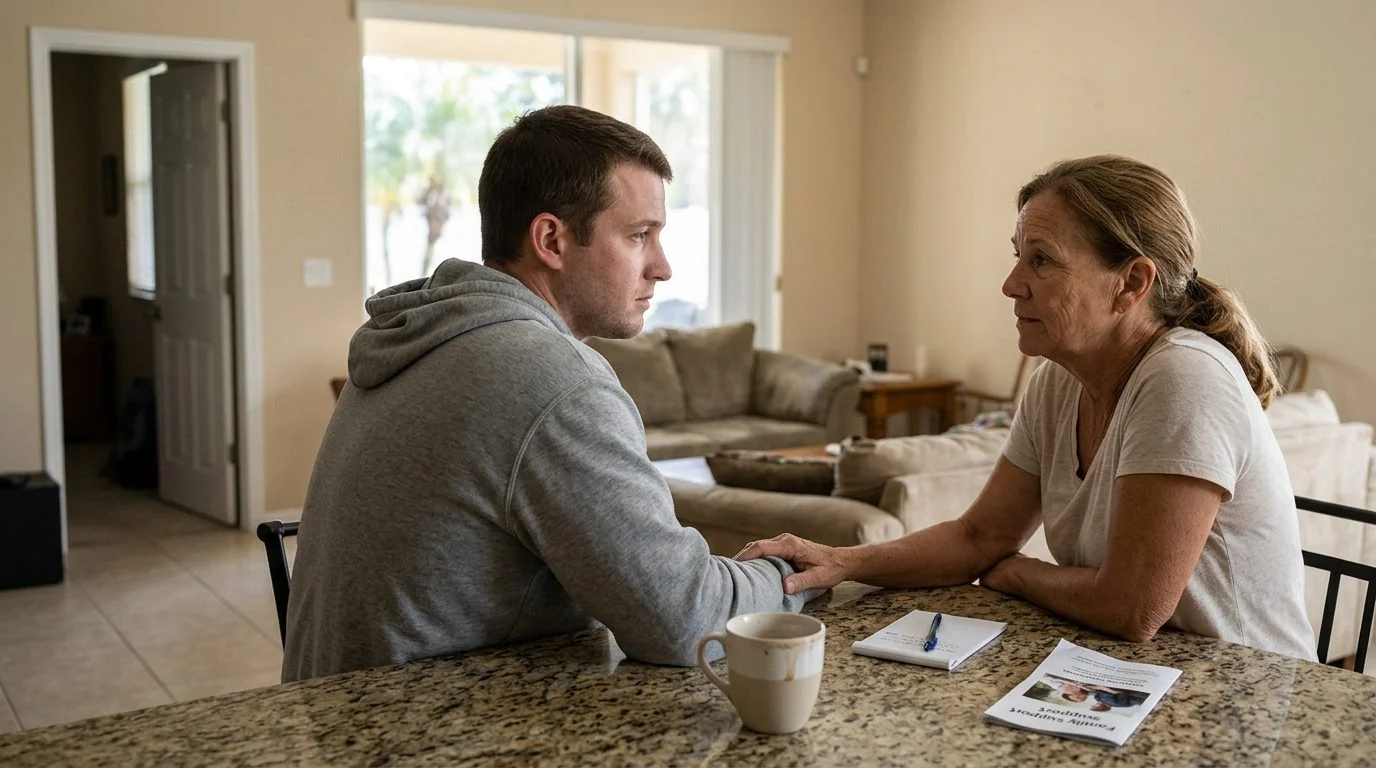
You’ve paid for treatment, tried interventions, and held firm on boundaries. Now your adult child is still using drugs at home, and you’re searching for how to stop it. Florida’s Marchman Act gives a family member a way to ask a court for an assessment and possible treatment order.
Where You Are Right Now
Looking for a legal way forward after a crisis is a reasonable response. It doesn’t mean you have failed. Maybe the call came after an overdose, a relapse, a hospital stay, an arrest, or a day when your child simply disappeared. Years of payments and hard conversations can leave you worn down and out of options.
Parents in this spot often fear the same things. They fear a fatal overdose, a jail cell, a child sleeping on the street, and the slow loss of hope that anything will work. Those fears are real. No court or lawyer can promise how your situation will turn out. What you can do is get clear answers to three questions: what you can do at home, what you can’t do alone, and what Florida law offers.
If your adult child keeps using drugs at home and you're ready to ask a court for help, you don't have to figure out the process alone; reach out to our team. Talk it through with our team — the first consultation is free, confidential, and carries no obligation.

What You Can and Cannot Do at Home Right Now
You can set household rules and decide which substances may enter your home. You can’t make your adult child stop using by rule alone, and forcing the issue yourself can put everyone at risk.
Some practical steps are within reach. You can lock up prescription medications, cash, car keys, and valuables. You can keep alcohol and drugs out of shared rooms. You can say clearly what you will and won’t provide, such as rides, money, or a place to sleep.
Ending an adult’s stay in a home is a different question. Whether you can do it depends on the facts, including who owns or leases the home and how your child came to live there. Physically blocking or removing an adult can cause injury. If your child is in danger, call 911 instead of acting alone.
What a Marchman Act Petition Is
A Marchman Act petition is a court filing. It asks a judge to order an assessment for a person believed to be impaired by substance abuse. It is not a police report, and it starts a legal process with notice and a hearing.
The Florida Department of Children and Families describes the Marchman Act as allowing involuntary assessment, stabilization, and treatment for adults and youth severely impaired by substance abuse. Under Fla. Stat. § 397.681, the courts have jurisdiction over involuntary treatment petitions for substance abuse impaired persons, and the clerk of the court may not charge a fee for filing such a petition.
For an adult, a petition may be filed by a spouse or legal guardian, any relative, a service provider, or an adult with direct knowledge of the impairment and prior treatment (Fla. Stat. § 397.68112). A parent is a relative, so a parent can file. The petition must name the person, name you, state your relationship, and give the facts behind the need for services (Fla. Stat. § 397.68141).
The petition goes to the clerk of the court in the county where the person is located. The clerk may not charge a fee for filing (Fla. Stat. § 397.681). A Florida appeals court has held that filing in the wrong county is a venue defect, not a loss of the court’s jurisdiction (J.P. v. J.N.).
What the Court Looks For at a Hearing
You, as petitioner, must prove your case by clear and convincing evidence. The judge reviews the evidence and makes findings. No one can predict the result in advance.
The core ideas are plain. The person must be substance abuse impaired and have lost the power of self-control over substance use. The petition must allege that the person has lost self-control and either has inflicted or is likely to inflict physical harm on himself, herself, or others unless the court orders services, or refuses care because substance abuse has so impaired judgment that he or she cannot appreciate the need for care or make a rational decision about it. The petitioner must show a history of not complying with treatment (Fla. Stat. § 397.6957).
The court must schedule a hearing within 10 court working days unless a continuance is granted (Fla. Stat. § 397.68151). Your child has the right to a lawyer at every stage. Expect your child to have counsel. If the court orders treatment, the order may last up to 90 days, though a renewal may be requested under s. 397.6975 before the 90 days end if the conditions are expected to continue (Fla. Stat. § 397.697).
When an Emergency Calls for 911, Not a Filing
If your child is overdosing, threatening suicide or violence, or in immediate danger, call 911 first. A court route moves on its own schedule.
In an emergency, the court may enter an order for assessment and stabilization based on the petition, without appointing an attorney first (Fla. Stat. § 397.6818). A service provider may hold the person for no more than 72 hours of observation, unless a listed exception applies. A person who meets the criteria for involuntary admission may be admitted to a hospital, detox facility, or addictions receiving facility for emergency assessment and stabilization, upon receipt of a certificate from a listed professional, such as a physician or clinical psychologist, that is specific to substance abuse impairment, plus a completed application (Fla. Stat. § 397.679).
Keep a written record now. Note dates of use, incidents, police contacts, hospital visits, and past assessments or treatment. A petition must state the facts, so these notes matter.
When Guardianship Is a Separate Question
Guardianship is a different court process. It falls under Chapter 744 of the Florida Statutes.
An emergency temporary guardianship requires a petition for determination of incapacity to be filed first. The court must find imminent danger that the person’s physical or mental health or safety will be seriously impaired, or that the person’s property is in danger of being wasted, misappropriated, or lost, unless immediate action is taken (Fla. Stat. § 744.3031). That authority ends 90 days after appointment or when a guardian is appointed, whichever comes first, but it may be extended for an additional 90 days if the emergency conditions still exist (Fla. Stat. § 744.3031).
Guardianship is not the same as a Marchman Act petition. The right route turns on your child’s condition and the details of the case.
Not sure what your next step is?
Talk it through with our team — the first consultation is free, confidential, and carries no obligation.
Helping Without Carrying the Crisis Alone
Helping means protecting safety and pressing for treatment. Enabling means covering costs and consequences with no plan behind it. Many parents move between the two without noticing.
Set limits you can keep. Write down what you will provide and what you won’t. Decide in advance what you will do on the hardest nights, and who you can call.
Caregiver stress is real. Your sleep, your health, and your other relationships belong in the plan. Keep your own medical appointments on the calendar. Questions about detox refusal and medication refusal deserve their own answers, and we can walk through them during a consultation.

Take the Next Step Toward Getting Your Child Into Treatment
If your adult child keeps using drugs at home and refuses help, a Marchman Act petition is a court route you can ask about. Robinson Casey limits its practice to Marchman Act petitions and guardianship matters. The firm serves families across South Florida and statewide. The responsible lawyer for this page is Richard J. Casey III, Esq.
Frequently asked questions
Can a parent file a Marchman Act petition for an adult child?
A parent is a relative, and Florida law lets a relative file for an adult.
Is there a fee to file the petition?
The clerk of the court may not charge a fee for filing it.
Does my child get a lawyer?
Yes. Your child has a right to counsel at every stage, which your child may waive if present and the court finds the waiver is made knowingly, intelligently, and voluntarily; a court-appointed lawyer is available if your child wants one and can’t afford private counsel, and the court may also appoint one if it believes your child needs counsel, without regard to your child’s wishes.
What should I do in an emergency?
Call 911 first. A court petition is a separate, slower step.
If your adult child is using drugs at home and you’re ready to ask a court for help, call (561) 849-4700 or request a consultation. The first consultation is free, confidential, and carries no obligation to continue.
If Someone Is in Immediate Danger
If an adult child is at risk of harm to themselves or others, call 911 first. Legal options take time to pursue, and emergencies need an immediate response.
Why Families Start with Robinson Casey
Free First Consultation
Your first consultation is free, confidential, and carries no obligation to continue.
Focused Practice
Robinson Casey focuses on Marchman Act petitions and guardianship matters for families across South Florida and statewide.
Support Along the Way
Our team, including our attorneys and support staff, keeps families informed about each step of the process.
Easy to Reach
Call (561) 849-4700 to talk with someone about your family's situation.
Legal Options Families Ask About
Marchman Act Petitions
A Marchman Act petition asks the court to address substance use when a family member's condition and safety are of serious concern. Our Marchman Act attorneys guide families through the filing process.
Involuntary Commitment for Addiction
Florida law provides a court process for involuntary commitment for addiction. We explain how this process works and what to expect.
Guardianship Matters
When an adult cannot manage personal or financial decisions, guardianship may be considered.
Emergency Temporary Guardianship
When urgent protection is needed, an emergency temporary guardianship may be sought from the court. Our guardianship attorney reviews the facts with you promptly.