
Marchman Act Guide | Miami-Dade & South Florida
What Is a Marchman Hearing? A Plain-Language Florida Guide
Understand how Florida's Marchman Act process works for involuntary treatment of substance use, and where your family can get help. Robinson Casey focuses on Marchman Act petitions and guardianship matters.
By Richard J. Casey III, Esq. · Published October 19, 2026
If you’re asking what is a Marchman hearing, you’re likely facing a situation you didn’t choose. This guide explains each step in plain words, so you know what to expect.
What Is a Marchman Act Hearing?
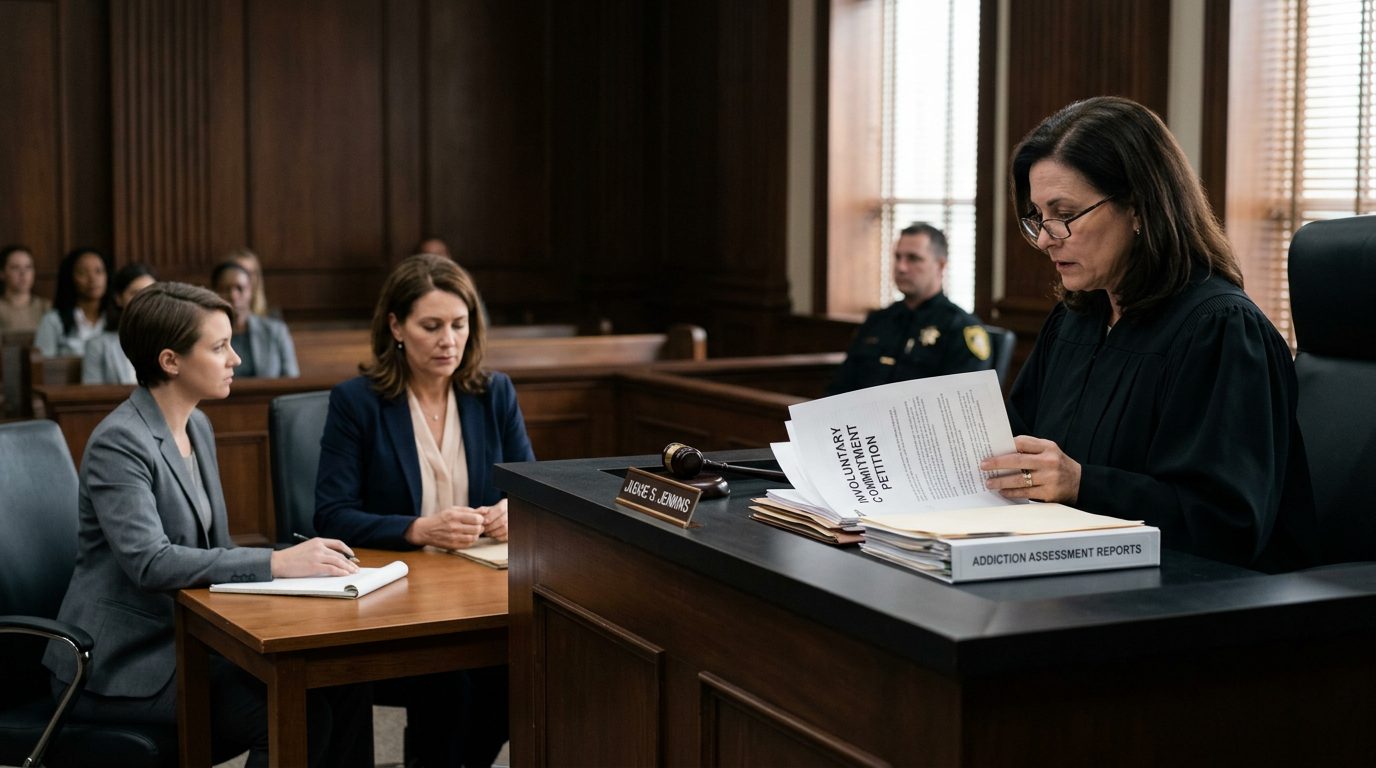
A Marchman Act hearing is the court date that follows a petition under Chapter 397 of the Florida Statutes. The Marchman Act is Florida’s law for court-ordered help with substance abuse impairment. The statute says courts have jurisdiction over involuntary treatment petitions for substance abuse impaired persons (Fla. Stat. § 397.681). The person named in the petition is the respondent. The person who files it is the petitioner.
The statute calls substance abuse impairment a disease that affects the whole family and the whole society (Fla. Stat. § 397.305). It also says services should be the least restrictive that still promote long-term recovery. That purpose is the backdrop for the whole process. For a broader look at the Act, read our Marchman Act attorney guide.

Not sure what your next step is?
Talk it through with our team — the first consultation is free, confidential, and carries no obligation.
How a Marchman Act Petition Leads to a Hearing
A petition starts the process. It must be filed with the clerk of the court in the county where the person is located. The clerk may not charge a filing fee for it (Fla. Stat. § 397.681).
For an adult, a spouse or legal guardian, any relative, a service provider, or an adult with direct personal knowledge of the person’s substance abuse impairment and prior course of assessment and treatment can file (Fla. Stat. § 397.68112). The petition must name both people and explain how they are related.
A report from a qualified professional who examined the person within 30 days can be attached. If the person was never assessed, or refused an evaluation, the petition must say so. Once filed, the court must schedule a hearing within 10 court working days unless a continuance is granted. The respondent, the petitioner, and the respondent’s attorney, if known, receive a copy and notice, along with the respondent’s spouse or guardian if applicable, a minor respondent’s parent or guardian, and any other persons the court directs (Fla. Stat. § 397.68151).
In an emergency, the court can act on the petition alone. It may enter an ex parte order, meaning one made without the respondent present, for assessment and stabilization. No attorney has to be appointed first. A provider may hold the person for no more than 72 hours of observation, with listed exceptions (Fla. Stat. § 397.6818).
What Happens During the Hearing?
At the hearing, the judge reviews the evidence. The respondent generally must attend. The court can excuse attendance only if the respondent validly waives it, or if presence is inconsistent with their best interests or likely to be injurious to self or others (Fla. Stat. § 397.6957). Fla. Stat. § 397.6957 reads: “(1)(a) The respondent must be present at a hearing on a petition for involuntary treatment services unless the court finds that he or she knowingly, intelligently, and voluntarily waives his or her right to be present or, upon receiving proof of service and evaluating the circumstances of the case, that his or her presence is inconsistent with his or her best interests or is likely to be injurious to self or others.”
The respondent has a right to counsel at every stage. A respondent who cannot afford a private lawyer has the right to court-appointed counsel (Fla. Stat. § 397.681). Florida’s Second District has held that due process protects this right in Marchman Act cases (Hillsborough County v. Albrechta).
The court hears all relevant evidence. That can include testimony from family members who know the person’s history, and the assessment results. The judge may also order drug tests. Testimony is given under oath, and the hearing is recorded. The respondent may refuse to testify.
A judge who calls and questions the only witness when the petitioner is absent has stepped into the petitioner’s role (J.C. v. State). The Fourth District took a different view in J.J.J. v. D.G. and certified conflict with Fifth District cases.
What Are the Possible Orders After a Marchman Act Hearing?
If the court finds the conditions proved by clear and convincing evidence, it may order involuntary treatment for up to 90 days (Fla. Stat. § 397.697). The statute asks whether there is a good faith reason to believe the person is impaired and has lost power of self-control. It also asks whether the person cannot appreciate their need for care, or is likely to neglect themselves or cause harm. Refusing services alone is not enough; under the statute, the refusal must be based on judgment so impaired by substance abuse that the person is incapable of appreciating the need for care and of making a rational decision about that need.
The order may send the person to a publicly funded provider. A privately funded provider can be used if the person has the ability to pay, or if someone on the person’s behalf voluntarily demonstrates a willingness and an ability to pay for the treatment (Fla. Stat. § 397.697). The court keeps jurisdiction after the order. It can monitor compliance and change the treatment approach.
If the conditions are expected to exist after 90 days of treatment services, a renewal of the involuntary services order may be requested pursuant to s. 397.6975 before the end of the 90-day period. The court may then order up to 90 more days (Fla. Stat. § 397.6975). When the conditions no longer exist, the person must be released.
Have questions about what happened?
Ask our team directly. The first conversation is free, confidential, and there is no obligation to continue.
How Is Cost Handled Under the Marchman Act?
Before admission, the full charge for services and the fee for the individual must be disclosed. The individual must contribute toward the cost based on ability to pay, unless other law provides otherwise (Fla. Stat. § 397.431).
Providers that contract for state funds must use a fee system based on ability to pay. If space and state resources are available, they may not deny services only because a person cannot pay (Fla. Stat. § 397.431). The Florida Department of Children and Families publishes general information about the Marchman Act (Florida DCF Marchman Act page).
Common Questions About Marchman Act Hearings
How long does a Marchman Act order last in Florida?
An involuntary treatment order can run up to 90 days. A renewal petition can extend it for up to another 90 days (Fla. Stat. § 397.6975).
Does the person named in the petition have to attend?
Generally, yes. The respondent must be present unless the court finds a knowing, intelligent, and voluntary waiver, or finds that, after proof of service and evaluation of the circumstances, presence is inconsistent with the respondent’s best interests or is likely to be injurious to self or others.
Does the person have a right to a lawyer?
Yes. The respondent has the right to counsel at every stage, which the respondent may waive if present and the court finds the waiver is knowing, intelligent, and voluntary; a respondent who desires counsel and cannot afford private counsel has the right to court-appointed counsel.
How soon is the hearing held?
The court must schedule it within 10 court working days unless a continuance is granted (Fla. Stat. § 397.68151).
Where is the petition filed?
It is filed with the clerk in the county where the person is located (Fla. Stat. § 397.681).

Talk With Robinson Casey About Your Situation
If a petition has named someone you love, you may be carrying fear, questions, and a court date you didn’t choose. That is a hard place to be, and you don’t have to work through the process alone.
Robinson Casey limits its practice to Marchman Act petitions and guardianship matters. Richard J. Casey III, Esq. is the responsible lawyer. Your first consultation is free, confidential, and without obligation. To talk through your situation, call (561) 849-4149 or request a consultation.
Want to know where you stand?
Tell us what happened and our team will walk you through the options available to you, at no cost.
What Families Often Want to Understand
What the process is
A Marchman hearing is a court proceeding under Florida's Marchman Act, which allows a court to consider treatment for a person whose substance use is causing serious harm.
What a petition involves
A petition sets out the facts supporting the request, and the court reviews the information before any hearing takes place.
Protecting your loved one's rights
The process involves legal notice, a hearing, and the opportunity to be heard. Our team explains each step in clear terms.
Plain answers to your questions
Families often arrive with urgent concerns. We take time to walk through the process and what it may mean for your situation.
Don't Navigate an Emergency Alone
A Marchman Act matter can move quickly and involves court deadlines and formal requirements. Early guidance can help you understand your options before the next step.
Matters Robinson Casey Handles
Marchman Act Attorney
Robinson Casey focuses on Marchman Act petitions for families across Miami-Dade, South Florida, and statewide.
Involuntary Commitment for Addiction
We help families understand court-ordered treatment for substance use and the petition process that leads to a hearing.
Guardianship Attorney
Our practice covers guardianship matters, including emergency temporary, plenary, limited, and mental health guardianship.
Emergency Temporary Guardianship
When a loved one needs immediate protection, we focus on the urgent steps needed to request a court-ordered guardian.