
Florida Guardianship Guide | Miami-Dade & South Florida
POA or Guardianship: Which Protects Your Family Better?
A power of attorney and a guardianship serve different purposes. Robinson Casey focuses on Florida guardianship and Marchman Act matters, and we can help you understand which path fits your family's situation.
Casey III, Esq. · Published November 5, 2026
The Short Answer: Each Tool Answers a Different Question
Neither option is better in every case. A power of attorney (POA) works when your loved one can still choose who acts for them. A guardianship is a court process for when a person can no longer make certain decisions. Once an interested person files a verified statement, made in good faith and with a reasonable factual basis, that the trust, trust amendment, or durable power of attorney is invalid, that document is not treated as an alternative to appointing a guardian; the appointment of a guardian does not limit the court’s power to keep certain authority under a durable power of attorney exercisable by the agent. Which one fits depends on the facts.
If you’re asking “What is better, POA or guardianship?”, you probably want to protect someone you love right now. Their health, money, or safety may be at risk. Addiction or a mental health crisis may have made daily decisions hard for them. Two questions drive most of the choice. Did your loved one sign a POA while they could still understand it? And does the family agree on who should act?
If you're deciding between a power of attorney and a guardianship for someone you love, you don't have to face it alone. Talk it through with our team — the first consultation is free, confidential, and carries no obligation.

How a Power of Attorney Works in Florida
A power of attorney is a voluntary document. The person who signs it, called the principal, names an agent to act for them. The principal must sign it, two subscribing witnesses must sign it, and the principal must acknowledge it before a notary public, unless the statute provides otherwise (§ 709.2105).
Durability is the key word. The exact wording of a power of attorney matters, so it is worth reviewing what the document actually says. Many families assume every POA keeps working when a loved one declines. The wording decides that.
Some powers need extra steps.
How Guardianship Works in Florida
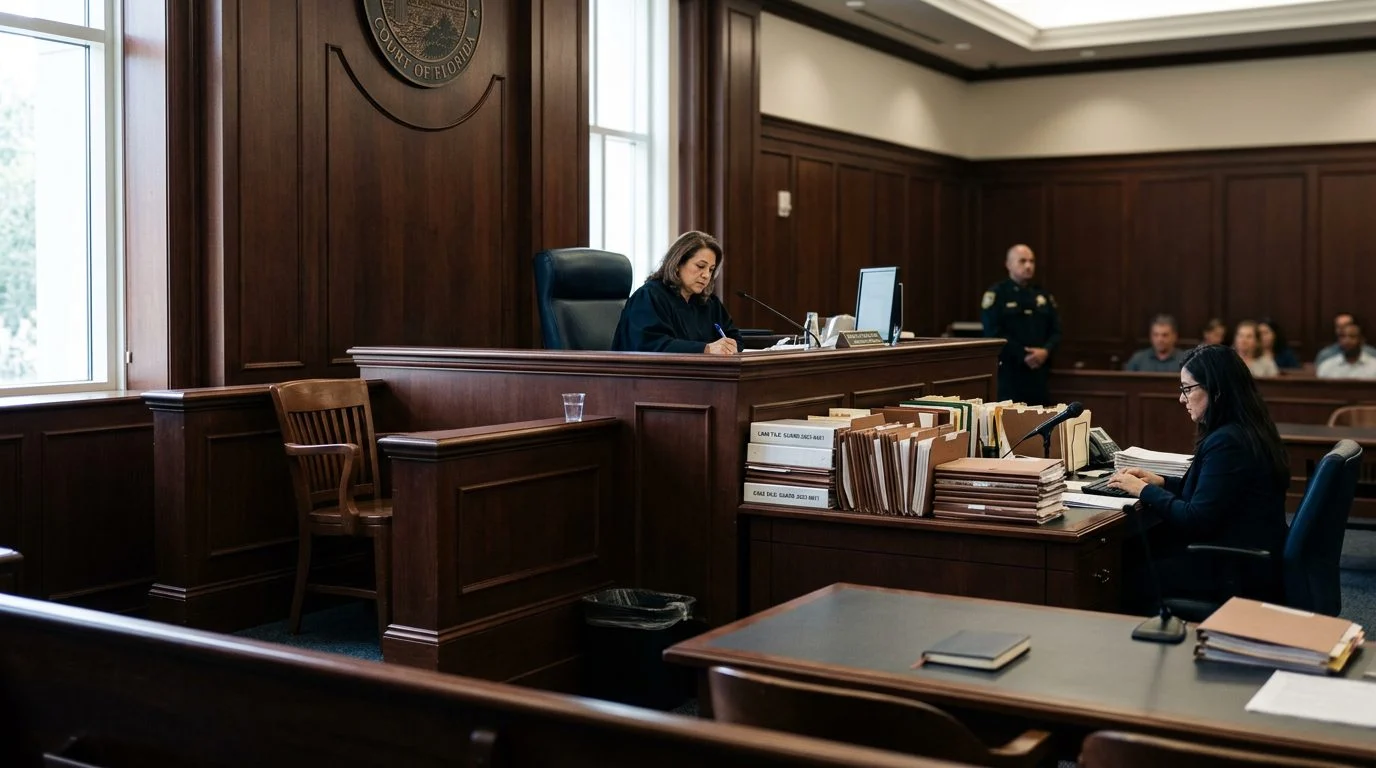
A guardianship is a court case. A judge decides whether a person is incapacitated and, if so, must consider whether an alternative to guardianship will sufficiently address the person’s problems; a guardian is appointed only if no such alternative exists. An adult starts the process by filing a verified petition that states the facts behind the belief (§ 744.3201).
The court must base its findings on clear and convincing evidence (§ 744.331). It removes only the rights the person cannot exercise. The guardian’s authority comes from the court order, not from the person’s signature. A guardian is a fiduciary who may use only the rights removed from the ward and delegated to the guardian (§ 744.361).
Each has a different scope. An emergency temporary guardian can be appointed only if the court finds imminent danger to health, safety, or property unless immediate action is taken. That authority lasts 90 days from appointment or until a guardian is appointed, whichever occurs first, and can be extended for another 90 days upon a showing that the emergency conditions still exist (§ 744.3031).
Power of Attorney and Guardianship Side by Side
When people ask what is better, POA or guardianship?, the answer starts with who makes the choice. The principal picks an agent by signing a POA. A judge appoints a guardian in a court case.
- A guardianship usually follows a loss of capacity.
- Court involvement: A POA generally works without a court case. A guardianship runs through the court and continues through yearly reports (§ 744.367).
- Source of authority: The agent acts under the document. The guardian acts under the court’s order.
- Changing course: The principal can revoke a POA by signing a later writing (§ 709.2110). A guardianship changes through the court.
One more point matters.
Advantages and Disadvantages of a Power of Attorney
A POA keeps the choice of agent with your loved one. That choice only exists while they can still make it.
The advantages are clear. The document reflects the person’s own choice. It generally works without a court case. It can give the agent the powers the principal chose.
The disadvantages are real. Family members may disagree about whether the agent is acting properly. The document may also miss decisions the family needs to make.
A common mistake is assuming the document covers everything. Check the wording for durability and for any separately initialed powers.
Advantages and Disadvantages of Guardianship
A guardianship gives a court-backed decision maker when no valid planning document exists. The court supervises the guardian.
The advantages include a formal record and clear accountability. A guardian must act in good faith and may not act against the ward’s best interests (§ 744.361).
The disadvantages are practical. The process takes time, requires a court hearing, and involves legal fees and ongoing reporting. The court can remove rights from the ward. Some rights, such as the right to vote or to hold a driver license, may be removed by court order but are not delegated to a guardian (§ 744.3215). A guardian also cannot commit the ward to a facility, institution, or licensed service provider without specific court authority and a formal placement proceeding.
Not sure what your next step is?
Talk it through with our team — the first consultation is free, confidential, and carries no obligation.
Questions to Help Your Family Weigh the Two Options
Five questions can show which path to look at first.
- Did your loved one sign a POA while able to understand it? If yes, check whether it is durable and which powers it grants.
- Can your loved one still understand what a POA would do? If not, a guardianship may be the path to review.
- Does the family agree on who should act? A dispute may need a judge to resolve it.
- Does the situation involve addiction treatment? Involuntary treatment for substance abuse runs through a court process under the Marchman Act, not a POA (Marchman Act guidance). A respondent in those proceedings has a constitutional right to counsel (Albrechta).
- Is a temporary step needed now? Emergency temporary guardianship requires a court finding of imminent danger.

Talk With Robinson Casey About Your Loved One’s Situation
If your loved one may no longer be able to sign a POA, a court process may be the next question to answer. Robinson Casey focuses its practice on Marchman Act petitions and guardianship matters for families in Miami-Dade, South Florida, and statewide. Our team can talk through your family’s facts with you.
Frequently asked questions
Can a power of attorney keep working after incapacity?
Yes, if its wording says it survives later incapacity, as chapter 709 allows (§ 709.2104).
Can a guardian place a loved one in a treatment facility?
Not on their own. A guardian needs specific court authority and a formal placement proceeding first (§ 744.3215).
Can a power of attorney be revoked?
Yes. The principal can revoke it by expressing the revocation in a later signed writing (§ 709.2110).
If you’re deciding between a power of attorney and a guardianship for someone you love, you don’t have to face it alone. Your first consultation is free, confidential, and comes with no obligation to continue. Schedule a consultation or call (561) 849-4700.
How Robinson Casey Works With Families
Guardianship Focus
Our practice focuses on Florida guardianship and Marchman Act petitions, so your matter is handled by attorneys who work in these areas every day.
Clear, Plain-Language Answers
We explain the options, the court process, and what each step means for your loved one, without legal jargon.
Serving South Florida Families
We represent families across Miami-Dade and South Florida, and we handle matters statewide.
Confidential Support
Families come to us during difficult times. Every conversation is handled with discretion and care.
Do Not Wait Until It Is Urgent
Choosing between a power of attorney and a guardianship is easier when the family has time to plan. Waiting until a crisis develops can narrow your options. Talk with our team early so you can understand your choices.
Questions Families Often Ask Us
Who Is Making Decisions Now?
Start by identifying who currently has authority to act for your loved one, and whether that authority is written in a document or ordered by a court.
Does the Document Still Apply?
The wording of an existing power of attorney matters. We review what it says and whether it fits the situation your family is facing.
Is Court Oversight Needed?
Some situations call for a guardianship proceeding. Others can be handled through planning documents. We help you weigh the difference.
What Happens in Urgent Cases?
When a loved one cannot protect their own interests, Florida courts may consider emergency temporary guardianship. We explain how that process works.