
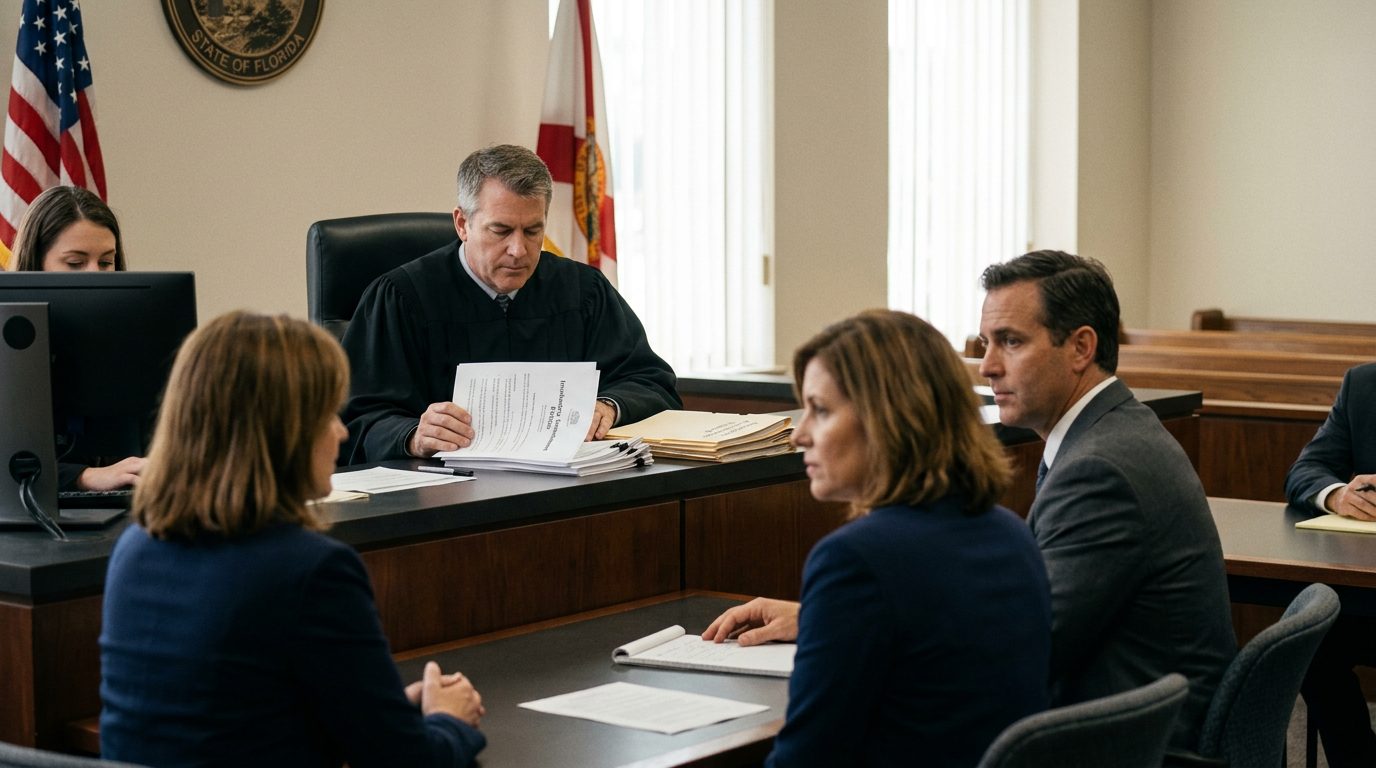
Marchman Act Petitions | Florida
Court-Ordered Treatment for Addiction Under the Marchman Act
Robinson Casey focuses exclusively on Marchman Act petitions and guardianship matters. Schedule a free, confidential first consultation, with no obligation to continue.
By Richard J. Casey III, Esq. · Published October 15, 2026
Involuntary commitment for addiction in Florida is a court process under the Marchman Act. A family member or other eligible person may be able to ask a judge to order assessment and, if the statute’s criteria are met, involuntary treatment. The court makes that decision. This page explains the process and the free, confidential first consultation that Robinson Casey offers. Richard J. Casey III, Esq. is the responsible lawyer for this page. The firm limits its practice to Marchman Act petitions and guardianship matters.
What Involuntary Commitment for Addiction Means in Florida
Involuntary commitment for addiction is a court-ordered process for adults with substance use problems. It differs from voluntary admission, where the person chooses to enter treatment.
The Marchman Act covers substance abuse, including illegal drugs, prescription drugs, and alcohol (Flagler County Clerk’s mental health page). The Baker Act covers mental health, and it is a separate law. The Florida Courts Baker Act guide explains how that law works.
This page is for adult family members, spouses, adult children, and other loved ones. You may be acting for someone else, under stress, and not yet sure you want to hire a lawyer. That is a reasonable place to start.
If someone you love is struggling with substance use and you're unsure what comes next, our team can talk it through in a free, confidential first consultation. Talk it through with our team — the first consultation is free, confidential, and carries no obligation.

Criteria for Involuntary Admission Under Florida Law
The court decides involuntary admission under the criteria in § 397.675. Those criteria center on impairment, loss of self-control, and harm or inability to decide about care.
The statute says a person meets the criteria if there is a good faith reason to believe the person is substance abuse impaired, or has a substance use disorder and a co-occurring mental health disorder. Because of that, the person must:
- Have lost the power of self-control with respect to substance abuse; and
- Either (a) be in need of substance abuse services and, because of the impairment, have judgment so impaired that the person is incapable of appreciating the need for those services and of making a rational decision about them (the statute adds that mere refusal of services is not evidence of lack of judgment); or (b) without care or treatment, be likely to suffer from neglect or refuse to care for himself or herself, where that neglect or refusal poses a real and present threat of substantial harm to the person’s well-being and it is not apparent that the harm may be avoided through the help of willing family members or friends or other services; or there is a substantial likelihood that the person has inflicted, or threatened to or attempted to inflict, or, unless admitted, is likely to inflict, physical harm on himself, herself, or another. This summary does not list every detail of the statute, other requirements may apply, and the court decides based on the evidence and its discretion.
This is a short summary, and the full statute text controls. Other requirements may also apply, and the court decides. Under § 397.697, the court may order involuntary treatment when the conditions are proved by clear and convincing evidence.
The Petition Process, Step by Step
A petition is a written filing with the clerk of the court. It names the people involved and states the facts behind the request.
Who May File
For an adult respondent, § 397.68112 lists who may file. That includes a spouse or legal guardian, any relative, a service provider, or an adult with direct personal knowledge of the impairment and prior treatment. Other requirements may apply, and the court decides.
What the Petition Must Include
Under § 397.68141, the petition must state each party’s name, their relationship, and the respondent’s attorney if known. It must also give the reasons for the petitioner’s belief about impairment and loss of self-control. A report from a qualified professional who examined the respondent within 30 days before filing may be attached. If there was no assessment, the petition must say so.
Filing and Emergencies
Under § 397.681, the petition is filed with the clerk in the county where the person is located. The clerk may not charge a fee for filing it. In an emergency, the petition must describe the exigent circumstances and request an ex parte order (§ 397.68141). Under § 397.6818, the court may rely solely on the petition and, without appointing an attorney, enter an ex parte assessment and stabilization order. Whether it does is up to the court.
The Hearing and Possible Orders
The statute says the court shall schedule a hearing within 10 court working days unless a continuance is granted (§ 397.68151). The actual timing depends on the court’s schedule and discretion.
At the hearing, the respondent must be present unless a waiver or exception applies. The court hears relevant evidence, including testimony from family members familiar with the person’s history (§ 397.6957). Testimony is under oath and recorded, and the respondent may refuse to testify.
If a court orders treatment, the order may last up to 90 days. Early release is possible when listed conditions apply, such as when the person no longer meets the criteria and consents to voluntary status (§ 397.6971).
Marchman Act Involuntary Commitment vs. Voluntary Treatment
Voluntary admission depends on the person’s choice, while involuntary commitment depends on a court’s order. A person who wants treatment may apply to a service provider for voluntary admission (§ 397.601).
Rights matter in both settings. The statute provides that an individual may not be deprived of any constitutional right (§ 397.501).
Families may consider voluntary options first, or alongside a petition. A petition is one legal tool among several. Which path fits depends on the person’s situation, and no path is promised to work.
What the Free Confidential First Consultation Covers
The first consultation is free, confidential, and carries no obligation to continue. It is a chance to talk through your situation before you decide anything.
In the consultation, you can describe the person’s situation in general terms and explain your relationship to them. You can also ask about the process described on this page. Our team can help with scheduling and what to bring.
Costs vary, and we discuss fee questions directly during the consultation. Under § 397.681, the clerk may not charge a filing fee for a petition. Service-of-process fees are handled separately, and the court may prohibit those fees for an indigent petitioner (§ 397.68112).
The firm limits its practice to Marchman Act petitions and guardianship matters. If your situation falls outside that work, or may be better handled by another lawyer or firm, we will tell you.
Frequently Asked Questions
These answers are short and general. The court makes the final decision in every case.
How do I get someone involuntarily committed in Florida?
A petition under the Marchman Act is filed with the clerk in the county where the person is located. The court decides whether the statutory criteria are met.
Does Florida have a 5150 hold?
This page does not address 5150 holds. The Baker Act covers mental health in Florida, and the Marchman Act covers substance use.
How much does it cost to file a Marchman Act petition?
The clerk may not charge a filing fee for the petition. Other costs vary, and we discuss fees during the free first consultation.
Can the person refuse?
Under the statute, refusing services alone does not show lack of judgment. The court decides based on the evidence and its discretion.
Does hiring a lawyer change the result?
The statute gives a respondent the right to counsel. No lawyer can promise a result, because the court decides.
Not sure what your next step is?
Talk it through with our team — the first consultation is free, confidential, and carries no obligation.

Talk Through Your Situation With Robinson Casey
If you’re watching someone you love struggle with substance use, you don’t have to work out the legal steps alone. A court process can feel overwhelming, and the answers depend on the facts.
This page explains general Florida law. It isn’t legal advice for your situation. Our team can talk with you in a free, confidential first consultation, with no obligation to continue. Call (561) 849-4149 or request a consultation.
Focused Practice
Our practice limits its work to Marchman Act petitions and guardianship matters, so every consultation centers on these areas of Florida law.
Free First Consultation
Your first consultation is free, confidential, and carries no obligation to continue. We will explain the process and the questions the court may consider.
Clear Next Steps
Our team will walk you through the documents and information involved in a petition so you know what to expect before deciding how to proceed.
Direct Access
Call (561) 849-4149 to speak with our team about your situation and to schedule a consultation at a time that works for you.
Important: The Court Decides
Matters Robinson Casey Handles
Marchman Act Petitions
Every Marchman Act petition is decided by the court based on the statute, the evidence, and the court’s discretion.
Involuntary Commitment for Addiction
Guidance on the court process for involuntary treatment for addiction, including how the statutory criteria are presented to the court.
Guardianship Matters
Guardianship attorney services, including emergency temporary, plenary, and limited guardianship, and mental health guardianship.