
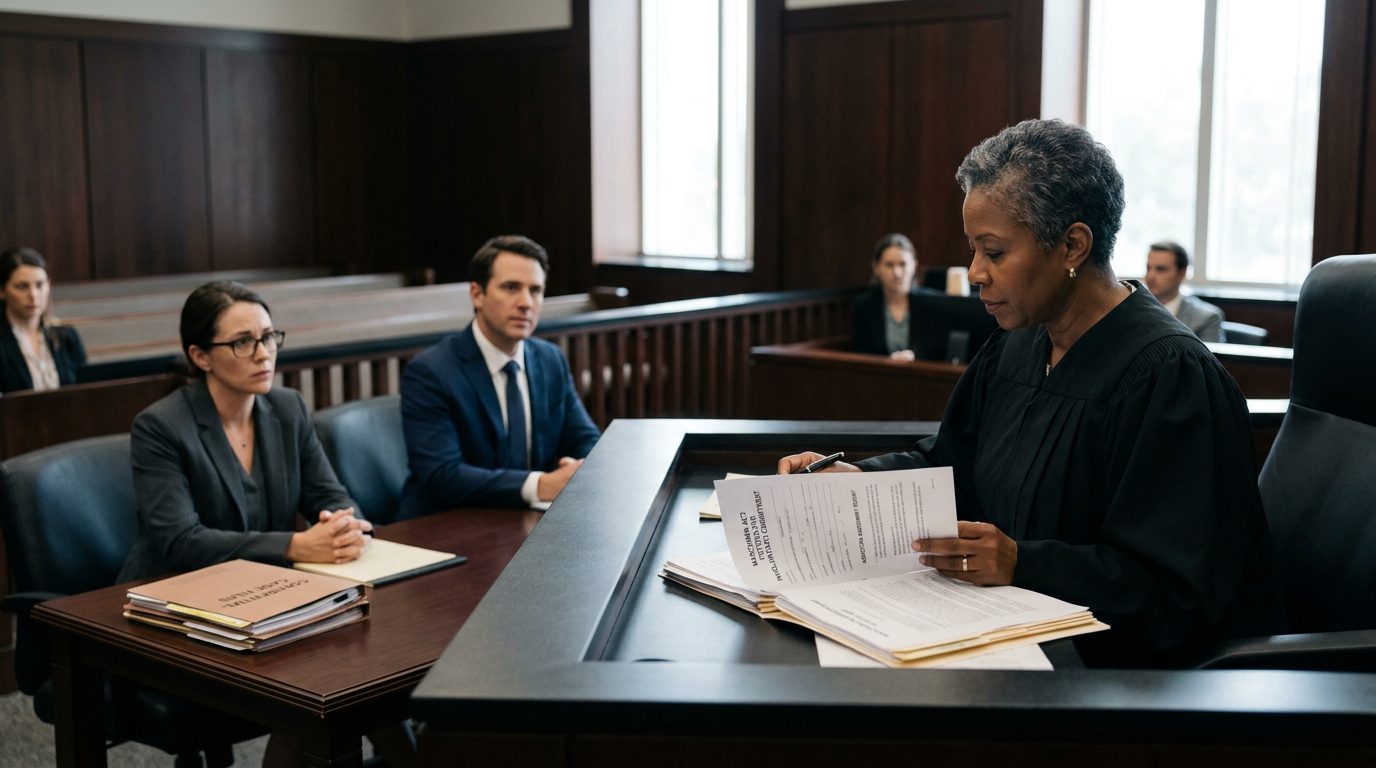
Marchman Act & Involuntary Commitment
Involuntary Commitment for Alcohol Addiction in Florida
When a loved one's alcohol use threatens their health or safety, Florida law provides a legal pathway to intervention and treatment. Robinson & Casey guides families through the involuntary commitment process.
By Richard J. Casey III, Esq. · Published September 28, 2026
Involuntary Commitment for Alcohol Addiction in Florida: What You Need to Know
When someone you love refuses treatment for alcohol addiction and their condition is getting worse—not better—you may be wondering whether the law allows you to step in. The answer is yes. Florida recognizes involuntary commitment as a legal tool specifically designed for people with substance use disorders, including alcohol addiction, who cannot or will not seek help on their own. This page explains how that process works, who can start it, and what your family should expect.
If you're watching someone struggle with alcohol addiction and wondering whether involuntary commitment is an option—or you're facing this decision now—families in your situation reach out to us regularly to understand their legal options. Talk it through with our team — the first consultation is free, confidential, and carries no obligation.

Understanding Involuntary Commitment for Alcohol Addiction in Florida
Involuntary commitment for alcohol addiction is a court-ordered intervention that allows a treatment facility or hospital to admit and hold someone against their will when they meet specific legal criteria. It is different from voluntary admission, where a person chooses to enter treatment. It is also distinct from guardianship, which addresses broader decision-making authority over finances, healthcare, and daily life.
Florida permits involuntary commitment for alcohol addiction because alcohol use disorder is recognized as a serious medical condition. Untreated alcohol addiction can lead to life-threatening medical emergencies—including seizures, delirium tremens (severe withdrawal symptoms), and organ failure—and poses immediate danger to the person and others around them. The law also acknowledges that addiction can strip away a person’s ability to recognize they need help or to make rational decisions about their own safety.
The Marchman Act, codified in Florida Statutes Chapter 397, is the primary legal framework governing involuntary commitment for substance use disorders in Florida. It provides a structured process—with safeguards for the individual’s rights—that families, healthcare providers, and law enforcement can use to petition a court for commitment.
When Involuntary Commitment for Alcohol Addiction May Be Considered
Involuntary commitment is not a casual step. Florida law sets a high bar. Courts will consider an involuntary commitment order only when specific conditions are met.
Immediate danger to self or others is the most common trigger. This means the person’s alcohol use has led to behavior that threatens their life or someone else’s—reckless driving, violent outbursts, or self-harm. A pattern of blackouts, falls, or near-fatal overdoses can establish danger to self.
Inability to care for basic needs due to alcohol abuse is another ground. If someone is drinking so heavily that they cannot feed, clothe, or shelter themselves, and their condition is deteriorating, that meets the legal standard. Courts look at whether the person is malnourished, living in unsafe conditions, or neglecting hygiene because of drinking.
Repeated failed attempts at voluntary treatment strengthen a petition. If your family member has entered rehab multiple times, left early, or relapsed immediately after discharge, that history shows that voluntary options have been exhausted.
Deteriorating physical or mental health linked to alcohol abuse—liver disease, cognitive decline, severe depression, or untreated withdrawal symptoms—can support a commitment petition.
Legal or financial crises driven by addiction, such as multiple DUIs, job loss, or bankruptcy, may be cited as evidence of the severity of the disorder, though they alone do not meet the legal standard for commitment.
The Marchman Act and Alcohol Addiction in Florida
The Marchman Act is Florida’s civil commitment law for substance use disorders. It covers alcohol, opioids, cocaine, methamphetamine, and other drugs. The law recognizes that addiction is a medical disorder and that some people cannot access treatment without legal intervention.
Under the Marchman Act, a petition for involuntary commitment must allege that the person is incapable of managing personal care due to substance abuse and poses a danger to themselves or others. The statute also requires courts to consider less-restrictive alternatives—such as outpatient counseling or day treatment—before ordering inpatient commitment.
Who can file a Marchman Act petition? Family members (spouse, parent, adult child, sibling), healthcare providers, law enforcement officers, and other authorized persons can initiate the process. You do not need the person’s consent, and you do not need to hire an attorney to file, though having legal guidance makes the process clearer and stronger.
The Legal Process for Involuntary Commitment
The Marchman Act process unfolds in stages. Understanding the timeline and what happens at each step helps families prepare.
Filing the petition. A petition is a written request to the court that sets out the facts: who the person is, what their alcohol use looks like, why they are a danger to themselves or others, and what attempts at voluntary treatment have been made. The petition is filed with the circuit court in the county where the person lives or where they are located.
Ex parte hearing and temporary hold. Within a few hours to a day of filing, a judge holds an ex parte hearing (a hearing where only the petitioner and the judge are present; the person being petitioned against is not yet there). If the judge finds reasonable grounds to believe the person meets the legal standard, the judge issues an order for an immediate temporary hold. This allows law enforcement or emergency services to transport the person to a treatment facility or hospital for evaluation. The temporary hold typically lasts up to five days.
Medical evaluation. While on the temporary hold, a physician and mental health professional evaluate the person. They assess the severity of the addiction, any medical complications (such as liver damage or withdrawal risk), and whether the person is a danger to themselves or others. This evaluation is crucial—it informs the full hearing.
Full hearing. Within five days of the temporary hold, a full hearing is held before a judge. Both the petitioner and the person subject to the petition are present. The person has the right to an attorney (if they cannot afford one, the court appoints a public defender). The judge hears evidence from the petitioner, the medical evaluators, and the person. The person can present their own witnesses and evidence. The judge then decides whether to order involuntary commitment.
Timeline. From petition to commitment decision, the process typically takes five to seven days. In urgent situations, the temporary hold can be issued the same day the petition is filed.
What Happens After an Involuntary Commitment Order
If the judge orders involuntary commitment, the person is placed in a treatment facility, hospital, or detoxification center. The facility must provide medically appropriate care, including management of withdrawal symptoms, medical stabilization, and addiction treatment.
The duration of commitment varies. Florida law allows commitment for up to six months initially, with the possibility of extension if the person continues to meet the legal standard. However, many people complete initial treatment and are discharged within 30 to 90 days.
During commitment, the person has rights. They can receive visitors, make phone calls (with reasonable restrictions), and receive mail. They retain the right to petition the court for release if they believe their condition has changed or if they wish to challenge the commitment order. Treatment facilities must provide individualized treatment planning, which may include detoxification, counseling, group therapy, and medication-assisted treatment if appropriate.
Discharge planning begins early. Before the person leaves the facility, the treatment team works with them and their family to create an aftercare plan. This might include outpatient counseling, support groups like Alcoholics Anonymous, medication management, and housing or employment support.
Not sure what your next step is?
Talk it through with our team — the first consultation is free, confidential, and carries no obligation.
Challenging or Modifying an Involuntary Commitment Order
A person subject to an involuntary commitment order is not without recourse. They have the right to petition for release or modification of the order.
Grounds for challenge include a change in circumstances (for example, the person has completed treatment and no longer poses a danger), a claim that the original commitment order was based on insufficient evidence, or a claim that less-restrictive alternatives are now available and appropriate.
Timeline and procedure. A petition for release can be filed at any time. The court must hold a hearing within a reasonable time. The person has the right to an attorney and to present evidence.
This right to challenge ensures that commitment is not indefinite and that the person’s civil liberties are protected.
Key Differences: Alcohol Addiction vs. Other Substance Use
Alcohol is treated distinctly under Florida law because of the unique medical risks of alcohol withdrawal. Unlike withdrawal from many other drugs, alcohol withdrawal can be life-threatening. Seizures, delirium tremens (hallucinations, confusion, rapid heart rate), and cardiac arrhythmias can occur within hours of the last drink. This medical urgency is why Florida courts take alcohol addiction cases seriously and why the Marchman Act includes alcohol alongside other substances.
Additionally, alcohol’s legal status (it is not a controlled substance in the same way as heroin or cocaine) does not diminish its recognition as a substance use disorder under Florida law. The Marchman Act treats alcohol addiction with the same legal gravity as addiction to illegal drugs.
What to Expect: A Family’s Perspective
Pursuing involuntary commitment is emotionally and legally demanding. Your family member may be angry or feel betrayed. You may feel guilt, fear, or exhaustion. These feelings are normal.
Expect the process to take time. Courts move deliberately, and judges want to ensure that commitment is truly necessary. You will likely need to gather documentation—medical records, incident reports, prior treatment records—to support your petition.
Communication with the treatment facility and the court is important. Once your family member is admitted, the facility’s clinical team will update you on their progress (within privacy law limits). After discharge, staying involved in aftercare planning increases the chance of sustained recovery.
Supporting your family member during and after commitment means being present, attending family therapy sessions if offered, and helping them connect to ongoing support. Many treatment facilities and support organizations offer resources for families.
Next Steps: Getting Legal Guidance
Navigating the Marchman Act process alone is possible, but having an attorney who understands involuntary commitment law makes a real difference. An attorney can help you:
- Determine whether involuntary commitment is the right tool for your situation or whether another intervention (such as guardianship) might be more appropriate.
- Prepare a strong petition with clear, factual evidence of danger and incapacity.
- Represent you at the ex parte hearing and the full hearing.
- Understand your rights and your family member’s rights throughout the process.
- Navigate post-commitment issues, such as modification or discharge planning.
When you’re facing a family crisis around alcohol addiction, you don’t have to figure this out alone.
Frequently Asked Questions
What is the difference between involuntary commitment and guardianship?
Involuntary commitment is a time-limited intervention focused on substance abuse treatment; guardianship is a broader, ongoing legal relationship that gives one person authority over another’s finances, healthcare, and daily decisions. They can work together, but they serve different purposes.
Can I file a Marchman Act petition without an attorney?
Yes, you can file the petition yourself, but an attorney familiar with the process can strengthen your petition and guide you through the hearing.
How long does someone stay committed?
Initial commitment is typically 30 to 90 days, though Florida law allows up to six months. Duration depends on the person’s progress and whether they continue to meet the legal standard.
Does involuntary commitment lead to recovery?
Commitment provides access to treatment and medical care, but recovery depends on many factors, including the person’s willingness to engage in treatment and their support system after discharge.
What if my family member is committed but wants to leave?
They can petition the court for release. The court will hold a hearing and decide whether to modify or terminate the commitment order based on current circumstances.
If you're watching someone struggle with alcohol addiction and wondering whether involuntary commitment is an option—or you're facing this decision now—families in your situation reach out to us regularly to understand their legal options. Talk it through with our team — the first consultation is free, confidential, and carries no obligation.

Reach Out Today
If you’re watching someone struggle with alcohol addiction and wondering whether involuntary commitment is an option—or you’re facing this decision now—families in your situation reach out to us regularly to understand their legal options. Robinson & Casey handles Marchman Act petitions and involuntary commitment cases across Florida. We can help you understand the process, prepare your petition, and represent you and your family through every stage. Contact us today to schedule a consultation, or call
Time Matters
Involuntary commitment decisions move quickly. The sooner you understand your options and file a petition, the sooner your loved one can access treatment and stabilization.
How Involuntary Commitment Works
Filing a Petition
A family member, healthcare provider, or law enforcement can petition the court under Florida's Marchman Act to seek involuntary commitment for substance abuse treatment when someone poses a danger to themselves or others.
The Court Hearing
A judge reviews the petition and evidence. If the court finds probable cause that the person meets the legal standard for commitment, an order is issued requiring evaluation and treatment.
Treatment & Stabilization
The individual is placed in a certified treatment facility for evaluation and care. Involuntary commitment is typically time-limited, focused on stabilization and connecting the person to ongoing recovery resources.
Your Role as Petitioner
Robinson & Casey handles the legal process—drafting the petition, gathering supporting documentation, and representing your interests at hearing—so you can focus on your loved one's recovery.
Why Robinson & Casey
Focused Practice
We focus exclusively on Marchman Act petitions and guardianship matters. Involuntary commitment for alcohol addiction is core to what we do.
Serving South Florida & Statewide
Based in Florida, we serve families across Miami-Dade, South Florida, and throughout the state in involuntary commitment and addiction intervention cases.
Compassionate Guidance
We understand the emotional weight of seeking involuntary commitment. We guide you through each step with clarity and respect for your family's situation.
Ready to Help
When your family needs immediate legal support for involuntary commitment, we are available to discuss your case and next steps.
Take the Next Step
Related practice areas
- Involuntary Commitment Patient Rights in Florida
- Limited Conservatorship Attorney | Florida | Robinson &